
Designing and managing luxury bathroom projects is not for the novice! They require extensive experience to master – spanning design and materials, but also plumbing, lighting, ventilation, electrical and technology.
Knowing what’s trending in this category is important too. Last October we looked at luxury kitchens. This time around, we focus on bathrooms. These seven pros share what they’re seeing and working on across the country, from the Hamptons to Hawaii!
- Quinn Hannum is an interior designer working between Philadelphia and the New York metro area.
- Lance Stratton is a San Diego-based kitchen and bath designer.
- Dayson Johnson is director of design and construction for Magleby Development in the Park City, UT area.
- Sarah Gaffney is design director for San Jose-based remodeling firm Next Stage Design.
- Caroline Danielson is director of showrooms for upscale retailer Ferguson.
- Doug Greenwald is an HTA-certified technology integrator serving Hawaii and Arizona.
- Chicago-based Jennifer Woodring is director of marketing for The Dawn McKenna Group real estate team.
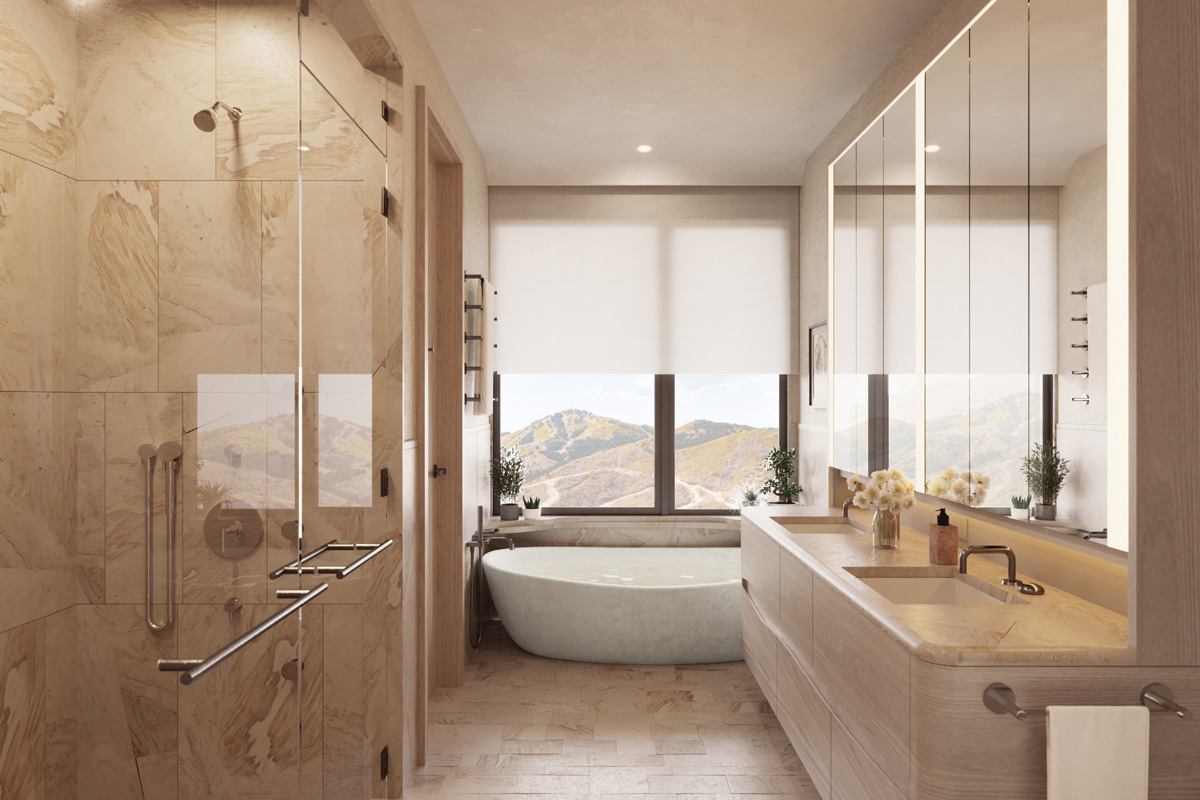
Photo: Velvære/Magleby Development
Room Planning Must Haves
When I was growing up in Brooklyn in the 1960s, our family of four shared the home’s one full bathroom down the hall. I discovered a few years ago on a real estate site that later owners converted my childhood bedroom into a bathroom for a new primary suite. It has a full shower with bench and handheld showerhead but lacks a separate toilet room and likely the amenities our contributors would add today.
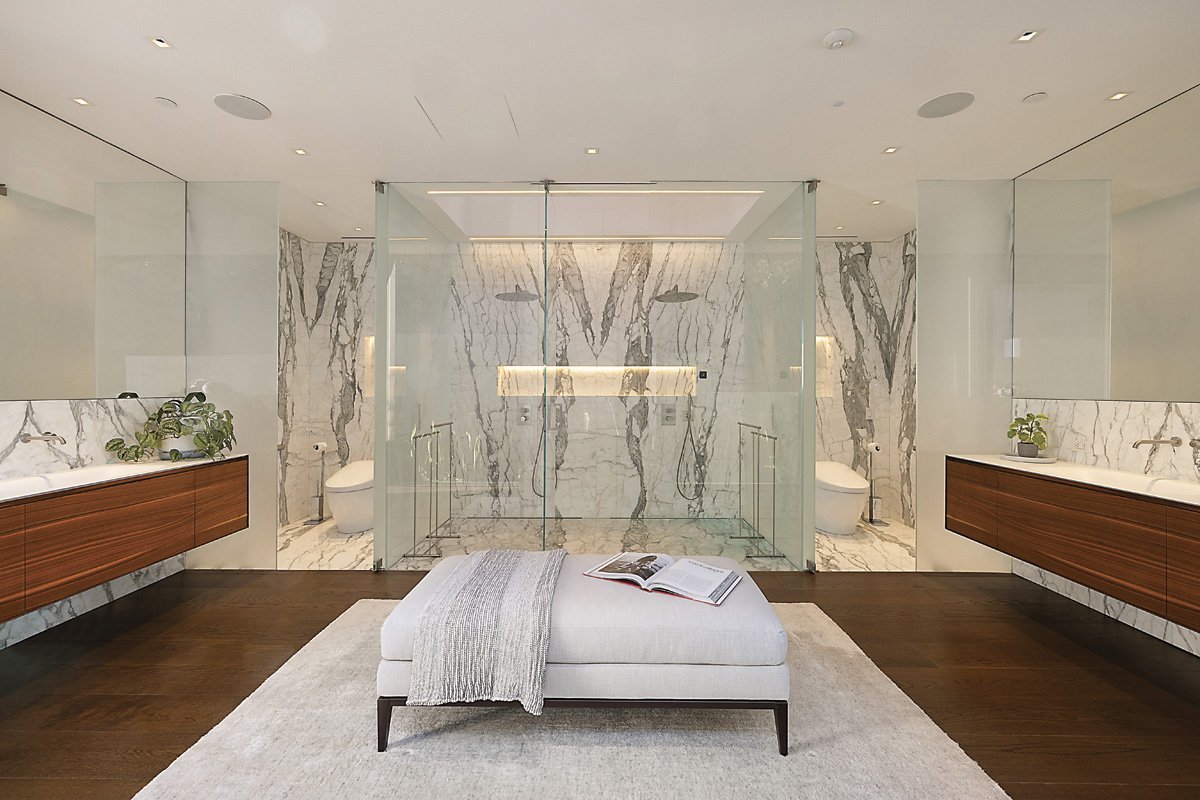
“Luxury homebuyers expect spa-like bathrooms with features such as large walk-in showers, soaking tubs, double vanities with ample storage and high-end fixtures,” observes Johnson. Natural light and thoughtful design that promotes relaxation and wellness are other features he mentions.
Woodring agrees: “Baths have become a place for respite within the home, so the more thoughtful and sumptuous their designs – as they relate to daily use and enjoyment – the better.”
Hannum sees separate tub and shower, concealed water closet, lounging space and other amenities as must-haves. “We’re also seeing large-format wet rooms equipped with rainhead shower systems and body sprays.” Integrating outdoor elements is another layout feature she cites.
“Main bathrooms are growing!” Stratton declares. “Extra floor space is welcome and wanted. We are learning that our clients want to be able to comfortably coexist in the main bath, and that takes space, and often separate vanities.”
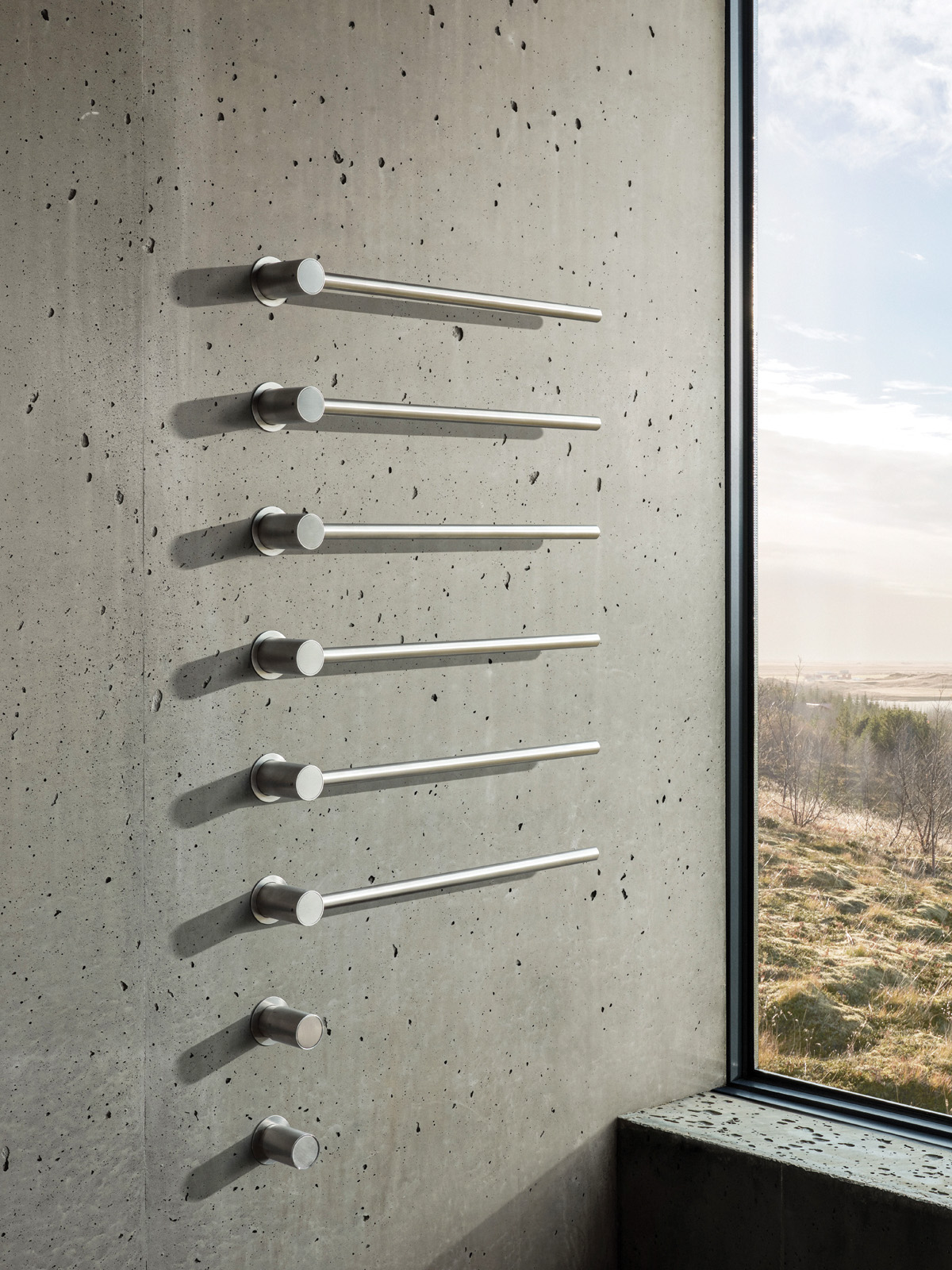
Photo: VOLA
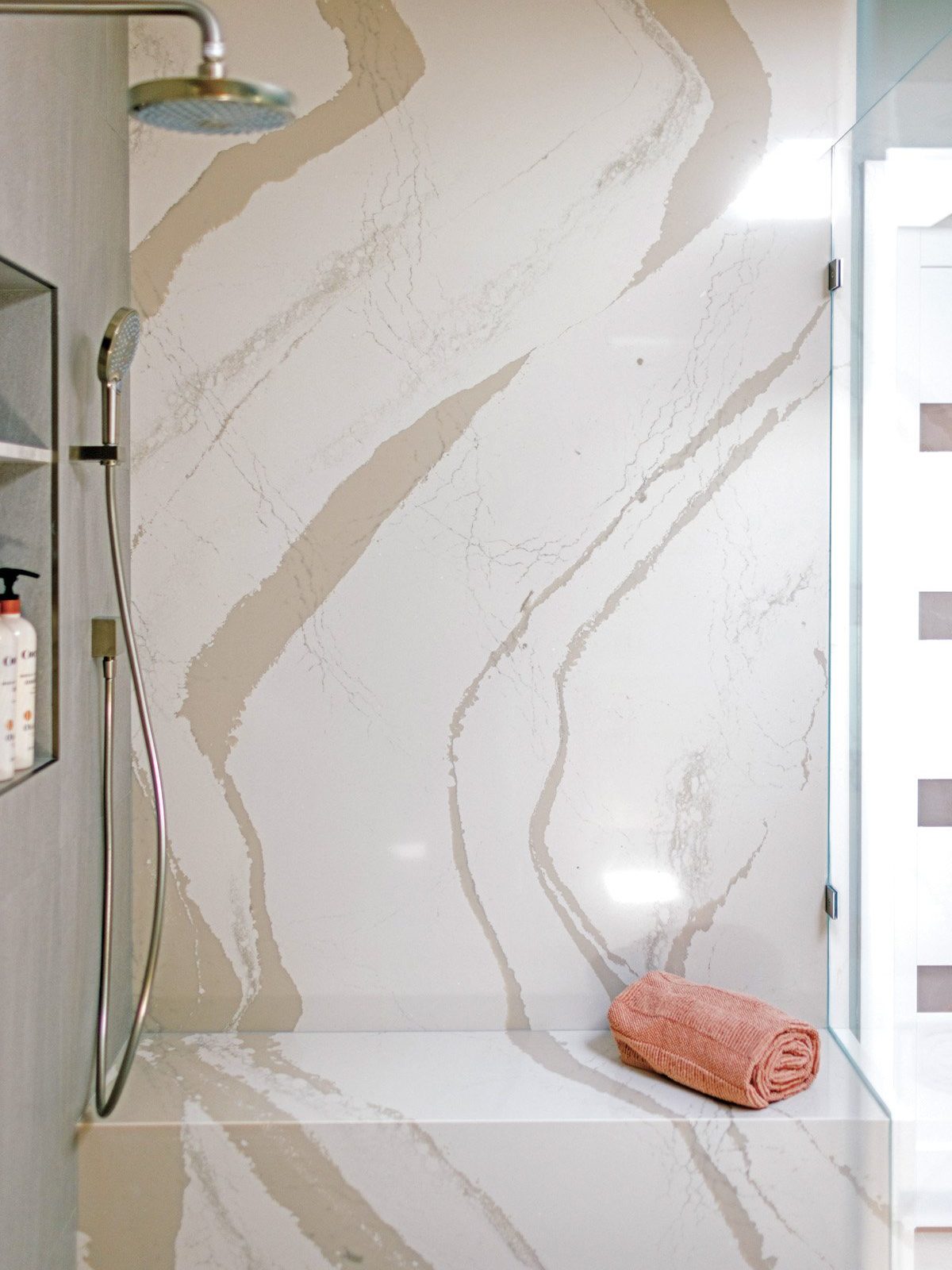
Photo: Next Stage Design
Fixture Must Haves
For Johnson’s luxury mountain homes, multiple showerheads, heated floors and towel racks, and premium surfaces are must-haves. For Stratton, “Freestanding tubs continue to be a leading request,” the San Diego designer says. He adds that many of his clients are asking about fully accessible showers – “no curbs and preinstalled backing for future grab bars,” he reports.
Hannum cites solid carved stone tubs that “make for beautiful and functional sculpture to create real wow factor” spaces and smart toilets. Additionally, she calls out rainfall showerheads paired with body jets to provide a spa-like experience and wall-mounted faucets to add a sleek, modern aesthetic.
“The bidet toilet is practically a standard now in the luxury bath. It is the one feature that quickly distinguishes an ordinary bath from a luxury bath,” Gaffney points out.
Danielson agrees. Ferguson’s clientele also sees steam showers as must-haves, offering the dual benefits of sustainability and luxury. “They use less water than traditional showers while providing a soothing, spa-like experience that promotes relaxation and well-being.”
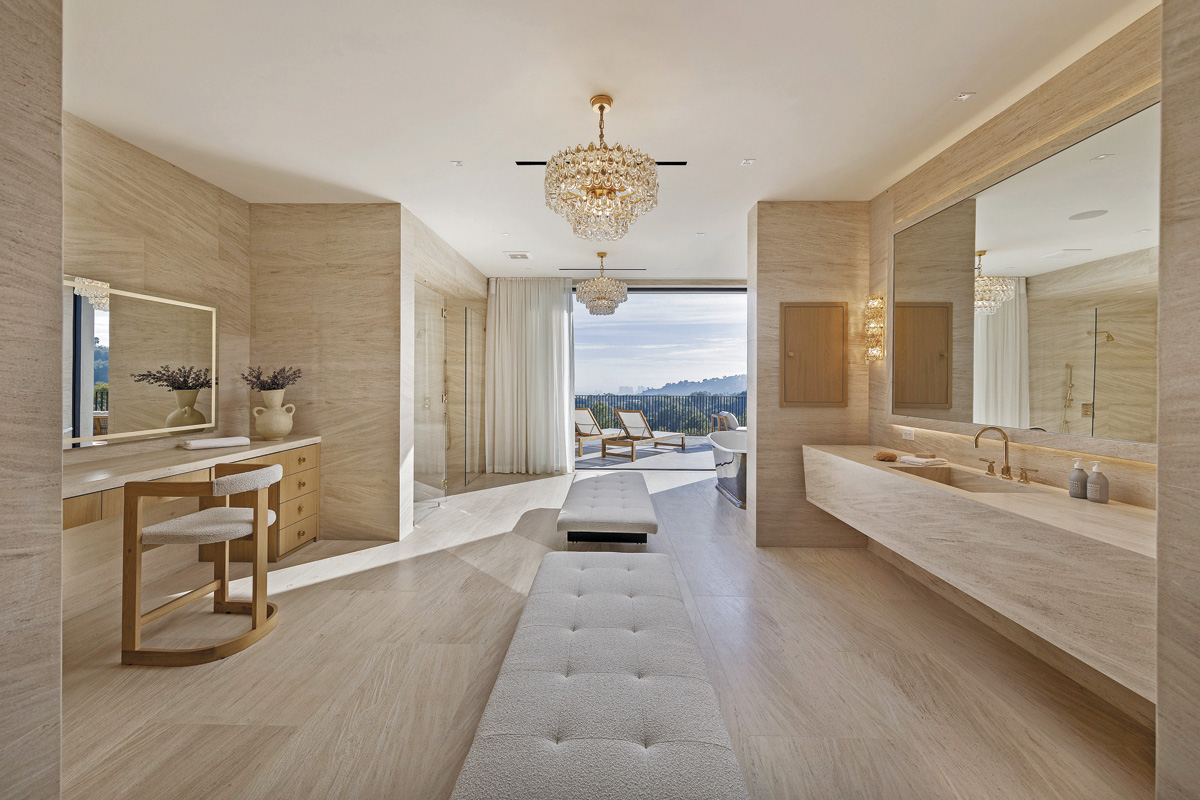
Photo: Jim Bartsch for Hilton & Hyland/Luxury Portfolio International
Finish Must Haves
“I love to clad walls in natural stone, millwork or specialty plaster because it’s like enveloping yourself in abstract art,” Hannum declares. “There’s something about using natural materials that calms our nervous system even more during our bath rituals. For floors I enjoy using mosaic tiles or micro-cement, and for more intricate designs, I create patterns using natural stone tile or handmade clay tiles.” She also mentions realistic porcelain slabs as a worthy finish.
Gaffney frequently opts for low maintenance quartz surfaces in place of marble, she offers: “We can create the same beauty and drama with a man-made quartz slab, especially when cladding shower walls.”
“Luxury customers are opting for less grout,” Stratton observes. He’s incorporating larger tiles and slab surfaces in floors and shower walls and notes, “Even Venetian plaster takes the place of smaller tiles.”
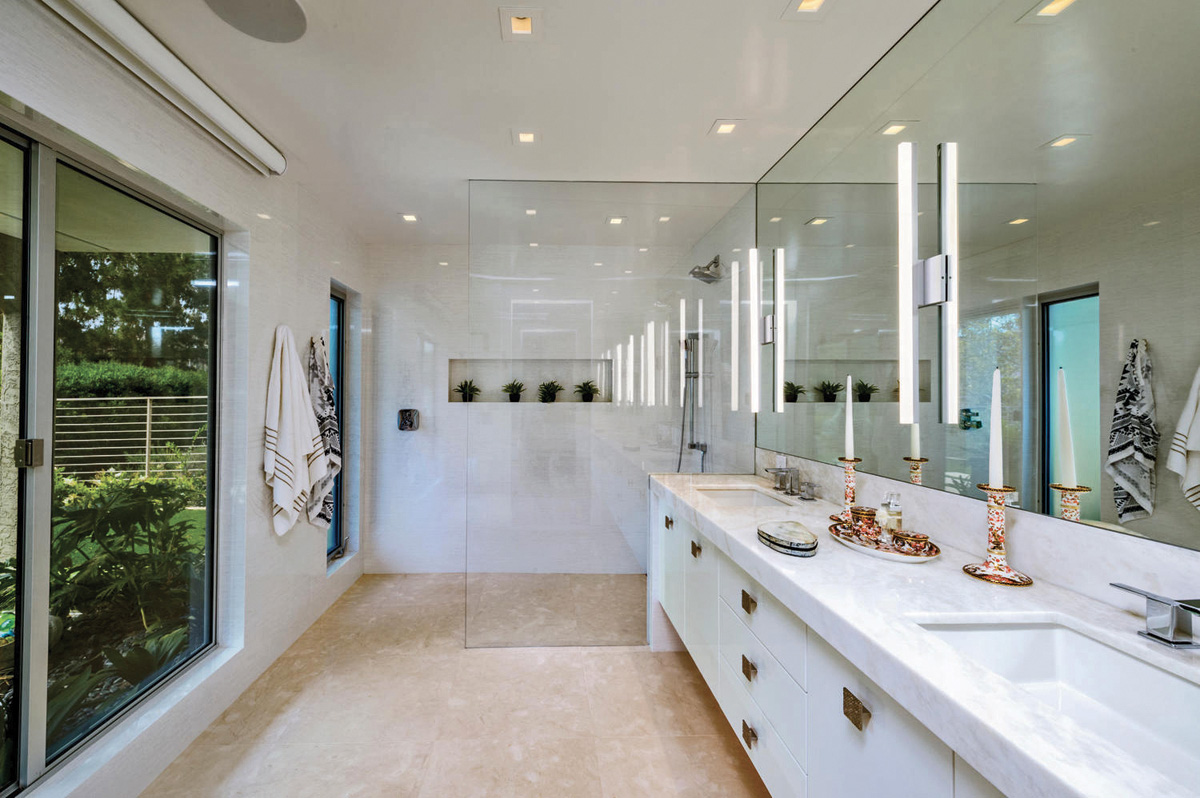
Photo: Studio Stratton
Technology Must Haves
“Clients want to bring all of their technology tools into the bathroom space, but they don’t want to clutter backsplashes and surfaces with chargers and outlets. In bathroom cabinetry design, we are designating spaces,” Gaffney comments.
Danielson sees the same with Ferguson’s clientele: “While technology plays a role, today’s luxury bathrooms focus more on comfort and elegance. Programmable showers and smart mirrors with integrated lighting offer convenience and personalization without overwhelming the space with tech. Touchless faucets add a modern touch and improve hygiene. Heated floors and carefully designed lighting enhance the overall experience, creating a spa-like atmosphere. The goal is to subtly integrate technology that enhances comfort and sophistication, ensuring a relaxing and indulgent environment.”
Integrated sound systems, automated window coverings, indoor air quality monitors, temperature systems, leak detectors, app-controlled lighting and temperature controls, smart mirrors, high-tech toilets with bidet functionality and touchless operation are available features for Johnson’s homebuyers.
Hannum’s clients across the country are embracing tech too: “Technology in luxury bathrooms is designed to enhance comfort and convenience,” she points out. Integrated smart mirrors with built-in Alexa, defogging technology and lighting controls are now standard, she adds. “Smart showers allow users to program water temperature, flow and even steam, providing a personalized experience,” she adds, also citing underfloor heating systems that can be controlled remotely. (Who doesn’t want warm feet first thing in the morning or on midnight visits?)
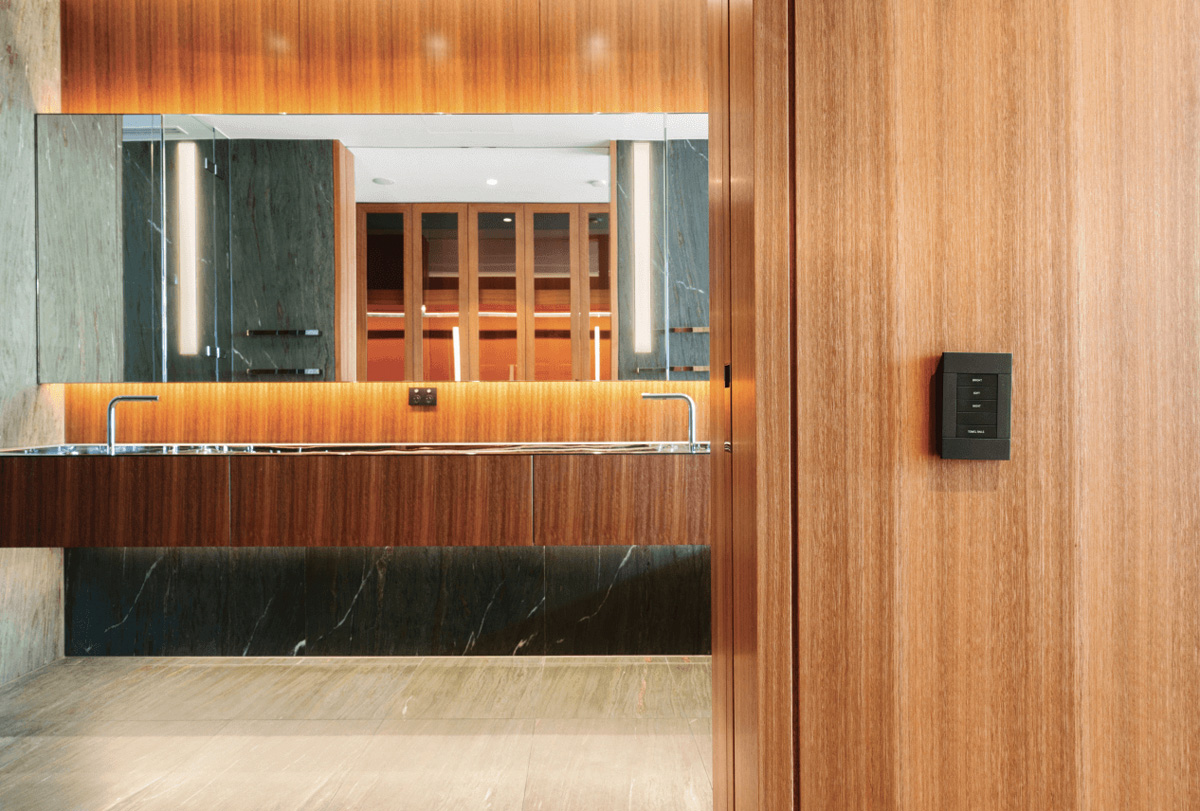
Photo: Crestron
Stratton’s clients are eschewing technology, he says, “preferring a more sanctuary feel.” Even requests for televisions, common in years past, never come up today, he says. “People are opting to unplug and relax now more than ever.” Well, not all of them…
“Some clients like to watch the news or the stock market while getting ready,” Greenwald shares. “Mirror televisions are excellent for this. The TV is actually behind a mirror, and you can see it only when it’s turned on.” He’s also providing the technology that makes smart toilets, showers, lighting, radiant heat and towel warmers work properly. Circadian lighting is an oft-requested feature, he says.
“Air quality is becoming more important to our customers and probably varies in popularity by region,” the integrator adds. “Our main office is located in Scottsdale, Arizona, and our air quality is very poor with air pollution and dust. I imagine places like Los Angeles also get more requests like these,” he theorizes. (This has become an imperative in the wake of the wildfires afflicting that city and those in regions blanketed by their smoke and ash.)
Woodring is seeing air and water filtration systems becoming must-haves for buyers, as well as integrated smart home features in general. “The more automative and responsive, the better!” the real estate executive declares.
The Wellness Factor
“Many clients are now seeking wellness-focused features,” Hannum observes, citing infrared saunas built into the bathroom space and customizable lighting to reflect desired ambiance. “Wellness has become a primary focus in luxury design, especially since the pandemic. Clients are increasingly looking for features that promote health and relaxation, such as air and water purification systems. The emphasis on wellness has also increased demand for touchless technology, which reduces the spread of germs.”
Polar plunges, chromatherapy and aromatherapy shower enhancers, as well as mini fridges with icemakers for refreshment, are showing up on Ferguson’s wellness requests, Danielson acknowledges.
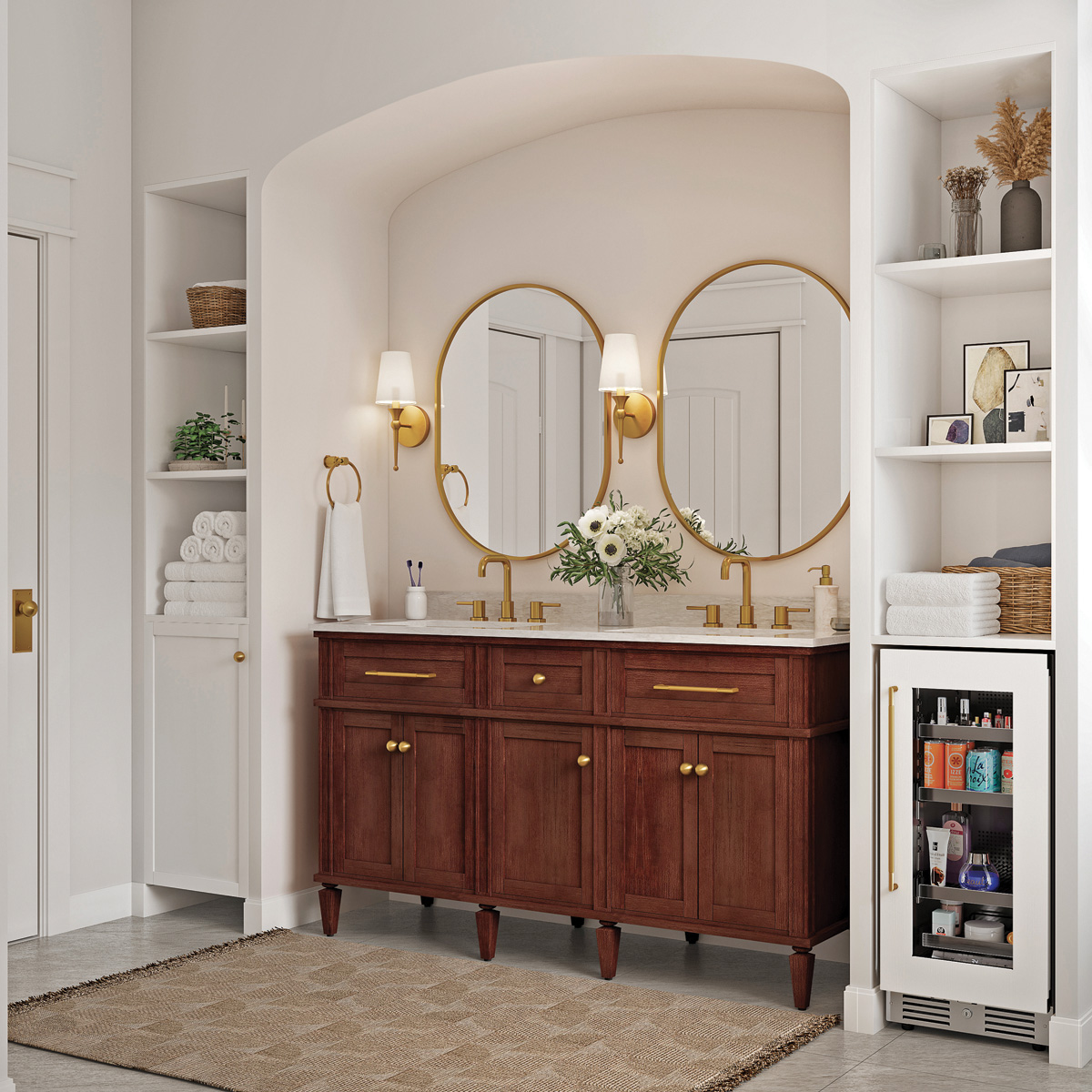
Photo: Avallon Available at Ferguson Bath Kitchen & Lighting Gallery
Budget Changes
“Budgets for luxury products have increased as homeowners prioritize comfort and well-being,” the Ferguson executive comments. “While it’s an estimate that spending on luxury bathroom budgets has increased by approximately 25%, it’s crucial to understand that these numbers can vary widely.” It’s not about the price point though, she suggests. “Instead, luxury is defined by how effectively an investment elevates the home.” It’s also about the luxury of comprehensive, personalized service provided by the client’s design, technology, installation and retail teams.
Hannum and Gaffney are both seeing increases in that same range, they report, attributing them to various factors, including material, shipping and labor costs. On the technology side, Greenwald is seeing 10% increases, he says. “The majority of this can be attributed to the desire and cost of circadian lighting being added to the overall cost of the project,” he reports.
Final Thoughts
The impact of wellness cannot be overstated! It shows up in many of the trends highlighted here and has really emerged, as Danielson observes, with the pandemic. This aligns with surveys I’ve seen showing huge leaps in consumer awareness of home-health links since COVID sent everyone to their rooms five years ago!
“The pandemic initiated a wellness journey for many that went beyond avoiding germs. People thought about their total health, including their quality of life. Some recognized the need for more movement and exercise-friendly home environments, while others missed natural sunlight and began investing in lighting systems that work with their biorhythms to enhance mood and health. Ultimately, they wanted to elevate their daily routines and not take anything for granted.” This has manifested in creating spaces and featuring products that cater to personal well-being, Danielson says. Those spaces are often expansions of primary bathrooms.
Woodring is seeing that on the real estate side too: “More and more, owners have been outfitting their homes with health-focused amenities as wellness continues to be top of mind post-pandemic, and we do not see any signs of that slowing.”
Jamie Gold, CKD, CAPS, MCCWC is an author, wellness design consultant and industry speaker. Her award-winning third book, Wellness by Design (Simon & Schuster, 2020) is available wherever books are sold. Learn more about her wellness design CEU presentations, books, blog and consulting services at jamiegold.net.