
In December 2001, a watershed moment for the decorative plumbing and hardware industry unfolded in a modest Bethesda, MD conference room. There, a visionary group of industry professionals – representing five showrooms, four manufacturers and one agency – laid the foundation to create the Decorative Plumbing & Hardware Association. This pivotal meeting provided a professional home for a community that had been wandering aimlessly around the decorative plumbing desert for years.
DPHA’s coming out party at the 2002 Kitchen & Bath Industry Show exceeded all expectations, attracting more than 150 members, including many of the industry’s most influential showrooms and trendsetters. All were independently owned and included many industry pioneers and first-to-
market businesses.
Today, less than 45% of DPHA’s founding showroom members operate under their original name or ownership structure. There are fewer independent showrooms than existed a quarter-century ago. The industry, like many others, is experiencing a wave of consolidation that is changing the dynamic of the independent showroom business, but not completely. There remain exceptional independent businesses that continue to thrive through innovation, nimbleness and market leadership.
On these pages, KBDN will profile three market-leading businesses that have mastered the art of longevity in this competitive landscape.
Embracing History, Technology and Personnel
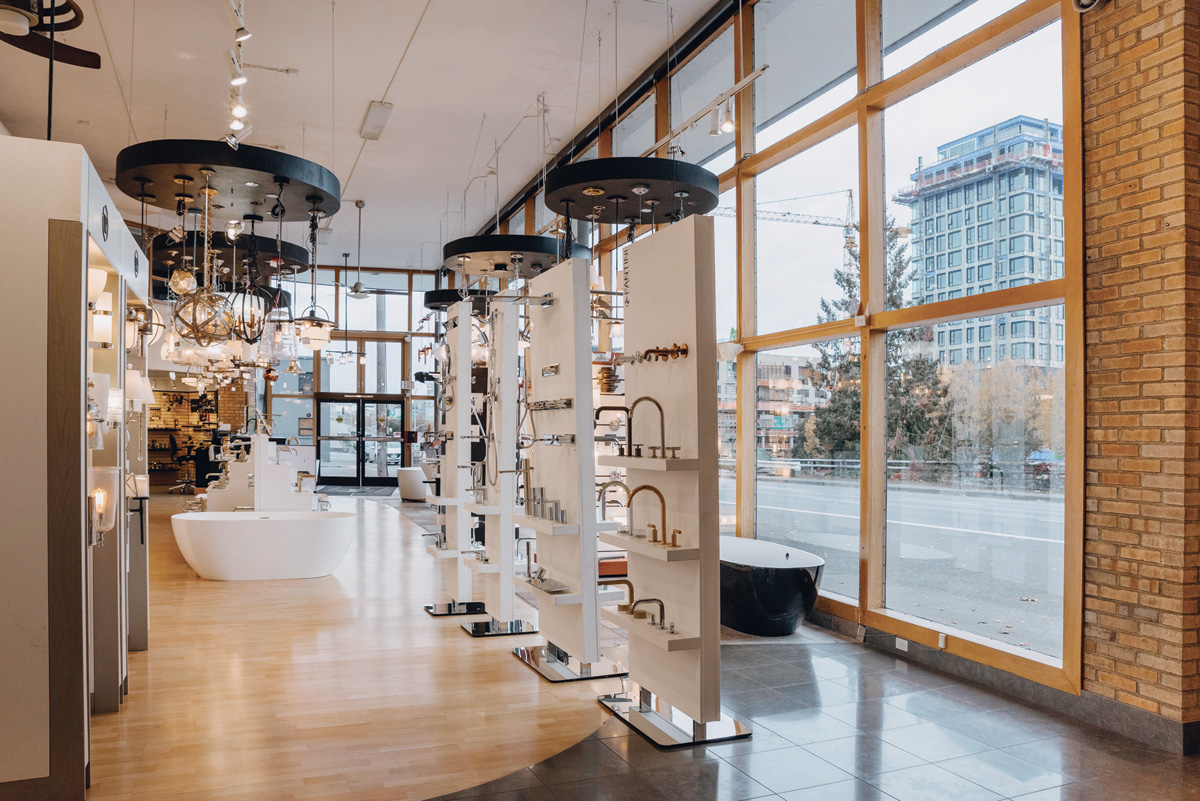
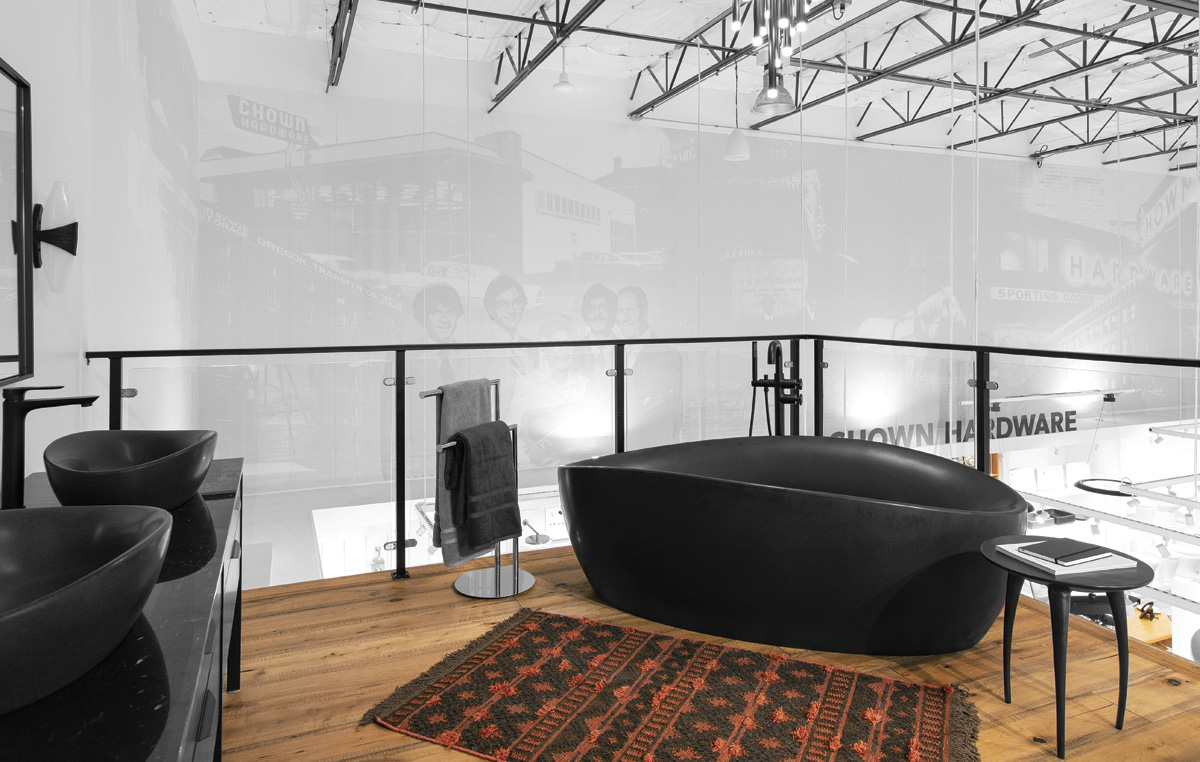
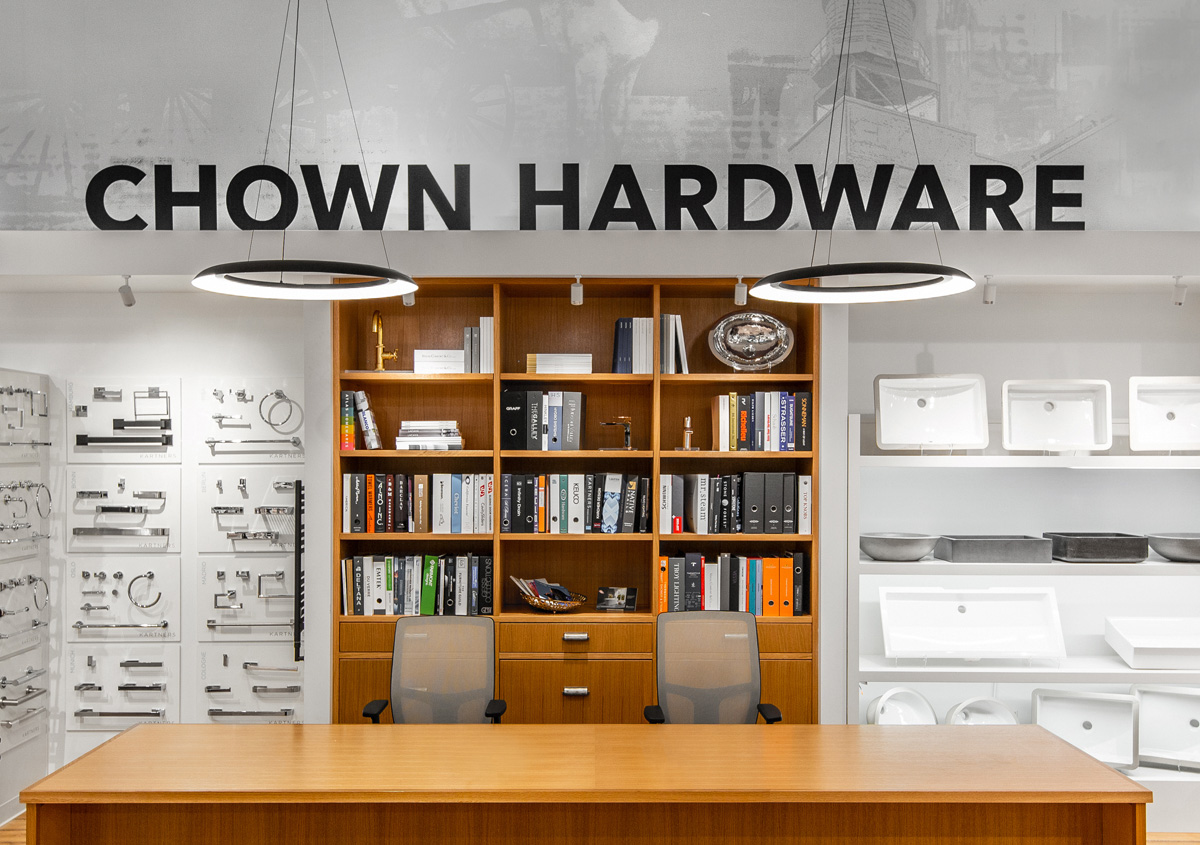
First up is Chown Hardware, an independent market leader that not only has withstood the test of time, but also continues to innovate at its showrooms in Portland, OR as well as Seattle and Bellevue, WA. The company opened its doors in 1879, when Francis Chown immigrated from Kingston, Ontario, to open a hardware emporium in Portland. Initially, it was a typical hardware store of the era, selling saddles, tools, implements and even builder hardware and locks – products that have remained part of the Chown DNA for 146 years. In the 1920s and 1930s, the store expanded its range to include paint and sporting goods along with hunting and fishing licenses. Chown was also quick to adopt new products like washing machines and radios as they first hit the market, continuing a tradition of pioneering new products to better serve their clientele that continues to the present day.
The transformation of Chown into a recognized leader of decorative plumbing and hardware in the Pacific Northwest started in the mid-1960s. Inspired by their European trips, Eleanor and Frank Chown decided to import and sell decorative hardware, antiques and figurines. By the mid-1970s, the business grew to four showrooms and gift shops in shopping malls throughout Portland. Meanwhile, Chown continued to operate a traditional hardware business selling tools and machinery in addition to locks and architectural hardware. That focus changed with the arrival of big box stores around 1999. Chown pivoted again, eliminating its traditional hardware offerings to focus exclusively on decorative plumbing and hardware for residential and architectural hardware for commercial clients.
Catering to both commercial and residential clients insulated Chown from the worst effects of economic swings, as typically when residential markets fall, commercial markets rise and vice versa, related former CEO David Chown. He added that diversifying its market focus has allowed Chown to spread risk and keep the company healthy even during the most difficult times.
Humility also is woven into the fabric of Chown’s corporate culture. Current company President Nathanael Chown explained that “our pride won’t carry us in the wrong direction. Our focus is to improve our business and brand awareness in our markets.”
Chown continues to lead by reinventing the way it goes to market. Currently, this involves investing in new technologies that provide Chown customers with a better buying experience. Chown is updating its point of sale and project management software, integrating AI into its operations while concurrently upgrading its ERP system.
Leveraging its history and experience also play significant roles in keeping Chown ahead of its competitors. “We have more history and experience than anyone else,” claims Nathanael Chown, “which enables us to provide a level and scope of service that our competitors cannot match.” That level of service involves serving as an extension of the client’s team and leveraging its knowledge of the A&D communities’ buying patterns. “We invest considerable time and intellectual capital specifying a project that may not come to fruition for 12 to 18 months. Rarely do we lose a contract because we have the relationships and expertise that saves our designers time, money and frustration,” he stated, adding, “We constantly create value by ordering the right products, ensuring that doors are drilled and installed properly and troubleshooting problems when they occur.”
Another key to Chown’s success is the ability to attract and retain talent by providing a culture and environment that its team members desire from their workplace. Newcomers are mentored by seasoned professionals and participate in a 10-step onboarding program that begins with participating in DPHA University and other industry-developed sales and product knowledge training programs. Chown also identifies and documents its best practices that has made its training program more robust. The company is constantly creating new training modules as processes and systems are improved. Every team member can take advantage of an extensive library offering guidance and how-to instruction for specific processes and tasks.
Chown sees a bright future ahead as the fifth generation of the family takes the reigns, bringing new innovative ideas to help create even more compelling customer experiences. Nathanael Chown explains, “You can’t capture the experience of soaking in a combination jetted/air tub or the benefits of our wellness therapy products in a video. In the next five years, we envision creating a showroom that is not focused exclusively on selling products, but instead providing experiential opportunities for customers to actually use products in a Chown-operated day spa.”
The Chowns also believe that their biggest threat is consolidation and the biggest consolidator of them all is the online presence that dictates pricing structures. That’s why Chown is developing strategies that enable customers to experience products remotely to communicate value without compromising its reputation.
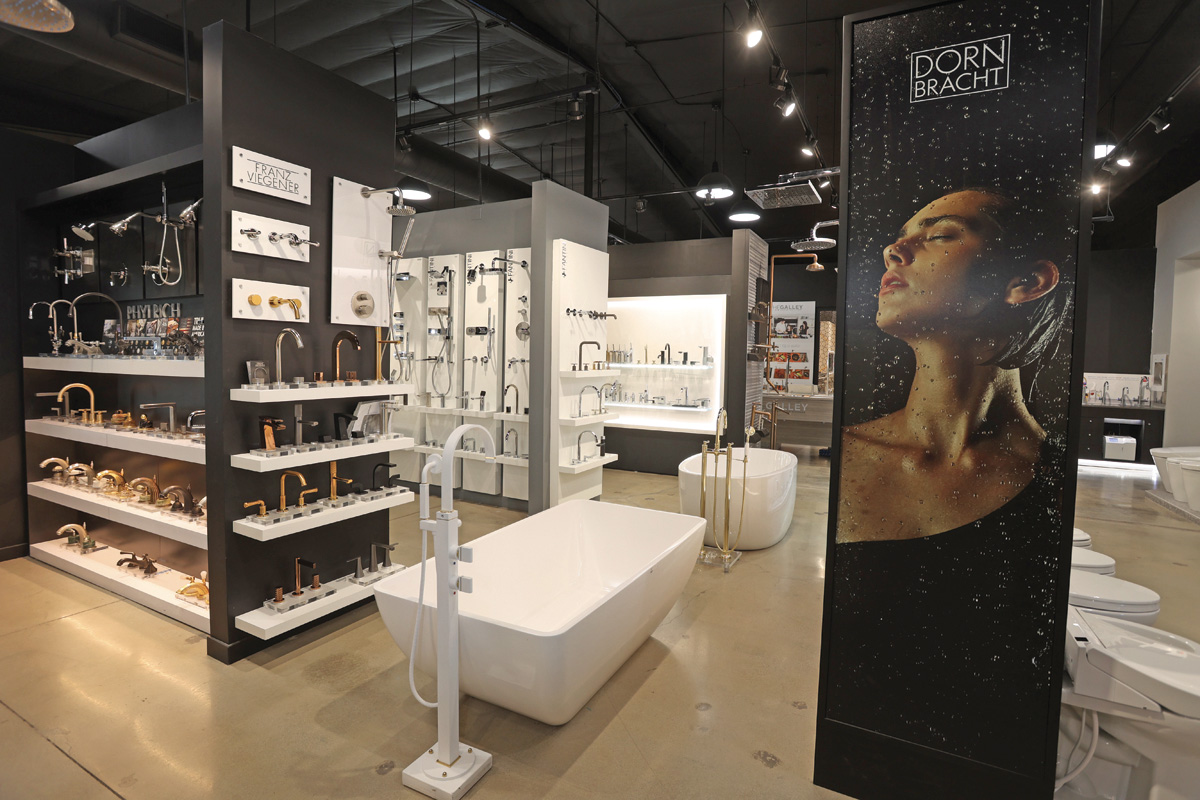
Reinvention to Stay Ahead
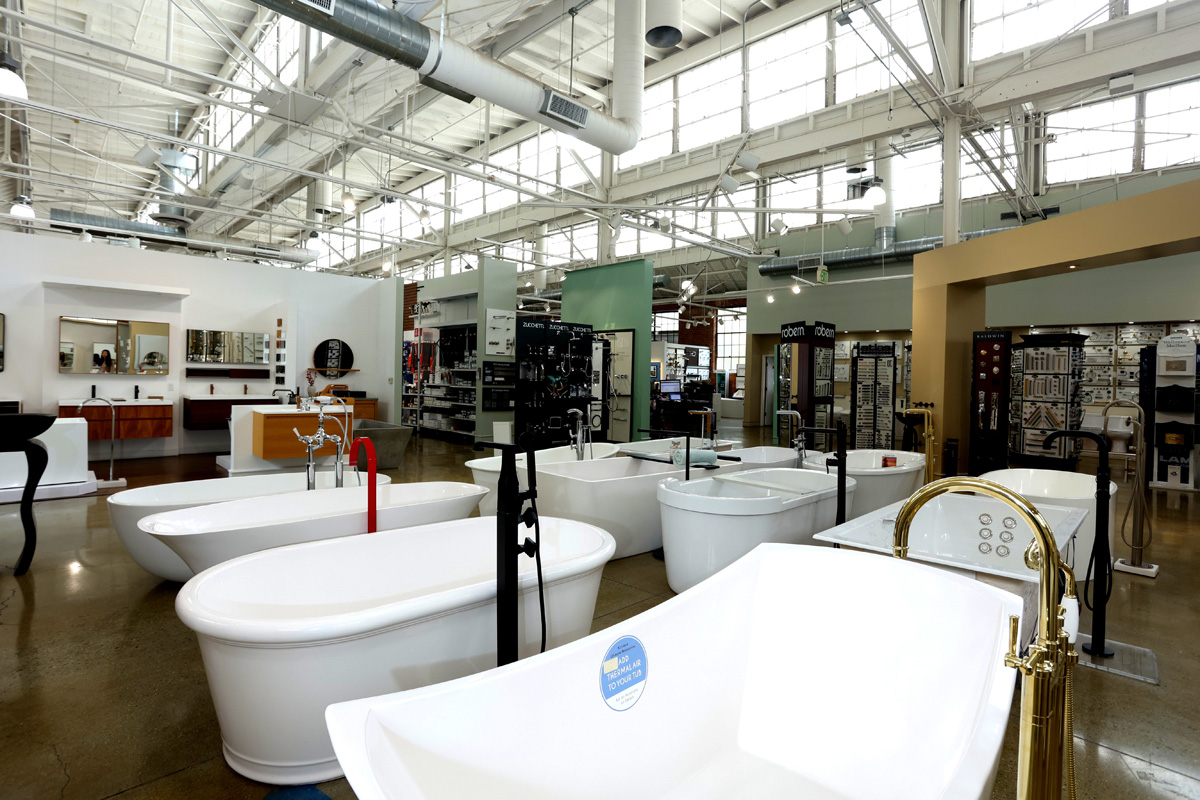
When Walt Diamond and Lou Snyder established their humble scrap metal business in 1949, Los Angeles was a city of just 2 million people, the Dodgers still called Brooklyn home, and the median house price was a mere $8,500. During the ensuing 75+ years, the company has constantly reinvented itself to respond to changing consumer demands, economic shifts and market dynamics.
Current company President Russ Diamond relates that Snyder Diamond pivots every four to six years, something that it has done from the very beginning. Change may be a constant for Snyder Diamond, but some things remain steadfast, including a laser focus on building relationships with the design community, creating new and compelling customer experiences and pioneering unique, innovative and cutting-edge products. Snyder Diamond’s many claims to fame include being the first to introduce Viking, Dornbracht, Gessi and Fantini to the U.S. The company’s pioneering spirit is embodied in its tagline, “always be first with what’s next.”
The pioneering of new products and applications began in the late 1950s when Walt Diamond recognized untapped potential in decorative plumbing products, introducing custom- plated fixtures in bronze, gold and silver. The company made another industry-first by creating a model bathroom at the Decorator Show – a revolutionary concept at a time when displays featured only bedrooms and living rooms. This success prompted Snyder Diamond to add appliances and kitchens to its lineup while continuing to push the product envelope, becoming one of the earliest distributors of Toto, Hansgrohe, Americh and many other brands.
Russ Diamond relates that one ingredient of his company’s secret sauce is to be very passionate about the business. “We try to instill our passion in our team as best we can, and we do a lot of outreach into the design community,” he comments.
Diversification is another key ingredient to Snyder Diamond’s success. The showrooms that once depended heavily on retail traffic have shifted their focus to the design community and the trades. Diamond explains, “We have serviced four generations of families, but a number of years ago I recognized that we can’t continue to solely depend on the retail consumer because that would require us to get into daily price battles with big box retailers and previously independent showrooms that have been acquired by larger entities. That would not work for us, so we focused our attention on the design community and trade in addition to continuing to serve retail customers who enter our showrooms.”
Product mix and project type are other areas where Snyder Diamond diversified its operations. Showrooms feature decorative plumbing and door and cabinet hardware, high-end appliances and kitchen, bath and outdoor spaces. The company also is active in the multi-family arena, sending dedicated business development team members to call on designers, architects and developers.
Diamond’s focus on the design community has help avoid a price race to the bottom. For his trade customers, service matters more than saving the last dime. The client wants to be assured that their project is going to be serviced and that showrooms will stand behind their products.
Support of the design community customer has been integral to building the Snyder Diamond brand. According to Chief Marketing Officer Matt Wold, the company has also adopted a digital-first marketing strategy. Wold leverages content marketing and data analytics to reach a much broader audience and foster more meaningful engagement through various touchpoints, achieving greater reach and impact than past marketing efforts.
Event marketing has become another distinctive competency that differentiates Snyder Diamond from many of its competitors. The company regularly takes designer clients on factory tours and to trade fairs such as Cersaie, Salone del Mobile Milano, Modernism and ISH. Those efforts cement relationships, build trust and demonstrate to Snyder Diamond’s designers its commitment to keeping its fingers on the pulse of industry and design trends, ensuring they are at the forefront of what’s next.
Company Focus Evolves Over Time
In 1889, Walter Thomas Weaver purchased a hardware business in the Georgetown section of Washington, DC where it remains today. Like Chown, W. T. Weaver & Sons originally focused on hardware. Over time, the business evolved from a traditional hardware store to a market-leading decorative plumbing and hardware showroom. The transition began in the 1960s when James Bryce Weaver established relationships with Sheryl Wagner, P.E. Guerin and Pfanstiel among other first-to-market brands. The hardware store was transformed to showcase these products in a section dubbed Bryce’s Brass Corner.
In 1963, the building burned to the ground. The rebuild allowed Weaver to expand and reconfigure its space to include a decorator department that showcased decorative plumbing and hardware in about a third of the first floor that shared space with power tools, rough hardware, finishing hardware, locks and cabinet hardware. The upper floor of the building was dedicated to commercial architectural hardware that provided products for a vast range of Washington, DC-area projects that included Dulles International Airport, Blair House, the White House, the National Institutes of Health and Ford’s Theater, among many others.
Weaver is another product pioneer, being among the first Baldwin Hardware distributors and expanding its decorative lines to introduce Rocky Mountain Hardware, Classic Brass and Omnia to the nation’s capital. These introductions help further cement relationships with the design trades and retail customers and create competitive advantages that ring true to the present day.
The company also used its diversification to help weather economic storms by serving both government and private-
sector clients for both residential and commercial projects. A cornerstone of their business strategy has been a commitment to relationship selling. Mike Weaver explains, “Almost everything we do is based on relationships. Whether it’s commercial, retail or custom hardware, each segment has its similarities yet demands a unique approach. Our trade customers focus on our ability to provide quality products, delivered on time and at competitive prices. In contrast, our retail customers often require more guidance and education, presenting us with a different kind of challenge and opportunity.”
The arrival of the big-box stores required Weaver to pivot again. A decision was made to abandon commodity products, create a studio showroom on the second floor of its building for its decorative lines and lease the first floor to a tenant that has been there for 30 years and counting. Bryce Weaver explains that remaining in the historic Georgetown neighborhood was extremely important to the Weaver brand and moving to a second floor did not deter walk-in traffic.
Another significant transformation occurred in 2015 when Weaver decided to abandon its commercial hardware business to focus exclusively on decorative products for retail and trade customers.
What links Weaver, Chown and Snyder Diamond together isn’t just their longevity but their adaptability and willingness to reinvent themselves when market conditions demand it. As the decorative plumbing and hardware industry continues to evolve, these independent showrooms demonstrate that survival isn’t just about being the fittest – it’s about being the most adaptable. Their stories affirm that, in an age of consolidation and digital disruption, there remains not just a place but a vital need for independent showrooms that combine a pioneering spirit and deep product knowledge with meaningful relationships, and the agility to pivot when necessary. For the next generation of showroom leaders, these business leaders have already mapped the path forward.
Tom Cohn serves as the exec. v.p. of the Decorative Plumbing & Hardware Association, North America’s largest trade association advancing the interests of decorative plumbing and hardware showrooms, manufacturers and representative agencies. Named a 2020 KBDN Innovator, Cohn also is president of Cohn Communications, a multidisciplinary marketing and association and buying group management firm headquartered in Washington, DC.