
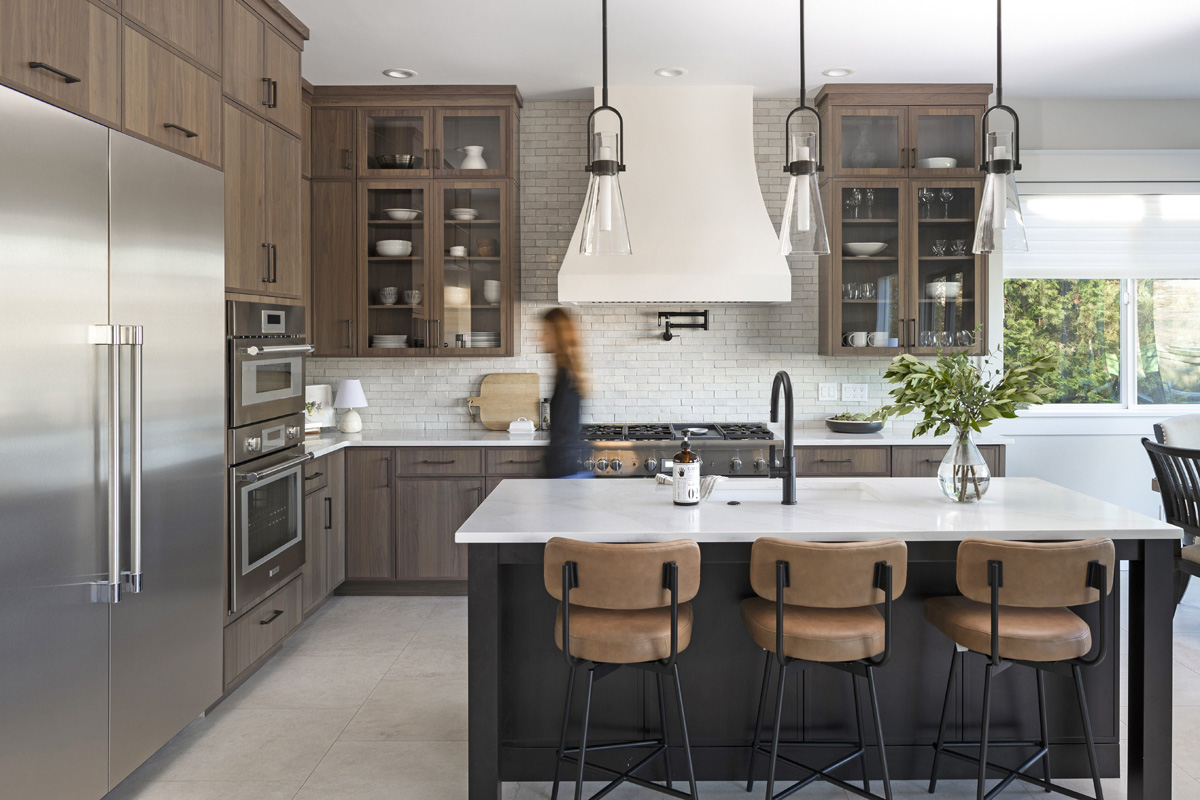
Organized. Hidden. Easy Access. Convenient. Designers have likely heard all of these words mentioned during conversations with their clients with regard to storage in their kitchens. Thankfully, a plethora of storage solutions makes all of them possible, even when they can be in direct competition with one another. For instance, finding ways to keep items hidden yet easily accessible can be a challenge for everything from utensils used every day to cherished dishware used seasonally.
As the heart of the home, the kitchen is also routinely asked to do more than just prep and cook food. It is now the place where people often pay bills and charge electronics…both of which come with unique storage requirements, which left unaddressed can lead to kitchen chaos.
This month, KBDN asked designers to share thoughts and projects that highlight some of their favorite storage solutions.
Thoughtful Storage
Kitchens are asked to do a lot these days beyond their historic task of serving as a place to cook.
“They are now multi-tasking spaces, used for working from home, doing homework or entertaining, so there’s a push for hidden storage that keeps visual clutter to a minimum,” says Ashley Neff-Hinkle, founder of Neff Designs located in the Columbia River Gorge in the Pacific Northwest.
As such, the designer encourages her clients to consider toe-kick drawers, pullout spice racks, trash/recycle pullouts, charging drawers and cabinetry equipped with slim vertical dividers for organizing baking sheets, muffin tins and cutting boards. Another favorite storage solution is a tall pantry organizer with swing-out doors and adjustable shelves.
“Pantry cabinets can sometimes be so deep that things get lost,” she relates. “But I love ones where the doors ‘unfold’ to make everything accessible.”
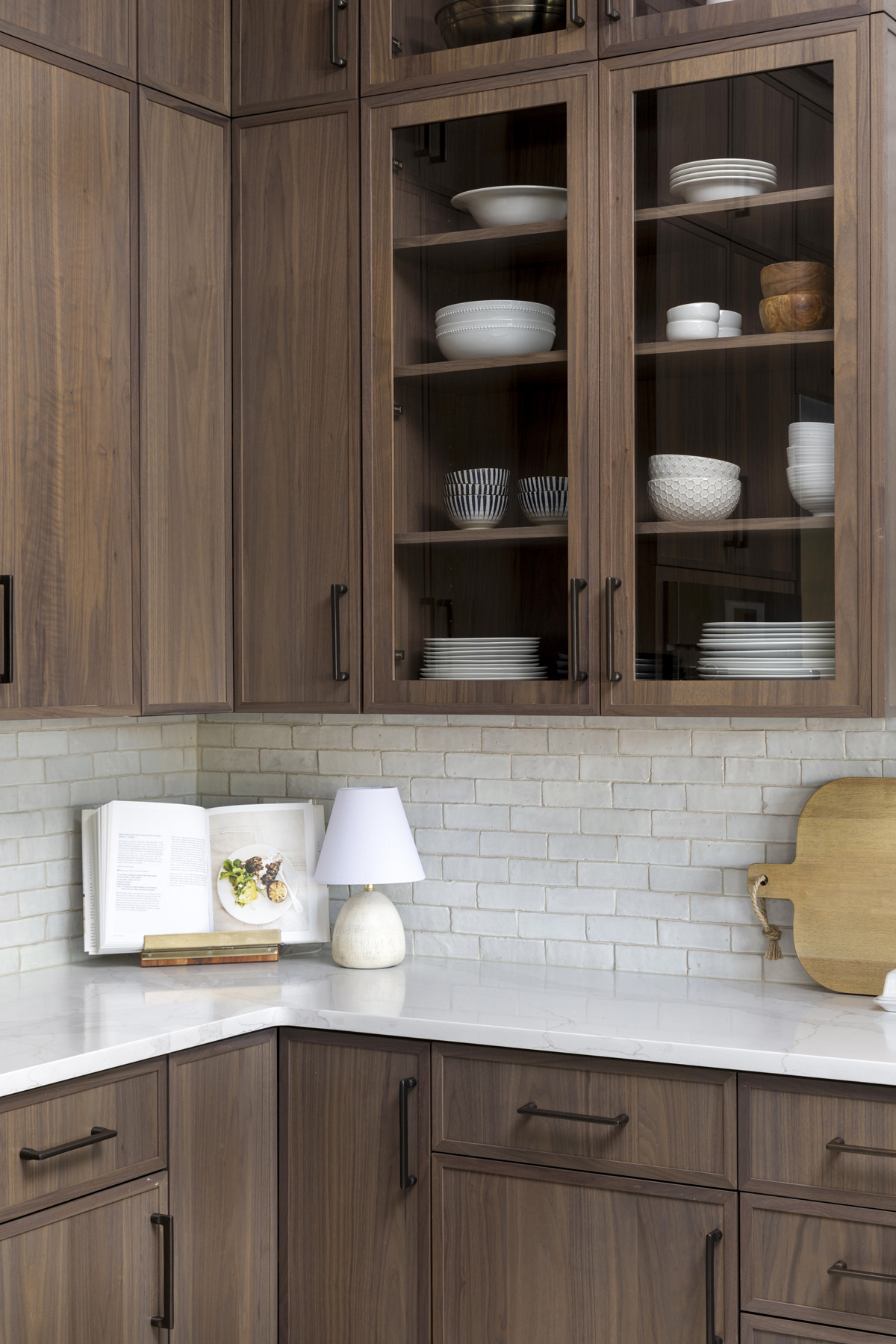
Ashley Neff-Hinkle’s clients wanted to brighten their kitchen so she included glass doors in several of the wall cabinets as a way to lighten the space and create interest.
Several of these favorites were included in a recent kitchen renovation where her clients wanted to brighten the kitchen and move beyond its outdated style. As part of that mission, they also wanted a streamlined design that maximized storage and cleared the countertops of clutter, especially small appliances…all while striking a balance between modern and transitional aesthetics.
Storage solutions include a trash/recycle pullout, a plethora of shallow drawers near the range for spices and utensils, vertical dividers for cookie sheets and cutting boards, and cabinetry that is large enough to keep those small appliances close at hand, yet hidden from view. Neff-Hinkle also extended the cabinetry to the ceiling to give her clients additional storage capacity that comes in handy for less frequently used items.
“Taking the cabinetry to the ceiling gave them a foot and a half more space that wasn’t utilized before,” she says, noting a collaboration with Allen’s Fine Woodworking. “That upper level of cabinets is a great place to store things you still want in the kitchen, without taking up valuable ‘everyday’ real estate.”
Since her clients also wanted to brighten the kitchen, Neff-Hinkle included glass doors in several of the wall cabinets.
“The previous kitchen was very dark,” she notes. “The glass doors help to lighten the space, while creating some interest.”
While these clients kept wall cabinetry as part of their overall storage solution, some of Neff-Hinkle’s clients are eliminating upper cabinets and shelves and are focusing on base cabinetry drawers because they are easier to access and are more ergonomic. Deep versions are especially useful for storing pots, plates and pantry items. Homeowners now also prioritize large, walk-in or butler-style pantries, often with dedicated zones for dry goods, small appliances and even prep areas.
A plethora of deep drawers and a walk-in pantry were the main storage solutions for another recent kitchen project, this time a new-construction home where Neff-Hinkle’s clients minimized upper cabinets to preserve their mountain view.
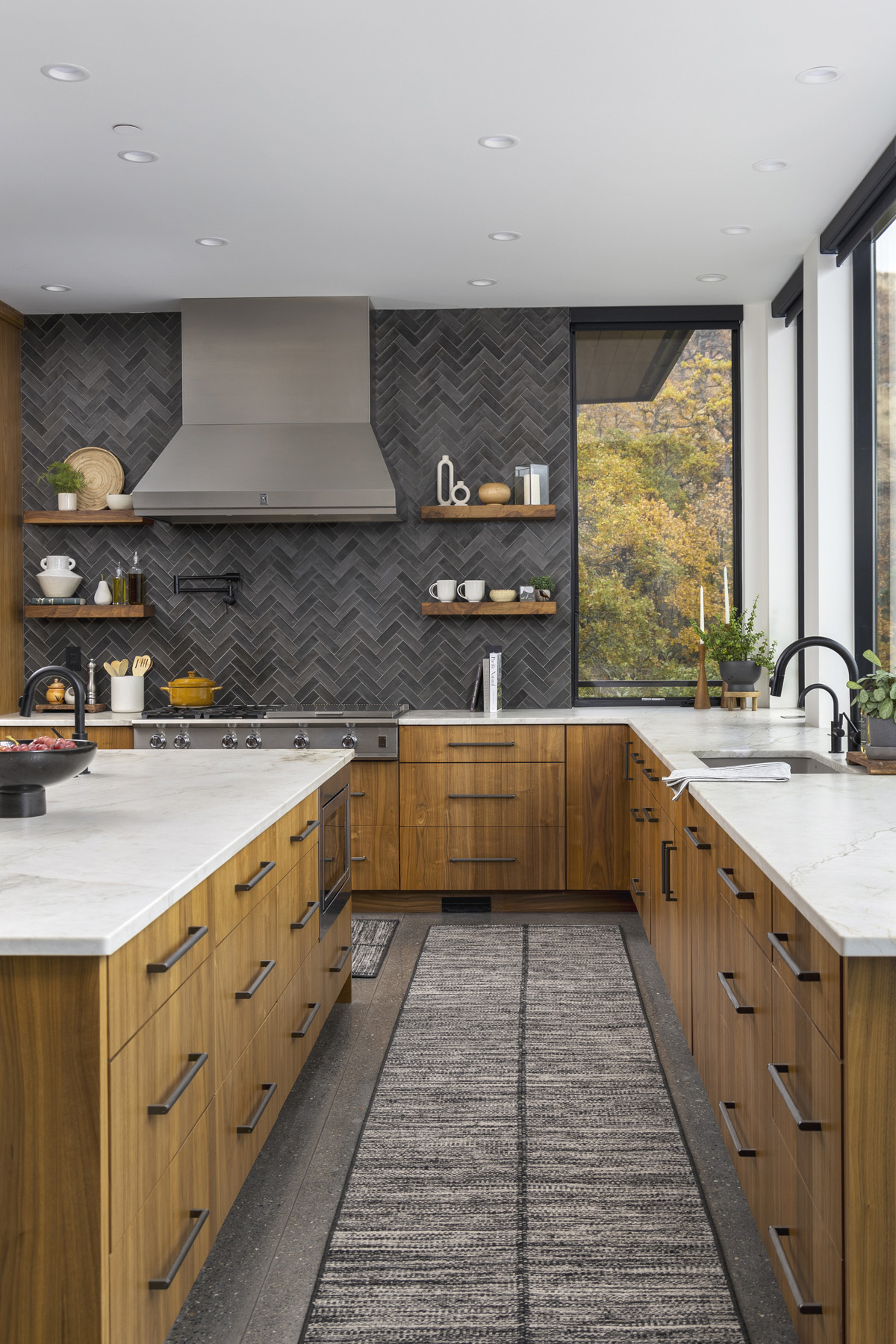
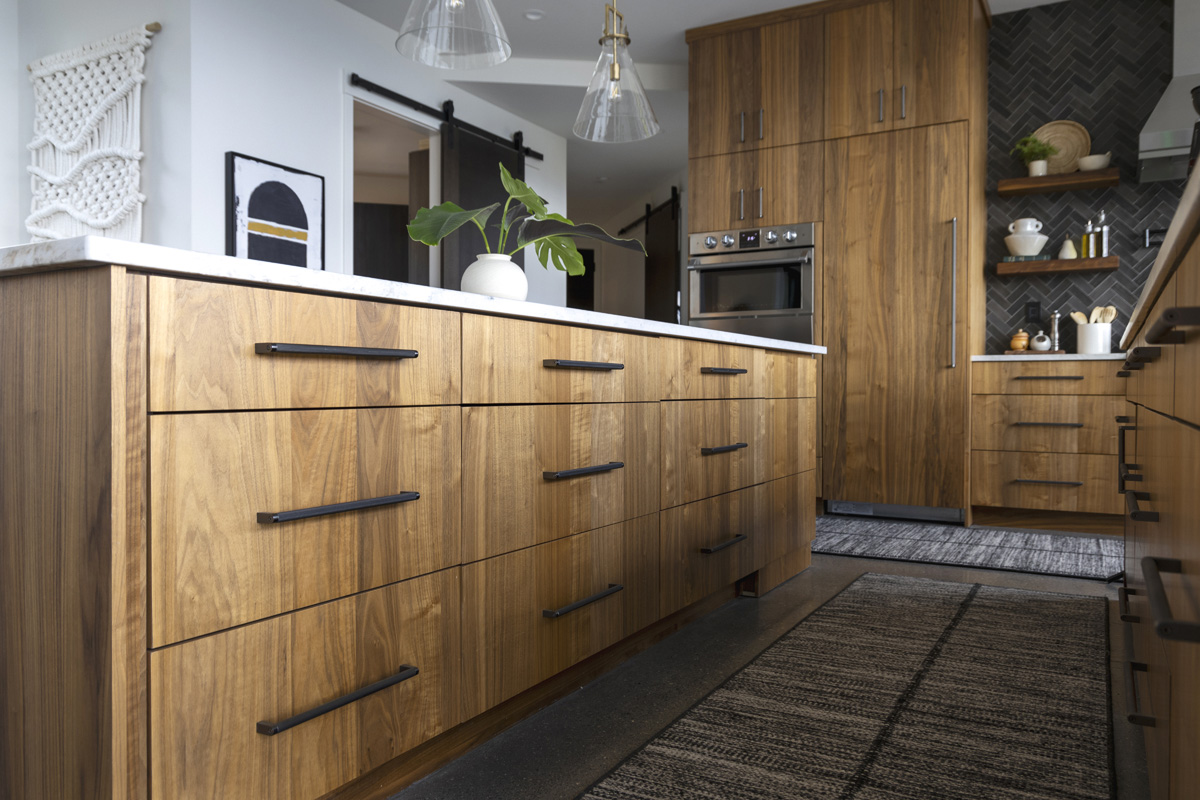
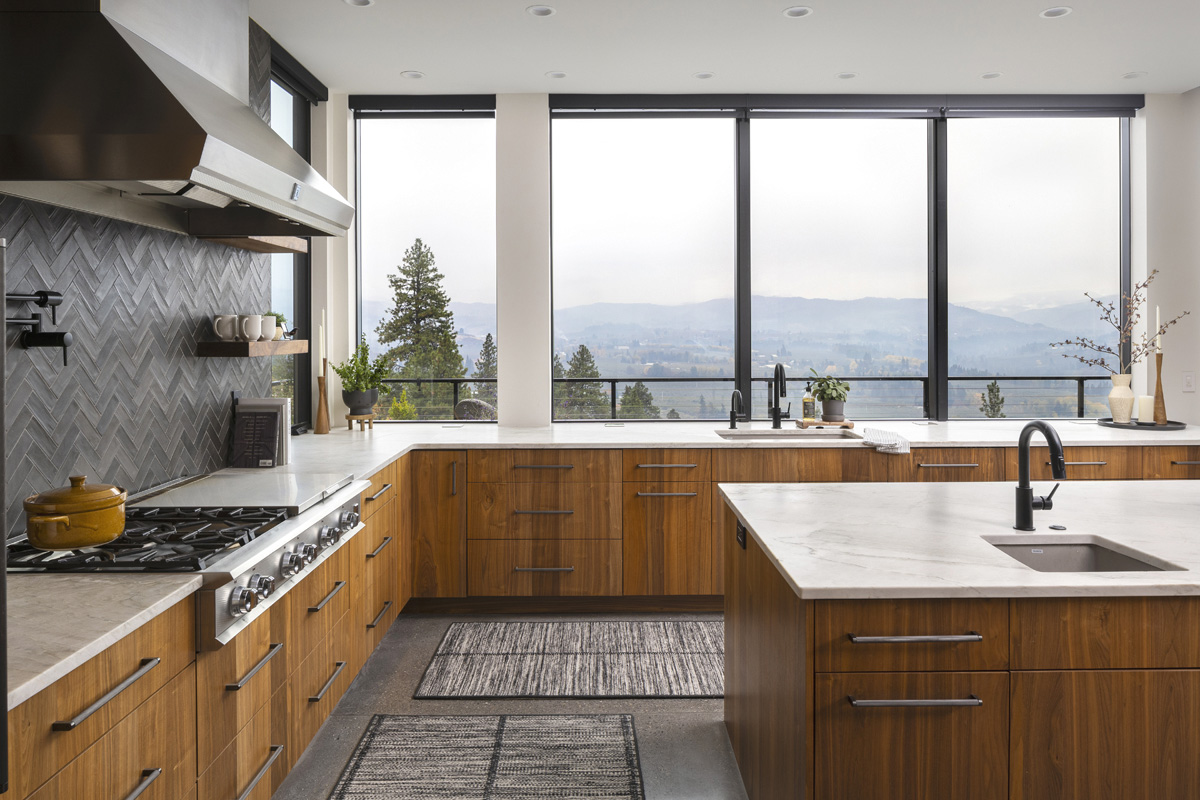
These homeowners wanted to minimize upper cabinets and shelves to preserve their mountain view. To ensure they had adequate storage, Ashley Neff-Hinkle, in collaboration with Allen’s Fine Woodworking and Gorge Design Build, incorporated a plethora of base cabinetry drawers, including those in multiple islands. Additionally, a walk-in pantry alleviates in-kitchen storage pressure by offering a place for small appliances and dry goods.
“This kitchen has enough square footage that we could include more base cabinets, including two islands, and eliminate most of the upper cabinets,” she says, noting a collaboration with Allen’s Fine Woodworking and Gorge Design Build. “There are a few wall cabinets around the refrigerator and double ovens, and we included some floating shelves around the range hood, but the kitchen is very open with a lot of windows.”
A butler’s pantry also alleviates in-kitchen storage pressure by offering a place for small appliances and dry goods.
“Thoughtful storage keeps a kitchen free of clutter to streamline the space,” she relates. “It helps the kitchen work like an oiled machine. I’m ever so grateful for my deep drawers, cutting board storage, trash pullout and spice pullout.
“Kitchens are the workhorse of the house,” she continues. “They need to be able to function at a high level while also being a showpiece. That only really works when storage solutions are thoughtfully mapped out based on space and personal needs.”
Greater Customization
Nancy Jacobson appreciates that cabinet manufacturers and after-market suppliers continue to introduce accessories that allow her to be more creative when designing storage solutions for her clients.
“For a long time we’ve had the attitude that base cabinets need some kind of accessory,” says the founder/president of Kitchen Design Partners in Northbrook, IL. “But more recently we’ve seen a trend toward greater customization, even without using fully custom cabinets.
“People want to express their individuality, so whatever their level of investment, we work very hard to customize their kitchen…giving them accessories to make their kitchen as functional, and beautiful, as possible…without going so far as to lose flexibility and usefulness,” she continues. “We don’t want a kitchen to be so specifically designed for a moment in time that it doesn’t have the ability to accommodate items that are added in the future…for example, designing storage for only five pots and pans, without considering that the homeowner might add three more later.”
Jacobson especially appreciates customization as it applies to drawers, which is her favorite storage solution. She often includes accessories for their contents such as spices, knives, utensils, etc. Including outlets gives clients a place to charge electronics out of sight.
“Kitchens used to have desks,” she relates. “But now they are no longer useful. I can’t tell you how many kitchens I’ve designed where we’ve taken out a five-foot desk and replaced it with kitchen storage. But many people still want a laptop in the kitchen. We also like to include a place for office supplies, tape, scissors, etc.”
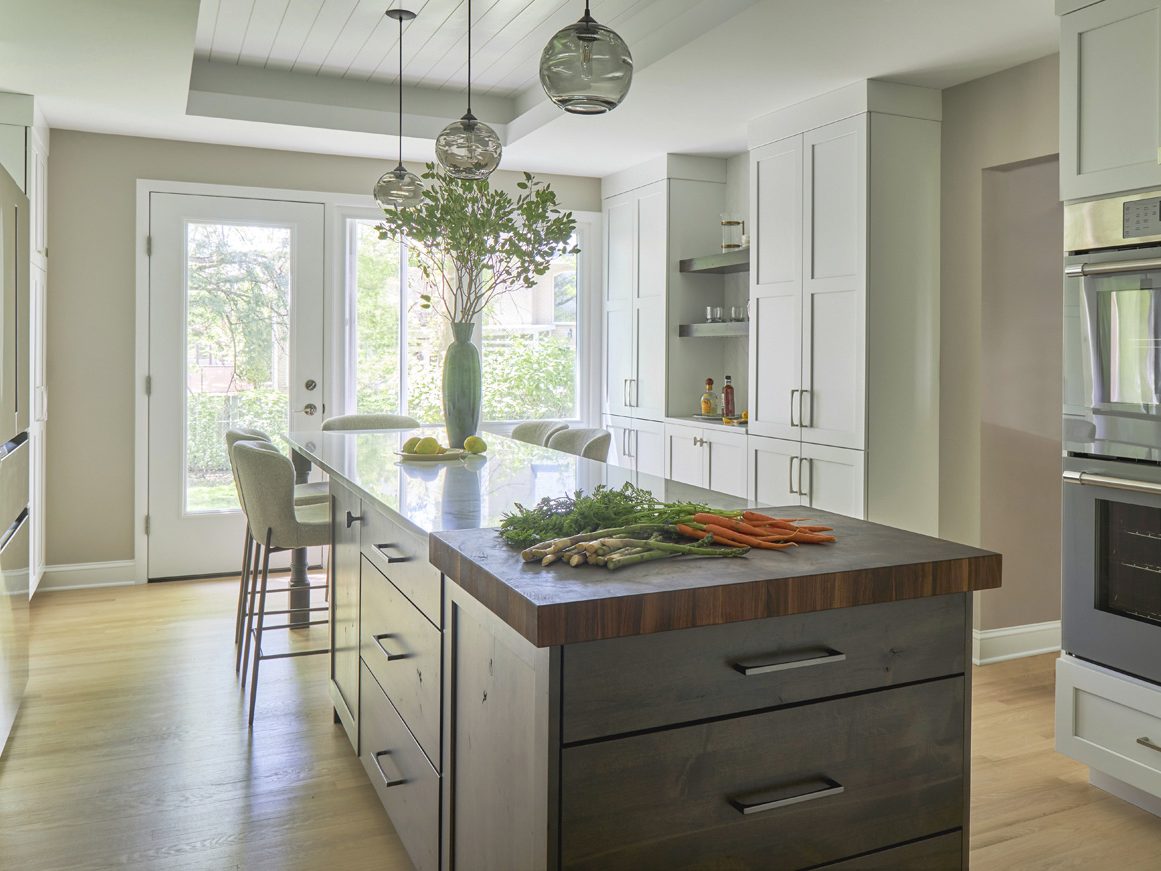
Having the right storage in the right location creates an efficient work flow. In this kitchen, Nancy Jacobson included a bank of drawers beneath the butcher block countertop, and close to the range, so her clients can store their knives and cooking utensils near their intended point of use. Photos: Mike Kaskel
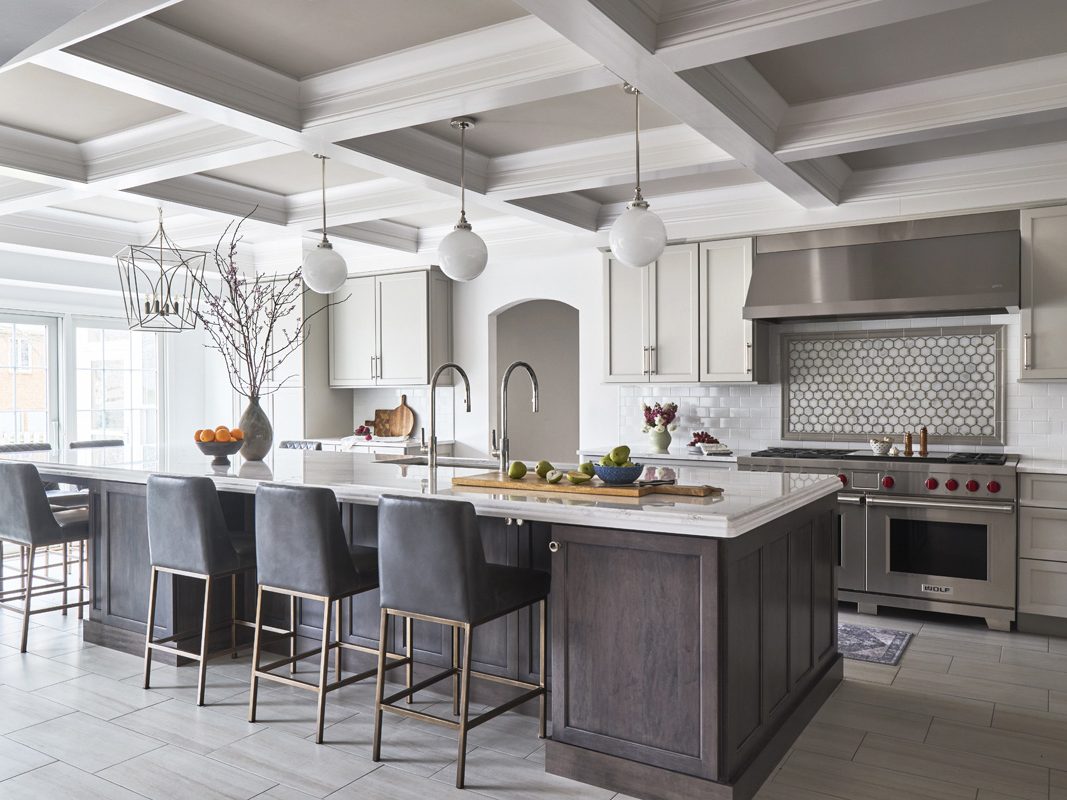
Nancy Jacobson’s favorite kitchen storage solution is drawers, which are plentiful in this kitchen. As well, she also likes to utilize pullout cabinets, especially for storing cutting boards, trash/recycling bins, utensils and knives. They are particularly valuable for narrow spaces that might not otherwise get used.
The designer even finds some clients prefer to store their plates in drawers.
“It became especially popular when people moved away from wall cabinets,” she says. “Even though that’s tapered a little bit and people are back to doing wall cabinets, I find that they like to put small, lightweight items like glasses, coffee mugs, small bowls and small appliances in a wall cabinet and heavier items like plates in a base cabinet drawer. It’s easier to take them out of a drawer than it is to reach up to a wall cabinet, especially for older homeowners, shorter homeowners or those who have difficulties reaching upwards.
“I love using drawers because they are so useful,” she adds. “I prefer them over cabinets with doors because with drawers there is just one motion…pull out the drawer and get what you need. They are also based on a concept where everything comes out to the homeowner. That’s why I prefer something like a LeMans insert to an old-style lazy Susan. We really want to make it as easy as possible for our clients so they don’t have to dig through their cabinets to find things.”
Pullout cabinets, which perform similarly to drawers, are also common specifications, especially for storing cutting boards, trash/recycling bins, utensils and knives. They are particularly valuable for narrow spaces that might not otherwise get used.
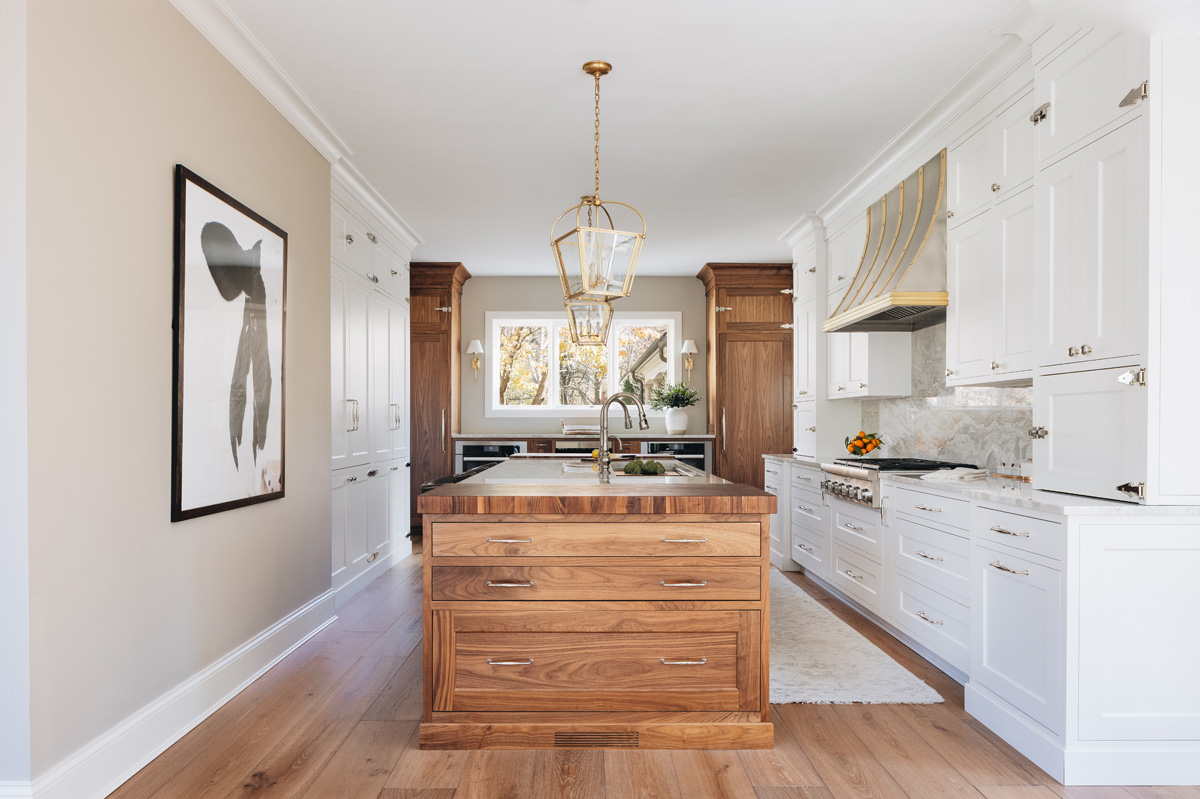
As Nancy Jacobson considers storage, she pays particular attention to the ‘knees to eyes’ area, i.e., the top two drawers of a base cabinet, the bottom shelf of a traditional wall cabinet and the lower levels of an appliance garage or cabinet that extends to the countertop. Photo: Stoffer Photography
As Jacobson considers storage she also pays particular attention to the ‘knees to eyes’ area, i.e., the top two drawers of a base cabinet, the bottom shelf of a traditional wall cabinet and the lower levels of an appliance garage or cabinet that extends to the countertop.
“It’s a concept I learned from Ellen Cheever during one of her training sessions,” she indicates, in reference to the renowned kitchen and bath designer who left an indelible mark on the industry. “The ‘knees to eyes’ area is prime real estate when it comes to a kitchen, and it’s the place where we store the most important things we use.”
Location also plays a role in terms of kitchen flow.
“Having the right storage in the right location creates an efficient flow,” she relates. “For instance, you take vegetables out of the refrigerator and clean them at the sink. If you cut them at the island, it’s really important to have knives readily available in the island. Likewise, you’ll want cooking utensils, such as spatulas and spoons, located near the cooktop. And we often include tray storage in a deep base cabinet near the oven or in a wall cabinet with dividers above a double oven. It’s about designing storage with workflow in mind to enhance the efficiency of a client’s kitchen.”
Taking Inventory
Living on the outskirts of Washington, DC, where a host of celebrities and government dignitaries also reside, Kelly Emerson has ample opportunity to work in generously sized homes that are 8,000, 10,000 and even 15,000 square feet with supersized kitchens and copious amounts of storage capacity. However, the bulk of her work is in more modest confines…colonials and bungalows where kitchens are, at most, 200 square feet. Sometimes they are much smaller.
“We do work in large kitchens where we have enough space to include specialty storage like a dedicated cabinet for a stand mixer,” says the senior designer for Aidan Design in Silver Spring, MD. “But in many kitchens, storage is a bit more limited, and we are counting spice jars and knives to ensure we have solutions to store them.”
These two items alone generate lengthy discussions between the designer and her clients, in large part because of the difficulties associated with accommodating their variations in size. Spice jars aren’t all consistent. Neither are knives.
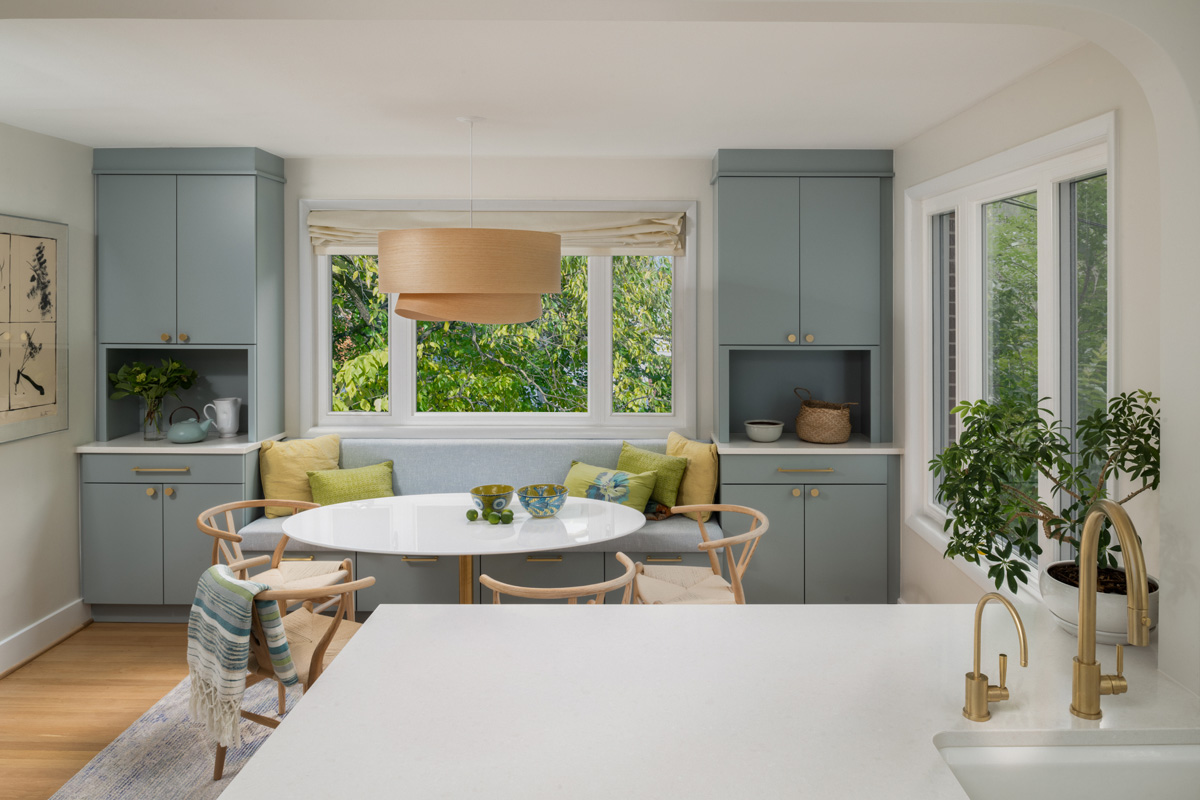
When kitchens are small, Kelly Emerson often looks to adjacent spaces to help ease storage pressure. For this kitchen, which is only about 75 square feet, she designed a tall pantry in the dining room to organize her client’s baking supplies (below). Two additional tall pantries in the dining room are located on each side of a window. A custom bench seat also offers additional storage
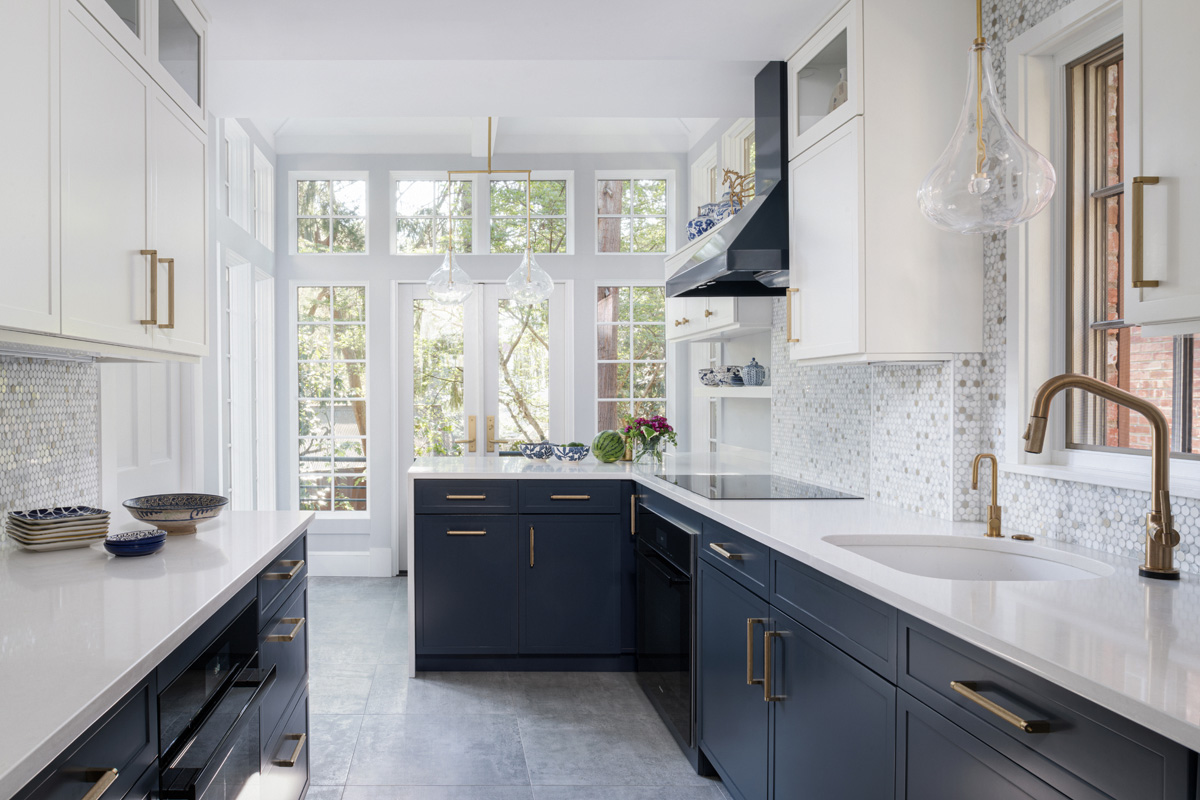
In this kitchen, at about 100 square feet, Kelly Emerson focused on functional and practical storage solutions, such as a LeMans corner unit, a trash/recycle pullout, tray storage and a tall pantry. A bit of additional storage, including for cookbooks, entertaining supplies and decorative items, is included beyond the peninsula.
“Nine times out of ten we’re including angled wood inserts in drawers for small spice jars because they provide an awesome visual,” she relates. “But larger jars, along with similarly used items like oils and vinegars, are often stored in a rack on the back of a wall cabinet door. Another option is a pullout base cabinet.
“And then there are the knives…paring knives, chef’s knives, knives with chunky handles, etc.,” she continues. “We have multiple options here, too. Some people like to store them in drawers, others in a knife block on the countertop. A relatively new option is for them to be stored in pullout base cabinets in canisters with ‘bristles’ that can accommodate knives in a variety of sizes.”
Ultimately, Emerson begins each conversation by taking an inventory of everything her clients need to store. As well, she encourages them to think about how they might expand that inventory down the road.
“We design our kitchens to work for our clients today and for years to come…at least 20 to 25 years,” Emerson relates, “so we encourage them to think beyond today or just a few months from today.”
For her, that means incorporating storage solutions that are flexible and practical, without being too customized. Often, that translates to LeMans units for corners, trash/recycle/compost bins in pullout cabinets and any other accessories that roll out to bring cabinetry contents forward so they are more accessible. As well, open drawers retrofitted with aftermarket dividers aren’t necessarily taboo.
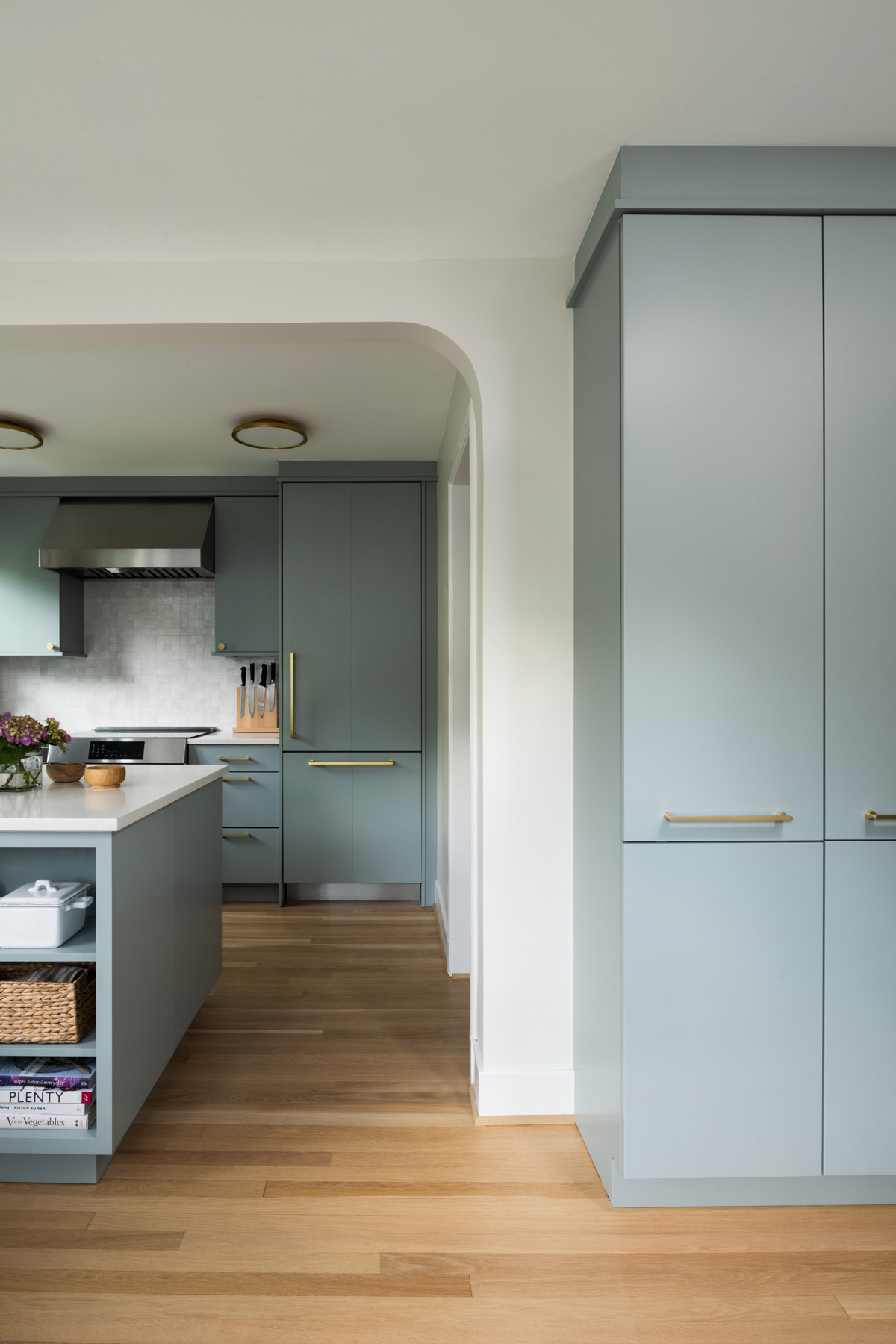
“Sometimes less is more,” she indicates. “Our cabinetry interiors are often maple, and the contractors we work with are very adept at tacking in loose drawer dividers so those interiors look very custom. With extensive lead times that are often required with custom cabinetry, sometimes it can be difficult for our clients to commit to more permanent, custom storage solutions at the time cabinetry is ordered, so considering aftermarket solutions can be a great option.”
When the kitchens she works in are on the smaller side, Emerson also looks to adjacent spaces to help ease storage pressure within a limited-space kitchen.
“We do a lot of work in older homes where kitchens are modest, very utilitarian and tucked away,” she says. “As needs and lifestyles have changed, we look to expand kitchens by opening walls to adjacent spaces, typically dining rooms. This allows us an opportunity to expand the footprint and bring more light into the kitchen. Everyday function is always the focus, but the extra space captured, typically in dining rooms, gives us flexibility to create coffee bars, china pantries and more, all while giving better flow.”
Such was the case in one recent renovation where her client, an avid baker, needed a place to keep related supplies.
“The kitchen is only about 75 square feet,” the designer relates, adding that she knocked down a wall between the kitchen and dining room to make the spaces more open and bright, as well as more communal for the family and for entertaining their guests. “We were able to create baking storage in a tall pantry in the dining room, which is only a handful of steps away.”
Stepping further into the dining room, Emerson included two additional tall pantries, one to each side of a window with a custom bench seat below. One pantry serves as a dedicated coffee/tea station while the other serves as overflow storage for canned goods. As well, the designer included storage in the bench seat.
Upgrading Storage
Christine Ramaekers and her design team at MainStreet Design Build in Birmingham, MI, often remodel upper-middle to high-end homes, many of which were built more than a century ago in the greater Detroit area. Kitchens are often designed to be the heart of those homes that serve everyone from gourmet chefs to large families, all of whom want innovative storage solutions that focus on accessibility and elegance that keep the space uncluttered and beautiful.
“Many of the staple items related to storage have been around for a while, such as rollout trays, dividers, spice racks, etc., so we haven’t really seen many dramatic changes in recent years,” says the CKD/founder and creative director of interior design. “However, what we’re seeing now is a perpetuation of these staple solutions getting better and more dramatic, making storage even more convenient and easier to manage items in the kitchen.”
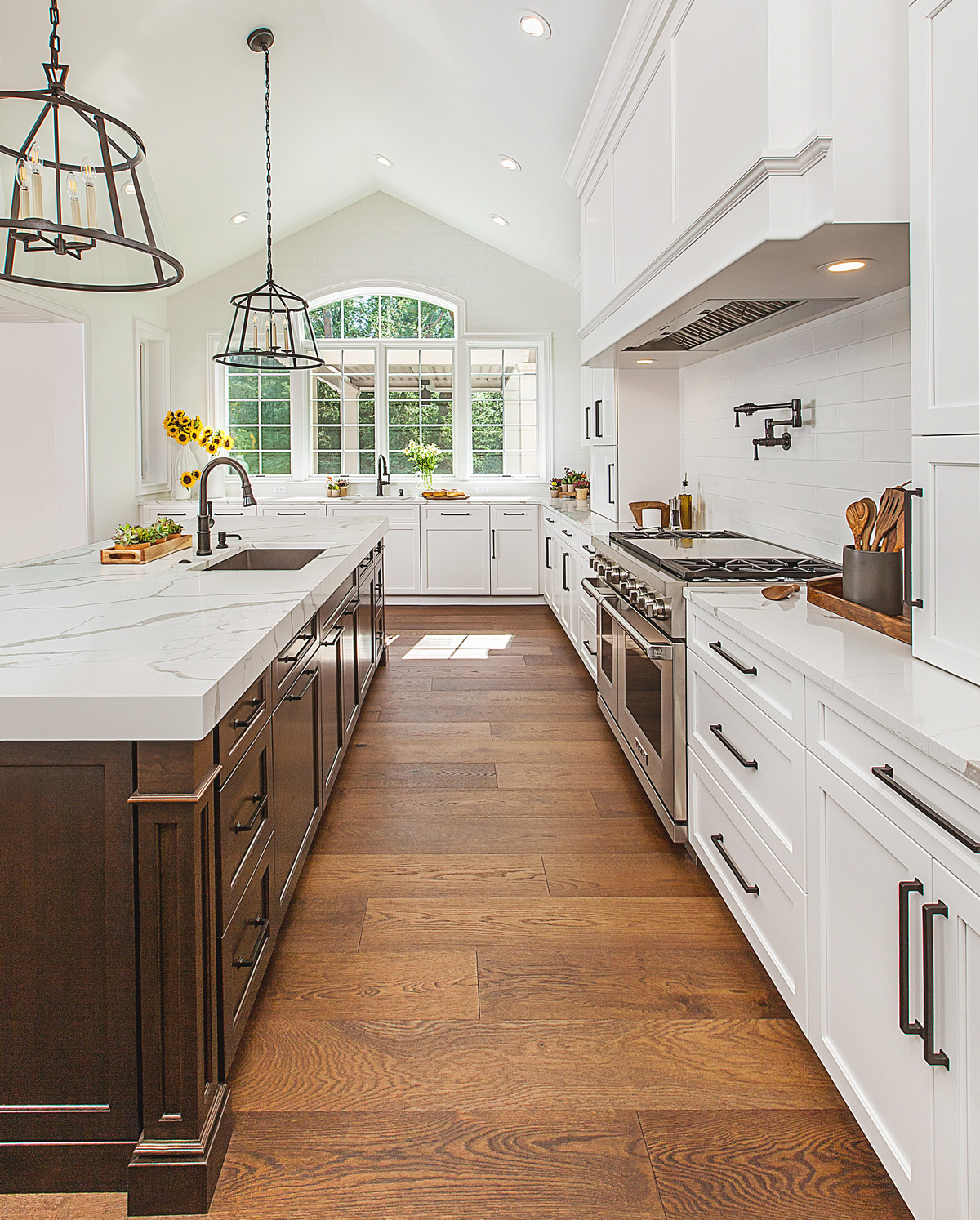
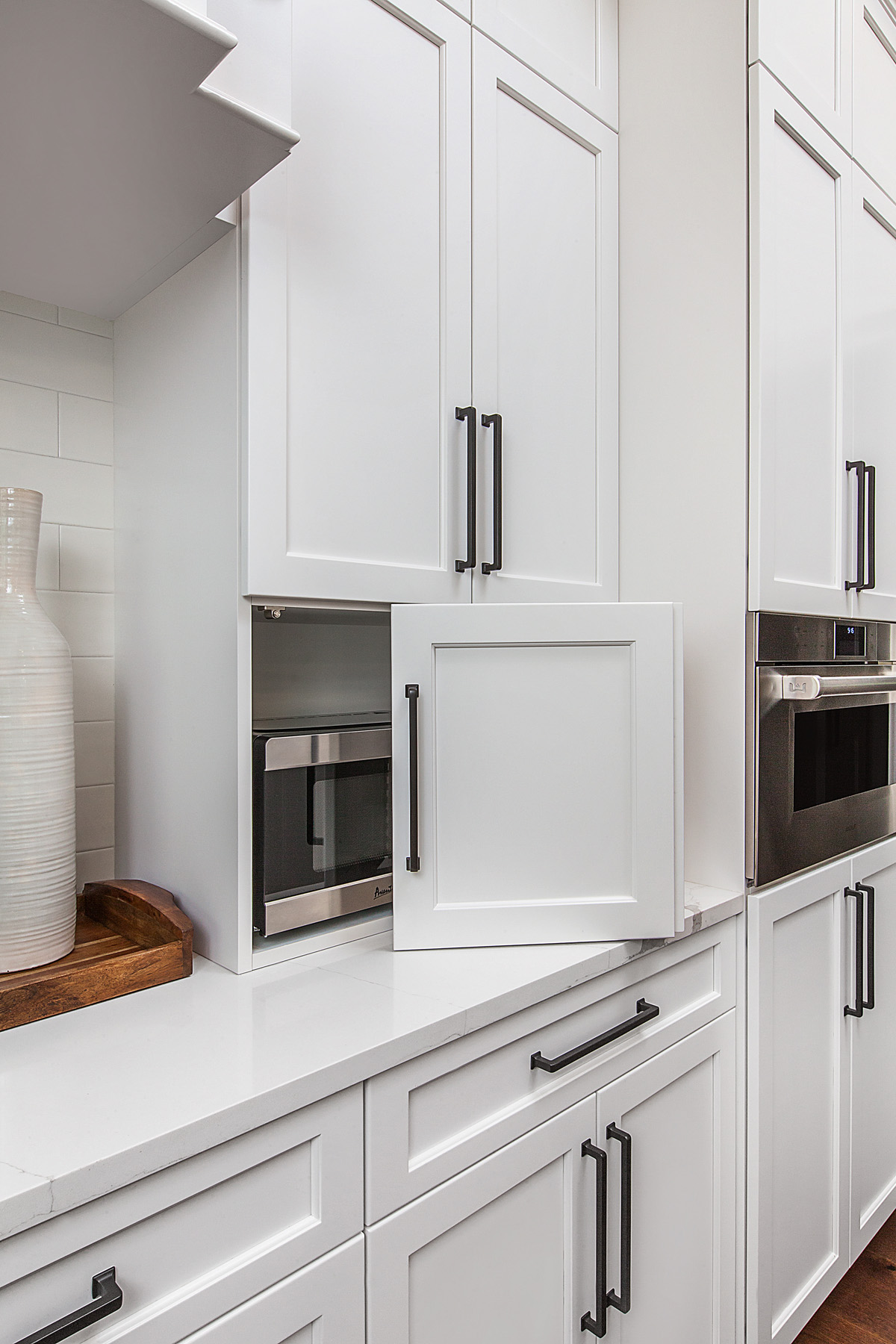
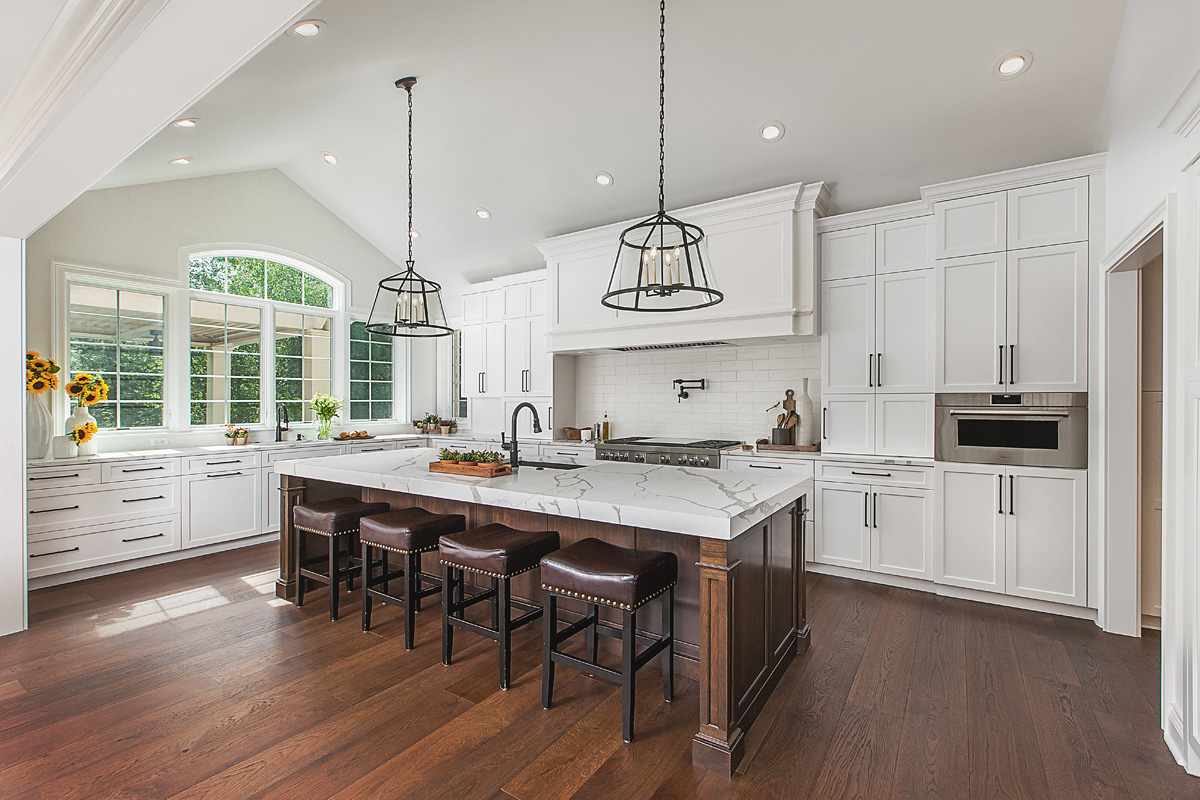
Custom cabinetry provides endless possibilities for innovative storage for Christine Ramaekers’ clients. In this kitchen, that ranges from appliance garages with bi-fold doors to drawers with tray dividers to pullout cabinets for recycling and trash. Photos: Jeff Garland Photography
For instance, not only are trash and recycling bins now fully customized to fit perfectly within a pullout cabinet, the cabinet can also include a custom cubby for holding associated accessories such as garbage bags.
“Custom cabinetry, in general, provides endless possibilities for innovative storage with extra-deep to thinly narrow spaces to accommodate diverse items from large pots and pans to cutting boards and baking sheets,” Ramaekers indicates. “Custom drawers can be turned into home automation hubs with built-in USB and power outlets for charging every type of device. And built-in, below-the-sink storage options are terrific for pullout shelves and trays containing soaps, household cleaning products, plumbing supplies and other unwieldy and toxic items. Above-cabinet shelves, racks and wall units are ideal for rarely used, cumbersome items that are accessible with a hidden ladder or step stool, which can also be integrated into these creative storage spaces…out of the way and out of view.”
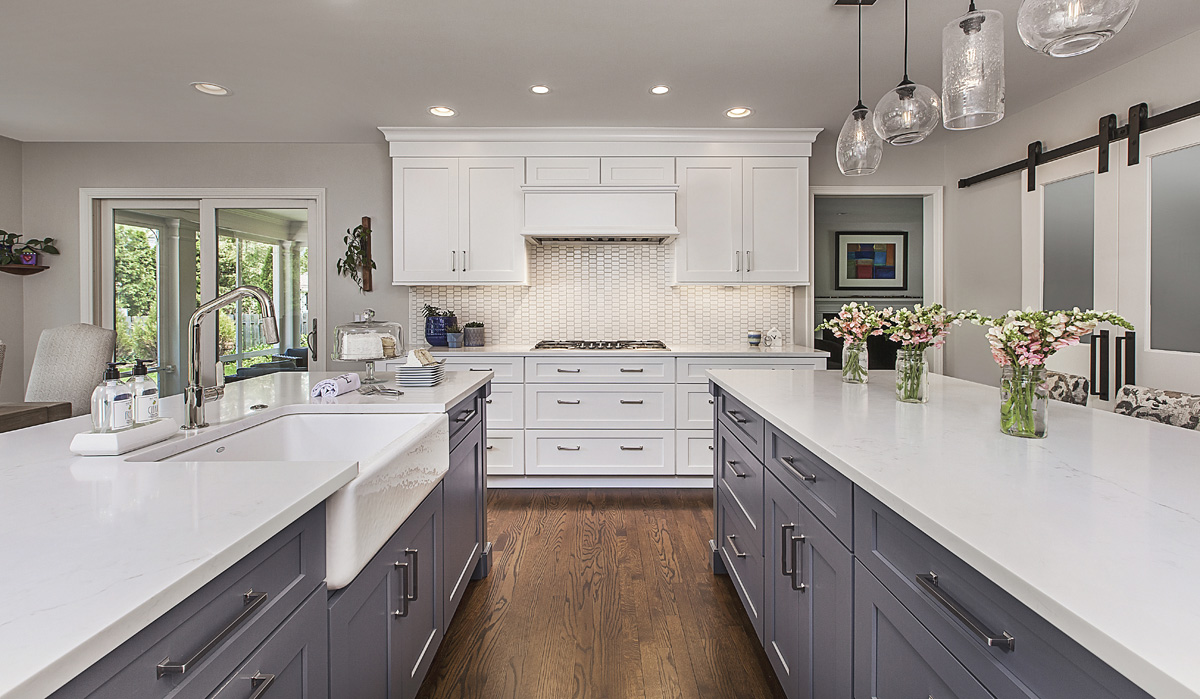
One of Christine Ramaekers’ favorite storage elements is a walk-in pantry. In this kitchen, it is tucked behind sliding barn doors and is complemented with abundant storage options in two islands, one dedicated to food prep and cleanup, the other to family snacking, homework, entertaining and relaxation.
As well, cabinetry interiors can be upgraded to include specialty woods like walnut or rift-cut oak that match or contrast with the cabinetry exteriors. Those same interiors might also include lights so when a drawer or cabinet door is opened, their contents are illuminated and readily visible.
“Lighting has moved beyond what is used in a glass-door cabinet,” she relates, adding that glass-door cabinets are, however, still quite popular for displaying treasured items. “Now we also use lighting in drawers and even in corner cabinets. Oftentimes, it is an option provided by many cabinet manufacturers. We just provide them with our electrical plans and we no longer need to worry about installing it on our end.”
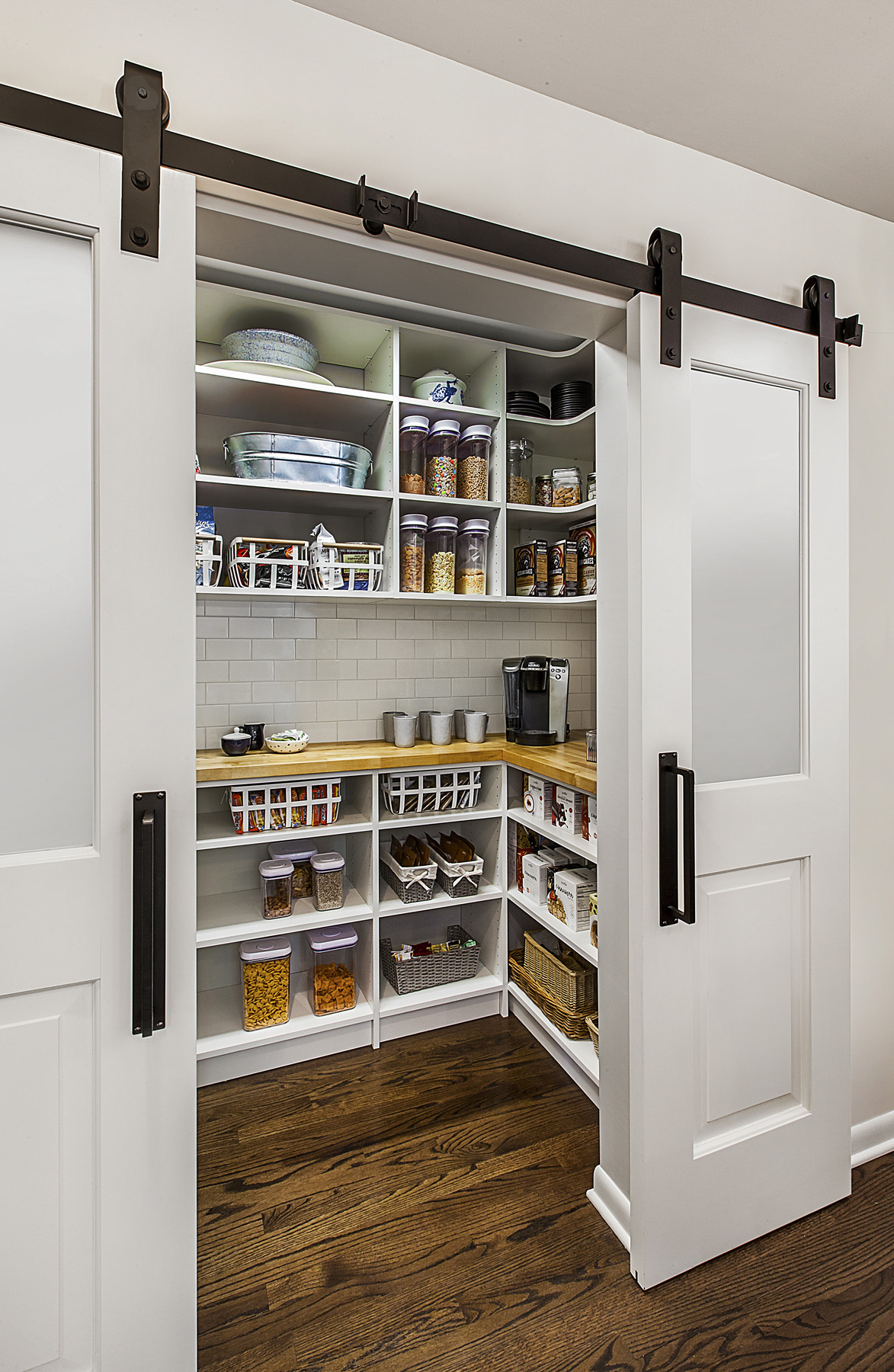
One of Ramaekers favorite storage elements is a walk-in pantry, especially those that blend with the cabinetry.
“We do a ton of built-in appliances where refrigerators, freezers and dishwashers are paneled to give a seamless look to the kitchen,” she explains. “To keep that sleek theme going, we’ve been doing a lot more kitchens where the entrance to the walk-in pantry is ‘hidden’ as cabinetry. So rather than having a traditional door or barn door, we will create a door out of the same material as the cabinetry so it all looks built in. Our designers love creating them and our clients love using them because they keep the kitchen clean and put together.”
Once inside the pantry, Ramaekers will furnish it with quartz, natural stone or butcher block countertops, base cabinets and plenty of shelving. Oftentimes, this is also where she will include the microwave and other large countertop appliances.
“Our clients still want microwaves, but they don’t use them as much as they once did,” she says. “It isn’t as integral as an appliance, so the pantry is a great place to store it.”
Along the same lines as hidden pantries, Ramaekers also frequently includes appliance garages because they conceal items traditionally stored on the countertop.
“Our clients love to use them for the small appliances they use every day,” she explains. “They can sit right on the countertop, plugged in and ready to use. Appliance garages offer more choices to hide everything from dishes and utensils to coffee makers and toasters.”