
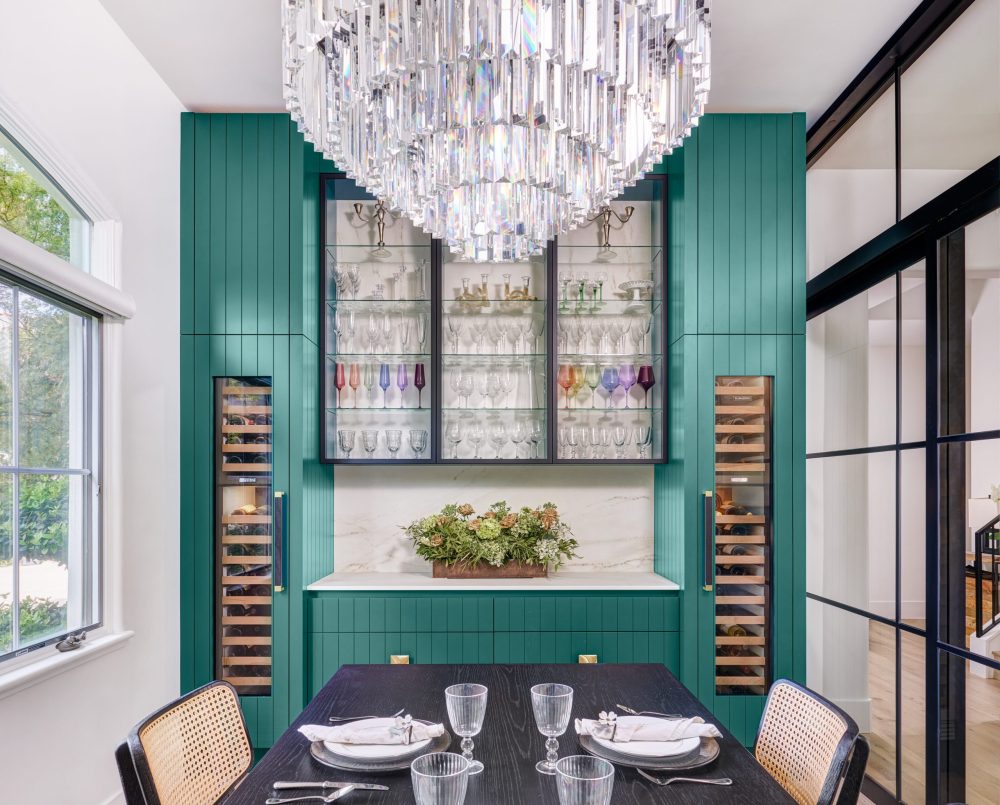
From serious collectors to social entertainers to casual partakers, those who enjoy a glass of wine will ultimately need to store multiple bottles.
Short-term options are often accommodated in dedicated beverage refrigerators, which designers frequently panel to blend in with any adjacent cabinetry. However, when a few bottles turn into dozens, or more, temperature- and humidity-controlled solutions become important to maintain the quality of the wine for serving and the value of the wine when collecting.
This month, KBDN asked designers to share wine storage solutions, especially wine rooms, that not only properly store wine, but do so while simultaneously showing off.
Celebrating Wine
Working in the luxury design market, Nar Bustamante’s clients often want to incorporate extravagant and indulgent extras in their homes.
“Our clients want everything,” says the founder of Nar Design Group in Sacramento, CA. “And even though some projects might be smaller than others, they are still high-end…with all the amenities.”
As well, living and working in California, those extras oftentimes include design elements related to storing one of the state’s most beloved beverages…wine. These days, when capacity beyond a beverage refrigerator is needed, that storage is trending towards temperature-controlled, glass-enclosed rooms that become statement pieces within a home.
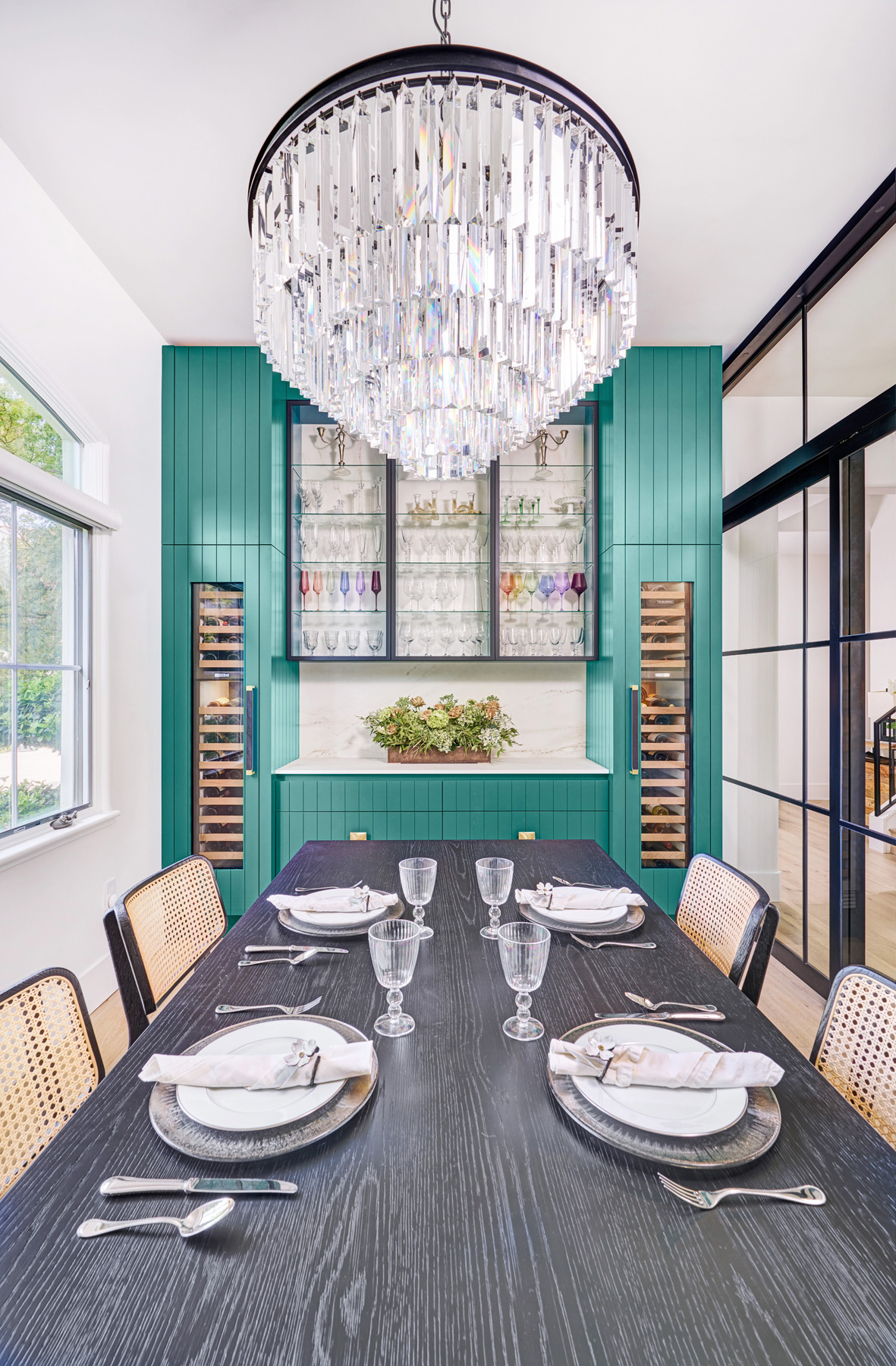
In this home, Bustamante included a beautiful feature wall with wine storage and display as part of a formal dining room. He also designed a moody bar/wine storage cabinet in the homeowners’ great room.
“Wine used to be stored in basement cellars because they were a perfect environment for keeping the wine cool naturally,” he says. “But now we have sophisticated and elaborate mechanical cooling systems, so we’re seeing a lot of people move their wine out of the basement and into a temperature- controlled space upstairs.
“Also, putting the wine in a room behind glass gives people, especially those who like to entertain, a way to present and celebrate their wine,” the designer continues. “It creates an elevated restaurant feel. Plus, people love to look at beautiful wine labels, so when someone is hosting a party in a home where the wine is visible, guests are encouraged to engage in conversation. A wine room is a great conversation starter!”
Such is the case in one home where Bustamante created a shallow wine room as a backdrop to the dining room table.
“We took what would have been a normal wall and created a rich, immersive experience for guests eating in the dining room,” he explains. “It’s a very rustic, restaurant feel that people just love.”

Given Nar Bustamante’s expertise in architectural interior design of complete homes, he focuses on making sure a wine room flows with other spaces throughout a residence. This is especially important when it is centrally located, such as this wine room that is situated by the stairs, the kitchen and the bar where it is also visible from the living room and dining area.
Custom metal and glass barn doors slide open to reveal the homeowners’ collection that is accented with a chandelier and a table for showcasing art or displaying wines that the host will serve during an event. Both lighting and surfaces for setting items, as well as a cabinet or two, are integral to many of the wine rooms Bustamante designs.
“Lighting is a great way to set a mood for entertaining…with vertical lights, chandeliers, etc.,” he relates. “When someone is entertaining guests, it’s nice to have the wine room fully illuminated to set the tone for an evening dinner. Also, it’s important to have general and task lighting so the homeowner can easily stock the room.
“If the room is large enough, people might actually sit down, open a bottle of wine and engage in conversation with a couple of friends,” he continues. “Then it’s nice to have a place to set something down. And cabinetry is convenient for storing wine-related accessories.”
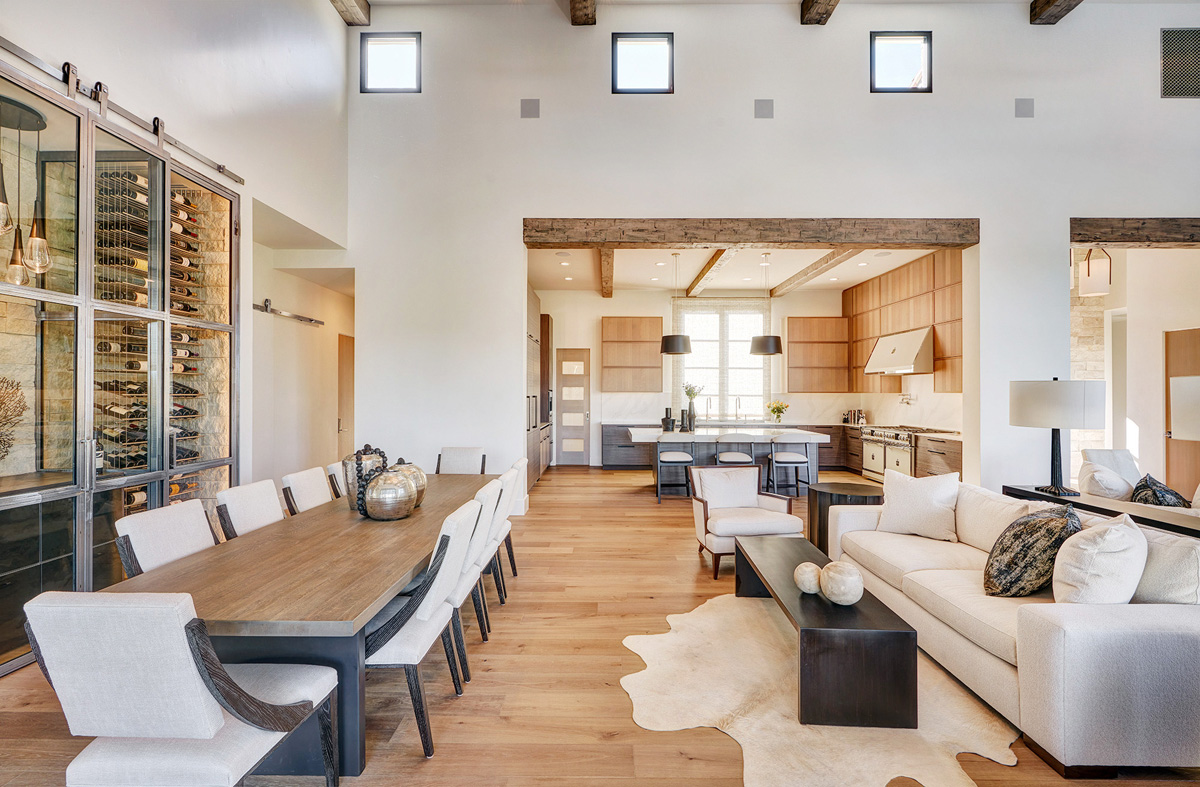
Nar Bustamante created this shallow wine room as a backdrop to the dining room table, where it is visible to guests and serves as a conversation starter. Custom metal and glass barn doors slide open to reveal the homeowners’ collection. The room also includes a table for showcasing art or displaying wines that the host will serve during an event.
Given Bustamante’s expertise in the architectural interior design of complete homes, he focuses on making sure a wine room flows with other spaces throughout a residence. This is especially important when it is centrally located and is intended to make a statement, such as one recent design where the wine room is centrally located by the stairs, the kitchen and the bar so it is highly visible from multiple spaces, including the living room and dining area.
“It’s a central focus of the home,” he says. “It really illustrates the whole concept of bringing wine storage out of a hidden basement cellar and celebrating it upstairs!”
Creating a Connection
Virtually every larger, multi-room project that Richard Sherer and his design team at Deep River Partners complete each year touches on some type of wine storage. It can be anything from a relatively simple wine rack to a beverage refrigerator to full-blown wine rooms with mechanical humidity and temperature control, extensive rack systems and even cabinetry, countertops and seating for tastings.
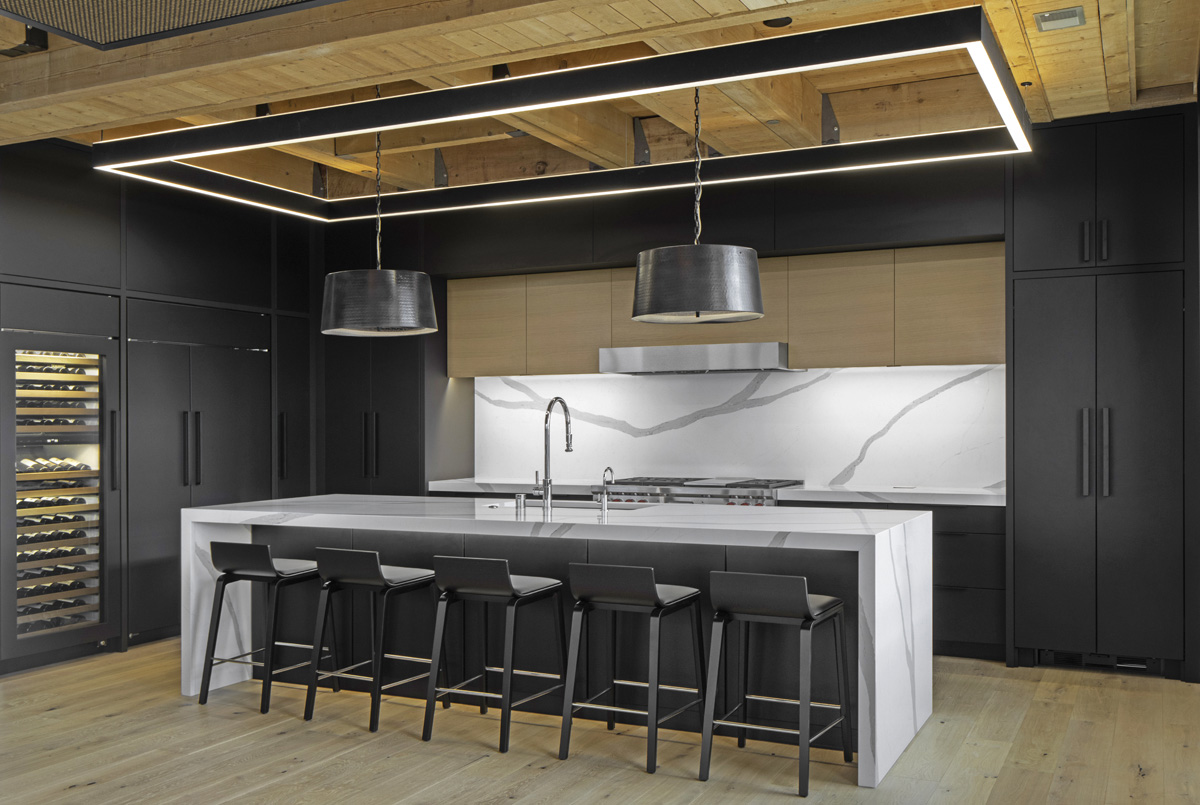
Richard Sherer caters to clients from the casual wine drinker to entertainers to the serious collector. Paneled beverage refrigerators that match the cabinetry can be great solutions for clients who only need short-term storage.
Photos: Ryan Hainey Photography
“We cater to everyone from the casual wine drinker to entertainers to the serious collector,” says the founder of the residential architecture and interior design firm in Milwaukee, WI. “Each lifestyle will point us in a different direction as to how elaborate a solution needs to be. Beverage refrigerators, which we often panel to match any cabinetry, are great for people who only need short-term storage. Maybe they want to pair a glass of wine with dinner or maybe they are entertaining for an evening. Wine rooms are better suited for those who buy in volume. Maybe they are part of a wine club. Or, maybe they are a collector. Sometimes the solutions are combinations where we include beverage refrigerators in one area, such as a kitchen or bar, for short-term storage and a wine room where a collection is kept for longer periods of time.”
Sherer included this multifaceted approach recently in a Craftsman-style home where an undercounter refrigerator located in a hospitality bar in the foyer is used to chill a few bottles of wine so the homeowners can welcome guests with a glass as they enter their home.
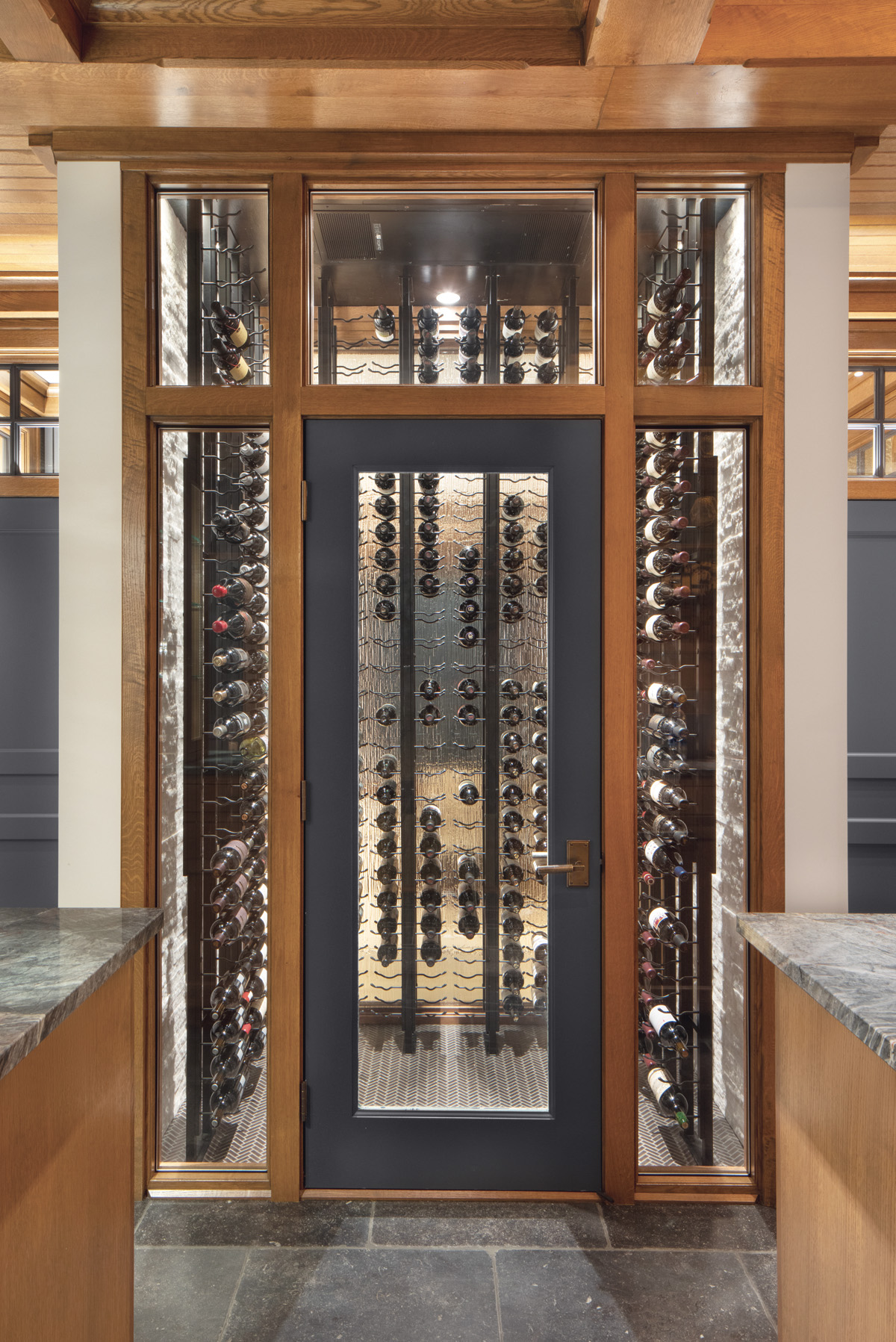
Richard Sherer often includes a multifaceted approach to wine storage, such as in this home where an undercounter refrigerator located in a hospitality bar in the foyer is used to chill a few bottles of wine. The temperature- and humidity-controlled wine room is an extension of the bar. Its entrance is a welcoming feature off the foyer and its glass back wall is shared with the dining room where it serves as a focal point, showcasing silhouettes of the wine bottles obscurely visible through the rippled art glass.
The temperature- and humidity-controlled wine room is an extension of the bar. Its entrance is a welcoming feature off the foyer where the glass door affords a glimpse inside, where artfully racked bottles contrast against white quartzite wall panels that sparkle in the down light. The back wall is also glass and is shared with the dining room where it serves as a focal point, showcasing silhouettes of the wine bottles obscurely visible through the rippled art glass.
“The wine room, visible through the glass, becomes an artistic expression that is part of the theme of the home,” he says. “You can’t necessarily see through the glass completely, rather it becomes a backdrop…a wallpaper of sorts so the dining room and the wine room can each maintain their own identity and express themselves individually.”
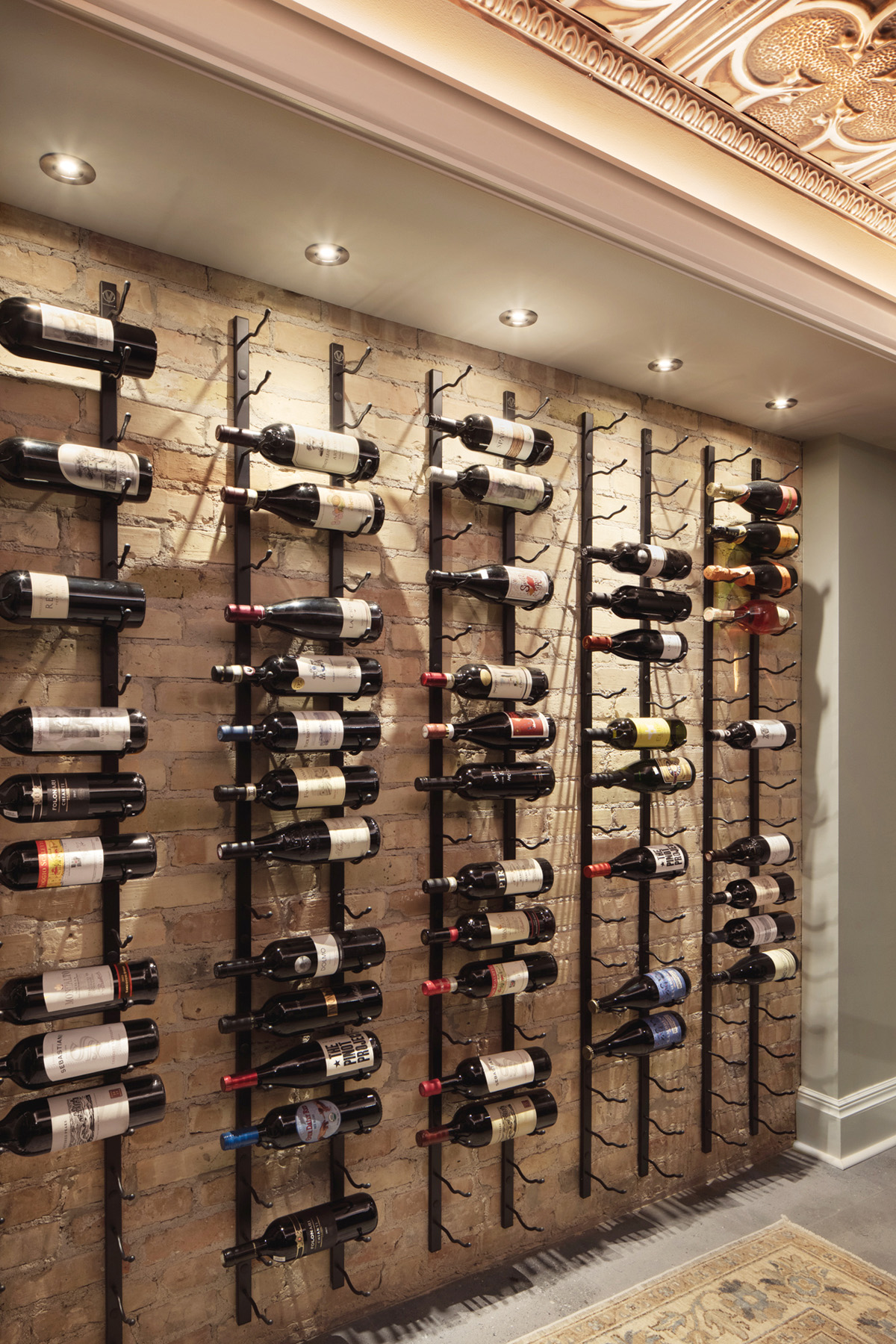
Richard Sherer is often tasked with carving out space for storing wine into existing homes, such as in this renovation where he converted a closet into a wine room with storage and a wet bar, the latter of which can readily accommodate wine samplings and tastings.
While the Craftsman-style home was a new construction project, Sherer is often tasked with carving out space for storing wine into existing homes during a renovation. Such was the case in another recent project, where he converted a closet into a wine room with storage and a wet bar, the latter of which can readily accommodate wine samplings and tastings.
“It still showcases and displays wine bottles artfully where the metal wine racking system allows the bottles to ‘float’ and be set off from the brick behind them,” he explains, adding that the Cream City brick is original to the home’s foundation. “But the display doesn’t necessarily take over the room.
“Wine rooms, in general, are often more about an experience rather than about simply storing wine,” he continues. “They are also about how they connect with a person’s home, their lifestyle and their personality.”
Showcasing Authenticity
Open-concept living has influenced much about the way people live within their homes, giving them physical and visual access to multiple spaces simultaneously, especially kitchens, dining rooms and living rooms. Lynn Holender indicates that living with fewer interior walls has also changed the way people entertain and how she incorporates entertaining accompaniments such as bars and wine rooms, which are included in most of the custom homes she designs.
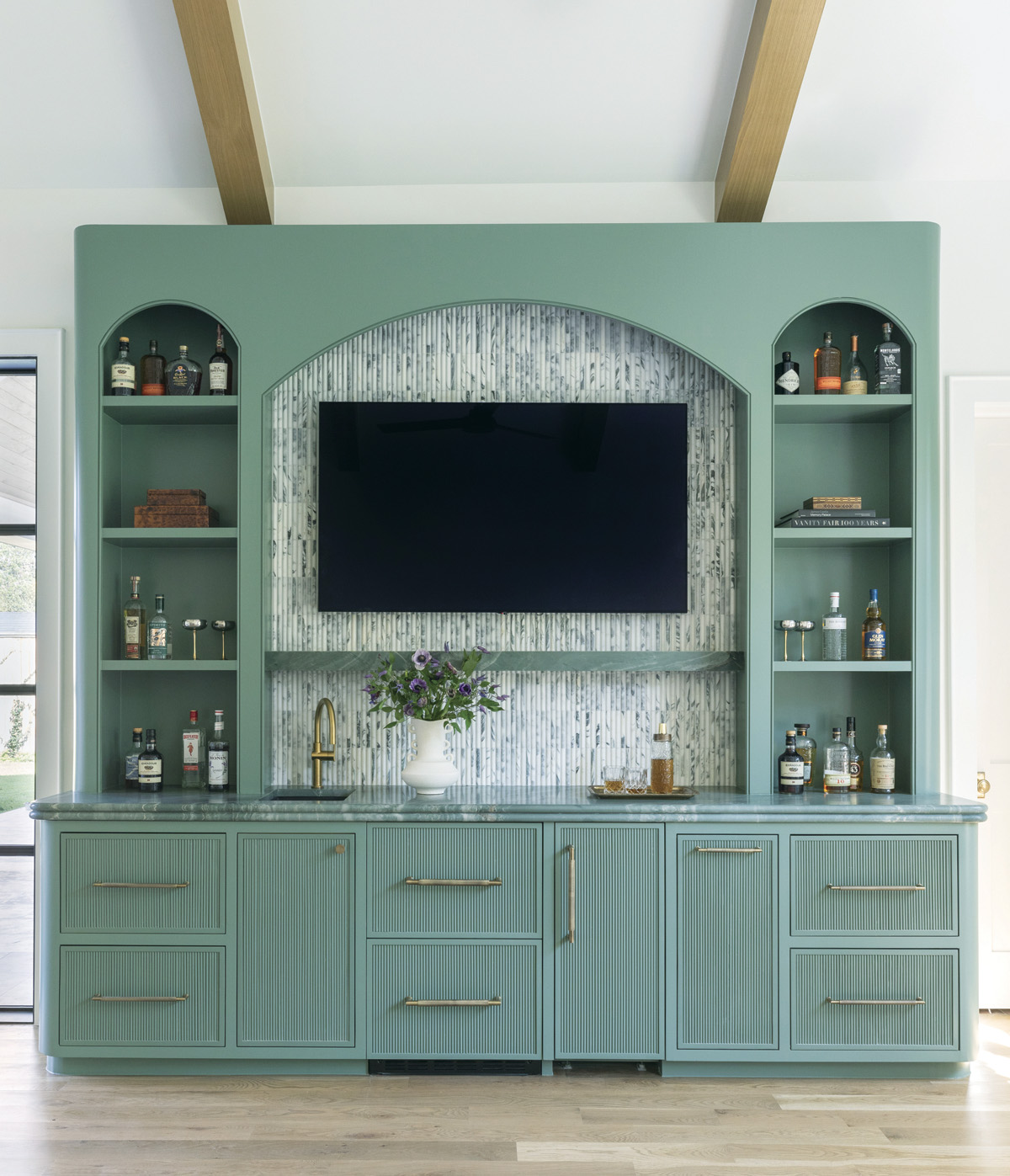
Lynn Holender designed a second bar near the patio. It includes refrigerator drawers for easy access to cooled beverages such as white wine and champagne.
Photos: Julie Soefer Photography
“About 99.9% of the time we are addressing wine storage in some way,” says the principal for Lynn Holender Designs in Houston, TX. “If someone doesn’t have an especially large wine collection, bottles can be stored in a paneled beverage refrigerator that blends in seamlessly with the rest of the cabinetry in a kitchen. But if someone entertains a lot and needs more storage, we will include a wine room that shows off a collection. Often, it is connected to a room where they are entertaining, such as a bar, which is usually close to a living room or dining room.”
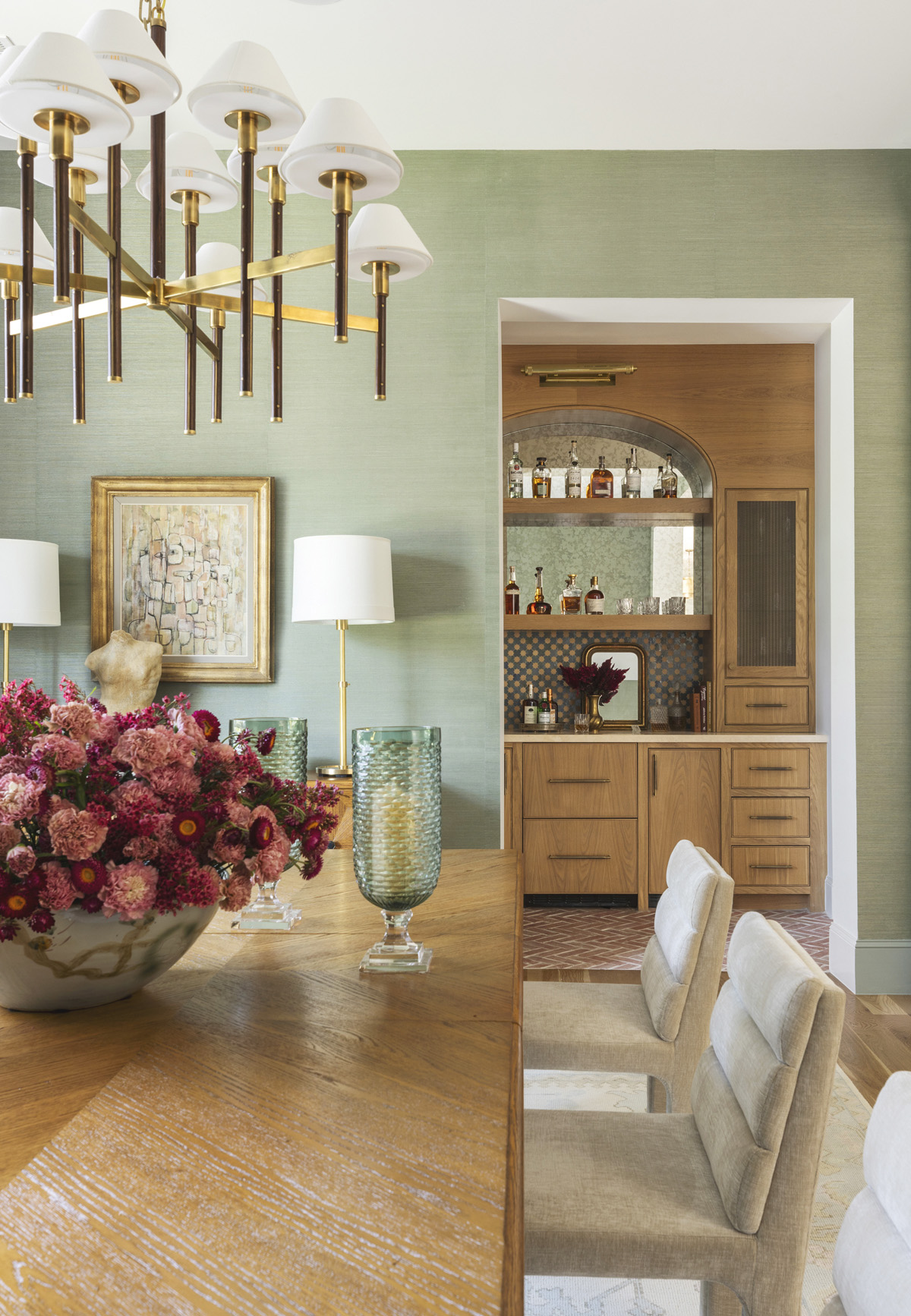
Lynn Holender often incorporates bars and wine rooms near where people entertain. In this home, the wine room is located next to the wet bar, which is accessible and visible from the dining room.
In addition to the expected temperature and humidity control, the designer likes to include a glass or iron door at the entrance to provide visual access to the space. As well, she usually incorporates traditionally styled elements, such as a liberal usage of wood and brick. Both conjure up visions of moody underground wine cellars and caves peppered throughout California’s Napa and Sonoma valleys
“It just feels more authentic to use natural materials from the earth,” Holender explains. “And, they make the space feel warmer and more inviting.”
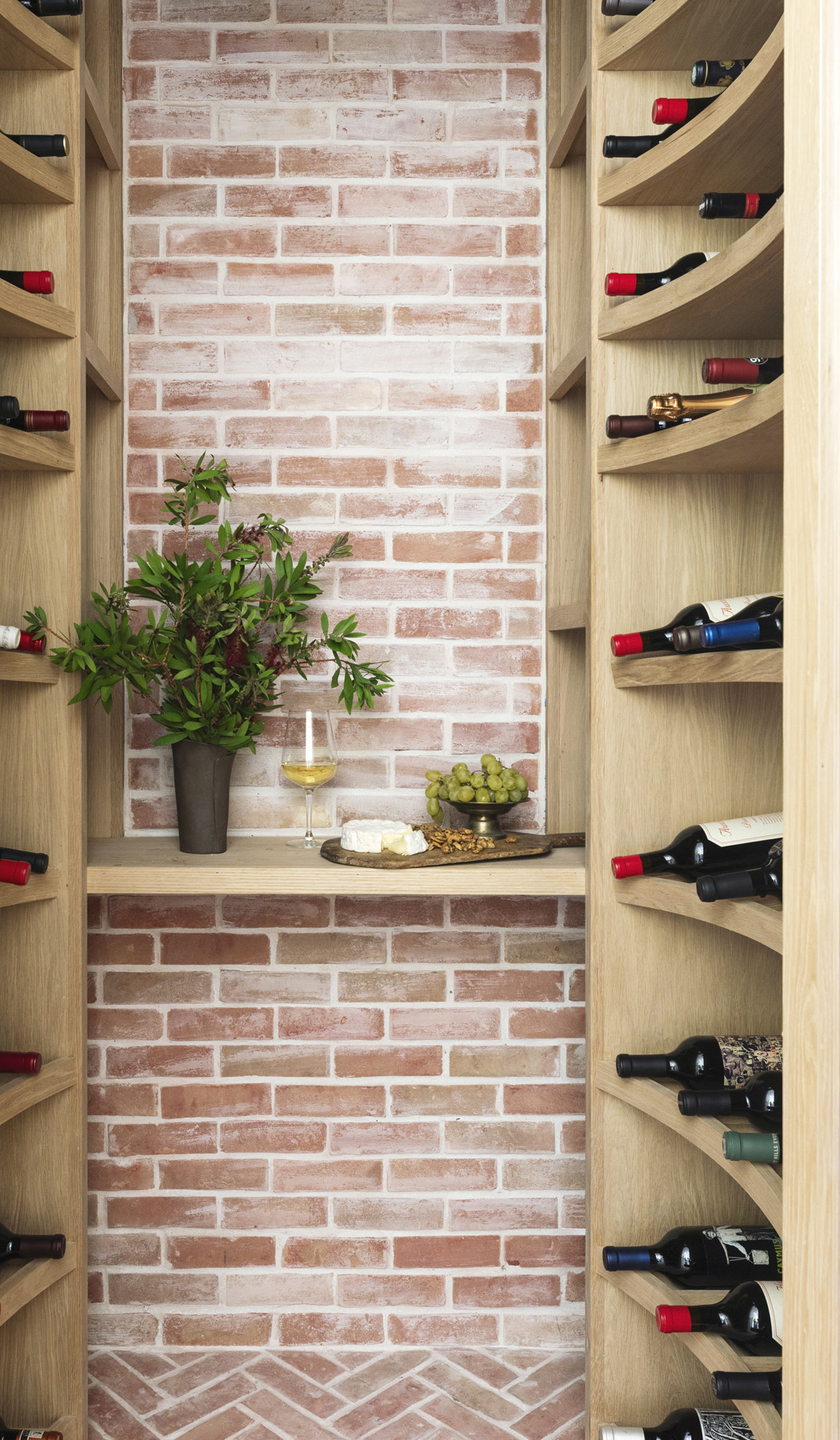
One focal-point feature of this wine room designed by Lynn Holender includes brick set in a traditional pattern on the wall and in a contrasting herringbone pattern on the floor. White oak shelves provide enough storage for more than 200 bottles of wine, as well as accessories. The slightly curved shelves ‘soften’ the visual and give a touch more room for her client to maneuver when she is working within the space.
Creating that vibe was an integral focus of one recent custom home built by Unika Custom Homes, where the designer included a wine room located next to the wet bar, which is accessible and visible from the dining room. A second bar, a sports bar created for the husband to entertain his friends, is sited near the patio and includes refrigerator drawers for easy access to cooled beverages such as white wine and champagne.
One focal-point feature of the wine room includes brick, which is set in a traditional pattern on the wall and in a contrasting herringbone pattern on the floor for added interest. White oak shelves provide enough storage for more than 200 bottles of wine, as well as accessories such as wine glasses. Holender gave the shelves a slight concave curve to ‘soften’ the visual and give a touch more room for her client to maneuver when she is working within the space.
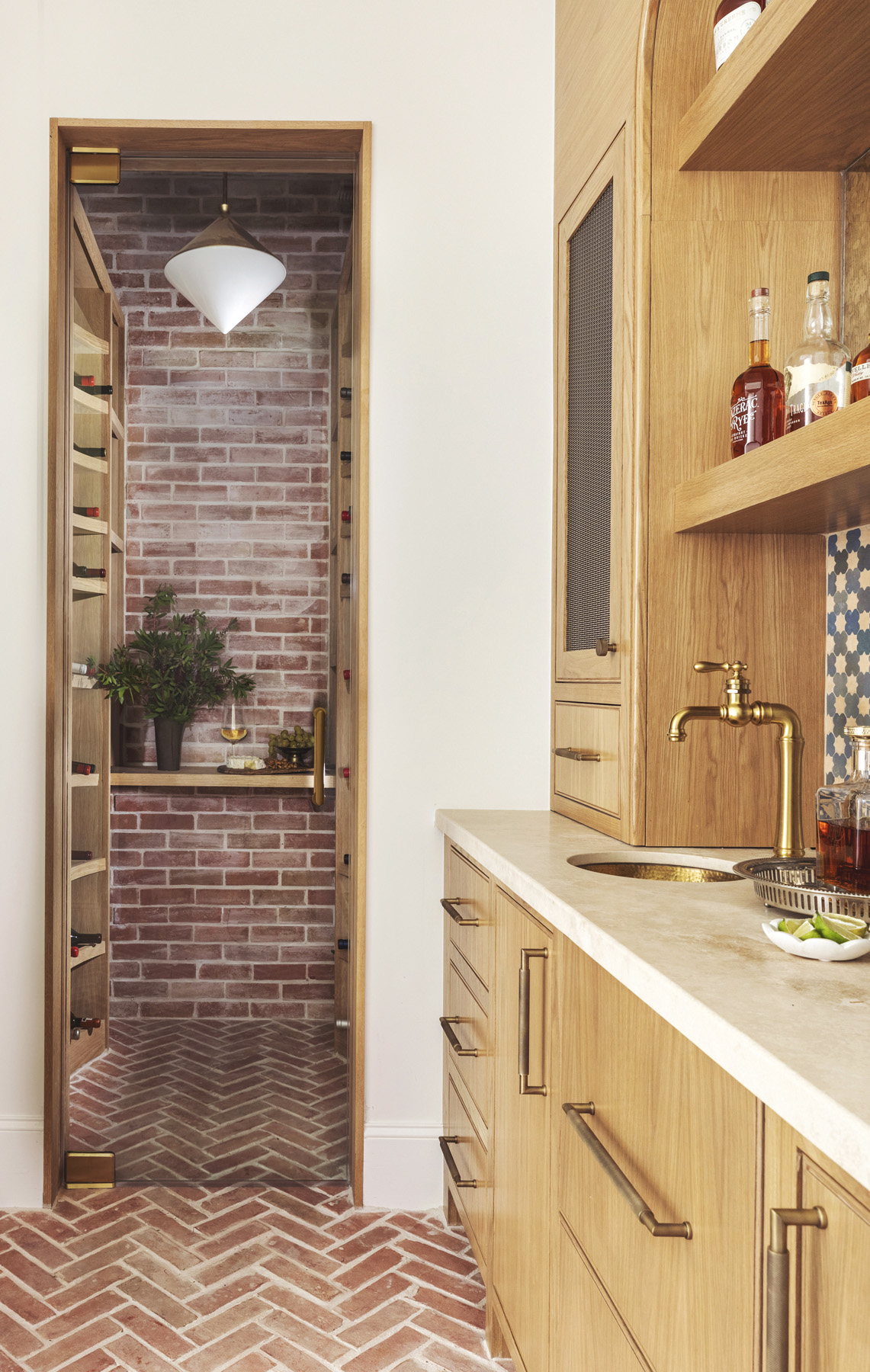
In addition to temperature and humidity control, Lynn Holender likes to include traditionally styled elements, such as a liberal usage of wood and brick.
“We really wanted to include some architectural features, which we accomplished by curving the shelves,” she indicates. “The curves also play off of the straight lines of the brick.”
Adding a ledge, made from the same white oak as the shelves, provides a place for her client to set a bottle of wine as she uncorks it.
“When there is enough room, I like to include a countertop or table, or minimally a ledge such as the one in this wine room, where the homeowner can set something down,” Holender says. “Being able to pull down a bottle of wine and uncork it right in the wine room is useful.”