
The pop suffix “-core” seems inescapable in today’s design world. Popularized by Gen Z and subsequently embraced with varying degrees of enthusiasm by other generations, from “normcore” to “Barbiecore” to “cottagecore,” there’s now a -core for every aesthetic philosophy imaginable.
One -core currently enjoying massive popularity in industries from interior design to fashion is “grannycore” or “grandmacore,” sometimes with specifics attached, i.e. “coastal grandmother.” As the terms might suggest, this is a philosophy that prizes nostalgic styles and ways of living, calling back to what younger generations especially might think of as simpler, more wholesome times.
Searching for grannycore design inspiration on Instagram or Pinterest will likely yield images that heavily skew toward interwar and mid-century tastes with the occasional foray into the 1960s and 1970s, often with an emphasis on homecrafts and a yen for the friendly, lived-in clutter of chintz and kitsch. Lovingly selected layers of vintage and handcrafted items jockey for space in cheery, sweetly busy kitchens outfitted with retro or retro-inspired appliances; baths might feature vintage touches like pedestal sinks and exposed plumbing, all the way down to a ruffled toilet seat and toilet paper covers.
But why are these retro styles suddenly seeing a surge of popularity, when carefully curated minimalism and clean, modern aesthetics have dominated interiors for the better part of the first decades of the 21st century? Is this penchant for throwback design elements a flash in the pan or part of a larger movement? Is it important for kitchen and bath designers to engage with this trend, and if so, to what extent? KBDN consulted designers whose recent projects have been touched by nostalgia.
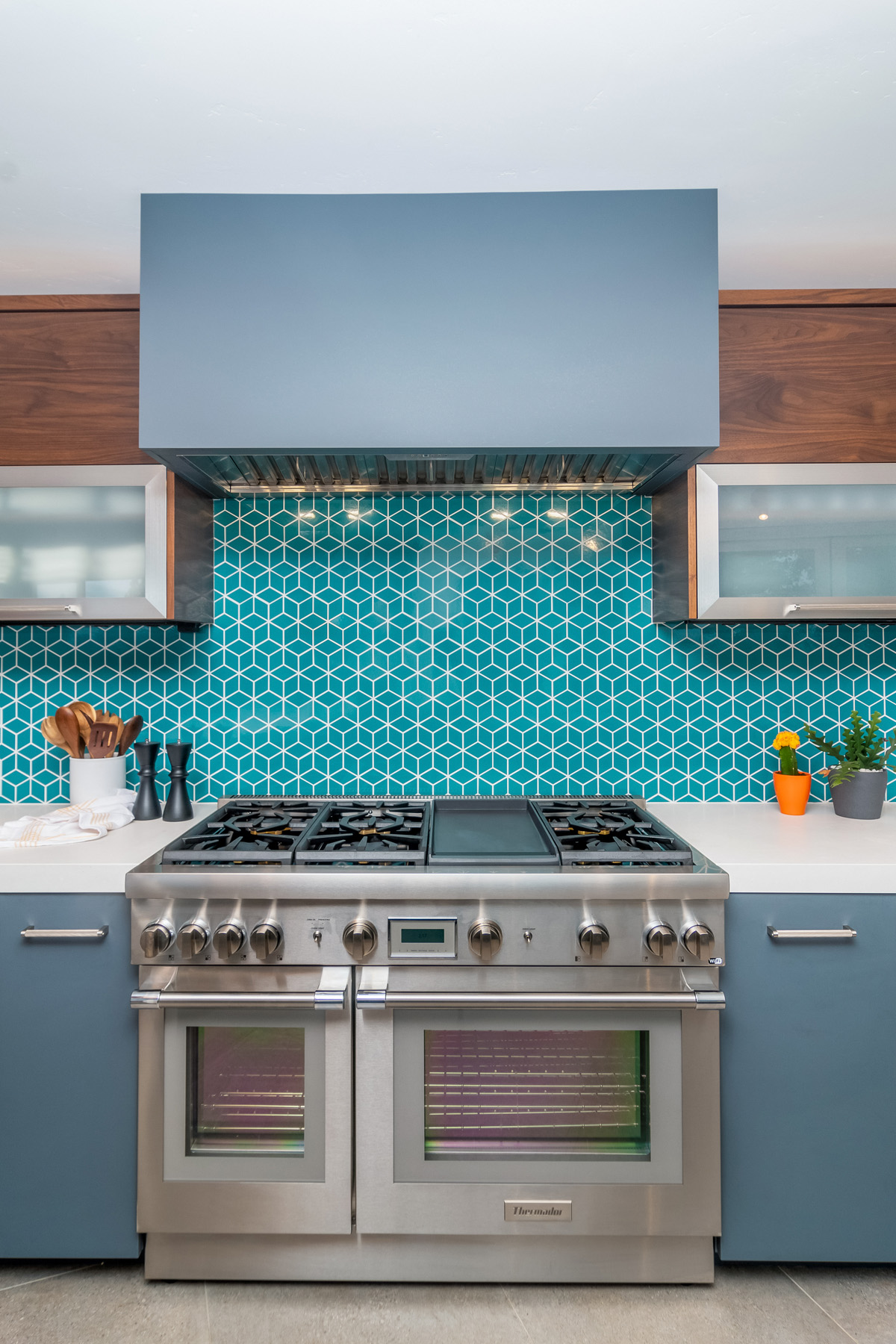
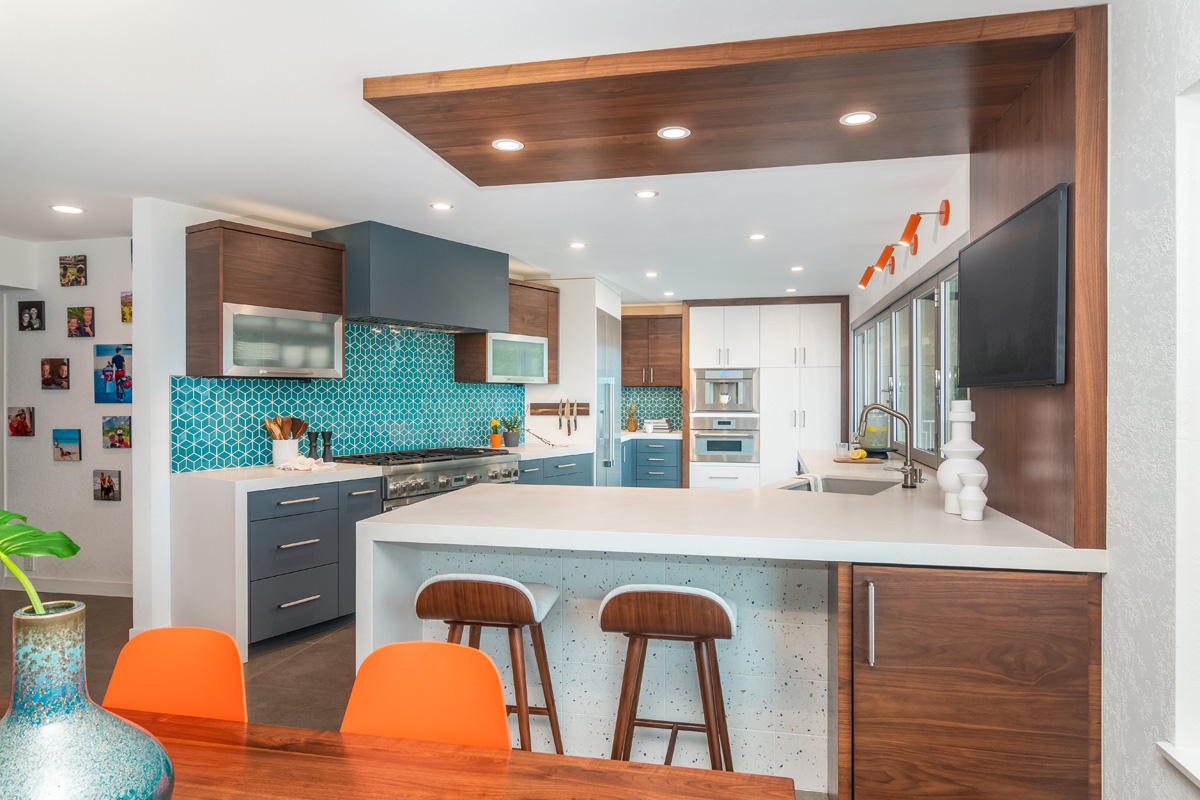
This vibrant kitchen from Jackson Design & Remodel…
This vibrant kitchen from Jackson Design & Remodeling was designed for a family seeking a space that balances the timeless appeal of their mid-century modern home with modern functionality. Its bold, clean cabinetry, turquoise geometric backsplash and terrazzo countertop tile create additional nods to the home’s history. (See feature image.)
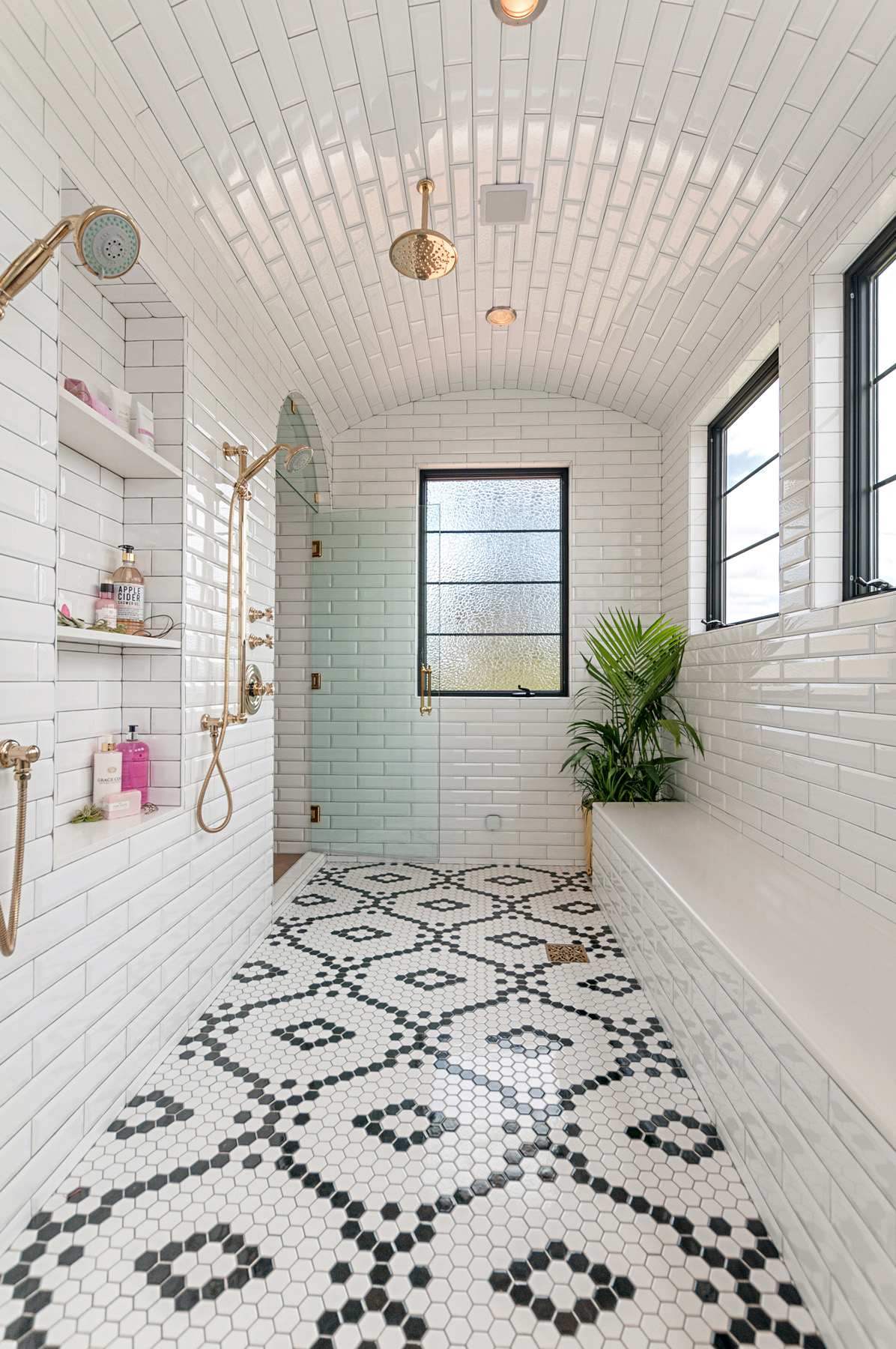
The primary bath by Jackson Design & Remodeling…
The primary bath by Jackson Design & Remodeling features a freestanding tub, a floral mural, custom hex-tile shower floor and French gold fixtures against a classic black and white palette.
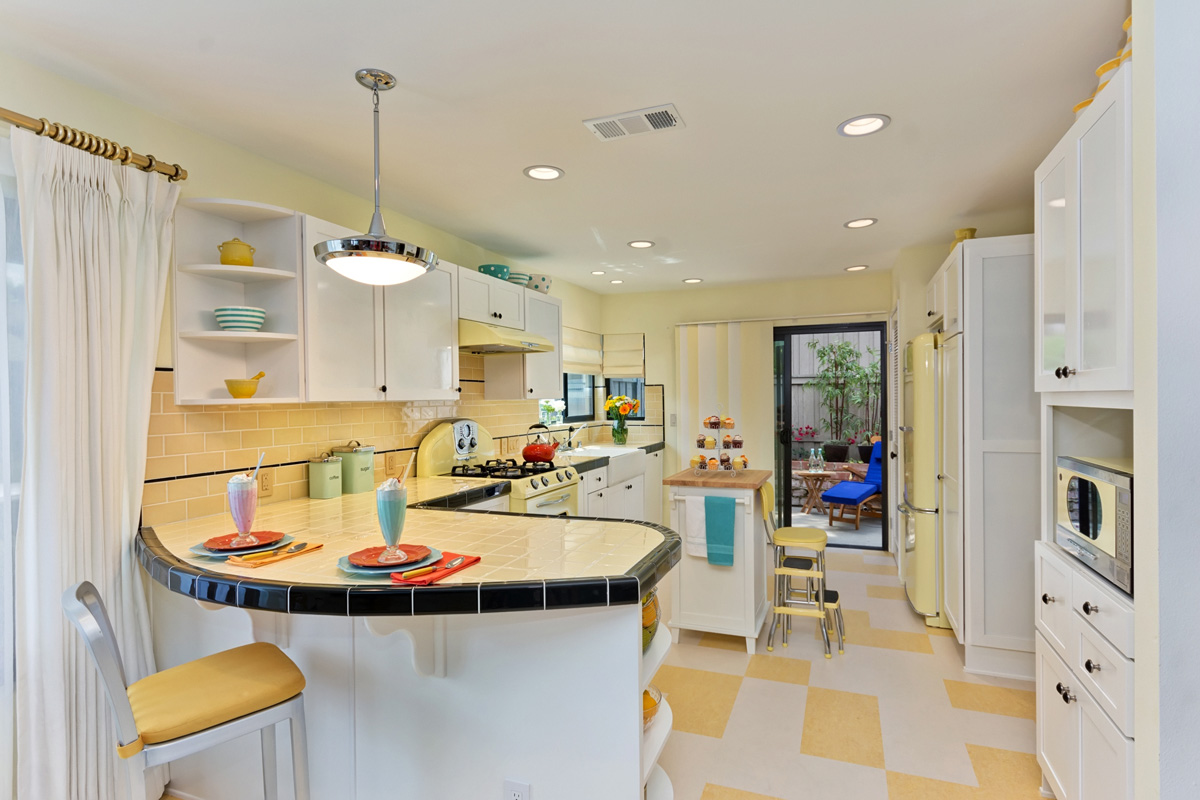
Envisioned as a playful space that pays homage to…
Envisioned as a playful space that pays homage to the client’s love of nostalgic design, this kitchen from Jackson Design & Remodeling features a vintage-inspired sink and faucet, yellow appliances, yellow ceramic tile countertops outlined with black trim and checked flooring for a whimsical vintage effect.
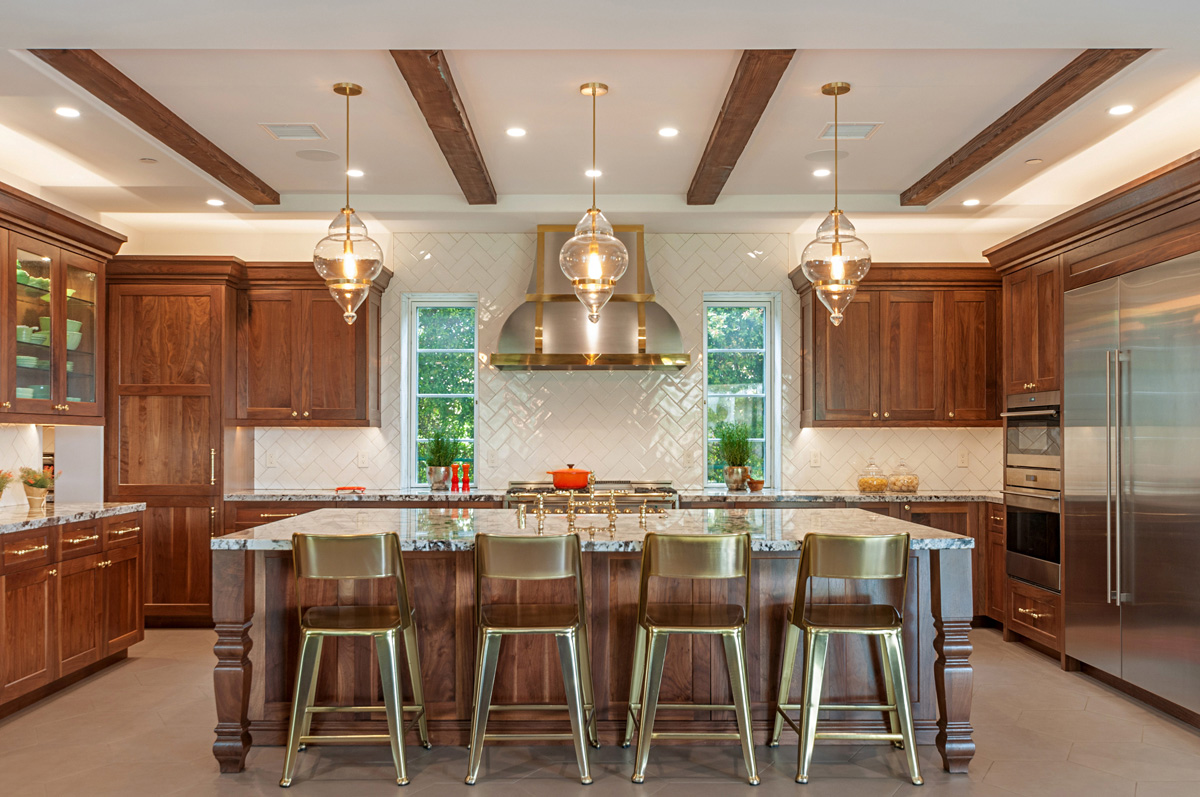
Located in a 1920s ‘eclectic Mediterranean’-style…
Located in a 1920s ‘eclectic Mediterranean’-style home, this kitchen remodel from Jackson Design & Remodeling was subject to historical preservation guidelines. Contreras found more space by stepping down and raising existing floors, creating enhanced functionality while honoring the home’s Old Hollywood flavor.
The Call of History
“Retro design is making a bold comeback in today’s kitchen and bath spaces, and I couldn’t be more excited,” gushes Marisela Contreras, senior interior designer with San Diego, CA-based Jackson Design & Remodeling. “As a designer, I’m constantly inspired by the creative possibilities that retro influences bring to a space.”
But why are these influences seeing such an increase in popularity? “The resurgence of retro trends can be attributed to a collective desire for comfort and nostalgia. In an ever-changing and often unpredictable world, clients are seeking familiarity and warmth in their homes,” Contreras says. “These vintage-inspired elements – whether it’s Art Deco silhouettes, colorful finishes or mid-century modern details – bring a sense of connection to the past, making spaces feel more personal and inviting. This trend mirrors what we’re seeing across popular culture as well, where TV show reboots, movie remakes and even musical revivals evoke a sense of continuity and comfort.
“By integrating retro aesthetics into contemporary settings, designers are offering a way for clients to connect with history while still embracing modern functionality,” she adds.
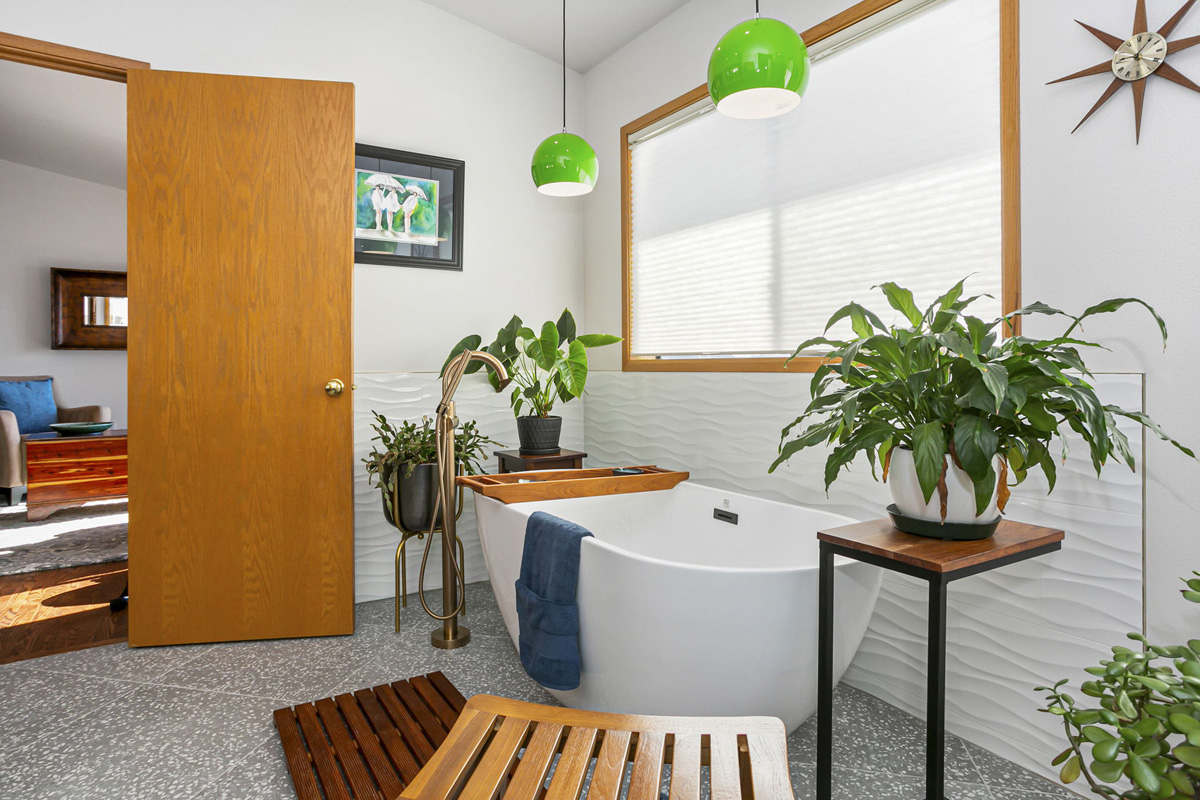
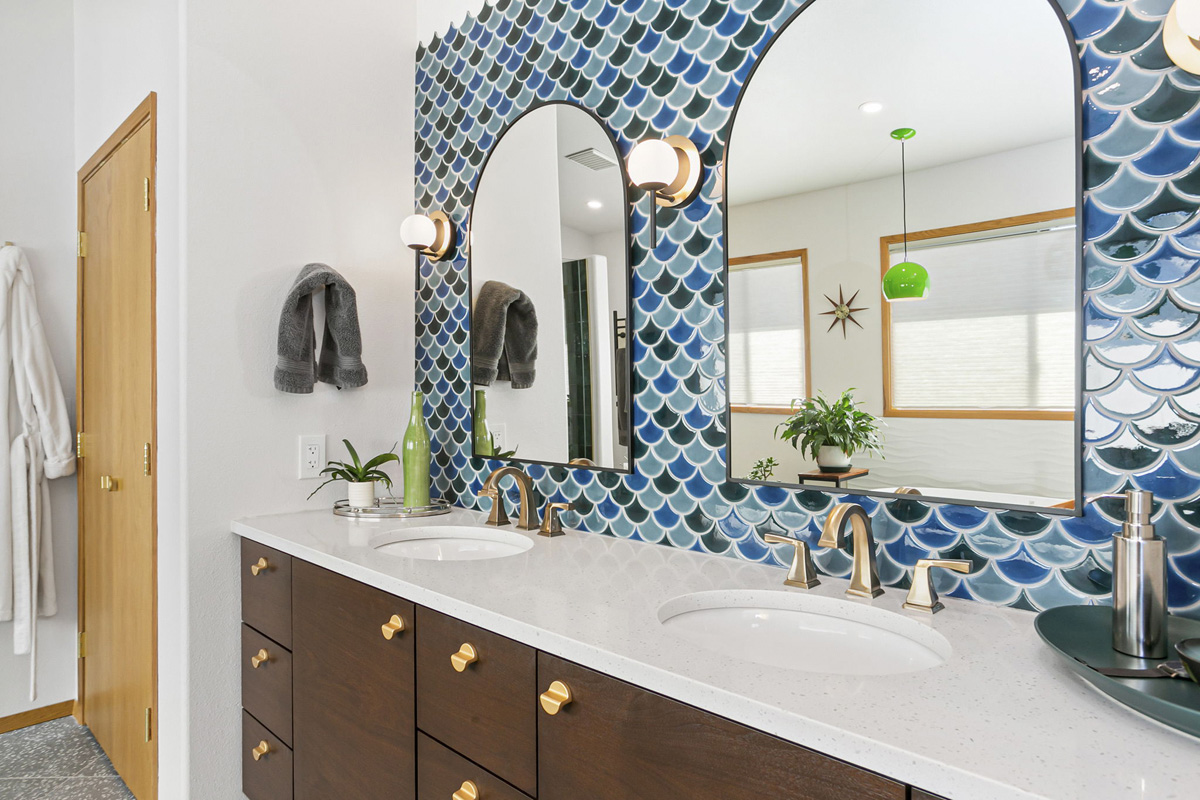
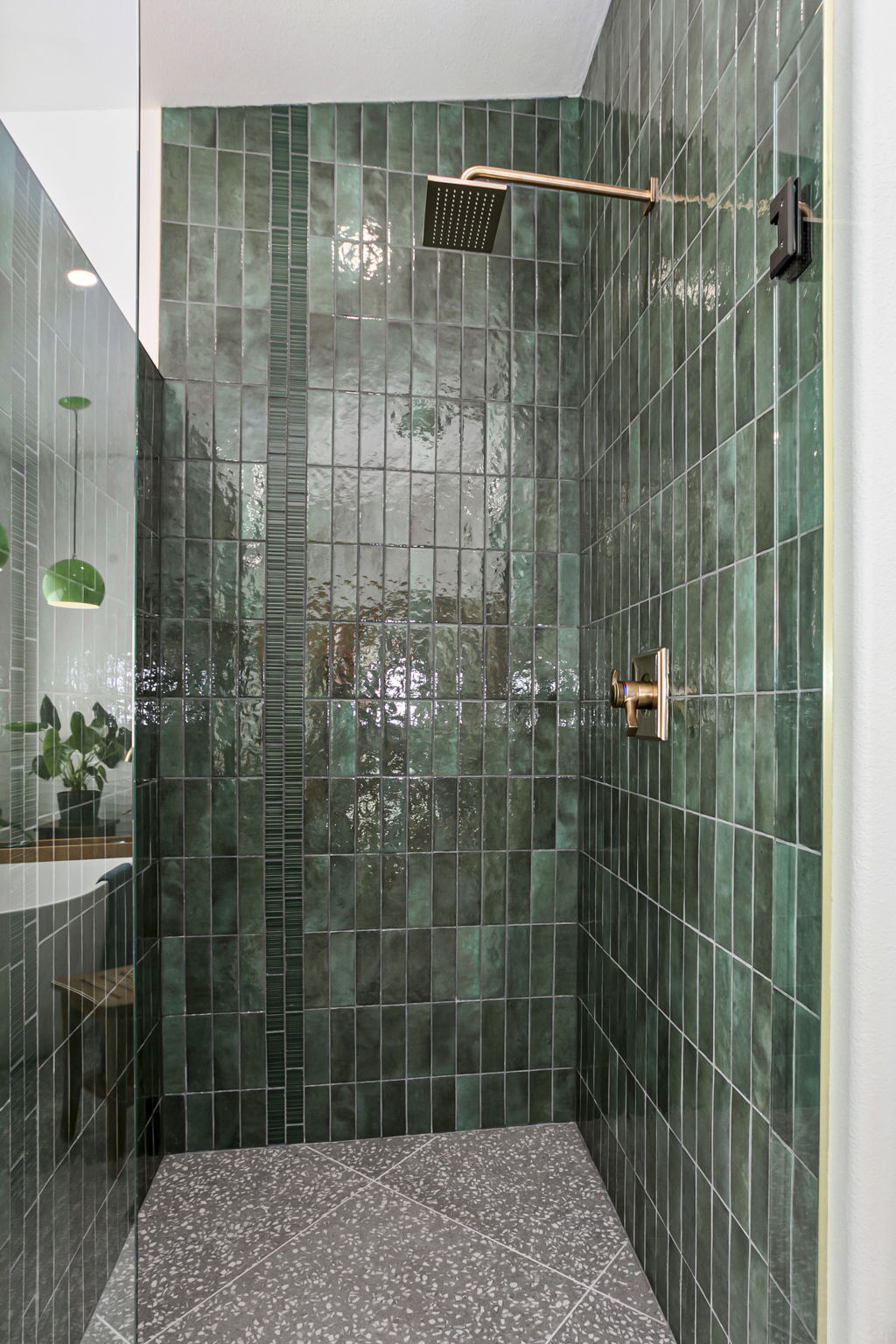
Both from the same mid-century modern home, these baths by Distinctive Interior Designs feature locally…
Both from the same mid-century modern home, these baths by Distinctive Interior Designs feature locally-made custom cabinetry and pops of color in the tile and lighting fixtures – hallmarks of the home’s historic style. The clients were after function and updates while keeping to the retro and MCM style.”
Photos: Matt Goodrich, Cascade Pro Media
Kelly DuByne, founder and designer at Snohomish County, WA firm Distinctive Interior Designs, points to the aftermath of the pandemic as the main driver for retro tastes, declaring, “Color equals happiness. Trends reflect what’s going on in the economy. After the pandemic, people want color, simplicity, clean lines and styles that can last a long time. They also want happy colors and styles after the dither of the pandemic. People are ready for color and happiness.”
“You know, I actually was curious, and I looked it up: retro means ‘imitative of a style,’” muses Richard Landon, CMKBD. “There’s a word missing in that, and that’s the word ‘element’ – design element, because that speaks to the physicality of certain things that occurred at different places in time that we have lost and now, in some way, are rediscovering.
“So, when you talk about retro, it is more than just a style of fashion or design element,” the Puget Sound-based designer continues. “It’s way more than that. There’s another aspect of retro that people often overlook, and that is the affective – that we yearn for our home. There’s a wonderful book called Places of the Heart that came out in 2015 by Colin Ellard, and he said what we yearn for in our homes is a connection to the seen and remembered of our lives.”
Who? What? Where? When?
Form, Contreras says, is one of the most significant elements of retro-inspired design. “I have noticed a lot of elegant, geometric silhouettes in hardware and fixtures, paired with jewel inserts that add a touch of vintage glamour.” She adds, “This sophisticated nod to the 1920s and 1930s allows us to infuse our clients’ spaces with a sense of luxury.”
DuByne agrees, noting that, in particular, “mid-century lines are timeless.” She points to the clean lines of slab front cabinetry as a mid-century element, particularly when paired with “pops of color in lighting, tile, paint or accessories.”
For Landon, “retro” is really about the experience of the memory rather than the specific design elements of an era. “We feel spaces – you know, everybody says, ‘oh, I love how this kitchen looks.’ No, no, no, no. You love the feelings that it’s invoking in you. It’s inspiring you at some level. And therefore, you’re responding to it.”
He points to the increased gravitation toward natural wood in kitchens as one prime indicator that people are trying to return to a different, kinder time. Rather than “cold, hard, glare-causing [surfaces] that raise our blood pressure, wood is warm to the touch, it’s quiet, it doesn’t cause glare. And when you stroke it, it physically lowers your blood pressure. It has that impact on you,” he relates.
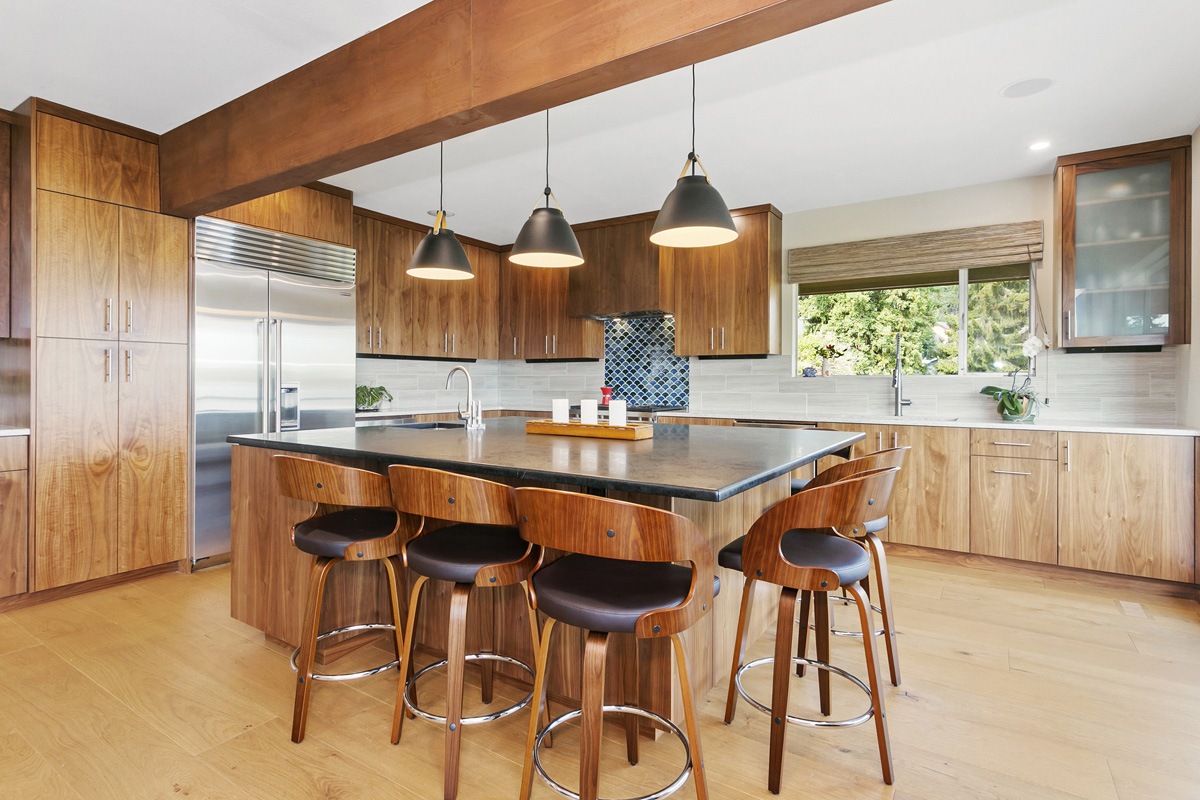
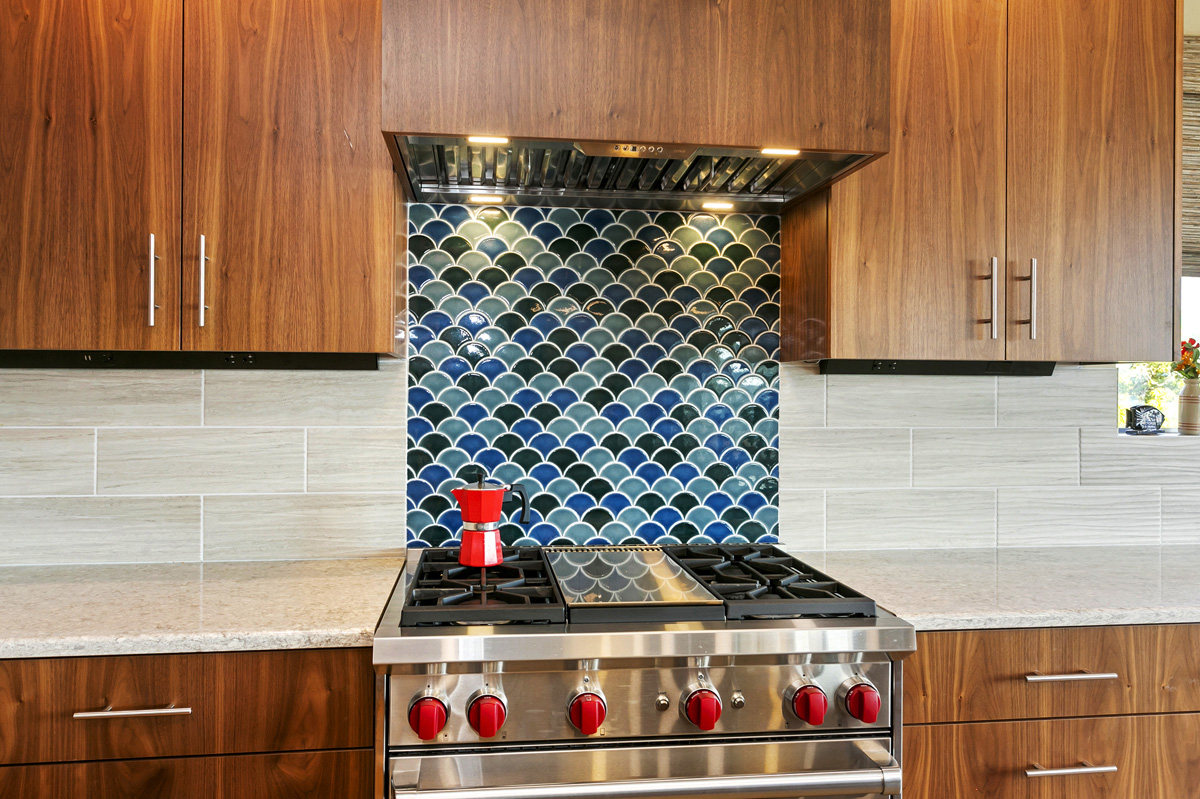
This kitchen, located in a mid-century home, was updated with an eye toward maintaining its historic character…
This kitchen, located in a mid-century home, was updated with an eye toward maintaining its historic character. The client wanted to modernize and update things, while embracing the lake view. DuByne achieved this with custom slab front walnut cabinets, soapstone island countertop and the playful curved tile behind the range.
Photos: Gary Bazzell, Expedition Studios
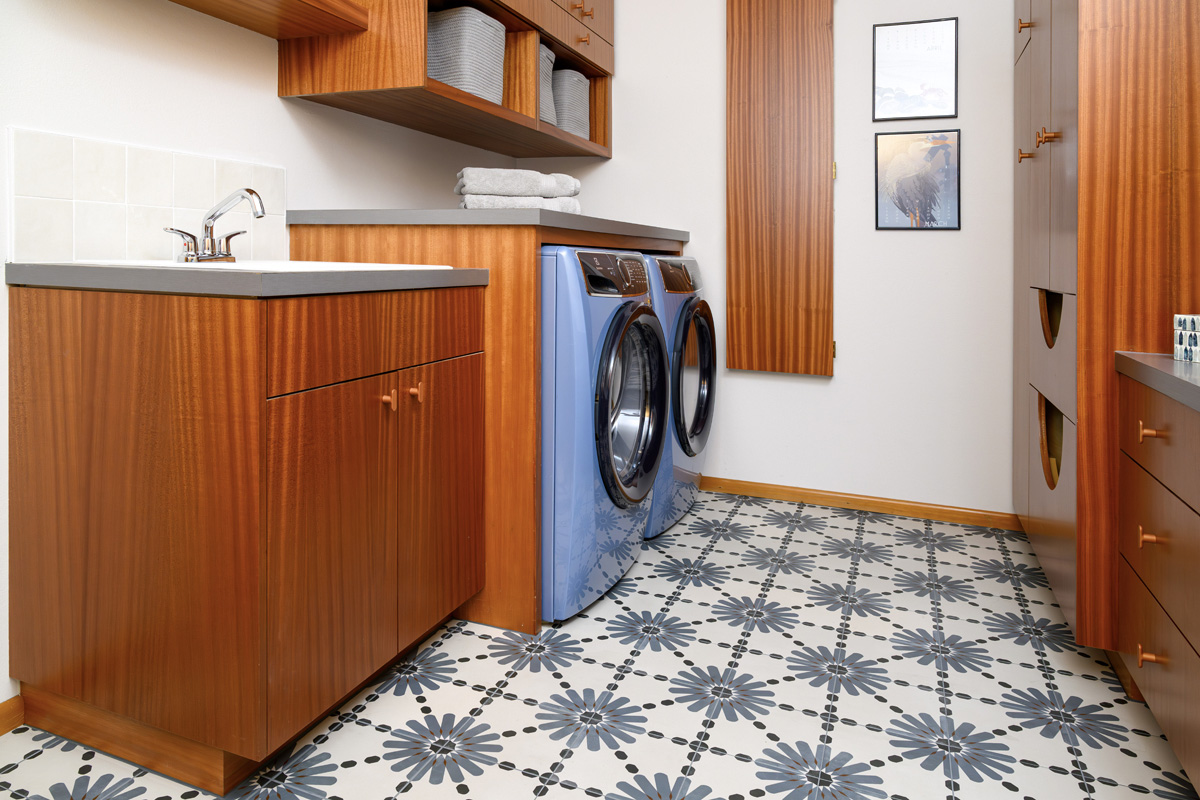
Even laundry rooms can benefit from warm…
Even laundry rooms can benefit from warm woods and other touches of nostalgic flair, as DuByne demonstrates.
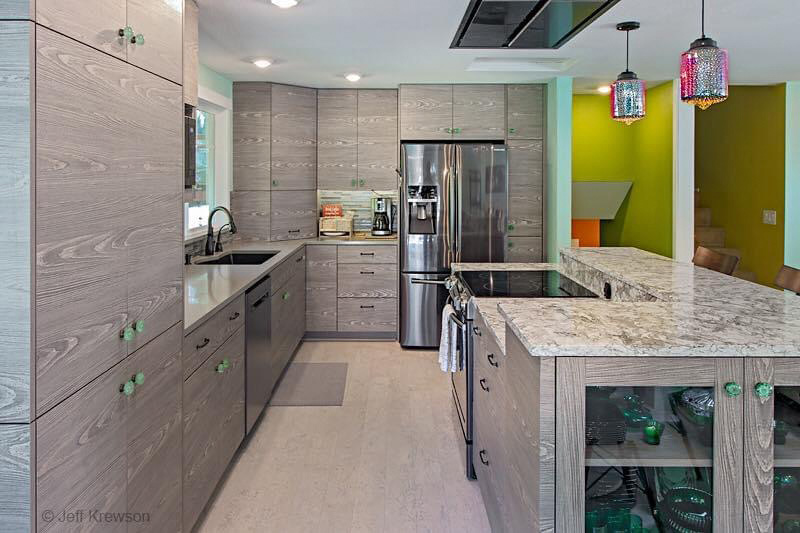
Designed by DuByne for a color-loving friend…
Designed by DuByne for a color-loving friend, this kitchen features modern custom laminated cabinets with a retro feel thanks to the artful pendant lights, which were a client find.
“We’ve used colorful appliances as bold focal points, transforming kitchens into vibrant, personality-filled spaces. Bold hues, whether on cabinetry or accent walls, bring energy and character, while patterned tile or wallpaper adds visual interest, creating a nostalgic yet fresh aesthetic,” says Contreras. Like Landon, she notes, “We’ve also embraced warm, natural woods, which lend a sense of timeless comfort and texture to our designs. By thoughtfully balancing these elements with contemporary features, we create kitchens and bathrooms that feel both familiar and fresh, paying homage to the past without sacrificing modern functionality.”
For DuByne, whose area of service encompasses a number of mid-century homes, the history and style of the home tends to inform the design elements she and her clients are drawn to. She points to one specific home for which her firm has had the opportunity to handle most of the remodels over the years. “It’s an original MCM on a lake, with a 1990s addition to enlarge it,” she explains. “The clients have always wanted to stay in the MCM style in terms of their furnishings and decor. We are prepping to do their final bathroom – I imagine the original American Standard pink sink and toilet staying and working around those! What a dream! We’ll be adding a color terrazzo floor and green hexagon tiles on the shower walls.”
The Past in the Future
Whether a design or design element has -core attached, the designers agree that a return to the familiar and the nostalgic is only increasing in appeal as the world seems to grow more and more complicated.
For Landon, the process of figuring out what design elements speak to a client’s history – that is, those personal memories they might perceive as retro – will always be a careful process of returning to past feelings and uncovering their stories. “I call myself a space therapist, because doesn’t a good therapist move people beyond where they’re stuck?” he says.
Contreras also indicates that personal experience is a driver for the continued popularity of retro elements, noting that “these trends align with a broader movement toward personalization in interior design. Our clients are increasingly looking for ways to express individuality through unique design choices that reflect their personal style and heritage. Retro elements – like bold, colorful appliances or vintage tile patterns – offer an ideal balance of tradition and innovation. They allow for creative self-expression while grounding the space in something familiar. It is a harmonious blend of the old and the new.”
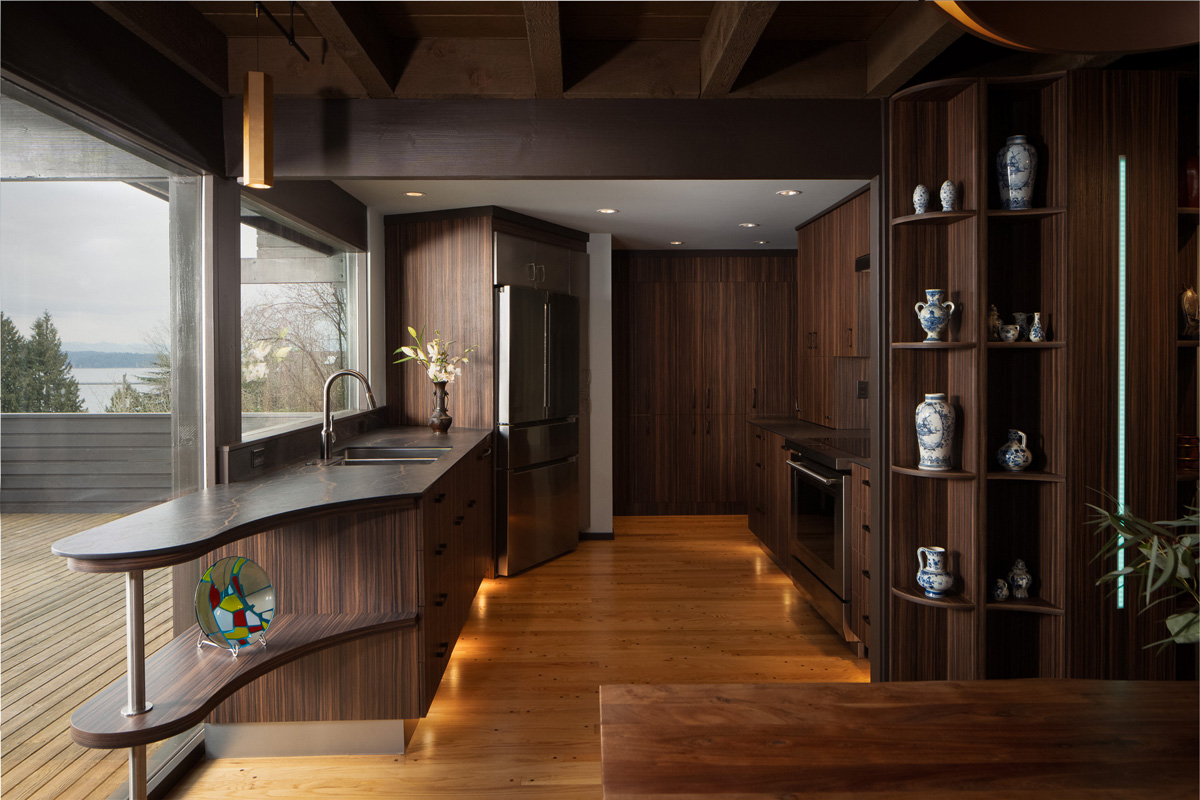
With its warm woods and subtly inward-funneling curves, this kitchen by Richard Landon was designed to…
With its warm woods and subtly inward-funneling curves, this kitchen by Richard Landon was designed to evoke not only a feeling of nostalgia, but the feeling of a hug.
Photo: Anton Benedikt
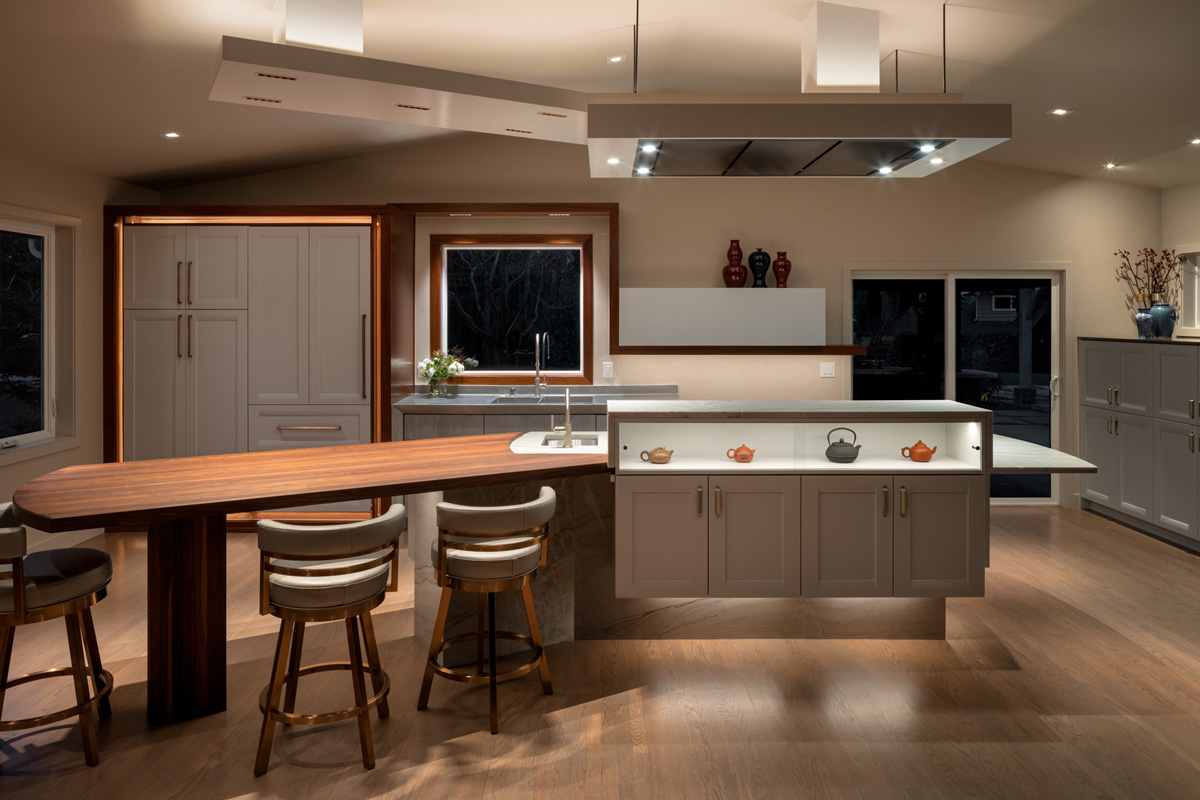
Landon played with variations on a theme of form…
Landon played with variations on a theme of form in this kitchen – the arc on the end of the seating area, echoed above and beneath the work area, in part thanks to the toe kick lighting. Open shelving in the island showcases the owner’s collection of pottery.
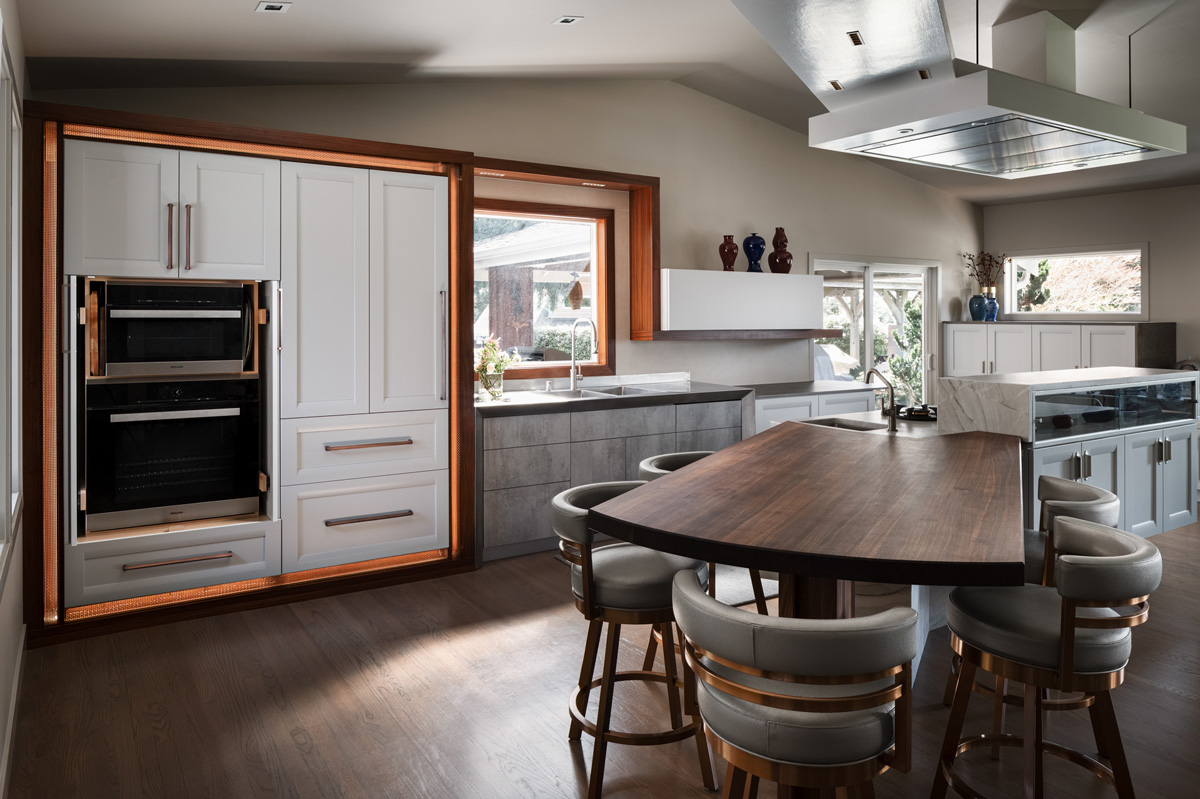
Landon believes this space showcases where…
Landon believes this space showcases where kitchen design is headed – evoking the feel of a living space. These clients live in an art-filled space that reflects their personality. ‘You can understand [this person’s] travels just by looking at the pots,’ he remarks.
“My predictions for retro trends that we’ll see more of in the near future are saturated colors, patterned and colorful tiles, colorful sofas, wallpapers with bold patterns and timeless slab front cabinets,” DuByne remarks. “Also, some clients that will opt for a more neutral kitchen or bathroom may be open to a colorful fridge, range or sink to add a pop of color and some drama.”
Contreras advises that the late 1980s and early 1990s might be the next era to look toward for retro trends. “Memphis-inspired design, with its bold, funky shapes and high-contrast colors, could become a popular choice for those seeking a playful, expressive aesthetic,” she notes. “At the same time, vintage-style lighting and plumbing fixtures are likely to remain strong, with finishes like unlacquered brass, polished nickel, and colorful enamel bringing a touch of old-world charm to modern spaces. What’s exciting is that clients today are becoming more comfortable blending different eras to create a personalized look. This creative mix of retro influences – whether it’s a splash of ’80s geometry or a nod to classic hardware – will continue to offer limitless possibilities for designers and our clients.”