
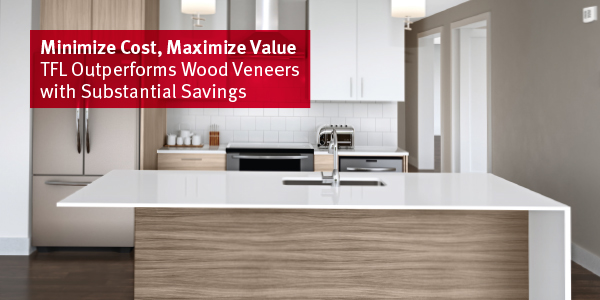
What is Value Engineering & Why Does it Matter?
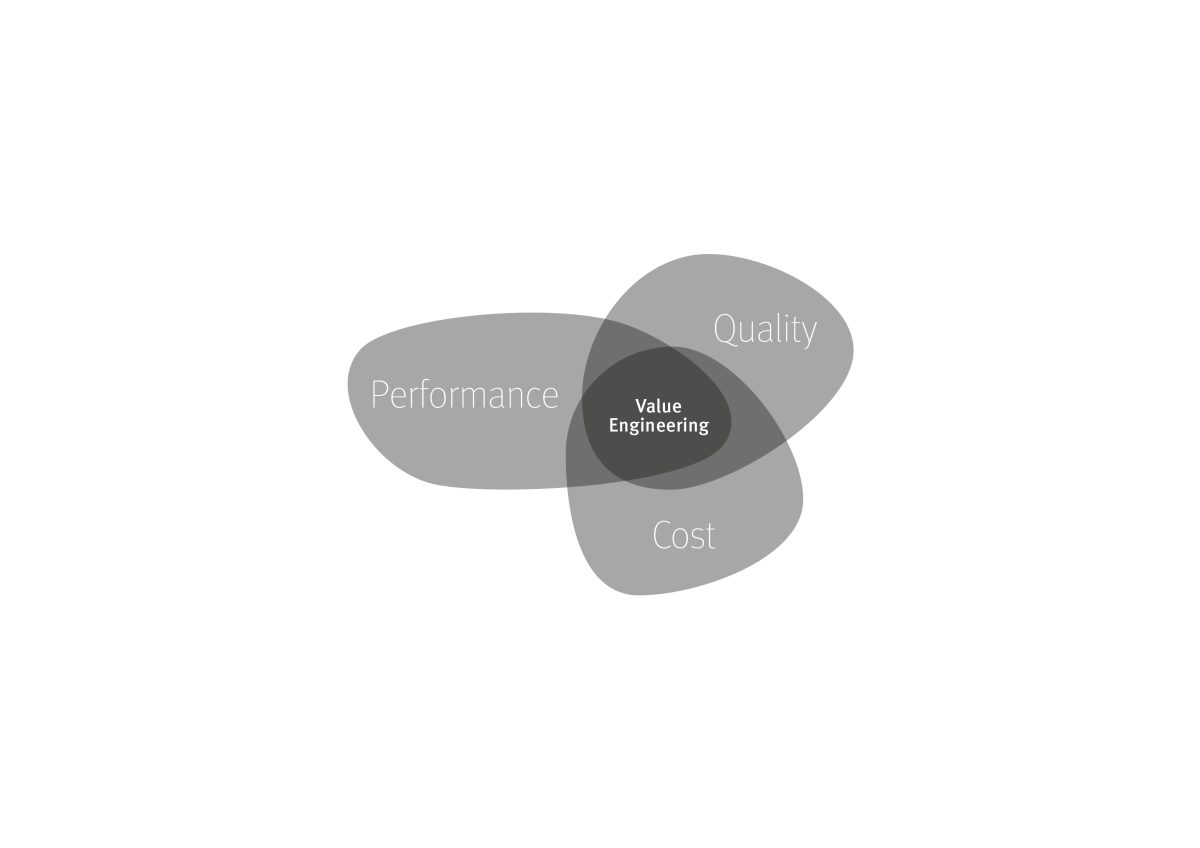
Value Engineering is a methodical process that analyzes design concepts, materials and
project requirements to lower costs while preserving quality, performance and safety. The
goal isn’t to cut corners – it’s to avoid overpaying when a more cost-effective product is
available offering comparable quality and durability.
For designers, fabricators and builders, Value Engineering ensures budgets stretch further
without compromising the end result. One of the clearest ways to apply this principle in
interiors is through the choice of decorative surface materials.
TFL: Cost-Efficient, High-Value Surfaces
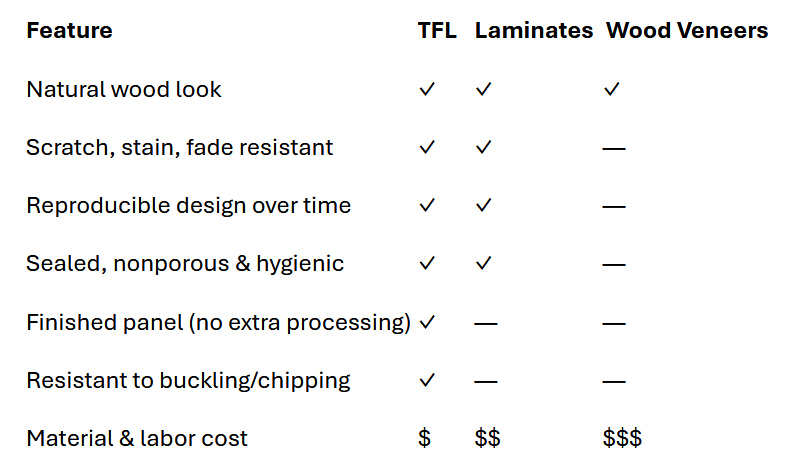
Thermally fused laminate (TFL) delivers substantial savings over traditional wood veneers,
without sacrificing performance or aesthetics.
How It’s Made:
TFL is created by fusing resin-impregnated decorative paper directly onto both sides of a
substrate such as particleboard or MDF under heat and pressure. The result: a finished,
durable, nonporous panel that is easy to process and hygienic.
Benefits of TFL:
- Easy to process as a finished panel
- Durable and fade resistant
- High-quality appearance that replicates natural wood
- Hygienic, nonporous surface
- Cost and labor savings compared to veneers and laminates
Applications:
TFL performs well in both residential and commercial spaces, including healthcare,
hospitality and workplace design.
Laminates: Durability with Design Flexibility
High-pressure laminates (HPL) are some of the most versatile decorative materials on the
market. Constructed from layers of resin-impregnated papers, they must be applied to a
substrate, such as particleboard or MDF.
Benefits of Laminates:
- Exceptional durability for high-traffic horizontal surfaces
- Ability to be postformed for curved or detailed edges
- Hygienic and fade resistant
- High design flexibility
Applications:
Best for areas requiring superior wear resistance, such as countertops, desktops and
heavy-use public spaces.
Veneers: Natural Beauty, Higher Cost
Wood veneers offer authentic wood grain aesthetics but often at a premium. Veneers
require finishing, are more prone to inconsistencies, and involve higher material and labor
costs. They remain a high-end choice for projects prioritizing prestige and natural variation,
but they come with trade-offs in durability and budget efficiency.
Side-by-Side Comparison
Real-World Value: Case Study Comparisons
Fabricators partnering with EGGER conducted side-by-side project estimates comparing
TFL, laminates and veneers.
- TFL & Laminates vs. HPL alone: Up to 50% savings in material and labor costs.
- TFL vs. Veneers: Up to 79% savings while maintaining quality, durability and
aesthetics.
These findings highlight how thoughtful material selection can significantly optimize
project budgets without reducing performance.
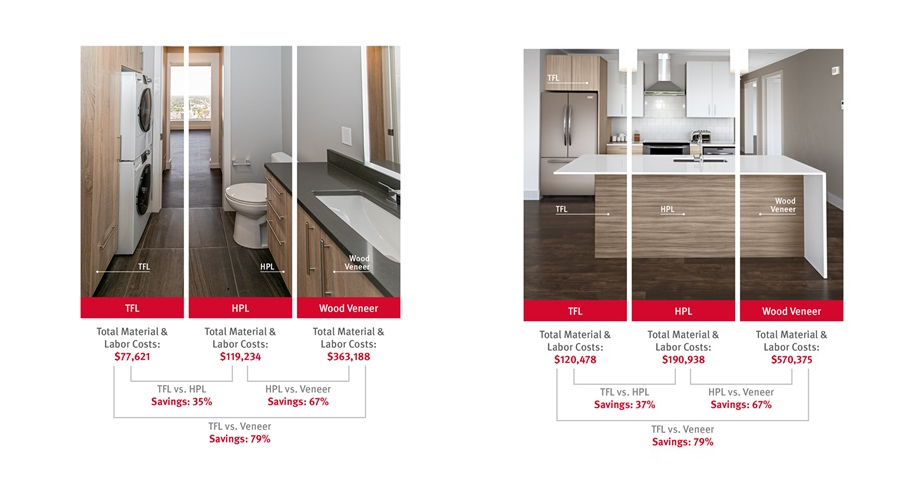
Location: Downtown Rochester, NY *Costs were based on 11/2021 prices in Rochester, NY
The EGGER Advantage
EGGER’s TFL and laminate surfaces combine European design leadership with high-
performance engineering. Designed for versatility and efficiency, these materials make it
possible to achieve elevated design at a fraction of the cost of veneers.
For architects, designers and fabricators, this means maximizing value while maintaining
the high standards clients expect.
The Bottom Line
Value Engineering isn’t about cutting costs at the expense of quality – it’s about making
smarter material choices that deliver the same (or better) performance at a lower cost.
By choosing TFL and laminates over wood veneers, design professionals can:
- Reduce costs significantly
- Streamline processing and fabrication
- Deliver durable, hygienic and beautiful results
- Ensure long-term consistency and performance
Minimize cost. Maximize value. That’s the promise of TFL.