

CHICAGO — Kitchen and bath design firms are feeling the pinch of ever-rising business expenses, with product/materials costs, labor shortages, shaky consumer confidence and tariff concerns among the headwinds dampening 2025 profit projections.
That’s the key finding of a nationwide survey conducted by Kitchen & Bath Design News in conjunction with Houston-based market analyst Bryan Research. The online survey, fielded in May, drew 150+ responses from company owners and principals familiar with their firm’s business metrics (see related Editorial).
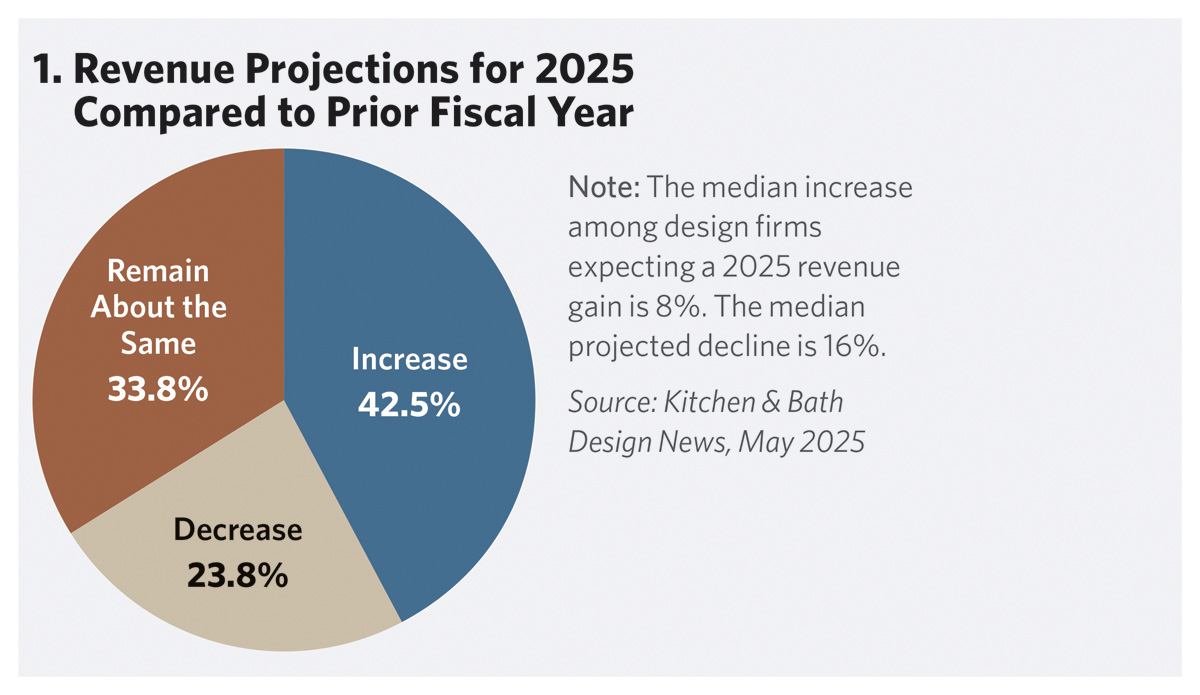
According to the survey’s findings, nearly 60 percent of the dealers and designers polled told KBDN that they expect their company’s annual revenue to either decline or remain static in fiscal-year 2025. By comparison, roughly 40 percent expect 2025 revenue to increase, with the median gain projected to be about 8% (see Figure 1).
Among those who predict a 2025 revenue increase, about one-third see revenue rising no more than 5%, while about 40 percent predict it will increase 6% to 10%, 10 percent see it rising 11% to 15%, six percent foresee a 16% to 20% gain, and two percent forecast that their company’s revenue gain will be less than 1%. In contrast, only a relative handful predict that 2025 revenue will increase more than 20%.
For design firms that foresee a 2025 revenue decline, 13 percent predict the decline will be 1% to 5%. By comparison, 18 percent see revenue falling 6% to 10%; 16 percent predict it will decline 11% to 15%; 29 percent see it dropping 16% to 20%, and 24 percent predict that 2025 revenue will decline 20+%. The median forecasted decline is 16%.
Perhaps more forebodingly, 2025 projections have dampened as the year has unfolded.
Indeed, roughly half the firms surveyed by KBDN report that estimates regarding 2025 revenue and profits have changed substantively the past six months, while only about a quarter reporting that their 2025 projections have remained static, and one-third noting that their projections are currently more pessimistic than earlier in the year. By comparison, less than 20 percent of survey respondents report that their 2025 projections are more optimistic now, while nearly half say that the current business climate is too unpredictable to be certain.
Factors impacting Projections
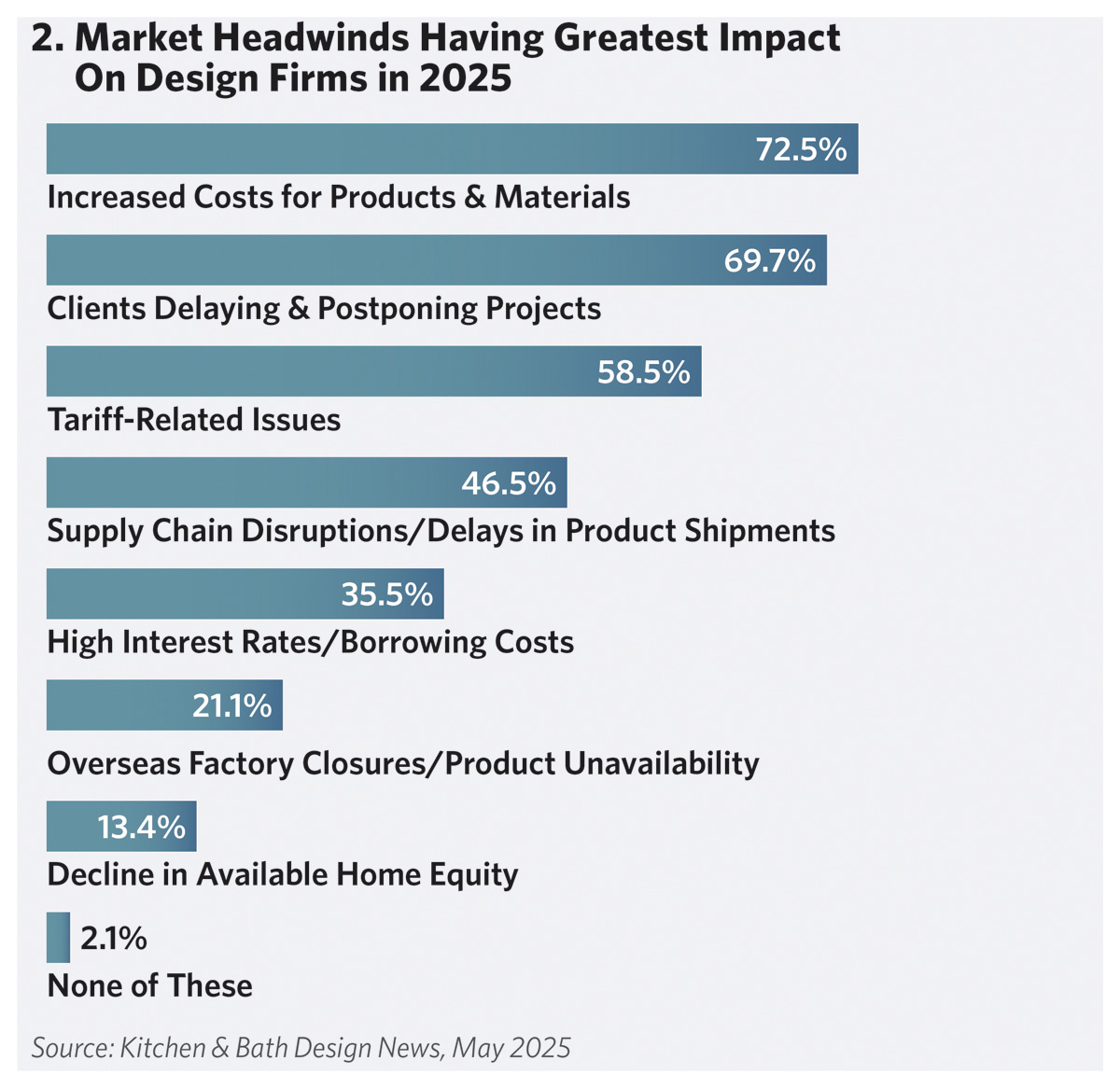
Among the market forces expected to put the greatest pressure on 2025 profits are steadily increasing costs for products such as cabinetry, plumbing fixtures, lumber and appliances, coupled with shaky consumer confidence that’s leading cost-conscious homeowners to trim their remodeling budgets, or to postpone/cancel projects entirely.
Additional headwinds include tariff-related concerns, supply chain disruptions and continued high interest rates/borrowing costs – all of which are seen resulting in fewer project sales, having to focus on lower-margin jobs and being forced to charge less for projects (see Figure 2).
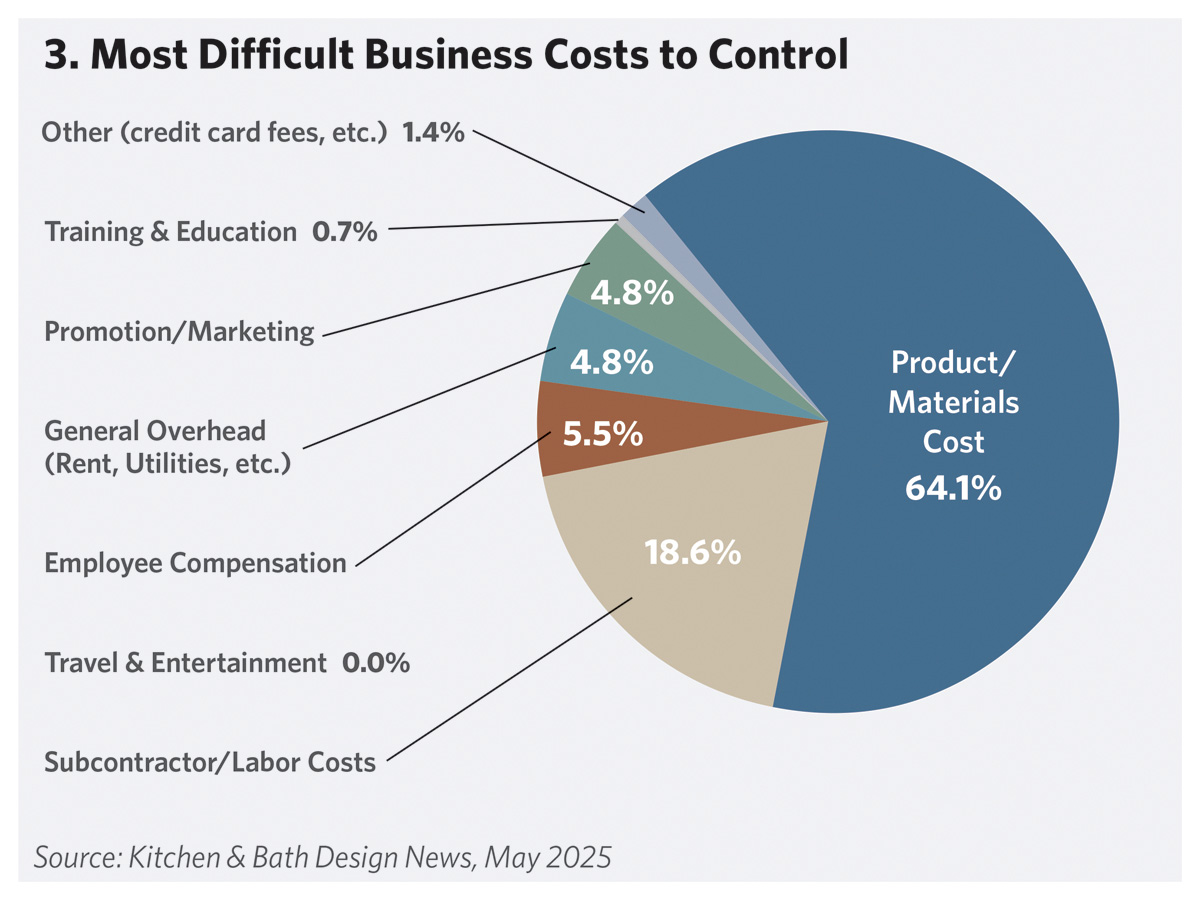
Product and material costs, survey respondents told KBDN, are by far the single-most difficult business costs to control in 2025. Subcontractor and labor costs also present a challenge, business owners report. Paling in comparison are costs tied to employee compensation, general overhead, promotion/marketing, travel/entertainment and training/education (see Figure 3).
Among operating expenses projected to increase most significantly in fiscal-year 2025 are costs for cabinetry, appliances, countertops and other key products (76.3%). Other increases are expected for subcontractor/labor costs (49.4%); general overhead (38.1%); employee compensation (26.9%) and promotion/marketing (22.5%). By contrast, only 9.4 percent of survey recipients foresee travel and entertainment expenses increasing, and even fewer (7.5 percent) project that training/education costs will rise.
Survey respondents report they anticipate that product/material costs will increase approximately 10% in the current fiscal year. Subcontractor/labor costs, they say, will increase by an average of about 7%.
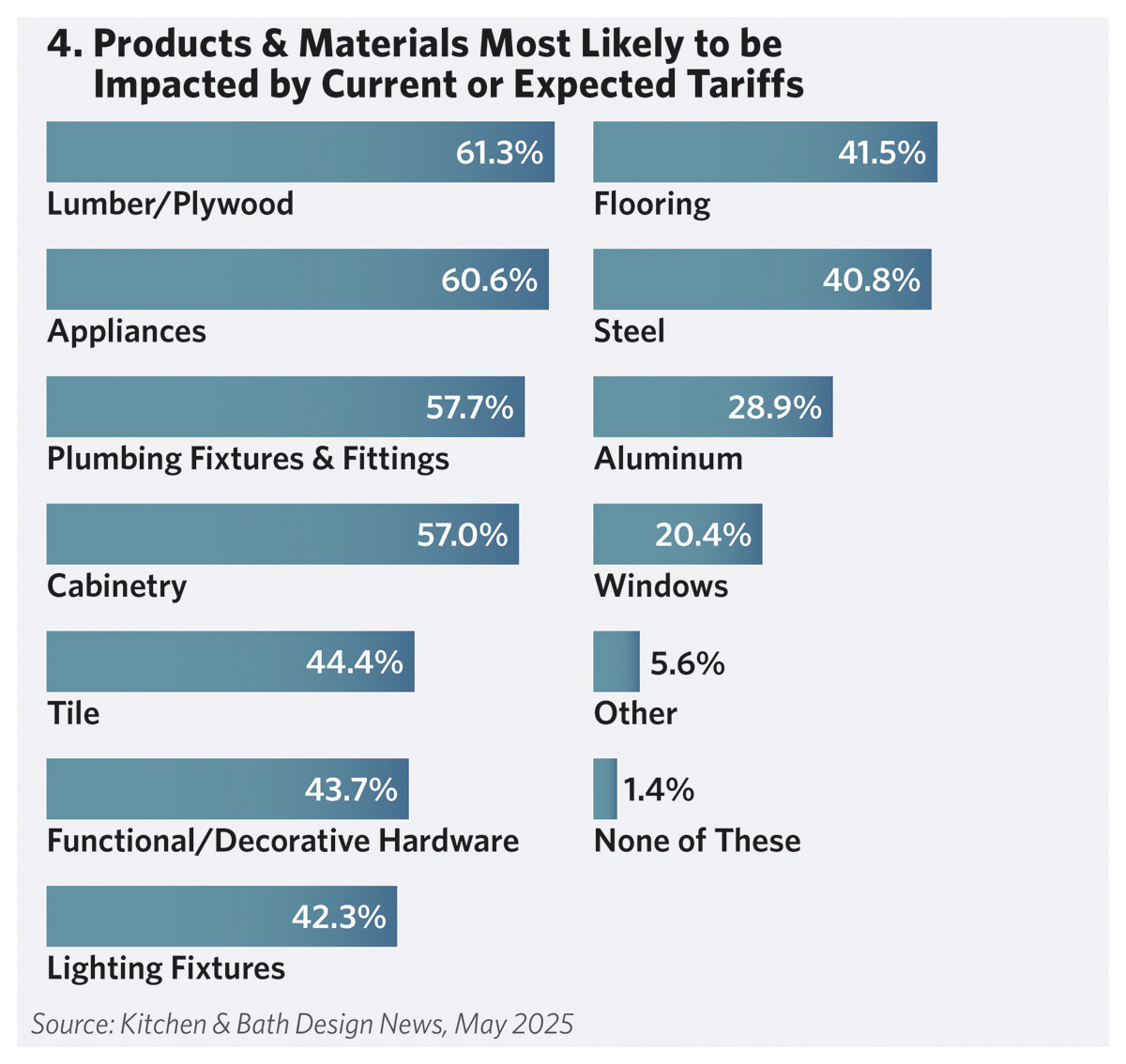
Regarding potential tariffs, a whopping 93.7 percent of survey respondents feel that prospective changes in U.S. trade policy are likely to increase product and material costs. In contrast, only a handful foresee product and material costs remaining materially unaffected by potential foreign tariffs. The products that concern design firms the most include lumber/plywood, appliances, plumbing fixtures/fittings and cabinetry (see Figure 4).
Among other survey findings:
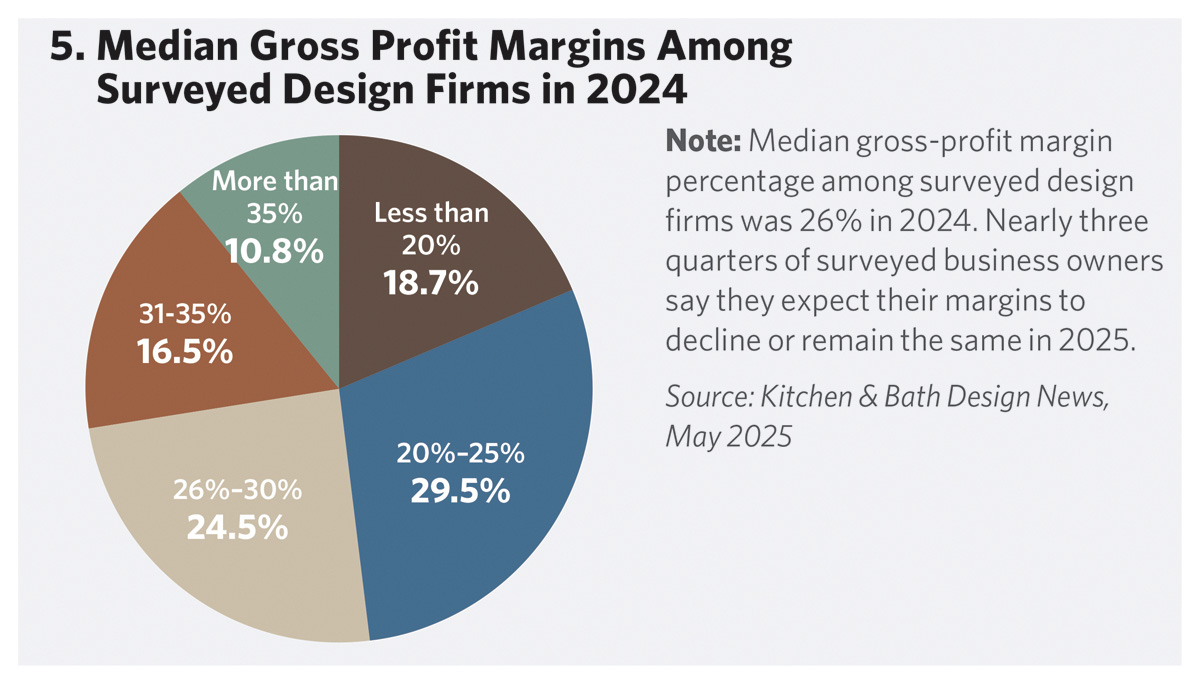
- The median gross-profit margin in their company’s last fiscal year among survey participants was 26%, although about half of those polled reported a fiscal 2024 gross-profit margin of 25% or less (see Figure 5). Nearly three quarters of surveyed business owners say they expect their gross-profit margins to decline or remain about the same as last year in 2025. Projected lower profit margins are attributable largely to an anticipated rise in costs.
- Survey respondents say they expect product/materials costs to rise by an average of about 10% this year. According to the latest industry estimates, suppliers have, on average, already increased prices about 6% year to date in response to newly enacted or anticipated tariffs.
- While concerns over trade issues, recession fears, worries over geopolitical tensions and supply chain concerns are reportedly on the rise, the availability of skilled labor is also proving to be a continuing concern, especially as it impacts kitchen and bath companies’ ability to meet demand. Concerns over interest rates are minimal, likely due to widely held assumptions that rates are unlikely to change significantly in 2005.
- More than 60 percent of those surveyed say they expect shortages among cabinet installers, finish carpenters, framers, plumbers and other skilled tradesmen to continue at current levels, while about 21 percent expect shortages to worsen. In contrast, only about 18 percent say they expect current labor shortages to improve.
Market Challenges Drawing Mixed Responses
CHICAGO — Today’s kitchen and bath market may be challenging to navigate, but most design firms are apparently finding ways to cope.
Indeed, the majority of company owners surveyed by Kitchen & Bath Design News report that they’ve already embraced an array of strategies aimed at mitigating rising business costs, recession fears, changes in trade policy, profit-margin pressures, labor shortages and other 2025 headwind. KEEP READING