
WASHINGTON, DC — The concepts of authenticity and connectivity are serving as a critical undercurrent to several overarching trends impacting interior design, from generational and familial shifts to work-life balance and quiet luxury.
That’s the key finding of the American Society of Interior Designers’ 2024 Trends Outlook, a research report identifying societal and demographic trends expected to impact interior design in the year ahead. Among those trends, the ASID reported, are consumers’ desire for connection, the allure of quiet luxury, blurred lines between live-work-and-play, and the intersection of sustainability, health and wellness, family and home, artificial intelligence, along with the impact of Gen Z.
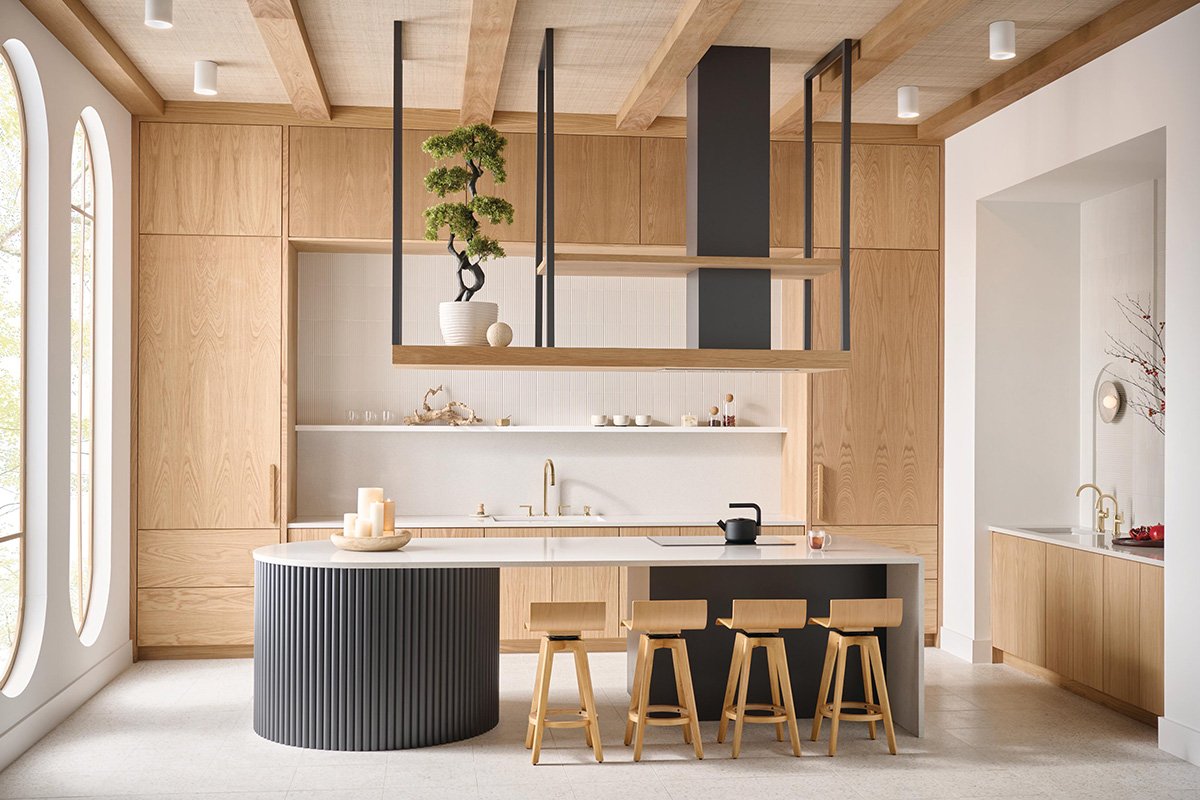
According to the report, Americans are currently experiencing family life in increasingly different ways, including through the rise of one-person households. With solo living on the rise, homeowners are seeking connectedness to loved ones through gathering spaces within the home, the ASID noted. For example, kitchens are utilizing large window walls to connect visually with the outdoors, while living rooms are using retractable window panels to extend spaces onto patios, the association said.
Among other key trends:
Blending Sustainability & Wellness: As designers think holistically about creating environments that support better health, many are increasingly making decisions contributing to personal wellness, including better indoor air quality, increased natural light and other amenities. “Sustainability is especially prevalent in 2024 as we tackle extreme weather events, with most Americans believing that climate change is harming people in the U.S. and likely to get worse,” the ASID said.
Aging in Place: More than one in four adults fall each year. That fear of falling may limit the activities of older adults, which can result in further physical decline, depression and social isolation, the ASID pointed out. “Innovative solutions that enable the elderly to remain in their own homes for longer are increasingly important, as a significant number of the population ages,” the ASID observed.
Learning From Gen Z: As the most racially and ethnically diverse generation, the members of Gen Z have distinctly different priorities than prior generations when it comes to health-related, political, social and cultural issues, the ASID noted. “Moving forward in 2024, designers should consider this change in consumer culture and use the generation’s evolving empathies and concerns to inform future design decisions,” the trade association added.
Blurring the Lines Between Live-Work-Play: Recent changes in the post-pandemic workplace have influenced a preference “for unique and authentic travel experiences, and blurred the lines of living, working, staying and playing,” said the ASID, noting that “as the lines between work and play fade, designers need to be well versed in cross-specialty design.”
AI Revolutionizing the Design Trade: Artificial Intelligence has long been utilized in commercial practice, but it is also gaining usage in residential markets, the ASID reported, noting that generative AI applications are being used in applications including the creation of floor plans and construction documents. ▪