
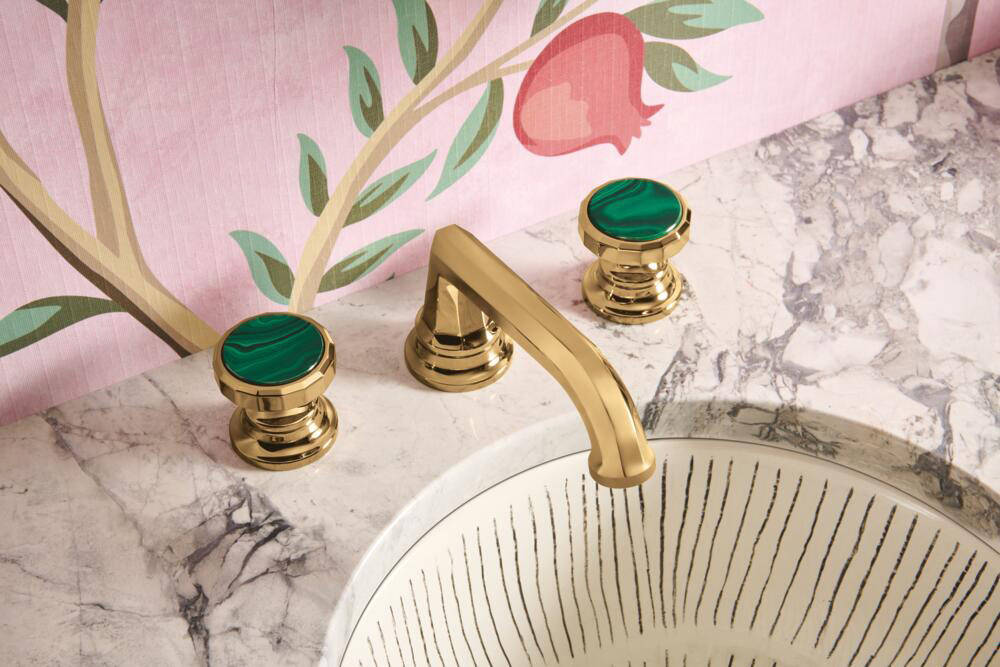
The bathroom is a place for both routines and respite; it must be a calming space that reflects the personality of the homeowners while also providing convenient, functional areas for self-care. Sinks and faucets are an integral part of the space, and key trends in these fixtures mirror those of the overall space, including personalization, clean design and attention to sustainability factors.
“Trends in sinks and faucets reflect a commitment to sustainability, sophistication and functional design,” says Jorge Cabrera, export manager for Noken Design, a part of the Porcelanosa Group, based in Ramsey, NJ.
“Bathroom sink and faucet trends continue to lean toward modern simplicity, customization and sustainability,” adds Nicole Matthews, brand manager for Lake Forest, CA-based Pfister. “Homeowners are embracing sleek, minimalist designs, with wall-mount and vessel sinks growing in popularity. Personalization is also key.”
Technology, as in most areas of the home, has an impact on sink and faucet trends in a variety of ways. “Technology influences almost every aspect of design today, and the kitchen and bathroom are no exception. Homeowners are constantly seeking the latest and smartest innovations, and it’s crucial to stay ahead of industry trends. Incorporating cutting- edge features into sinks and faucets not only enhances functionality but also makes daily life more convenient and efficient for homeowners,” observes Sally Edenfield, brand strategist, for Ruvati in Austin, TX.
Other trends include matte and metallic finishes, natural materials, pops of color and a bit of nostalgia. That’s according to manufacturers recently surveyed by Kitchen & Bath Design News.
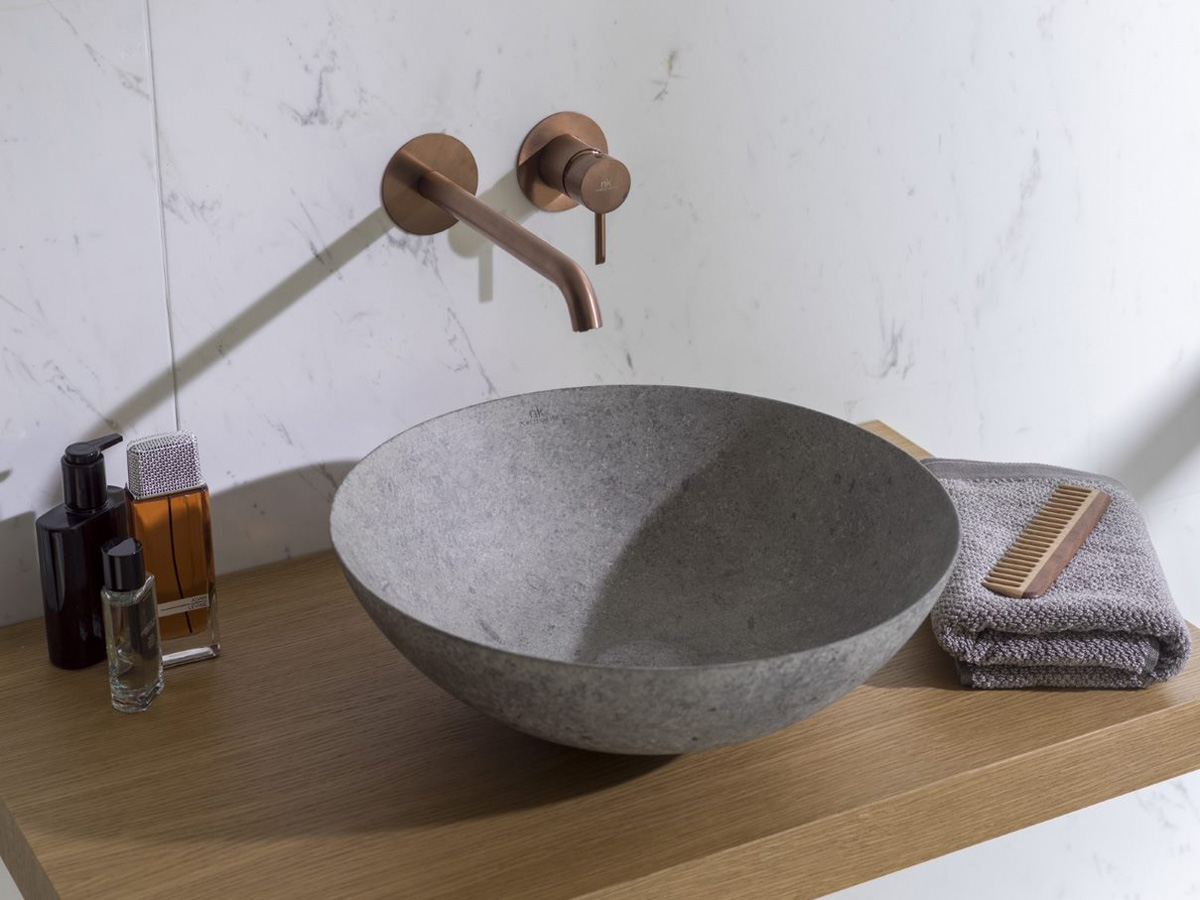
The Slender Wash Basin from Noken, part of the Porcelanosa Group, is a countertop wash basin with a thin edge without overflow available in several finishes. The washbasins are hand painted by skilled artisans, which makes them custom at both the visual and tactile level, notes the firm.
Personalized Retreat
As consumers continue the trend of converting their bathrooms into personal retreats, every facet of the design needs to align with this goal, including sink and faucet choices.
“The major trends for sinks and faucets are creating a minimalist, spa-like atmosphere and keeping sustainability top-of-mind in the bathroom. We’re seeing this in homeowners opting for sleek fixtures that blend form and function. Bathrooms have become a place coveted for being personal sanctuaries, and [homeowners] want spaces with fixtures that exude that energy,” stresses Danielle DeBoe Harper, senior creative style manager for Moen, based in North Olmsted, OH.
“In 2025, bathrooms are becoming more personalized, incorporating vibrant colors, natural materials and sculptural forms. Metallic finishes, present in both faucets and sinks, add a touch of sophistication and modernity. This combination of elements transforms the bathroom into a unique space, where design and functionality merge,” adds Cabrera.
Harper notes that demand for beautiful fixtures that also make life easier continues to grow. “From touchless features that make washing hands and multitasking a breeze, to built-in water-savings features, it’s become more important than ever to homeowners to have beautiful bathroom faucets and sinks that don’t sacrifice style for performance.”
“An increase in custom sink installation pushed plumbing manufacturers to adapt and offer items that allow for more flexibility during the installation phase,” states Diego Zanatta, business development manager – North America for New York, NY-based Fantini USA. More and more companies are also introducing both smart faucets and multi-functional faucets, he adds.
Howard Hyde, public relations manager for JACLO Industries in Cranford, NJ, believes consumers are looking for multi-functional options. “Not unlike kitchen faucets, there is demand for multi-spray mode bathroom faucets,” he remarks. “In addition, consumers are asking for swivel spouts. The key word is options.”
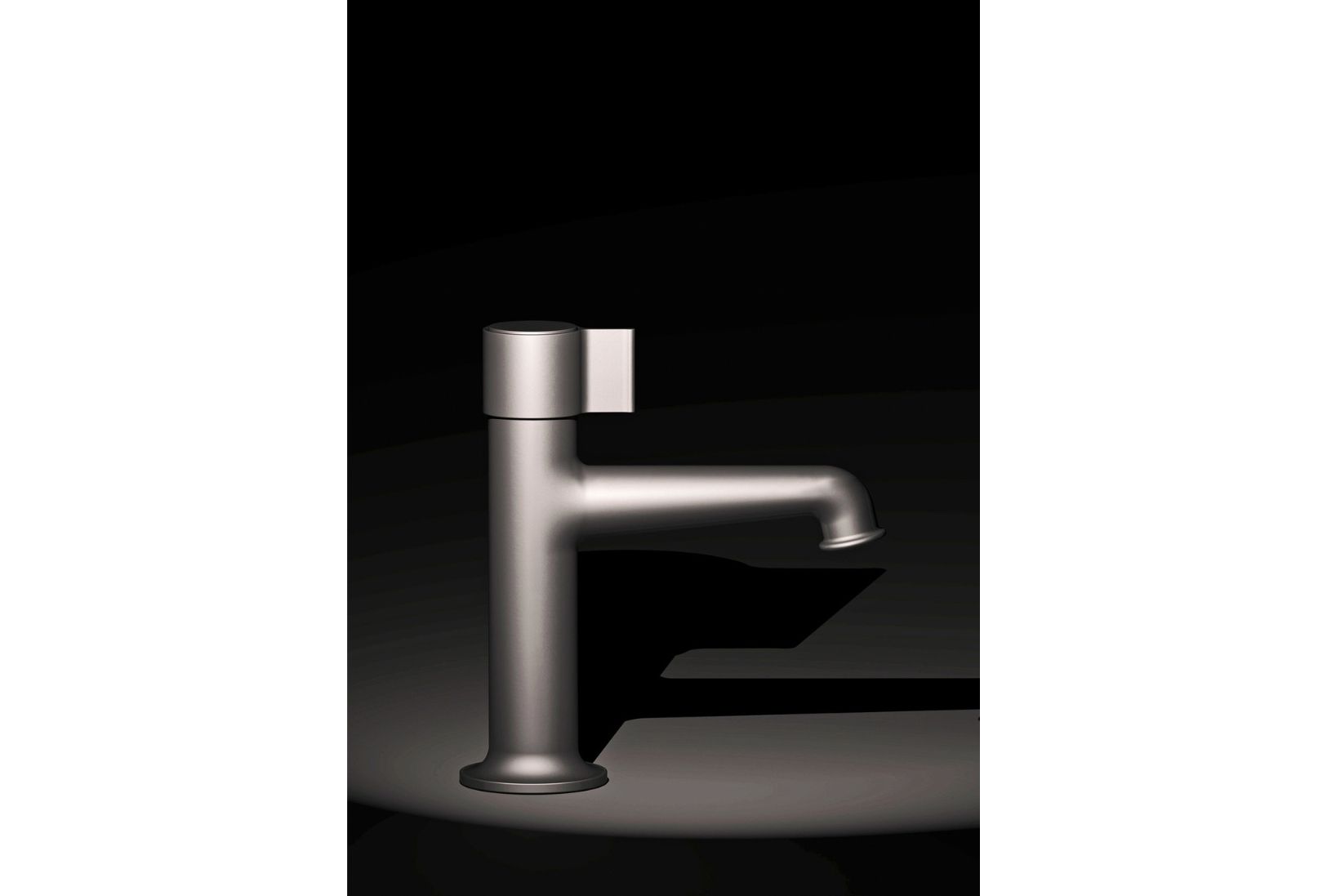
The Flora bath faucet, designed by Vincent Van Duysen for Fantini, sports an industrial aesthetic with a modern feel. Low, generous, ergonomic proportions are featured on the faucet, which is defined by its single- and double-lever handles. It is available in a Matte Gun Metal PVD finish.
Natural Simplicity
Manufacturers report that sinks with minimalist design, made with natural materials in neutral tones, are trending.
Zanatta has noticed renewed interest in transitional styles, with the inclusion of details or inserts in natural materials like stone, wood or glass.
“For sinks, clean lines, simple designs with natural materials and neutral tones are highly desired,” stresses DeBoe Harper. “Having sinks that are crafted from the same materials as the countertops can deliver a sophisticated, uninterrupted aesthetic that makes the space appear larger.”
“Stone and raw organic material sinks are gaining popularity,” notes Eveline Simard, House of Rohl director of industrial design in Montreal, Québec, Canada. “Semi-recessed sink installations are also emerging as a stylish design choice, allowing designers to nest vessel sinks into vanities for a polished look.”
Cabrera reports, “In sinks, natural materials such as marble and stone are gaining prominence, combining strength and elegance.” Sinks are evolving towards matte finishes, he adds, and the diversity of colors allows for the creation of more personalized spaces.
“Customers are increasingly drawn to bold and unique materials like epiStone for bathroom sinks, offering vibrant colors that make a statement,” adds Edenfield.
Janet Vokes, brand and sales director for Roca Bathrooms US, based in Miami, FL, agrees that matte white finish is overtaking gloss white, and earth tones are trending. “Ceramic washbasins are most popular, although natural materials like stone and glazed steel are great choices for durability and unique shapes and colors,” she says. She adds that there is a growing trend to bring the workstation concept from the kitchen into the bathroom.
Edenfield says they are introducing workstation bathroom sinks later this year. “These sinks have made a huge splash in kitchen designs, and we’re eager to see how they’ll transform smaller bathroom spaces as well,” she offers.
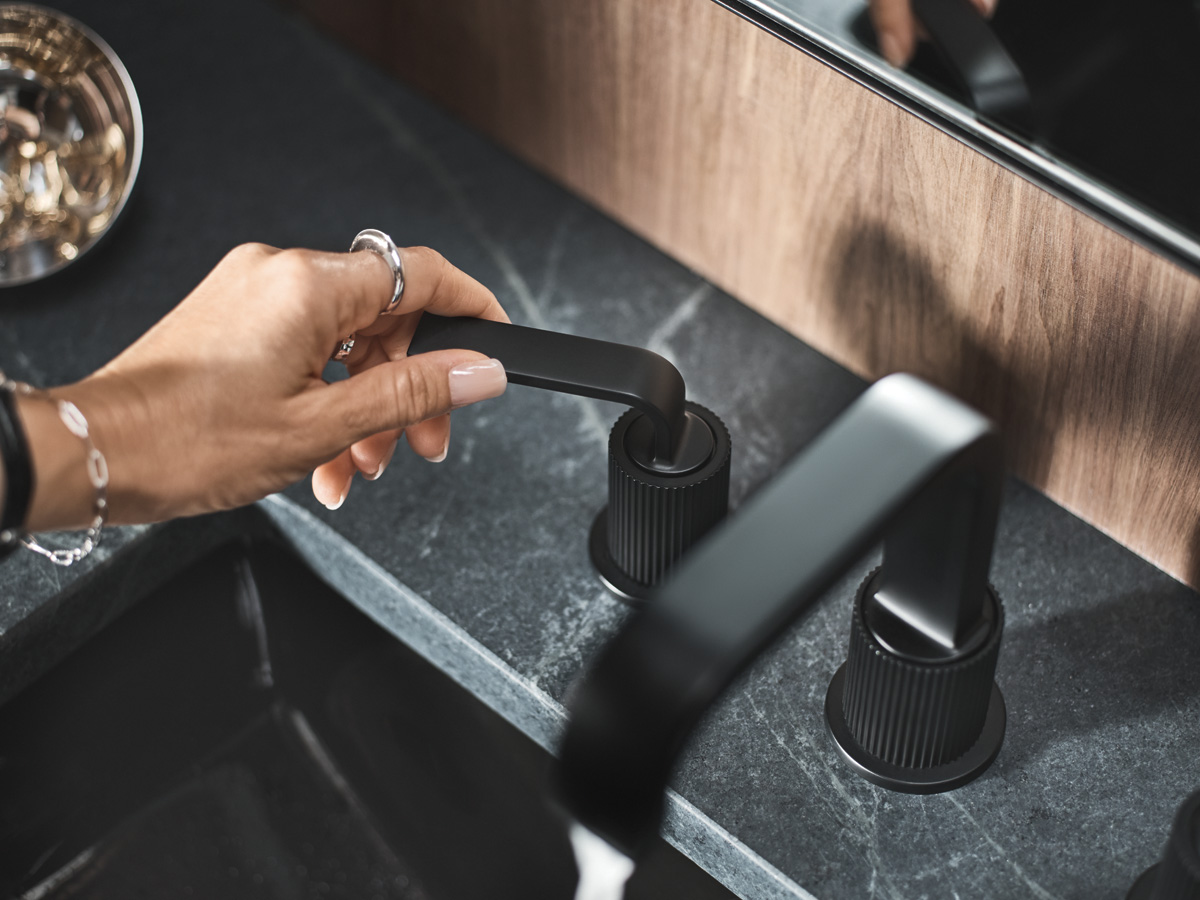
Moen’s Cambium Bath Suite features a combination of machine textures, fluted patterns and a mixed metal finish. Flat, thin rectangular lever handles, a large radius and rectangular spouts grace the faucet. All fittings are ADA and WaterSense compliant.
Efficient and Sustainable
Bathroom sinks and faucet trends are impacted by technological advances that promote functionality, design, convenience and sustainability.
“Technology is revolutionizing the kitchen and bath industry, expanding both on functionality and design possibilities,” Simard reports. “Smart features like touchless faucets offer enhanced convenience and hygiene, allowing for a more intuitive, hands-free experience. These innovations are not just about ease of use – they’re also about sustainability, helping to reduce water waste.”
Water conservation is a top consideration for both consumers and manufacturers. Deboe Harper states, “With growing water scarcity across the U.S., bathroom faucets are increasingly being designed with water-saving innovations to help minimize overuse without homeowners even thinking about it.”
“Sustainability and water conservation and ‘eco-friendly’ features are also evolving, responding to changes in many state laws,” adds Hyde. “We are seeing more requests for water efficiency and faucets with water-
saving aerators. Consumers are becoming more conscious of sustainability and conservation, for sure.”
“Technology plays a key role in sink and faucet trends, especially in water efficiency,” agrees Cabrera. “Today’s innovations make it possible to reduce consumption without affecting pressure or the user experience, optimizing flow and ensuring more sustainable use. This not only contributes to saving resources, but also improves comfort and functionality in the kitchen and bathroom.”
Advances in technology promote sustainability in other ways as well. “Sustainability is at the core of what technology can do for us,” Simard says. “On one hand, technology enables the use of alternative materials that reduce environmental impact; on the other, we have innovative solutions such as innovative aerators with advanced water jets technology like boost faucet performance that allow water-saving solutions that don’t compromise the overall experience.”
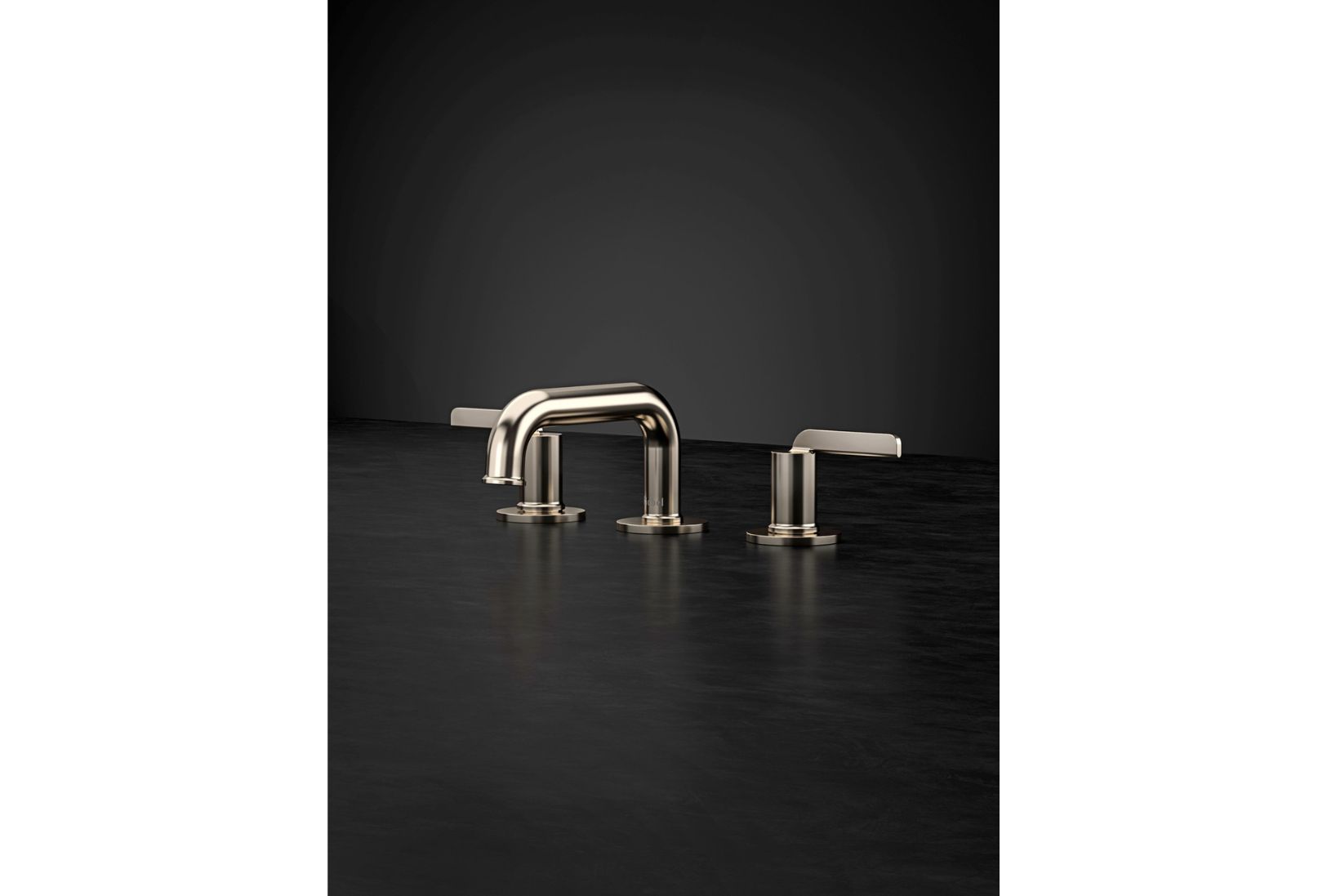
Inspired by the Art Deco movement and Streamline Moderne industrial design, the Authentica Collection by Riobel from The House of Rohl features cylindrical shapes and horizontal lines that evoke motion and fluidity, according to the company. The collection includes lav faucets, tub fillers and more.
Design Advances
Style and design can also be shaped by the latest innovations in technology. “Materiality and technologies with manufacturing processes that allow for thin edge design, unique shapes and embedded textures in washbasins can add subtle details that have big impact in the overall aesthetic,” notes Vokes.
“From a design perspective, advancements in manufacturing have made customizable finishes and materials more accessible, enabling consumers and designers a more personalized, tailored design experience,” Simard adds. “Technology is reshaping our industry, driving smarter, more sustainable solutions while expanding creative possibilities.”
Hyde agrees. “Design, and the speed of design, is also changing due to technology. The advent of AI is having a wide impact on the entire design, manufacturing and marketing/communication process.”
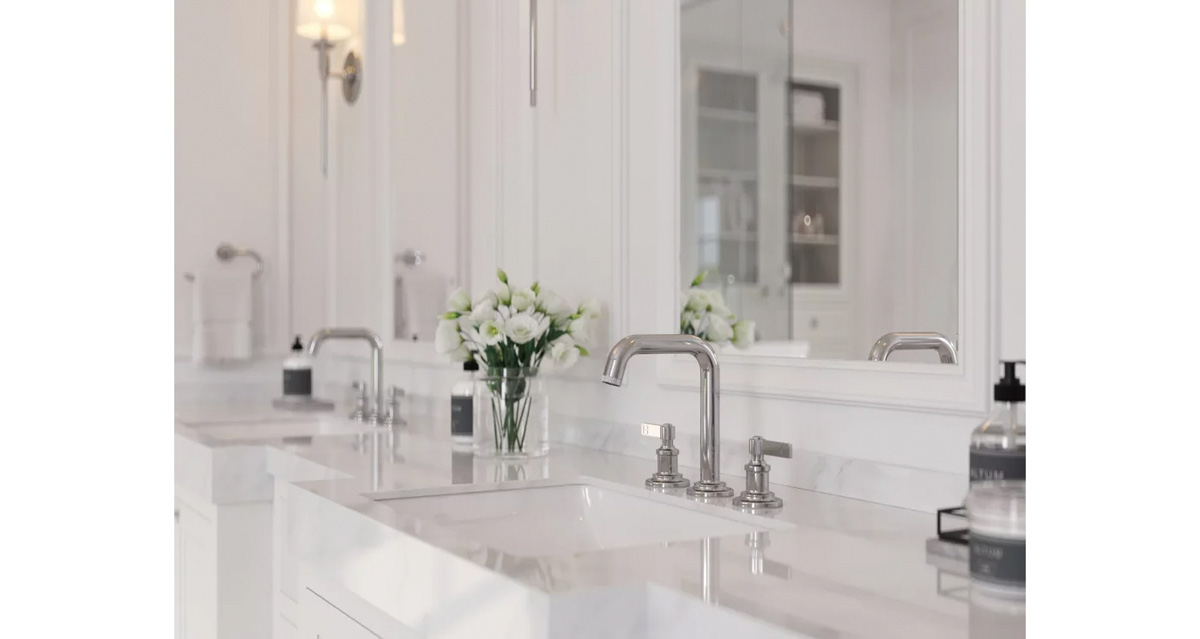
The Winter Park Widespread Bathroom Faucet by Pfister showcases a two-handle design and an 8″ widespread configuration, with water-saving technology. The faucet is available in finishes including polished chrome, spot-defense matte black, polished nickel and polished gold.
Clean and Convenient
Consumers are also interested in technology that allows for higher convenience and better hygiene, manufacturers say.
“The ability to minimize dirt and germs has always been important to homeowners but has especially grown in the last few years – especially when it comes to touchless faucets. It goes beyond simply not wanting to touch a dirty faucet handle – it’s about convenience and making life’s daily routines simpler and healthier for the whole household,” says DeBoe Harper.
Matthews agrees that touchless and voice-activated options are becoming more common for improved hygiene and convenience.
Vokes, on the other hand, notes that while touch-free technology in bathroom faucets does allow for enhanced hygiene, adoption of this technology in the bathroom is slow.
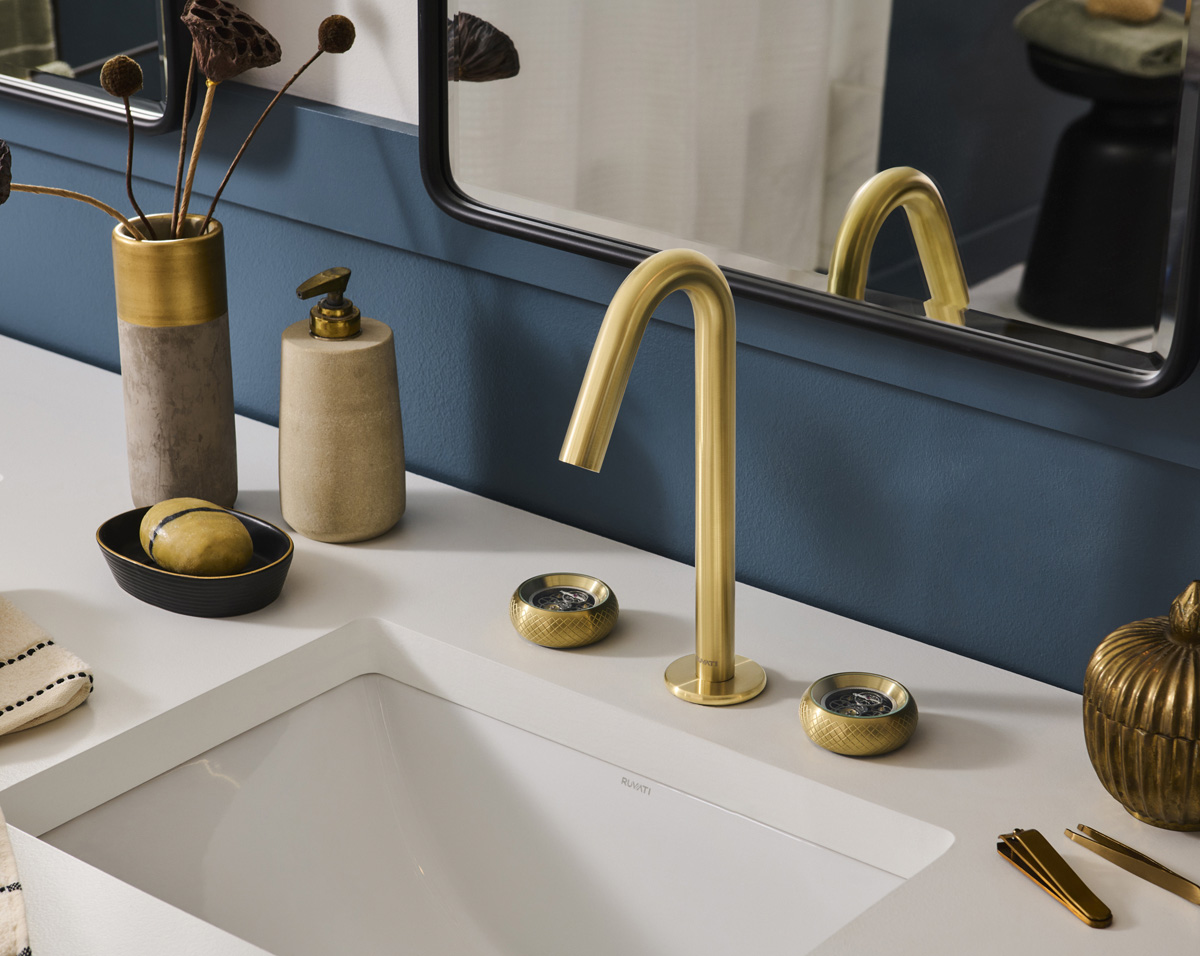
Ruvati has expanded its product offering to a new category with the introduction of the Chrono collection, with watch face-inspired handles. The twist, ergonomic handles are ADA compliant. Crafted from brass, the bath faucets are available in brushed nickel or brushed gold finishes.
Modern Finishes with Flair
The overarching desire for personalized spaces creates a need for myriad options when it comes to faucet finishes. Modern finishes, matte and metallic finishes, along with customized color finishes, are on top, manufacturers report.
“The most popular finishes for sinks and faucets are stainless steel, matte black, brushed nickel and gold, with each offering a modern, durable look that can easily complement other fixtures,” says Edenfield.
“We have seen a surge in the popularity of matte black finishes due to their versatility and ability to blend well with a variety of different preferred design aesthetics and homeowner preferences,” reports DeBoe Harper. “Less traditional finishes such as brushed gold and bronzed gold are also growing in popularity as well.
“Consumers are incorporating faucets with mixed metals to bring unique styling to the sink – especially with black, brushed nickel and gold,” she continues. “To further embrace this clean look, seamless integration and cohesive fixtures and accessories are on the rise.”
Vokes agrees that matte black and gold are popular, along with other metallic finishes. “Polished nickel is always a timeless choice and aligns well with a resurgence of vintage design aesthetics,” she adds.
“Matte dark colors are still popular, but we get many requests for custom colors as well,” notes Zanatta. “PVD technology offers the possibility to increase the range of standard and custom options.”
Hyde states that matte black, graphite, brassy and gold tones are the most popular. “Our fashion colors have certainly garnered a lot of attention these days,” he adds. “Consumers today are wanting to express their individuality and personality…and standard issue doesn’t cut it anymore!”
One of the most exciting trends, Simard relates, is the return of living finishes, such as aged or unlacquered brass. “These finishes develop a beautiful patina over time, adding warmth, vintage charm and a tactile, visual texture to the space. Perfect for modern and traditional interiors, they seamlessly integrate into the design, particularly in fixtures like faucets, mirrors, light fixtures and cabinet hardware. These finishes create a refined, lived-in, tailored look that brings a sense of history and individuality to the room.”
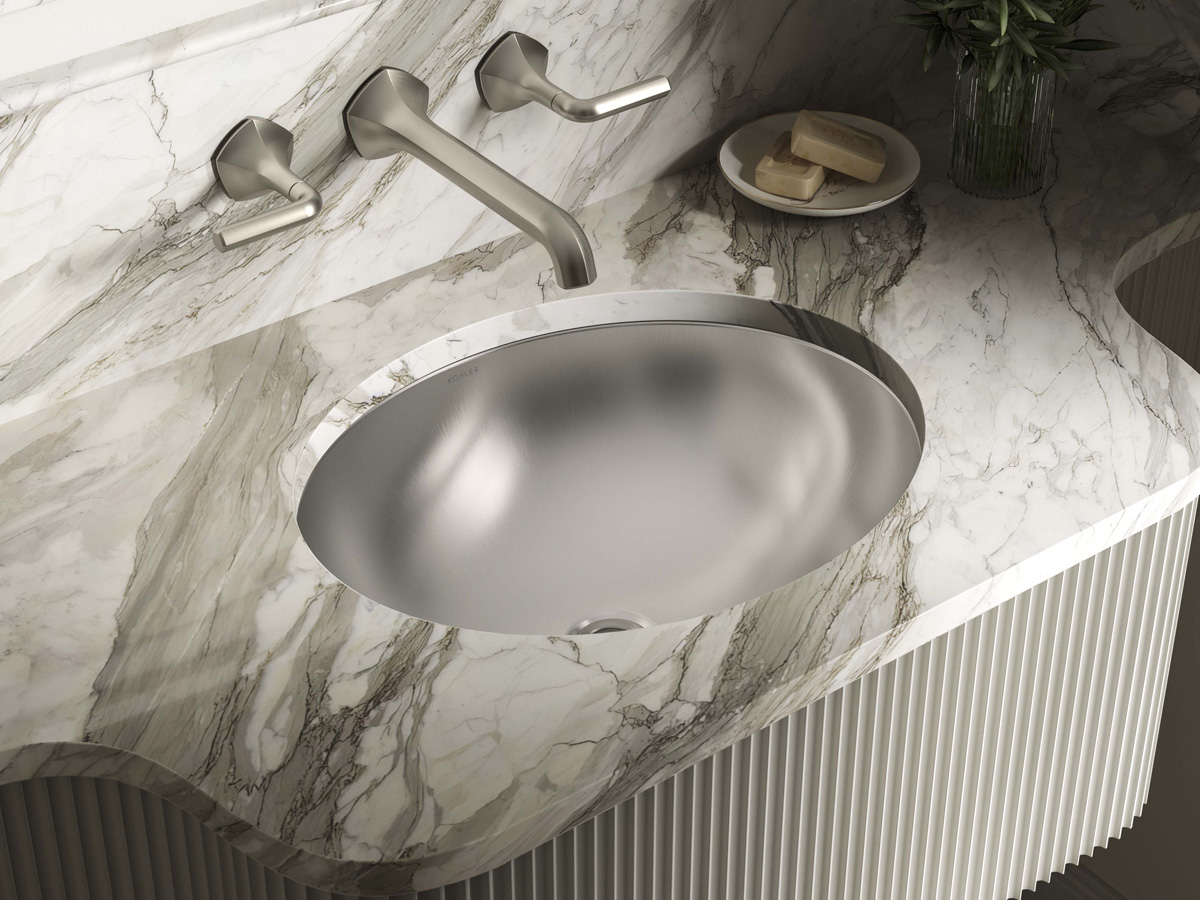
The Bachata Bathroom Sink collection from Kohler is now available in two new finish options – Vibrant Brushed Moderne Brass and Vibrant Brushed Bronze – alongside the original Luster and Mirror options. Available as a drop-in or undermount sink, the vessel sports a minimalist style with a satin finish.
On the Wall
Manufacturers say there is increased interest in wall mounting for both sinks and faucets.
“In terms of configurations, we’re seeing a significant rise in wall-mounted faucets, which complement the resurgence of transitional and traditional interior styles,” says Simard. “These fixtures work wonderfully with both vessel and undermount sinks, offering a new experience around the sink area.”
“Built-in wall-mounted design is a growing trend, prioritizing built-in faucets that free up space and create a cleaner, more minimalist ambience,” Cabrera states.
“While undermount sinks provide a seamless, popular look, we are seeing vessel sinks and wall-mounted sinks gain traction in the bathroom,” notes DeBoe Harper. “Vessel sinks add a unique, elevated focal point while wall-mounted sinks are perfect for smaller bathrooms giving the essence of increased spaciousness.”
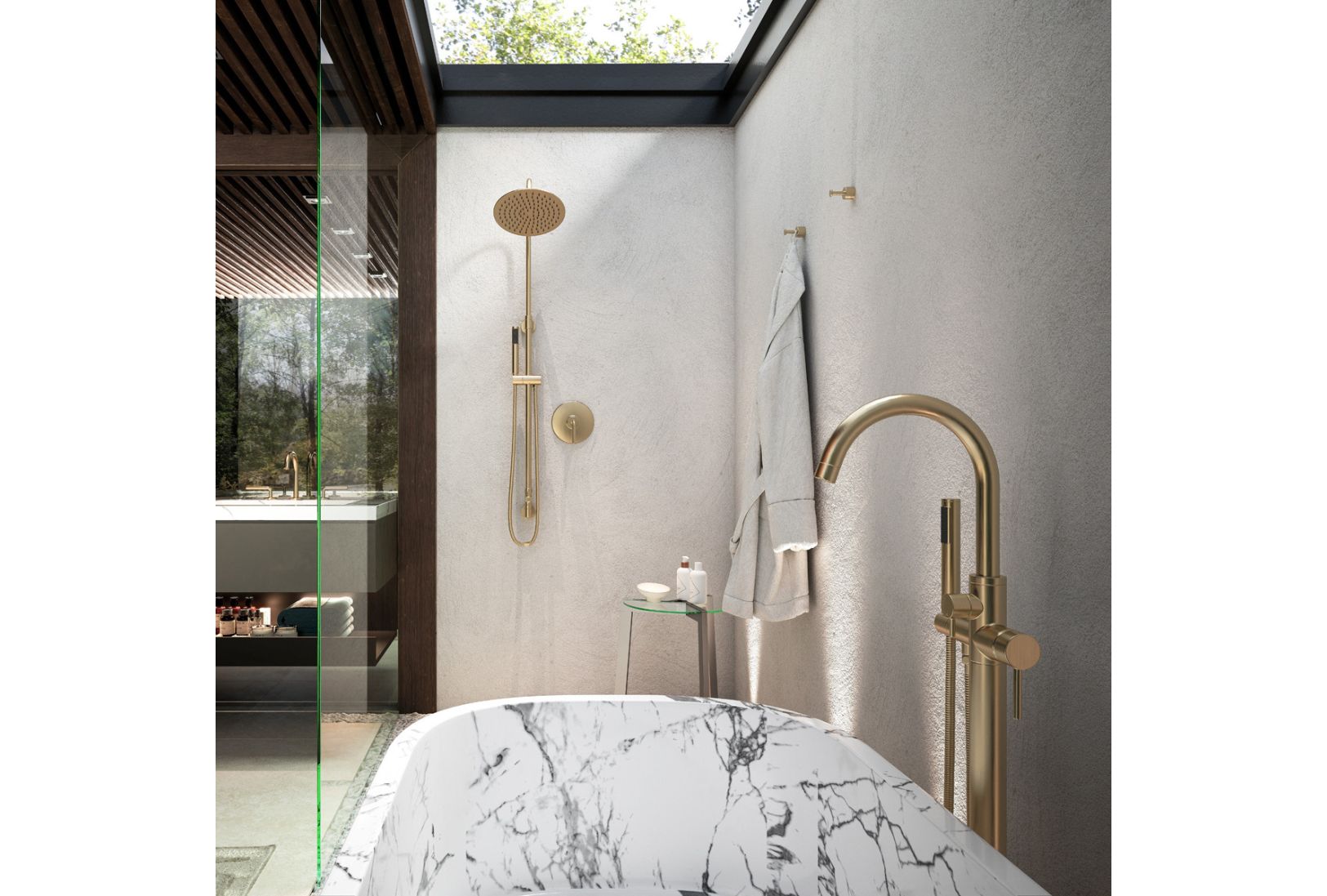
Jaclo’s mid-century-modern-inspired Lila collection features clean lines and a flared base for an elevated design aesthetic, notes the firm. The faucets and tub fillers in the line are available in lever and cross-handle options, in 35+ finishes.
Return to the Past
Manufacturers are seeing some movement toward designs and colors from days gone by.
Hyde says there’s a trend towards sinks in unique materials, shapes, sizes and colors, including traditional styles like pedestal sinks. “‘Retro’ colors from the 1950’s and 1960’s are also making a comeback,” he adds.
Simard believes nostalgia has sparked fresh creativity across the bathroom design world. “This trend is about honoring history while meeting contemporary needs. Plumbing collections are drawing inspiration from iconic aesthetic movements, introducing new geometries, textures and detailing that feel timeless yet fresh. The influence of the 1920’s Art Deco era remains a strong influence in our industry with its ornaments and bold geometric shapes.”
Featured Products
Click on product image to request more information. See the full list of featured products from this article in the May 2025 issue of KBDN.