

During those first dreadful months of COVID-19, much of our outside lives moved home. We set up areas to work (maybe our housemates did too). We set up areas to exercise. We set up areas for study. Our living spaces suddenly had to multitask as hard as our lives always have. Though millions of Americans have returned to their workplaces, classrooms and gyms, many others haven’t. So our homes are still multitasking – and so are many of our clients. Hail the updated flex room!
Builders have long offered what they call “bonus rooms” and homeowners have used them, in turn, for homework stations, home offices and hobby rooms in retirement. The shift has come from the increasing pace of change, or these spaces doing double or triple duty at the same time. I asked eight pros to weigh in on what they’re seeing and doing in this regard. They are:
- Teri Slavik-Tsuyuki, co-founder of the America at Home Study and principal at community development research firm
tst ink; - Karen Ellerman, sales and marketing v.p. for national builder Shea Homes’ Southern California division;
- San Diego-based smart home integrator Troy Dunnington;
- Fabiana Scavolini, CEO of the eponymous Italian cabinet manufacturer;
- Los Angeles-based architect Dean Larkin;
- Buffalo area kitchen designer Lauren Schulte;
- Interior designer Allison Fannin in Lubbock;
- Interior designer and ASID Colorado Chapter President Kelly Flynn.
Overview
“In the last few years, we have been witnessing a profound evolution of living spaces: our lifestyle has changed and our homes, as a consequence, needed a transformation. Thus, designing domestic spaces revolves around a new perspective, and the idea of ‘fluid’ rooms fits these new needs,” Scavolini points out.
American homeowners agree! “Respondents to the America at Home Study told us what changes they have made in their homes because of more of life spent at home the past few years,” comments Slavik-Tsuyuki.
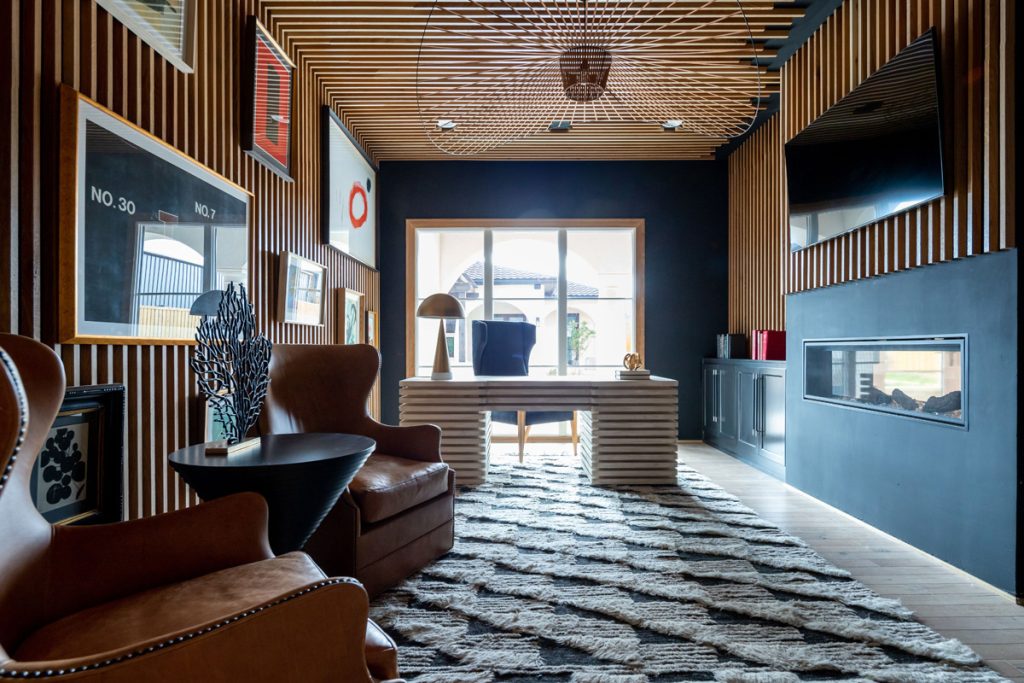
A handsome desk and storage adds functionality to cozy den.
Photo: Allison Fannin/Two Thirty Five Designs/Kristen Mayfield Photography
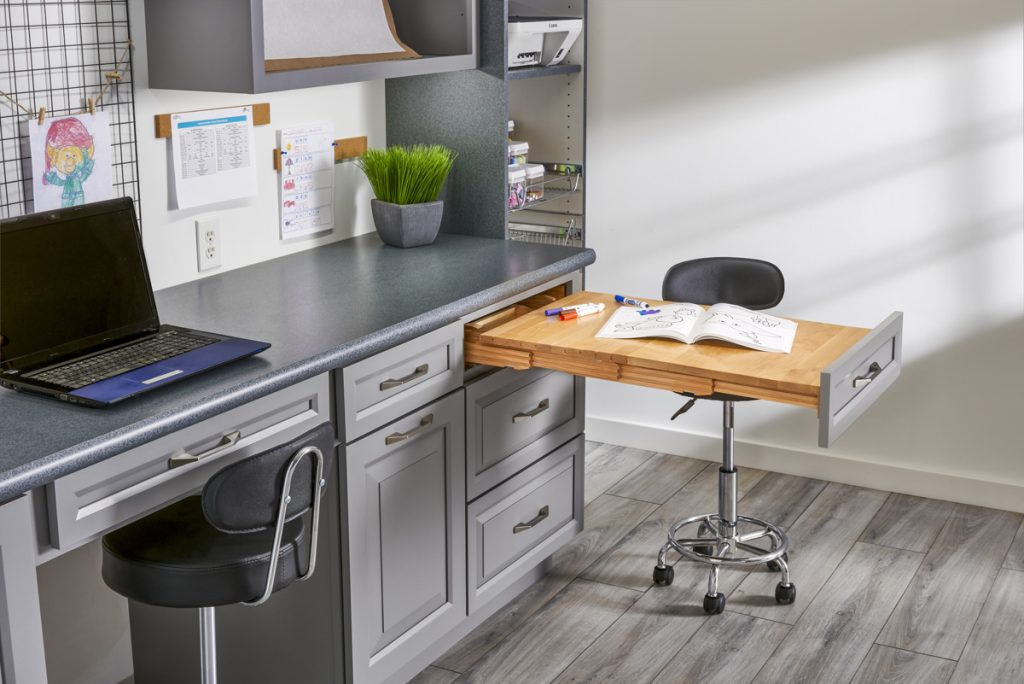
A pull-out desk flexes a kitchen for schoolwork and seated prep.
Photo: Rev-A-Shelf LLC/Wellness by Design – Bonus Chapter © J. Gold, 2024
“Using rooms for combined purposes’ ranked number three on the list of changes people made in their homes,” she adds. “We heard lots of examples from study respondents about how they are reorganizing to create more space for storage, using rooms for combined purposes, creating an additional right-sized office space for more than one person, and using their garages differently, adding space for a home gym/fitness space, a home office or workspace, or even a craft or games space.”
The researcher observed that there are generational differences in their approaches to space planning. Millennials are the least satisfied with how the spaces in their home function for the way they live. The presence of children in the home was a decisive factor, she adds, and family rooms were most important to these households. The kitchen was most important to multi-generational households – which Slavik-Tsuyuki cites as nearly one in five.
Ellerman notes that 75% to 80% of Shea’s home plans feature some kind of flex space, both for work and play, and demand is helping to drive that trend. “We have seen an increase in buyer demand for a remote workspace, and multi-generational families are common in our markets, so having separate media/lounge spaces is important to our customers,” she adds.
Kitchens and “Downstairs” Living
“Consumers want a better equipped and designed kitchen for more functionality,” comments Slavik-Tsuyuki, adding, “It must be a place that supports different uses at different times of the day, for individuals taking a break from work to grab lunch, kids doing homework on a kitchen island, and for groups gathering to socialize and connect.” They’ve taken on the functions of dining rooms and, often, family rooms too, making places to eat for everyone critical. “A bar-height island, for instance, doesn’t work for smaller children, or mobility-
challenged older adults,” she observes.
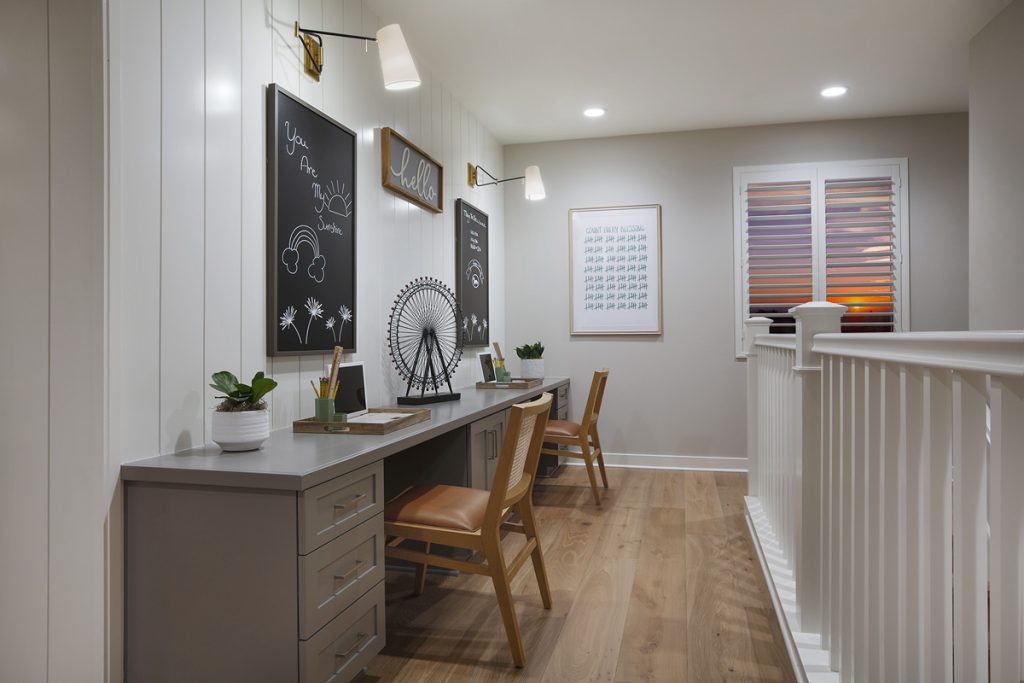
Adding a study area to a compact landing maximizes space.
Photo: Shea Homes
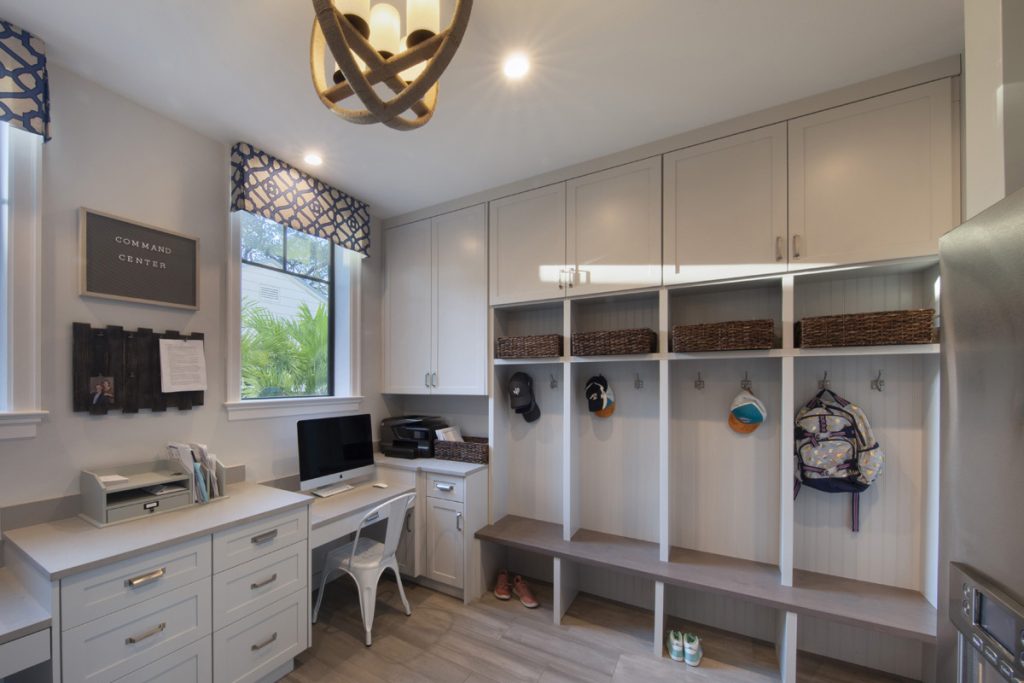
This entry area is optimized with a small home office.
Photo: Kelly Flynn – Studio Shelter/Jess Blackwell Photography
Schulte sees a flex trend in her practice too: “While storage and cooking are really important, the increase in wanting large islands to do homework or add a coffee bar/bar area [and] office area are huge. Homeowners are really into having in-cabinet organization and in-drawer tech plugs (so iPads, phone and clutter can be off the tops and concealed in drawers).” She adds that there are a lot of requests for TVs so they can watch while making dinner.
Multi-tasking is a common request for Dunnington. “Some of the additional features homeowners are adding to their kitchens include designated desks for remote work or study, built-in laundry areas or utility closets, and integrated storage solutions for household supplies. These can impact technology requirements by necessitating upgrades such as expanded electric panels to support increased power demands, additional backup battery storage for uninterrupted operation of essential appliances, and updated outlets with USB ports or smart features for enhanced convenience.”
Connections and sight lines are also important for parents monitoring homework and members of the family to feel that they’re together while doing their own thing. “We do a ton of sitting and homework areas, along with playrooms off of kitchens,” remarks Fannin. “Having a door or a way to hide clutter and add privacy is an item we try to make sure is always featured in the plan.” She adds that clients are seeking an area for their children to do crafts and homework, along with play areas that are close to the kitchen to keep everyone in the same space. Ellerman comments that Shea’s first floor bonus spaces are often designated as offices or dens, letting the user be closer to the kitchen action, while still having some functional separation.
Scavolini introduced its modular BoxLife system at the 2018 EuroCucina and in the U.S. market the next year. The launch used a 300-sq.-ft. studio apartment concept with kitchen, office, laundry, bedroom and closets alternately concealed and revealed by a door opening system. This offers optimal flexibility and functionality to the types of urban dwellers who often have more style than space. It’s getting the most love in Manhattan, Chicago and Miami, as well as in Southern California, Scavolini adds, mainly in condos and ADUs.
Bathrooms and “Upstairs” Areas
Larkin designs numerous homes that are fabulously large, but whose owners choose to flex their rooms as both time and step savers. “Convenience is driving a lot of the multi-
function as it gets easier to put that washer and dryer in your closet or that small refrigerator in your bedroom, thus automatically adding more functionality to whatever space they are going into,” the architect comments.
Dunnington’s clients are adding laundry centers and grooming stations, as well as spa features. All involve technology upgrades like smart water management systems, energy-
efficient fixtures and enhanced electrical panels, he shares.
Schulte’s clients are flexing primary bathrooms with glamorous closets, she shares: “I am seeing an island in the center of the room, chandeliers, tech storage and a place for their Peloton.” To get their grand closets, clients will sometimes steal space from the bathroom or even the bedroom, but judge the outcome worthwhile, she says. Flynn’s clients are more protective of their bathroom space, she shares, and will add a stackable laundry pair to gain that function in a small space.
The Colorado designer points to ASID’s 2024 Trends Outlook Report for bedroom flexing. “Homeowners are incorporating boutique hotel amenities to their primary suites, adding beverage stations and refrigerators to their space.”
Scavolini’s Gym Space, which also debuted at the 2018 Milan show, was conceived as a wall-mounted structure dedicated to physical activity and wellness, the executive shares. It also holds bathroom elements like lights, soap dishes, shelves, storage and mirrors, she adds. The unique concept is catching on where designers and homeowners can see it installed in one of the U.S. company stores, she notes. The trend toward home workouts that started during the pandemic has also influenced Gym Space sales, Scavolini reports.
As Slavik-Tsuyuki notes, younger homeowners are just as eager as their older counterparts to have their homes multitask. To accommodate them, Shea builds upward: “Townhome buyers want the flex spaces that are more widely available in single family homes; we’ve accomplished this by adding a third floor or mezzanine/roof deck, including a loft, and making the most of our square footage,” Ellerman comments.
“Flex/multi-functional rooms are becoming more prevalent in condos, older and smaller homes due to the constraints of limited space and the growing need for versatility,” Dunnington agrees. “In these settings, homeowners are seeking innovative solutions to maximize the functionality of their living spaces without compromising on comfort or convenience.”
Larkin is seeing “more kitchen/mini bars placed throughout the home, reducing the occupants’ needs to go all the way to the kitchen for that cold bottle of water.” This extends to outdoor areas too, often as well-equipped as their indoor counterparts. “The major brands are making it easier to place their appliances throughout the house,” the architect notes, citing, “combination washer/dryer units that require no ventilation, quiet undercounter refrigerators, and appliances that fully integrate into the cabinetry to completely conceal themselves.”
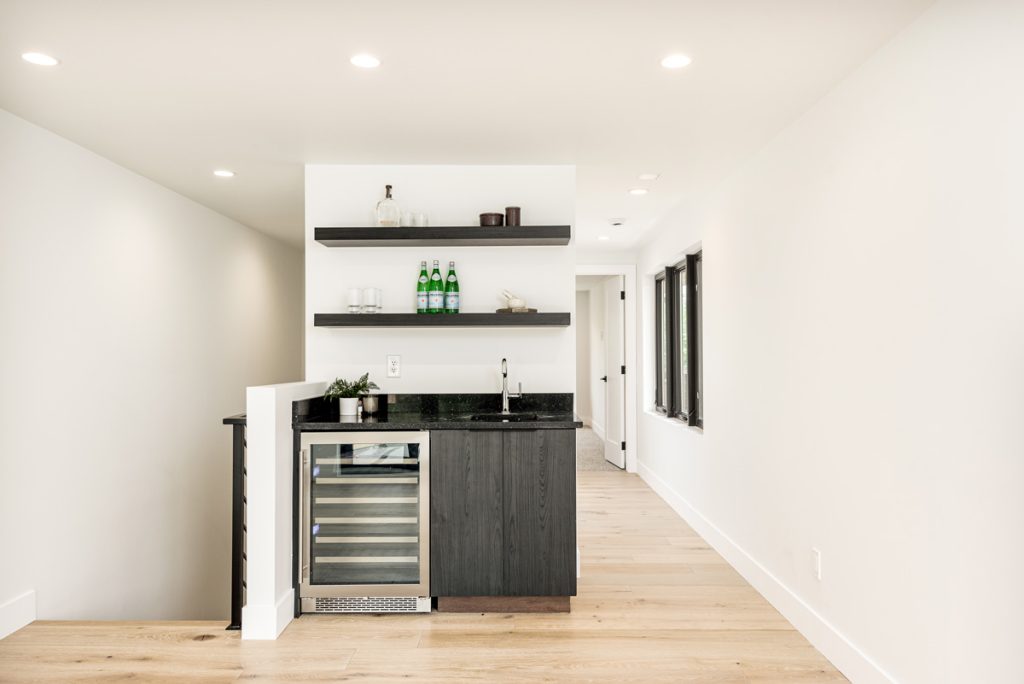
Mini bars are being added to other areas of a home for owner convenience.
Photo: Kelly Flynn – Studio Shelter/Jess Blackwell Photography
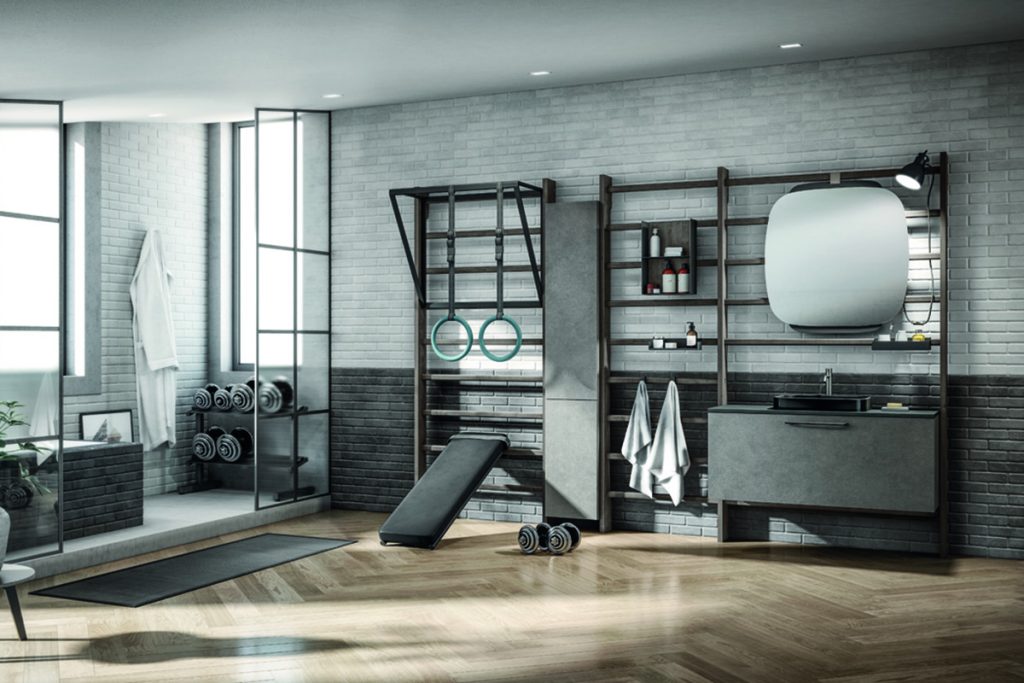
Home fitness has become a popular flex feature for homes.
Photo: Scavolini
Laundry and Other Areas
Laundry rooms have long been prime territory for flex functionality. Bonus uses on the rise include pet baths, and better, expanded storage capacity. “All of this relates to the overall trend we see of no wasted space, no dead corners, every inch counts, and the spaces in our home all need to be more thoughtfully designed to support how we live today, not just utilitarian rooms,” Slavik-Tsuyuki comments.
Schulte observes that high mortgage rates are spurring remodeling, rather than relocation. Homeowners are really maximizing unused areas like the basement and the attic, she says. “One out of every eight requests is to turn a basement into either a playroom, man cave, guest bedroom or movie room,” she adds.
“The most underused areas in a home are typically the dining room or a second living room space,” notes Flynn. “More recently, we have been converting them into game rooms, libraries, offices, play areas for kids and fitness rooms. Many of these spaces become multi-function with Murphy beds for occasional overnight guests but are used for fitness or a study day to day.”
Flynn has also seen multiple uses for ADUs and in-law suites, including golf simulator areas and game rooms, studios for art, music or other special hobbies (which are also found in air conditioned garage areas), secured safe rooms and more luxurious mud rooms. “Through our work with developers on high-end speculatory homes, we’ve noticed another flex room trend of using the top floor of the home as a full guest suite. These spaces are great for entertainment spaces, guest suites, kids lounge areas and more. They typically have a dedicated full bath with a bar and bedroom.”
Schulte also shares a comfort trend: “Because we live in cold and snowy Buffalo, I am seeing the addition of sauna rooms and hot tubs enclosed in the home/porch area. I have done a few flex spaces that have either a sauna or a hot tub with a fireplace or fire pit. It doesn’t happen too often, but I love adding these to a space here when I can; trust me, we need it!”
Fannin comments, “Older homes have sunrooms that become second TV areas/offices. Newer homes have a planned second living space for family gatherings and when guests are over.” Overall, she says, “Guest suites and second living spaces top the list of what people are requesting.”
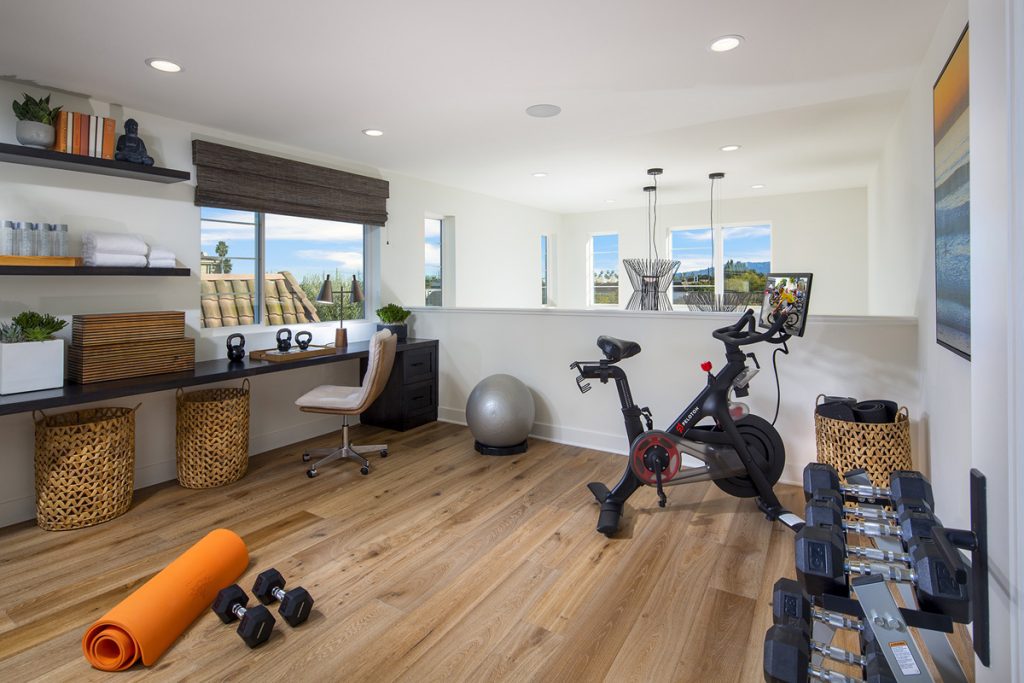
The top floor gets a home office and fitness flex.
Photo: Shea Homes
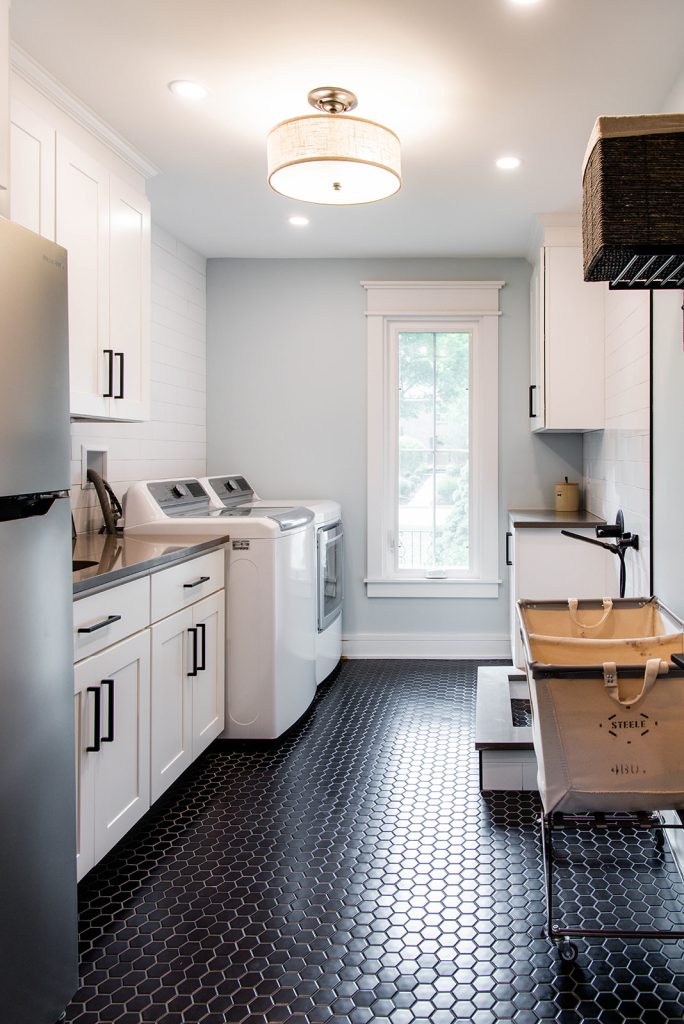
Pet centers with shower facilities are popular features for laundry rooms.
Photo: Lauren Schulte/Monarch Kitchen Design Studio/Tribe Up North (Photography)
Last Words
“Designers and architects play a crucial role in creating flexible environments that seamlessly adapt to changing needs and preferences while prioritizing comfort, efficiency and aesthetic appeal,” Dunnington notes. True! Technologists count in their roles too. ▪
Jamie Gold, CKD, CAPS, MCCWC is an author, wellness design consultant and industry speaker. Her award-winning third book, Wellness by Design (Simon & Schuster, 2020), has a new Bonus Chapter: Lessons for How We Live Now, published October 2023. Learn more about her wellness design CEU presentations, books, blog and consulting services at jamiegold.net.