
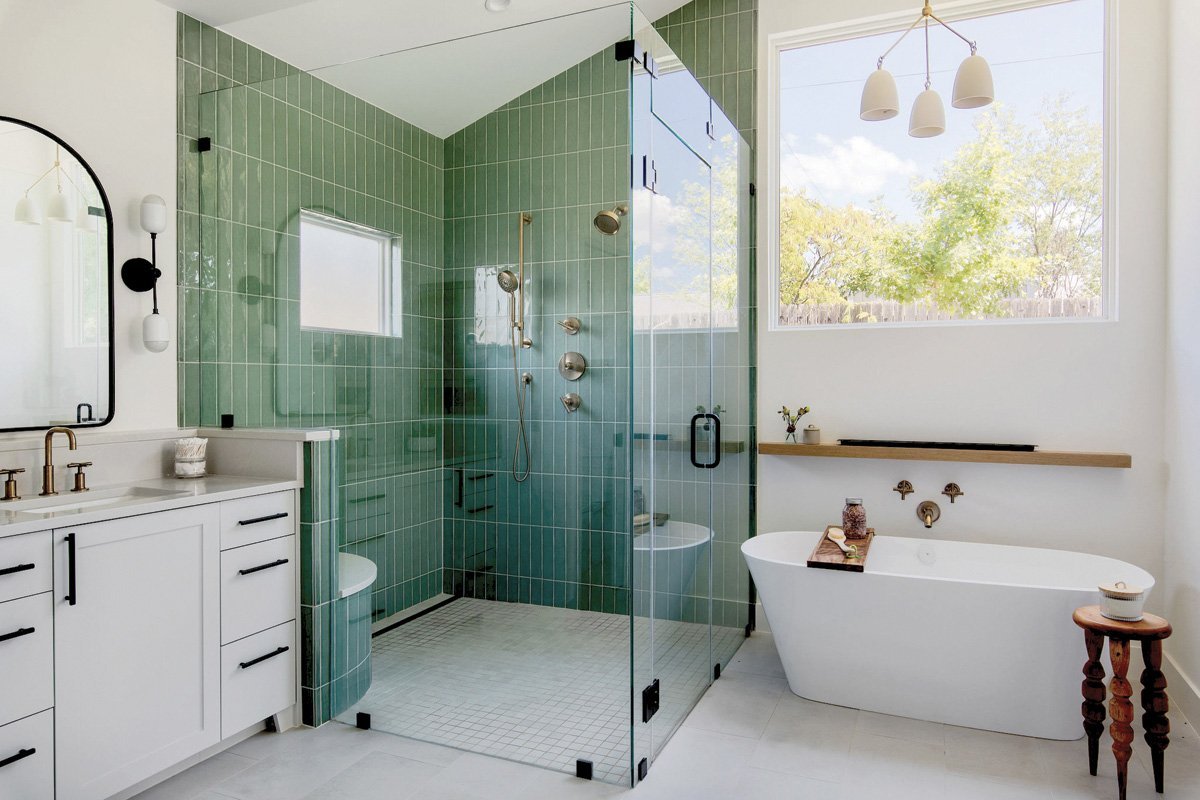
Publishing deadlines being what they are, I’m writing this column in late September as residents of four southeastern states are digging out from Hurricane Helene. By the time you read it, 2024’s hurricane season will be close to over and you may be in end-of-year mode. I’m extremely grateful to the following five professionals for taking time out of their schedules to share what trends they’re seeing in kitchens and bathrooms sliding into 2025.
- National homebuilder Toll Brothers’ senior v.p. of design studios, Lisa McClelland;
- Jason Barth, CEO and founding partner of The Premier Group, an Indianapolis area smart home technology integration firm;
- South Florida-based designer and TV host Alena Capra;
- Denver area designer Elizabeth Lord-Levitt;
- Economist Marine Sargsyan with home improvement platform Houzz.
Major Trends
“Homeowners are increasingly designing their kitchens and bathrooms with longevity in mind, according to Houzz research,” Sargsyan says. This is bringing in functional elements to support accessibility and aging – like cabinet pullouts, extra lighting and wide drawer pulls, as well as nonslip flooring, rounded countertops, wider doorways, grab bars and ADA-friendly toilets.
McClelland sees multigenerational living as a strong trend, with suites designed for that purpose: “The rise in multigenerational living has fueled demand for this option, whether it is kids returning home after college or grandparents moving in with the family.”
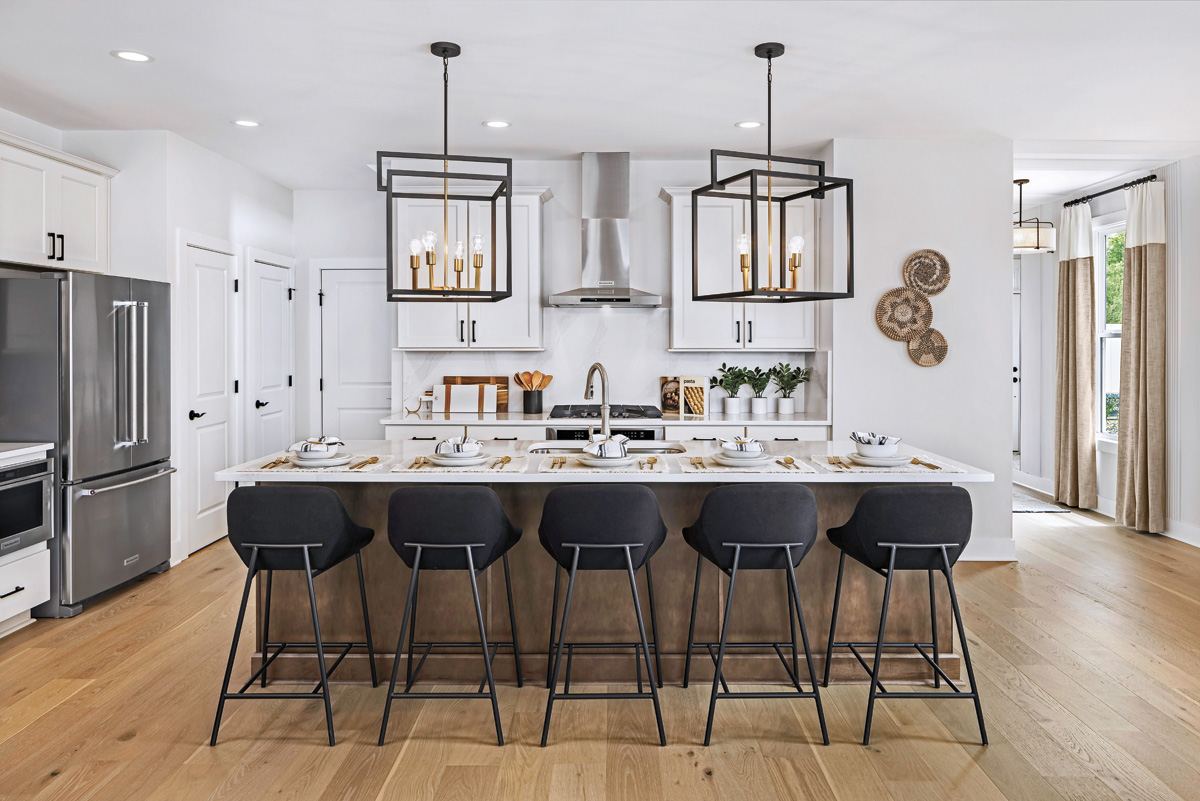
Photo: Toll Brothers.
Capra is seeing a focus on wellness, accessibility and multigenerational living too, she says, and a fading of the ultra-glam trend. “Glam spaces will always exist and are now being brought in with warmer brass and soft gold fixtures, rich woods, lacquered finishes and luxe natural stone, engineered stone or porcelain slabs,” she notes.
Levitt is seeing healthy living showing up with conscious material selections, enhanced sunlight and combining a sense of indoors and outdoors, she remarks.
Kitchen Trends
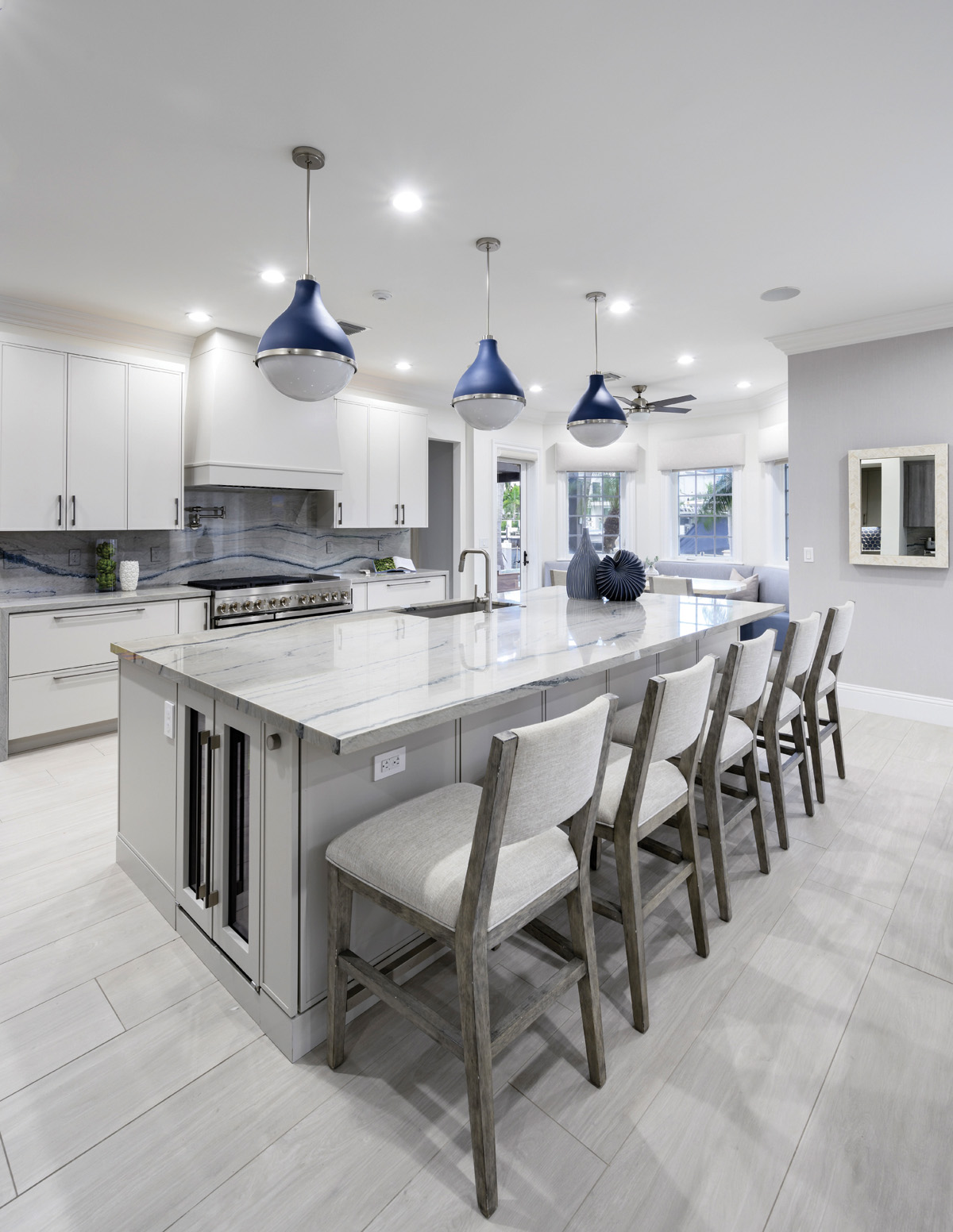
Photo: Alena Capra.
McClelland sees kitchens as hubs between living spaces, including larger or multiple islands, and optimized for storage. She is also seeing prep kitchens gain popularity. “Many homeowners want the main kitchen to be the ‘wow’ space but want a secondary kitchen space for the main cooking area.” On the appliance front, the builder is seeing induction cooktops, flush-mounted appliances and WiFi enabling for remote access, she adds.
Levitt is also creating distinct working kitchen spaces, she shares. “We’ll never go back to the compartmentalized way of living, but a dedicated room that functions as storage or extra prep space has become a major factor in my designs. I’m also designing more kitchens with two dishwashers and kitchens that act as dual-purpose spaces, like an island that seats a minimum of four for informal dining,” she says.
Capra is seeing indoor/outdoor living emphasized in kitchen design, including tile continuing through both spaces. She’s also noting the prep kitchen trend, larger and double islands, induction cooking appliances and microwave drawers, as well as an emphasis on innovative storage, workstation sinks, and farm sinks for traditional and transitional kitchens.
Bathroom Trends
“Indoor/outdoor living spaces are a popular element in all our markets now across the country,” McClelland comments. Bedroom suites are designed to have access to the outdoors. “Nature has a very calming and grounding effect on wellbeing,” she notes, pointing to its benefits as a wellness feature.
Digital showers are also a strong trend, the Toll Brothers executive says, giving each user personalized controls. Floating vanities with motion-sensor LED lights underneath for a soft glow illuminating nighttime visits are popular. “No more stumbling around in a dark bathroom in the middle of the night or turning on the lights and being blinded!” she declares. Additional lighting inside the cabinets, undercabinet lighting, toe kick lighting – all on voice-activated dimmer switches – are trending.
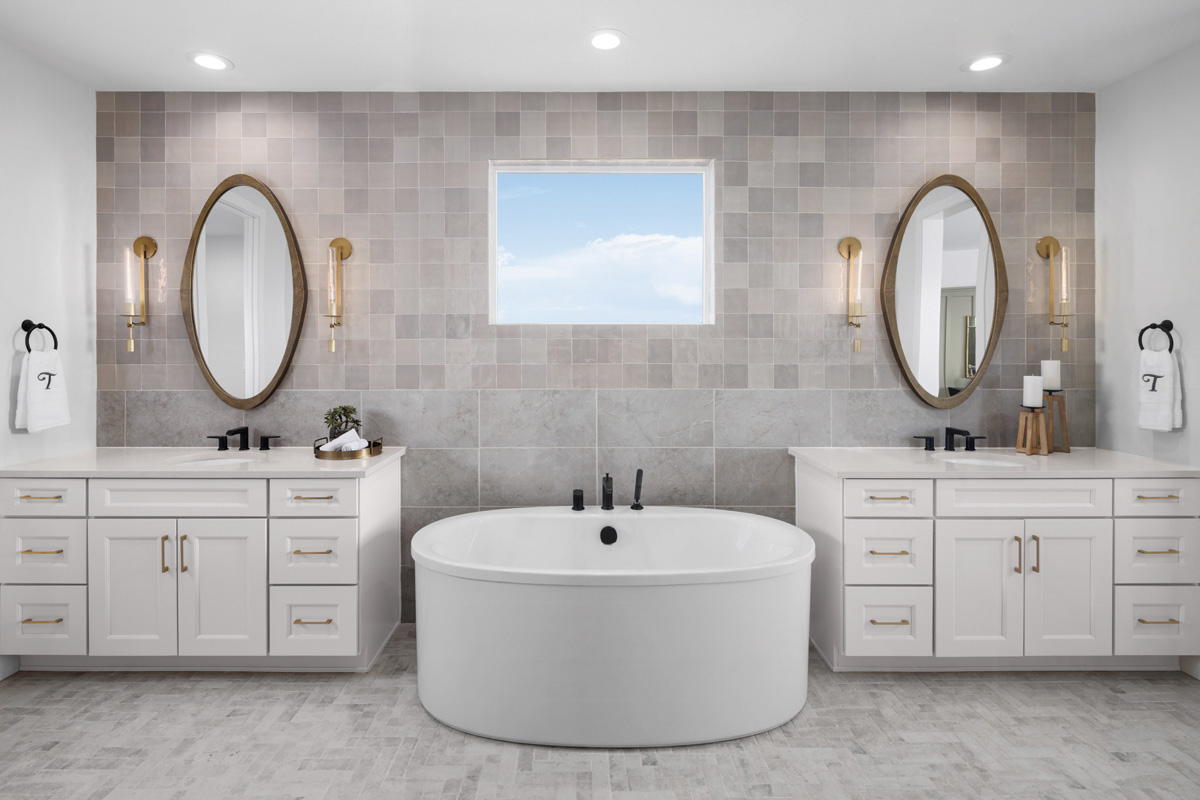
Photo: Toll Brothers.
Capra is seeing open bathroom spaces in primary suites with closed-off toilet rooms, curbless showers and freestanding tubs. “I am incorporating a smart toilet or bidet seat in most primary baths, and now even in secondary baths or power rooms. Steam showers with aromatherapy and all the bells and whistles are a welcome option, as it aligns with the wellness trend. Same with hydrotherapy tubs, air baths and whirlpools,” she reports.
Levitt’s clients are requesting more storage options, like vanity cabinet accessories and creative solutions for storing linens and bathroom necessities. They also like recessed towel niches, cabinet pullouts for hair dryers, and appliance garages that conveniently store electric toothbrushes off the counter. She’s also seeing wallpaper making a comeback to personalize client spaces, framed shower enclosures (as opposed to glassed-in), arched entrances, curved mirrors and textured tiles in fun colors and patterns.
Technology Trends
“Many homeowners are prioritizing appliances with high-tech capabilities, with nearly a third choosing appliances with WiFi connectivity and opting for models that are controllable by smartphones or tablets,” Sargsyan comments, pointing to a notable increase in popularity in Houzz surveys. “Interest in touchscreens, smart-home connectivity and built-in apps and cameras has also seen significant growth since last year. Upgraded kitchens often include electronic home assistants, Bluetooth or other wireless speakers, and stereo systems,” the economist shares. High-tech faucets have been a draw too, she adds.
“The old separate dials and gadgets for lighting, exhaust fans, towel warmers, heated floors, shower controls, etc. have gone away in favor of a simple, unified integrated touch-panel control. Wall clutter is GONE and should never come back!” declares Barth. What the integrator has started seeing this year is large-format touchscreen/control panels in the kitchen, often 21″ and larger, “sitting on the corner of a countertop, or on the island that can be used not just to control the home through an app (Control4, Crestron Home, Lutron, JoshAI, etc.) but also to act as the hub of the family. You can call up a Google calendar with the family schedule, or watch content via YouTube TV or Netflix, or just to look up a recipe or other information.” Clients love these command centers, he comments. There’s also an urge toward ‘hidden’ tech, like Samsung’s Frame TV showing artwork when not in television viewing mode.
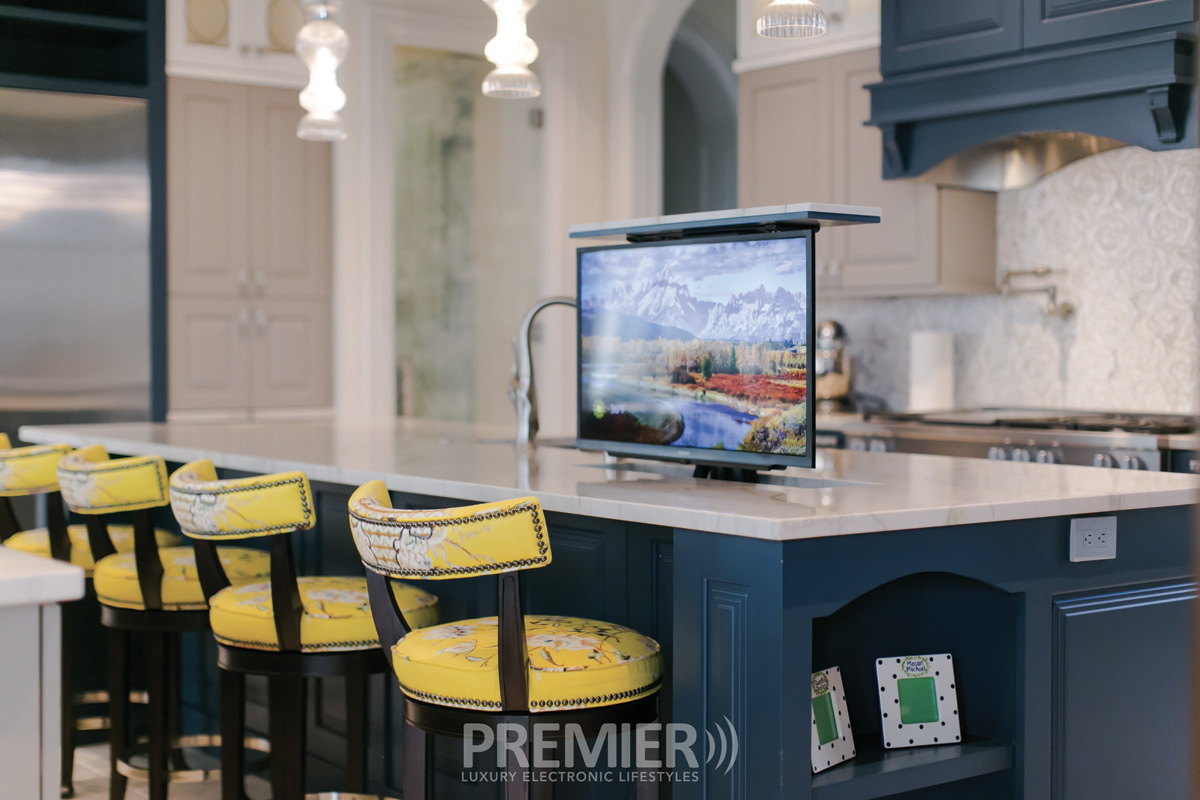
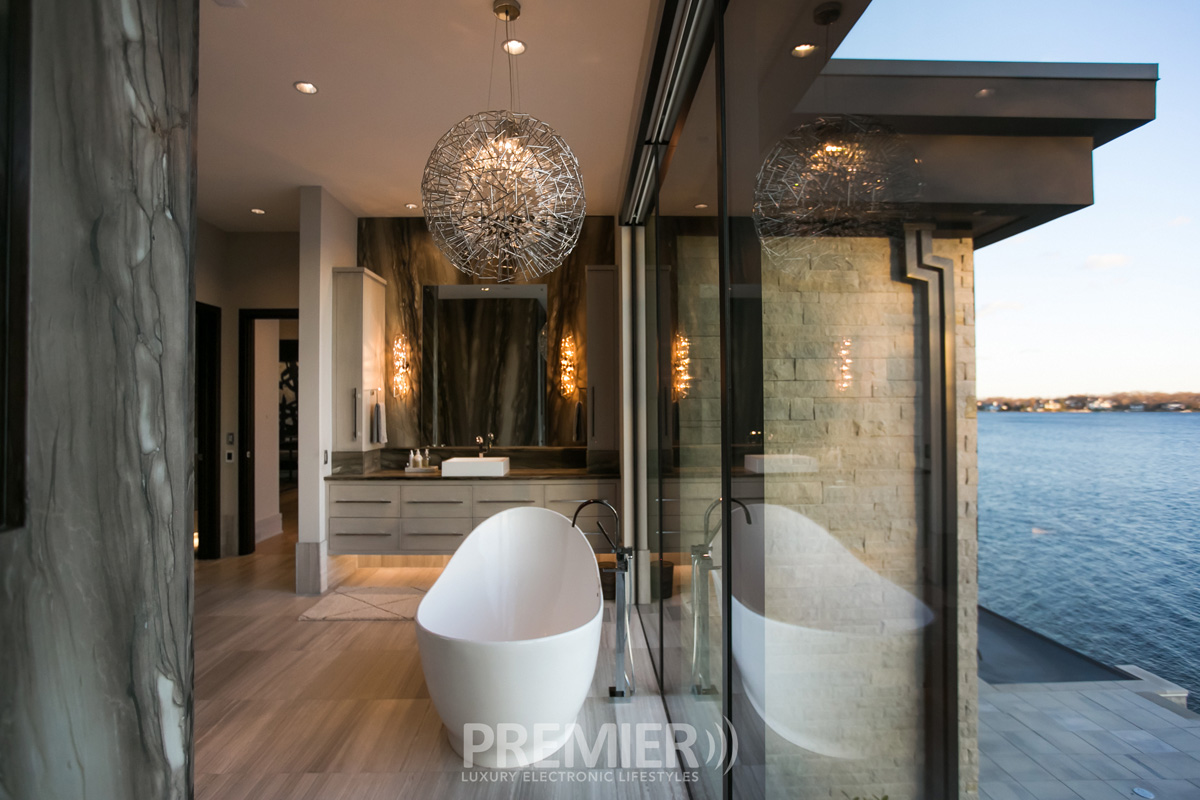
Photos: Premier Group
In bathrooms, Barth’s firm is enabling smart showers and motorized privacy shades. An alternative he likes is smart glass, which he describes as opaque when electrified, transparent otherwise. “When we integrate this into our control system, you can press your ‘Good Morning’ button in your bed and the path to the bathroom lights up, while the glass is activated so the neighbors can’t see in. Later, during the day, the glass can be translucent to allow more natural light and enjoy the view.”
Voice-activated lighting, as well as touchless or voice-activated faucets capable of dispensing water in specific quantities and temperatures are popular with homebuyers, McClelland shares. Owners are also interested in smart appliances. She especially cites “smart ovens that can provide recipes, cooking instructions and features that can be controlled via WiFi/remote access.” Given technology’s rapid evolution and growing importance, Toll Brothers created a dedicated smart home division to stay ahead of trends. Are you staying on top of technology yourself? There’s an excellent chance that your clients are these days!
Levitt is seeing the connected appliance trend too, with one particularly welcome innovation: “Cameras inside refrigerators allow a client to view if they need milk while at the store, or alerts to let you know the freezer door was left open.” The technology also allows some remote problem diagnosis for greater convenience and savings.
Capra is observing a bit less kitchen tech love among her clients: “I am seeing some homeowners preferring appliances that don’t have as many bells and whistles, or if they do, they are not always using the apps that pair with them,” she points out. Tech-enabled faucets and lighting seem to be the most manageable and appealing, she says. “Layered lighting, lighting incorporated into the mirrors and tunable lighting to different color temperatures is a big trend and request,” the Florida designer adds about bathroom technology.
Style, Material and Finish Trends
“Engineered quartz has notably increased in popularity as a countertop material,” Sargsyan says, comprising about half of Houzz respondents. “Natural stones, such as granite, quartzite and marble, have dropped in favor.” In bathrooms though, quartz and marble tops are still popular, McClelland says, as is Dekton for shower surrounds, and patterned tile floors in herringbone or large hex shapes.
Porcelain tile is the most popular surface for backsplashes, with slightly more than half choosing it in Houzz’s research, according to the economist. Capra is also seeing porcelain frequently used as slab tops, some with integral sinks, and splashes.
Shaker still rules the kitchen cabinetry style competition, McClelland, Levitt and Capra agree. The latter is seeing a lot of mixed wood and painted or lacquered finishes, along with slab doors. “These two looks are often being paired together.” In bathrooms, Capra is seeing “glass front, lacquer in matte or gloss, wood, painted finish and textured wood. Pieces that resemble furniture are popular, and so is wall-to-wall cabinetry that either floats or extends to the floor.”
“Natural wood tones and colors made a statement and will continue into 2025,” Levitt comments. “Cabinets with wood detailing, or natural grain showing, is a plus, while adding fun cabinet hardware to elevate the door profile. Painted cabinet colors are more in line with nature, like green tones or muted neutrals like off whites and greiges.”
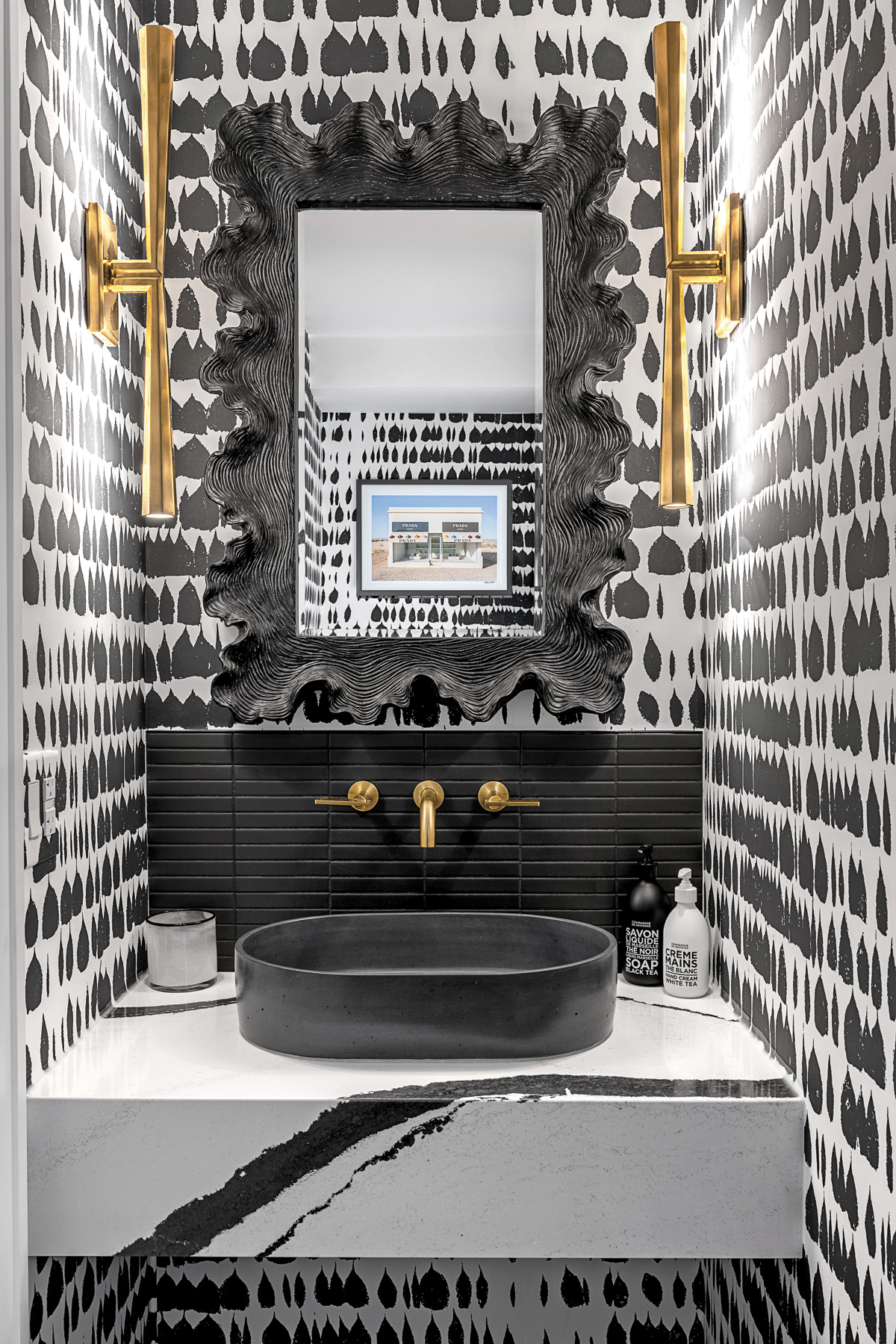
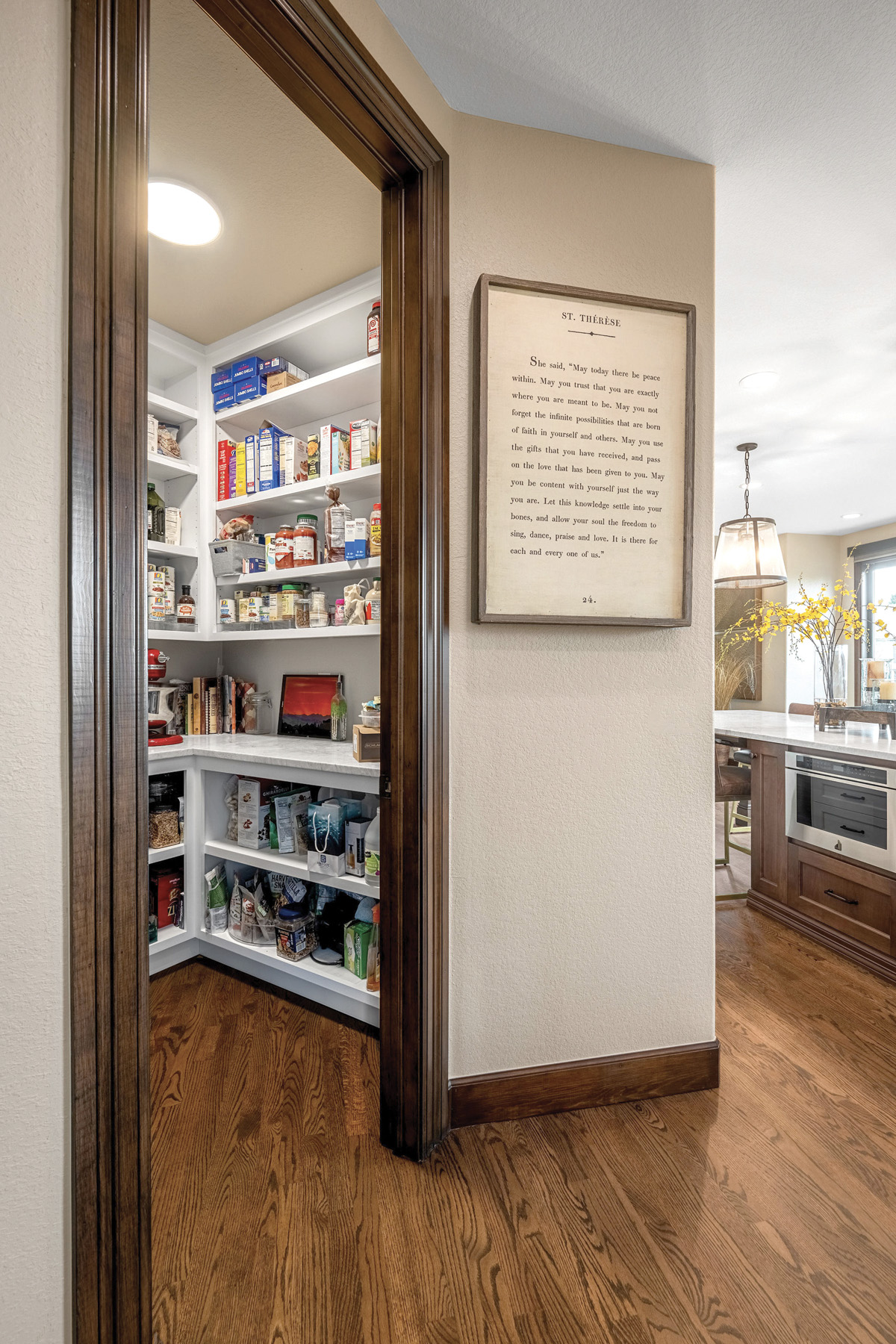
Photos: Elizabeth Lord-Levitt.
The Colorado designer is bullish on this old school finish: “My clients are loving the textural element plaster brings. Whether it’s on a hood, fireplace surround or walls, a plaster application has become a great way to add texture to a space without having to coordinate with wood tones.”
“Integrated appliances are now a need in most kitchen designs,” Levitt declares, explaining, “Hiding refrigerators and dishwashers allows for a focal-point range that doesn’t feel compelled to match adjacent appliances. It can be a statement piece without having to fight other functional necessities in a space.” Capra is also seeing integrated appliances trending, but notes that stainless steel still reigns supreme for non-integrated appliances.
Matchy-matchy may be over in the faucet category, McClelland reports. Gold and matte black are still trending, but may also be reaching a saturation point, the builder predicts, adding, “We expect other finishes like polished nickel, gunmetal and weathered bronze to begin to pop up.” Gunmetal? Capra describes this finish as a softer alternative to matte black. Chrome, matte black and brushed gold are also popular with her clientele, she says.
Last Words
“While improving the home’s resale value remains a consideration in kitchen and bathroom upgrades, it has declined as a driving motivation for renovations,” Sargsyan reveals. That’s an interesting trend by itself. I’m wondering if you’re spotting it in your work, and why you think that is. I have theories… The 2008 crash created a bit of a YOLO mindset, which the pandemic reinforced. COVID also dramatically increased people’s awareness of the links between their home and their health. “82% of U.S. consumers consider health and wellness a top priority in their everyday lives,” according to McKinsey’s January 2024 consumer insights. That is showing up strongly in many of the findings shared above.
May we all have a new year filled with wellness, joy and prosperity! I look forward to sharing more Trend Spotting columns with my readers!
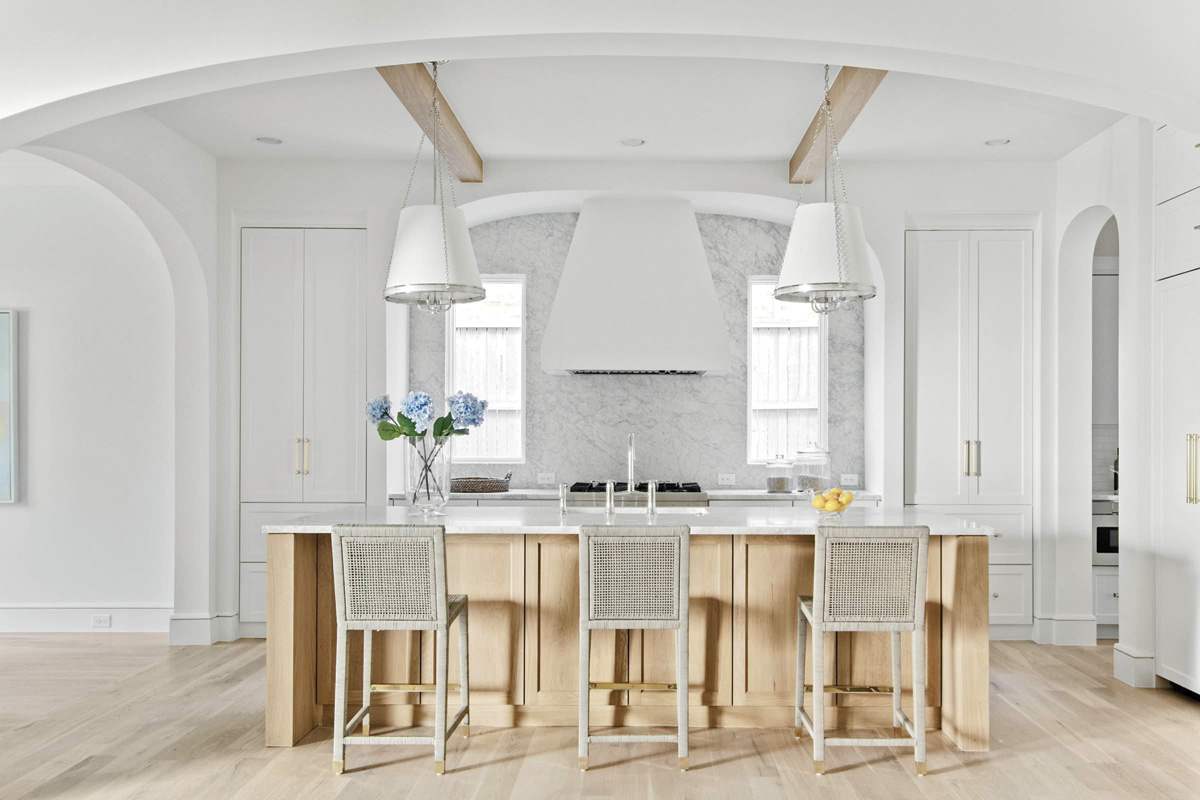
Photo: © Houzz | Jessica Koltun Home © Unique Exposure Photograph.
Jamie Gold, CKD, CAPS, MCCWC is an author, wellness design consultant and industry speaker. Her award-winning third book, Wellness by Design (Simon & Schuster, 2020), has a new Bonus Chapter: Lessons for How We Live Now, published October 2023. Learn more about her wellness design CEU presentations, books, blog and consulting services at jamiegold.net.