
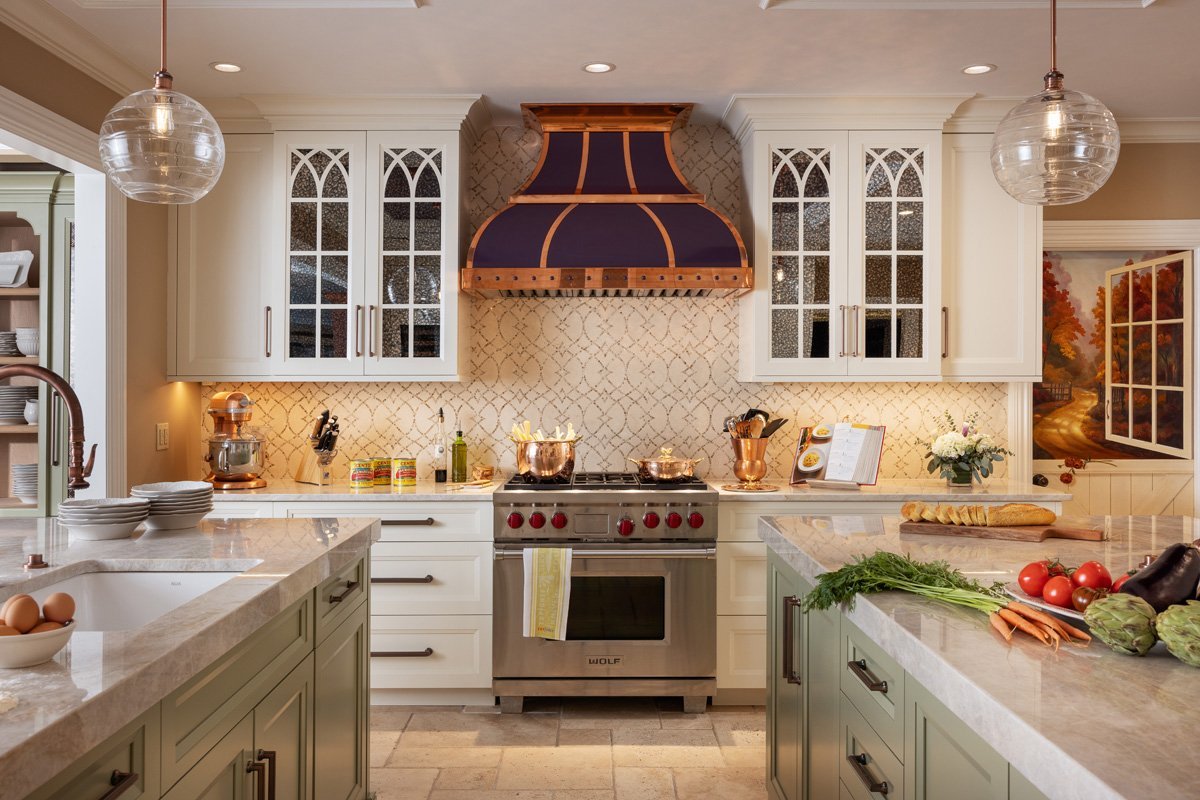
The completion of a beautiful kitchen or bath project comes with both a sense of relief and of pride, as the stages from sketch to finished room have been conquered one by one. And it is common for designers to want to share their latest masterpieces with the world.
Thankfully, there are a range of mediums in which to do that, among them personal and professional websites, social media and design publications. But how to best showcase designs should prompt careful consideration, as how a project is presented is a direct reflection on a design firm and the designers themselves. And that’s where hiring a professional photographer comes in.
“Setting yourself up for the best success in this industry is very much tied to your future clients being able to get a feel for the work you do,” states Stephanie Frees, principal/lead designer, Plain & Posh LLC in Westmont, IL. “If you don’t take the time and effort to get great photographs of your work, and then post them on your website, across social media and other platforms, then I don’t know how you can generate the best client network for your particular style of work.”
While hiring a professional photographer to take photos of a completed project can be pricey, many kitchen and bath designers understand the importance of going the extra mile. The return on investment is significant, as professionally shot images can be used by the designer in a multitude of ways.
Frees believes that there are two ways to generate new work – through referrals, and then through social media and the company’s website. “If a client is a referral, I send them links to my website and social media platforms. This tends to sell them,” she adds.
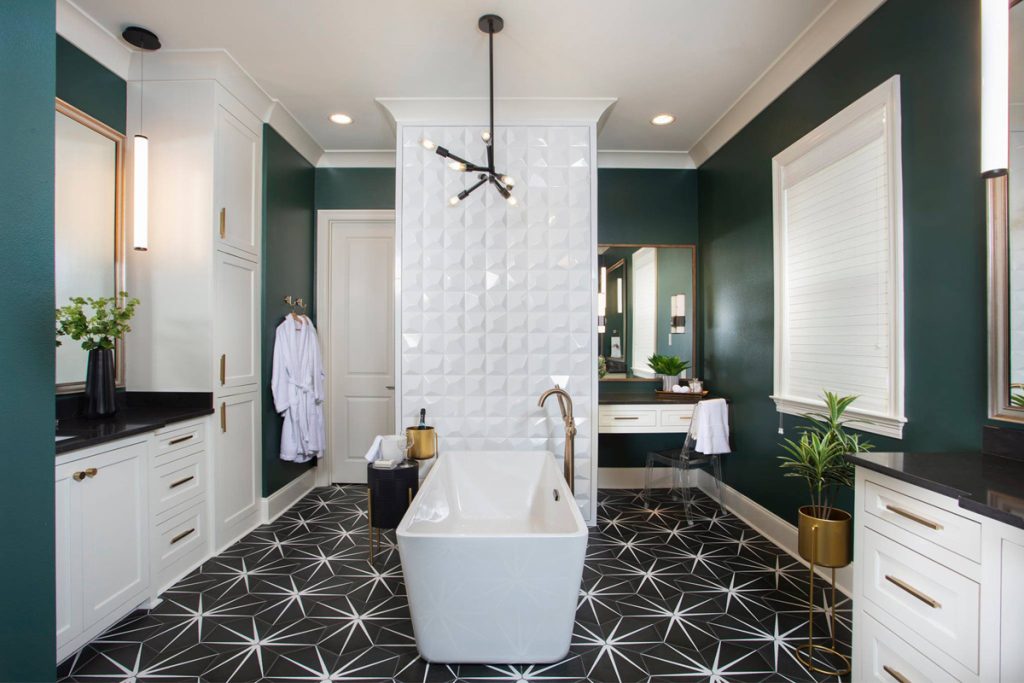
In an interesting twist, Frees notes that the photographer she currently uses the most not only does great work but has a very active social media presence. While her rates are higher than other photographers Frees has hired, her connections are worth it. “She has generated work for me,” the designer explains. “Back in the day, she would post on her social media and link me, so her followers would see my work.
“So, it’s important to do research,” she continues. “Besides the pictures, what else is the photographer doing? Is there potential for you and your business?”
Kimball Derrick, CKD, principal, Kimball Derrick, LLC in Cincinnati, OH has been using professional photographers to take photos of his projects since the 1990s, when it was all analog. “We would shoot kitchens that were standouts and have 16″x20″ prints made and matted,” he remarks. “In presenting those photos to clients, they would not only see that we were doing exceptional work, but we were proud of what we did.
“When you add up the benefits of being able to show those photos in your client meetings, and then using the same photos from that investment for getting published and entering contests, it’s absolutely worth it,” Derrick adds.
“The benefits of using a professional photographer are numerous,” agrees Steven Kampfer, senior designer, Küster Design in Indianapolis, IN. “From their artistic perspective to the high-end equipment they use, they can truly capture the look and feel of the space.”
Qualifying Candidates
When looking to hire a professional photographer, there are a range of factors that should be deliberated, note designers.
“I recommend looking for a photographer who has experience or a keen interest in interior design,” states Angela Poirrier, owner/designer, Acadian House Design + Renovation in Baton Rouge, LA. “Understanding the elements of design helps in capturing the intended mood and functionality of the space.”
She also stresses that the ability to effectively communicate with each other is crucial. “A photographer who can understand and interpret your design concepts will be better equipped to bring your vision to life in the images,” Poirrier adds.
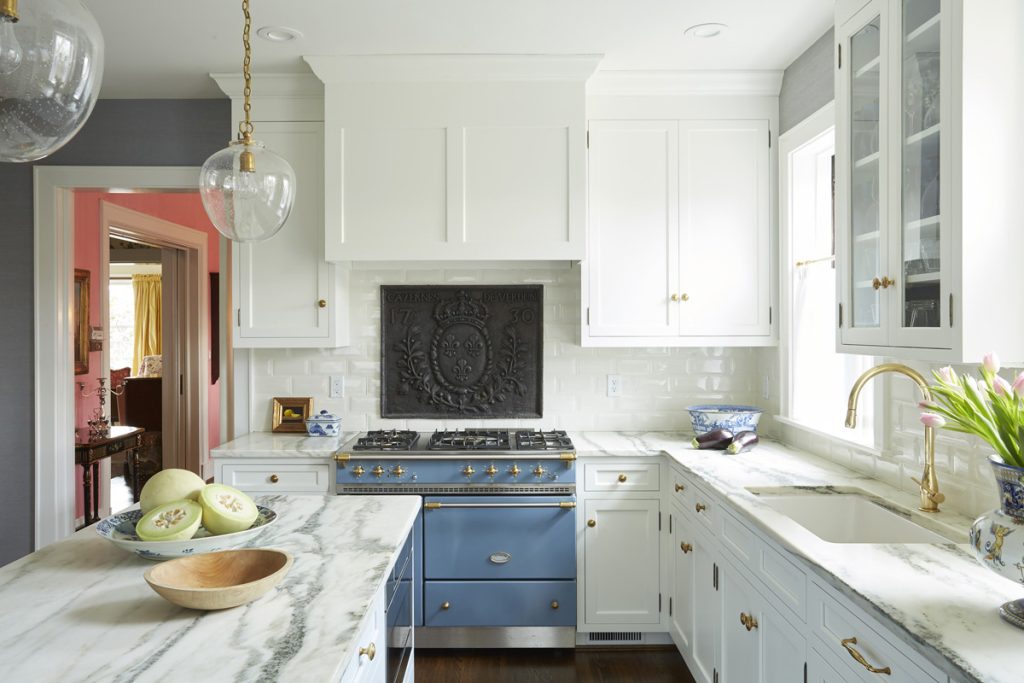
“It is important to select a photographer with whom you can easily communicate,” concurs Peter Salerno, CMKBD, owner, Peter Salerno Inc. in Wyckoff, NJ. “You both must be able to listen to each other’s ideas and vision in order to capture the magic of the room.
“When looking at the photographer’s portfolio, you must feel comfortable with how the photos tell the story and ensure that their style complements your signature design style,” he continues.
Lauren Tolles, founder, Maison Birmingham, in Birmingham, MI, notes that she has been working with the same photographer almost exclusively for eight years. “Martin Vecchio popped on my radar when I saw his photos in a local design magazine, and his lighting and style was everything I’d always wanted,” she explains.
Indeed, photographs that put designs in their best light, so to speak, require an intimate understanding of natural and artificial light, plus a whole lot more. The ability to capture design details and distinctive features, as well as interesting angles, must be part of the photographer’s repertoire.
With regard to lighting, a professional photographer will understand its importance to the overall shot, and how to work with what’s available at any given moment. “They can manipulate natural and artificial light to showcase the space in its best form, enhancing colors, textures and overall aesthetics,” Poirrier explains.
“It is so rewarding to see the space captured in the right lighting and composition that aligns with what we’ve envisioned all along,” notes Tolles.
“Experienced photographers also know how to frame shots to emphasize the best angles and composition,” adds Poirrier. “This is crucial for presenting the flow and functionality of the space.”
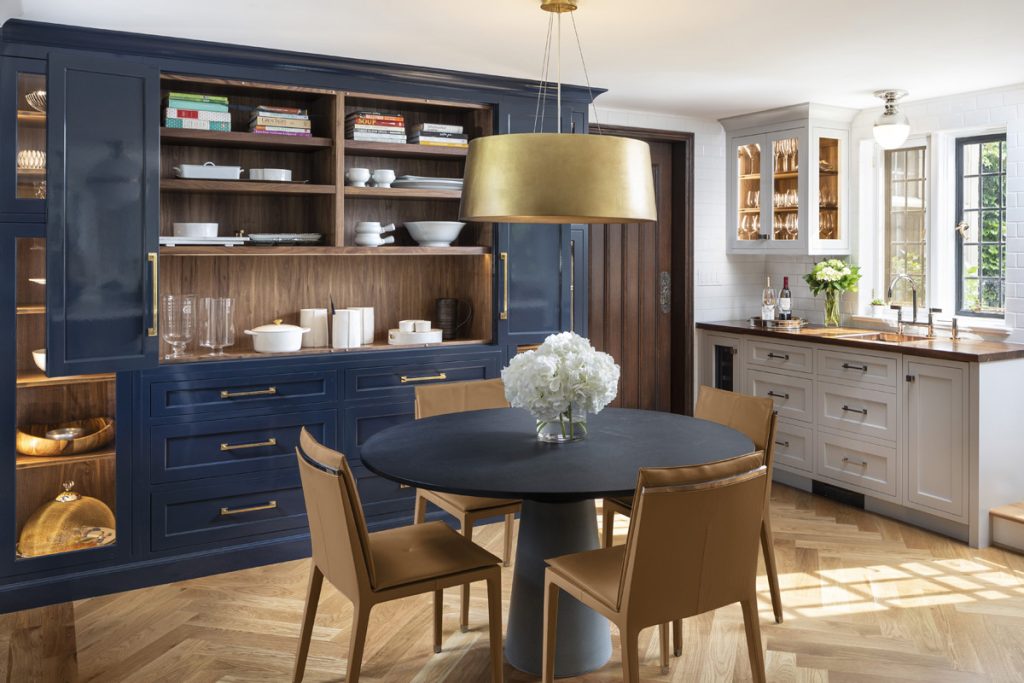
Photo: Martin Vecchio Photography
A Collaborative Effort
Most designers agree that the relationship between the design professional and the photographer should be collaborative. While there are some designers who will hand over the keys and allow the photographer to shoot the project on their own, relinquishing that responsibility is a major no for most design pros.
“While the photographer brings technical expertise, your input as the designer is invaluable in conveying the intended look and feel of the space,” states Poirrier, who works closely with the photographer to stage the room. “It’s important to provide insights into key design elements and arrange decorative items to complement the overall design aesthetic.”
“When I first create a kitchen or bath on a sketch pad, I have a vision of what the finished project will be, and I want to make sure the photographer captures the space as I imagined it – right down to the angle, lighting and subject of each shot,” notes Salerno. “It is very important that the room’s personality be expressed in every photo.”
He stays with the photographer during the entire shoot, with the two of them staging the room. “It is two artists working side by side to create a masterpiece,” he remarks.
Frees does her own staging, often going to the home the day before the shoot. “I put myself in each room and figure out what I want it to look like, and then stage accordingly. Then I stand with the photographer and tell her the shots I want and the views I need,” she comments.
“When we bring in a photographer I tend to be very involved with staging, shot lists, angles and lighting,” says Tolles. “If I know I can’t stay for the whole shoot, I’ll grab a few shots on my phone to demonstrate an area or specific angle I’d like to capture and let him wrap it up.
“One of my favorite things the photographer I work with asks before he sets up for a shot is, ‘what’s it about?’ Then I can rely on his ability to interpret that and translate it into an amazing image,” she continues.
“As a designer it’s important to collaborate with a photographer from the beginning,” stresses Kampfer, “from the initial site visit to the actual day of shooting. Getting a shot list together and thinking of staging, it’s all important to both parties. That way the photographer knows what you’re expecting and can plan accordingly.”
Once the scene has been set and the designer has the shots they want and need, Kampfer suggests letting the photographer have some creative control. “They might see things differently, and can give you a unique perspective as an outsider who hasn’t been on the project from day one,” he comments.
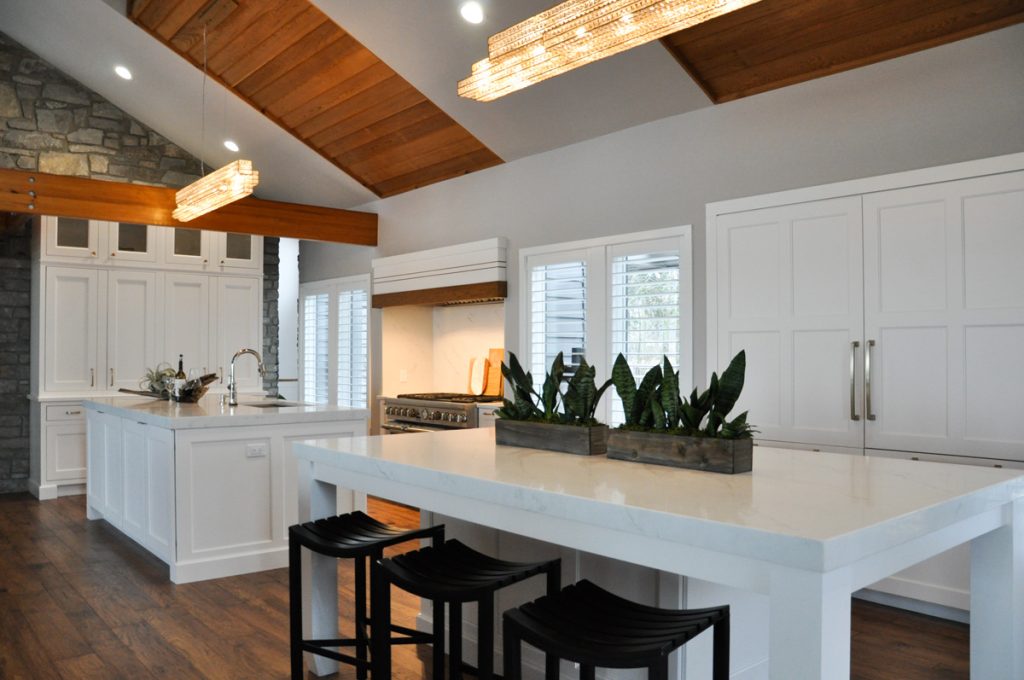
Photo: Steven Kampfer
Photo Rights and Usage
Of the utmost importance to kitchen and bath designers when working with a professional photographer are the rights to images. Forging a relationship of trust with the photographer is a vital step, but so is fully understanding what the agreement and contract stipulate with regard to usage and ownership of the images.
“Your agreement with the photographer should specify where and how the images can be used, whether it’s for marketing materials, your portfolio or other purposes. You need to discuss if the photographer requires attribution or if they use watermarks on the images,” emphasizes Poirrier. Clear guidelines on this aspect help avoid misunderstandings in the future, she continues. “Define whether you are purchasing exclusive rights to the images or if the photographer retains the right to license the images to others.”
“A big deal for me is working with a photographer who will sell me the rights to the images, and not so much for an extra charge,” reports Derrick. He always makes sure the photographer is credited for the images, however, so that the photographer gets the inherent marketing bump for his work.
He’s worked with photographers in the past who have kept ownership of the images and, while he was allowed to use the photographs for personal use or show them to clients, that’s where the rights ended. “If I wanted to publish the images, then the publication would have to pay for the images again, and that could be an issue,” he indicates.
“I will only use a photographer who will give me the rights to the photos, even if it costs me a little more money,” states Salerno. “As the designer of the project, I feel it is imperative to secure the rights to any photographs of my work. This allows me to send them in to national competitions, magazines and newspapers.”
Frees stresses that it is well worth the time and effort to research photographers to find the best match. “If you are building your network, then someone who truly has a large following and helps with staging and photo set up would be the way to go,” she remarks. “But, if you are experienced in staging and the ways you want your images to be portrayed, then look for someone who offers you full rights. This will allow you the most flexibility.”
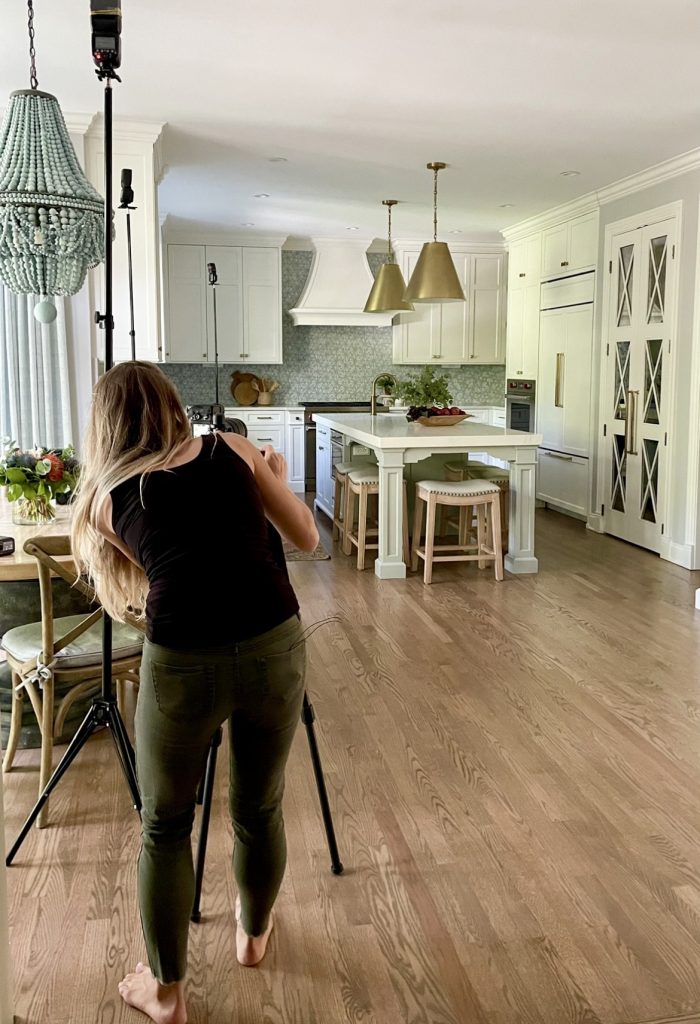
Photo: Stephanie Frees
Designers truly need to understand their agreement with their photographer, she adds. “You need to know who actually owns the images. If you don’t ask the right questions, you might not know what you’ve actually paid for,” she stresses.
Tangling with usage rights and the expense makes it tempting for designers to take their own photos, especially since smart phones put a camera in everyone’s pocket.
“Some advantages of taking your own images include time and money. Interior photo shoots can be costly so, if you’re up for the challenge, it’s a good way to save on expenses. You can also play around and get some shots you wouldn’t normally want to pay for. You also own all the images and rights, which can be beneficial,” notes Kampfer.
However, the designer, who worked as a professional photographer in the past, is well aware of the disadvantages for those who don’t have his professional background.
“As someone who photographs projects myself, the key element is to have the best equipment. Knowing how to compose a shot is a given, but the differences between an iPhone shot and a DSLR shot are astounding,” he stresses. “It’s important to have the right camera, lenses and lighting equipment for the particular space you’re photographing.”
Kampfer also cites the importance of post-production knowledge, as a professional photographer’s job doesn’t end when the shoot is finished. “You may need to remove lens distortion, or correct color and lighting issues,” he states. “Good post-production skills are a must to produce the best mood and feel of certain projects.”
“The work my photographer does afterwards is just as important,” adds Derrick. “If you have electrical outlets in your backsplash, or the ceiling is peppered with can lights, the photographer can erase them all in the afterwork.”
Derrick notes his own photography background, but resists the idea of photographing his own projects. “Am I going to go out and get all of the necessary equipment and spend my time practicing, or am I going to focus on design?” he queries. “Designers can shoot the photos themselves and they’ll get better at it, but what is their time worth?”
In the end, Kampfer stresses that using a professional photographer can provide the designer with quality photos that they can’t get on their own, regardless of their talent behind a lens. “It’s the same reason clients hire us as designers,” he muses. “Some photo shoots are not DIY.” ▪