

When people envision their dream kitchens and bathrooms, they visualize spaces like those they see on home renovation shows, in social media posts and even in magazines like Kitchen & Bath Design News, i.e. spaces with beautiful finishes and materials…and clutter-free countertops.
However, life is usually much messier than what is portrayed. Consider that someone in the family needs to charge their phone. Another doesn’t have time to put away the toaster or clear away the accompanying crumbs before heading off to work or school. And where does everything go after making the ‘big box’ store run?
Tackling life that happens in a kitchen or bathroom can seem daunting. However, incorporating the right storage solutions can streamline much of the chaos to create a more idyllic space that more closely matches the vision.
This month, KBDN asked designers to share savvy kitchen and bathroom storage solutions that streamline everything that happens in life.
Tackling Storage in Zones
Laura McCroskey remembers the frustration associated with storage in her kitchen when she moved into her home 18 years ago. She recalls that, for example, when she would carry out a recipe, she’d trek across the kitchen to her pantry where she would load up her arms with supplies, then trek back to her island to prepare the meal. If she didn’t have enough ‘carrying capacity,’ she’d have to make a second, or worse yet, third, trip. After she was finished, she’d have to repeat the process, in reverse, to put back everything she didn’t use.
“There is so much going back and forth with walk-in pantries,” says the founder/principal designer for McCroskey Interiors in Kansas City, MO. “They just aren’t efficient…on any level. People forget what they have, they buy too much, things get lost. That’s how people end up with 10 bottles of ketchup! They don’t think they have any so they buy more. In reality, they’re buried somewhere in the pantry.
“It’s also difficult to stay organized in a walk-in pantry when everything, such as water bottles, canned goods, flour, etc., is intermingled,” she continues. “Everyone tries to be organized, but it ends up being a mess.”
Instead, she and fellow interior designer, Leann Lynn, encourage their clients to think about storage in zones. In fact, that’s how McCroskey designed her own kitchen when it was time for a renovation.
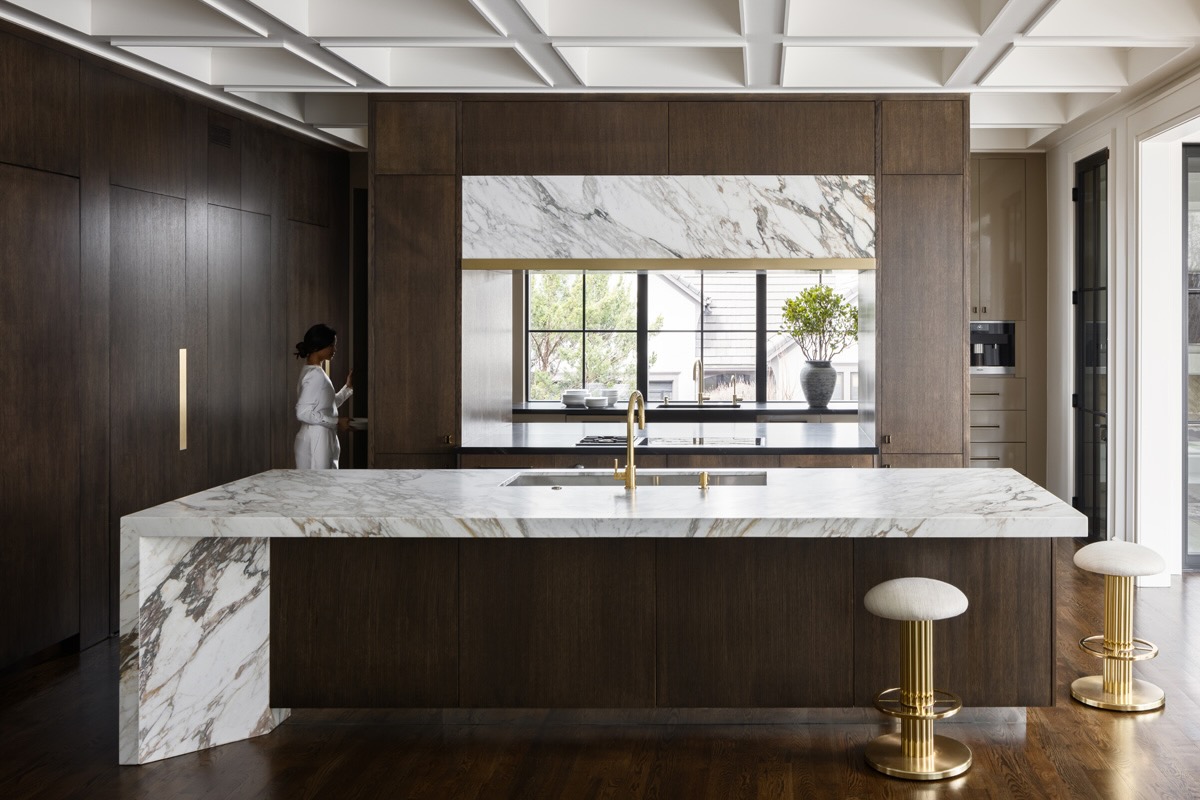
This heavily used kitchen for a family with three small children and in-laws who frequently visit is divided into several zones based on the intended task, for example, baking, cooking, etc. Designers at McCroskey Interiors also included plenty of associated storage, much of which is hidden to maintain a clean aesthetic.
“When I consider storage now, I divide a kitchen into zones based on a task, such as baking, cooking, etc.,” she explains. “Within a baking zone, for example, we will design storage for everything someone needs to bake. The same applies to a cooking zone or a beverage/snack zone. A person never has to leave the zone they’re working in to get supplies. That means we need to get very creative with storage. Sometimes, that may also mean there are duplicates of some things, but that’s okay.”
One creative solution she and Lynn often utilize is shallow storage accessed via a sliding panel(s). Oftentimes, it is in a cooking zone, for example, integrated into the backsplash behind a range or cooktop.
“It is a lot easier to have shallow storage for items like spices and oils right by your cooktop, rather than having to reach into an upper cabinet or into a base cabinet drawer,” she explains. “Upper cabinets can be difficult to reach, and they are often about 14″ deep. Spice jars are usually pretty small and they can get knocked over and easily lost. Spice drawers can be better, but they have their limitations, too, because bottles and jars aren’t necessarily uniform in size. And, some of them just don’t fit into drawers. These sliding panels that conceal shallow storage are great because everything is stored upright, and they can be customized to fit bottles of any size.”
McCroskey indicates that the concept readily works in a bathroom, too.
“You can position a mirror in the middle of a vanity, then have shallow storage on either, or both, sides with panels that slide behind the mirror to expose the ‘medicine cabinet,’” she explains.
The designers are also always looking for ways to improve storage in an island, which, given its central location, can be considered a ‘neutral’ zone that is accessible from several other zones. As such, they often include built-in paper towel holders, vertical slats for cutting boards and knife holders integrated into countertops or islands for knife storage.
“Taking it even further, we also push for drawers underneath a sink,” McCroskey continues. “People often have baskets with some cleaning supplies, but it’s usually unutilized real estate. With drawers, they can store cleaning supplies, as well as prepping supplies like utensils and cutting boards…and also onions, garlic, tomatoes, etc.”
While she isn’t a fan of walk-in pantries, she does advocate for what she terms ‘Costco closets’ or overflow storage zones.
“I am realistic,” she says. “I understand that people buy in bulk so I create overflow storage areas where clients can store items they buy in bulk, or in multiples. In my kitchen, I have two shallow storage areas for overflow supplies that I use for replenishing. I only visit these sections every two weeks, or maybe once a month, when I need to replenish items that are integrated into the kitchen itself. These overflow areas eliminate the need to visit another room on a daily basis.
“In general, people are more open to creative storage solutions, and to thinking outside the box,” McCroskey continues. “Today, that means saying ‘no’ to a walk-in pantry, and ‘yes’ to zone storage. Whatever the solutions, having a well-organized, clutter-free space makes the space not only beautiful but more enjoyable to work in.”
Seamless Storage
When Jenny Murphy first meets with her clients for a kitchen or bathroom renovation or new-build project, she conducts an ‘anatomy session,’ where among other topics, she discusses storage needs.
“What’s essential for one family might not suit another, especially as it relates to a kitchen,” says the owner/principal designer of J. Reiko Design Co. in Fort Collins, CO. “Everyone lives, and eats, differently. So, based on their comments, we plan storage to ensure optimal functionality and convenience.”
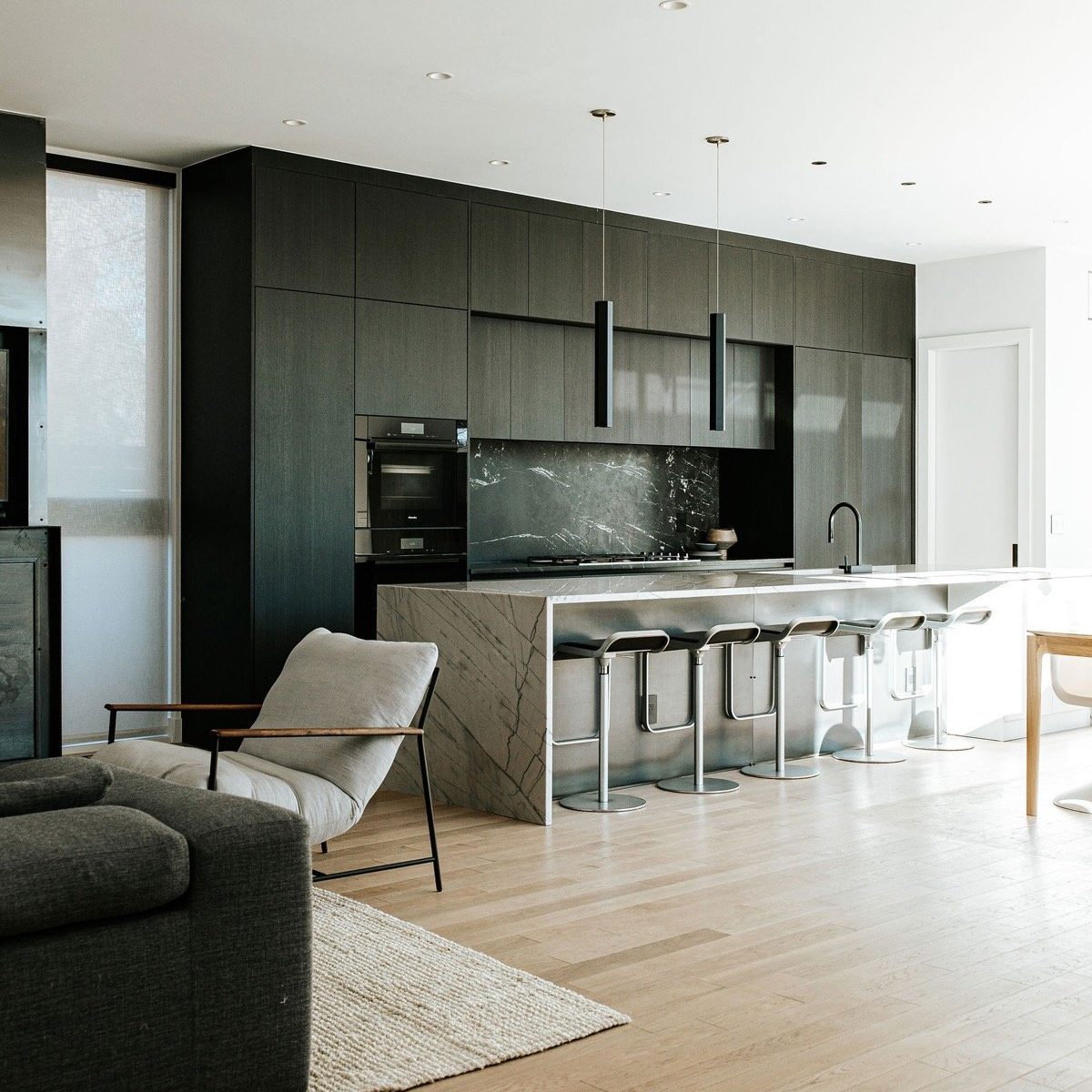
In this contemporary kitchen, Jenny Murphy’s clients wanted to hide everything to create a streamlined aesthetic. Other than the ovens, all the major appliances, including the refrigerator and freezer, are paneled to blend with the cabinetry. A pocket door to the right of the refrigerator and freezer leads to a working pantry that helps keep the main kitchen tidy.
Photos: Sierra Ann Photography
Even though every client’s storage needs are different, there are some commonalities, especially as they relate to technology and appliances, both of which are changing the way people live in their homes.
“I’m seeing a lot more technology and appliances, with more items that need power sources,” she says. “That, of course, has pros and cons. Some of the cons are finding ways to blend everything seamlessly into a space.”
With an increased emphasis on hidden storage, Murphy encourages the inclusion of appliance garages, cabinets that extend to the countertop. Typically larger and more functional than appliance garages of yesteryear, today’s updated kitchen versions are often equipped with outlets for power-in-place usage of small appliances and multiple shelves for organizing associated accessories. Bifold or pocket doors allow full and easy access to cabinetry contents.
“We’re seeing a lot more small appliances that people use every day, such as coffee makers, blenders and juicers,” she says. “People want them accessible, but they don’t want them visible on the counter.”
As well, cabinets in bathrooms that reach to the countertop and function in an appliance-garage manner can conceal the ever-growing abundance of powered items used in these spaces, such as toothbrushes, water flossers, razors, etc.
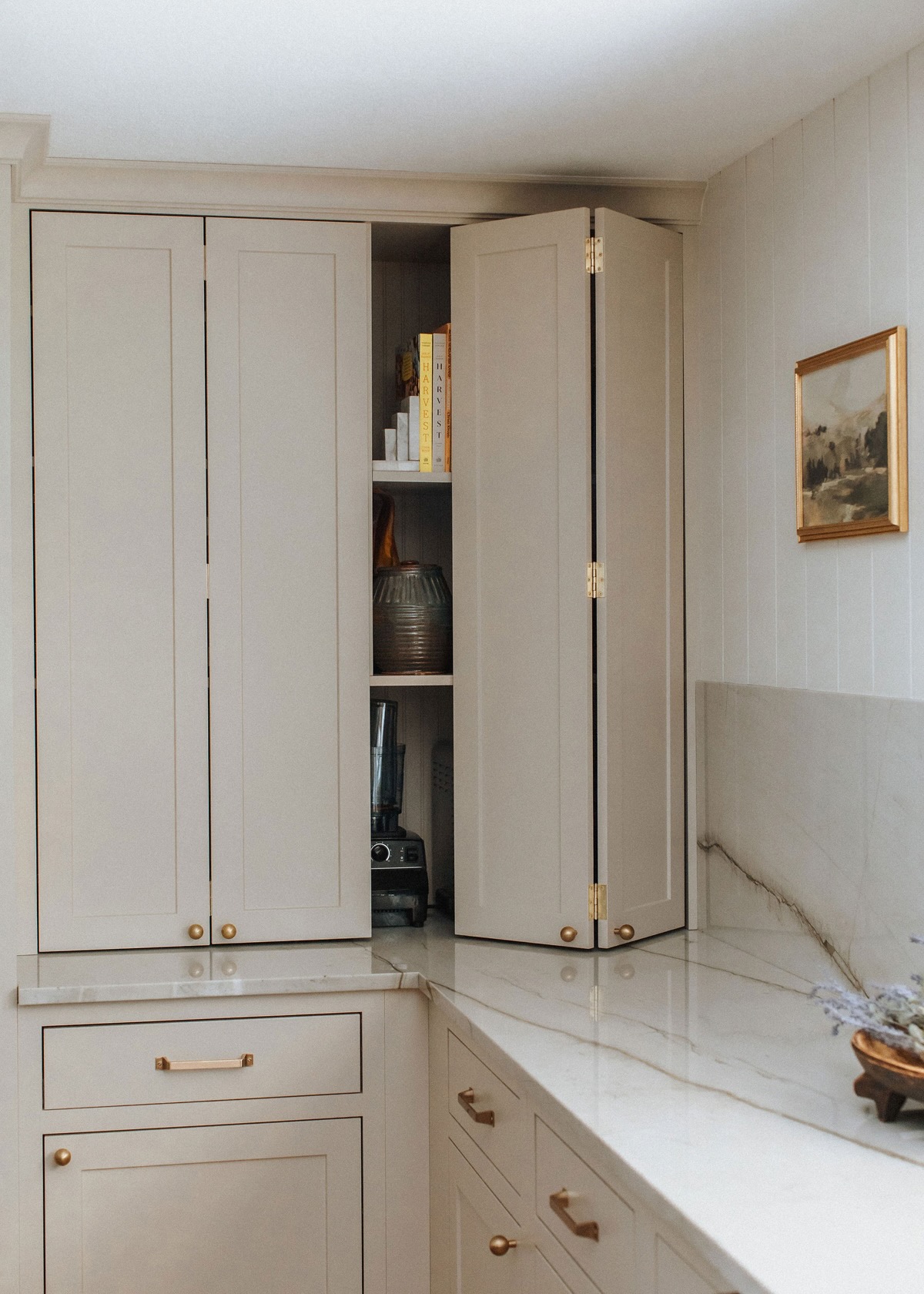
With an increased emphasis on hidden storage, Murphy encourages the inclusion of appliance garages – cabinets that extend to the countertop. Today’s updated kitchen versions are often equipped with outlets for power-in-place usage of small appliances and multiple shelves for organizing associated accessories.
“These ‘towers’ sit on top of the vanity top – often one in between two sinks or multiples flanking the sinks – and function almost like a really large and deep medicine cabinet,” the designer relates. “We can cut electrical into the back of them so powered bathroom items can be plugged in all the time.”
Since Murphy often renovates historical homes, being able to conceal these contemporary conveniences also preserves their period appeal.
“People who live in older homes don’t always want modern-day technology jumping out at them,” she says. “Appliance garages give them the ability to maintain the historic nature of their house while enjoying the functionality of modern conveniences.”
Such was the principle behind the renovation of a 1901 Victorian home where the designer created a custom coffee center tucked behind a pair of pocketing doors. This renovation also features another of Murphy’s favorite storage solutions…a secondary-use kitchen.
When space allows, Murphy likes to incorporate secondary kitchens, including working pantries, butler’s pantries and sculleries, because they give homeowners a place to be messy while keeping the main kitchen tidy. The most elaborate ones, such as this one, even have sinks and duplicated appliances.
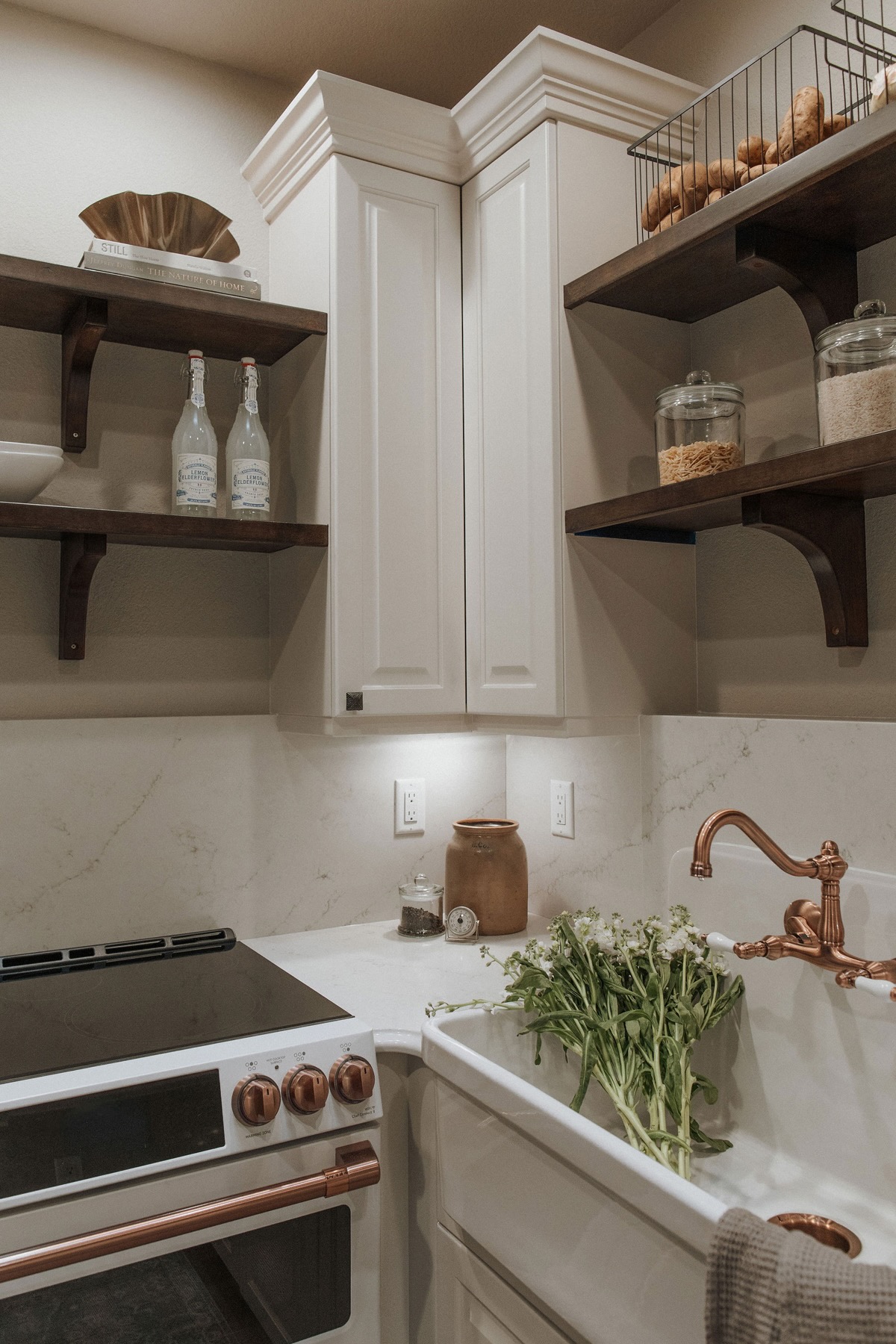
“When space allows, these secondary kitchens – including working pantries, butler’s pantries and sculleries – give homeowners a place to be messy while keeping the main kitchen clean and tidy,” the designer explains. “The most elaborate ones will even have sinks and duplicated appliances…typically pro-level in the main kitchen and mid-range in the secondary kitchen.
“Secondary kitchens are also great solutions for people who have a lot of appliances, and not enough room for all of them in the main kitchen,” she continues. “When someone wants all of the traditional appliances as well as specialty appliances, we can quickly run out of cabinet and wall space for everything to be located in one place.”
Whenever possible, and as budgets allow, Murphy also utilizes drawers for efficient storage in base cabinets, which can be especially valuable when upper cabinets in a kitchen are reduced or even eliminated entirely. As well, in bathrooms, L-shaped/notched versions capture valuable space that has historically been lost beneath the sink. ‘Character’ storage, such as furniture-style apothecary or antique cabinets for keeping linens tidy, is also becoming more popular.
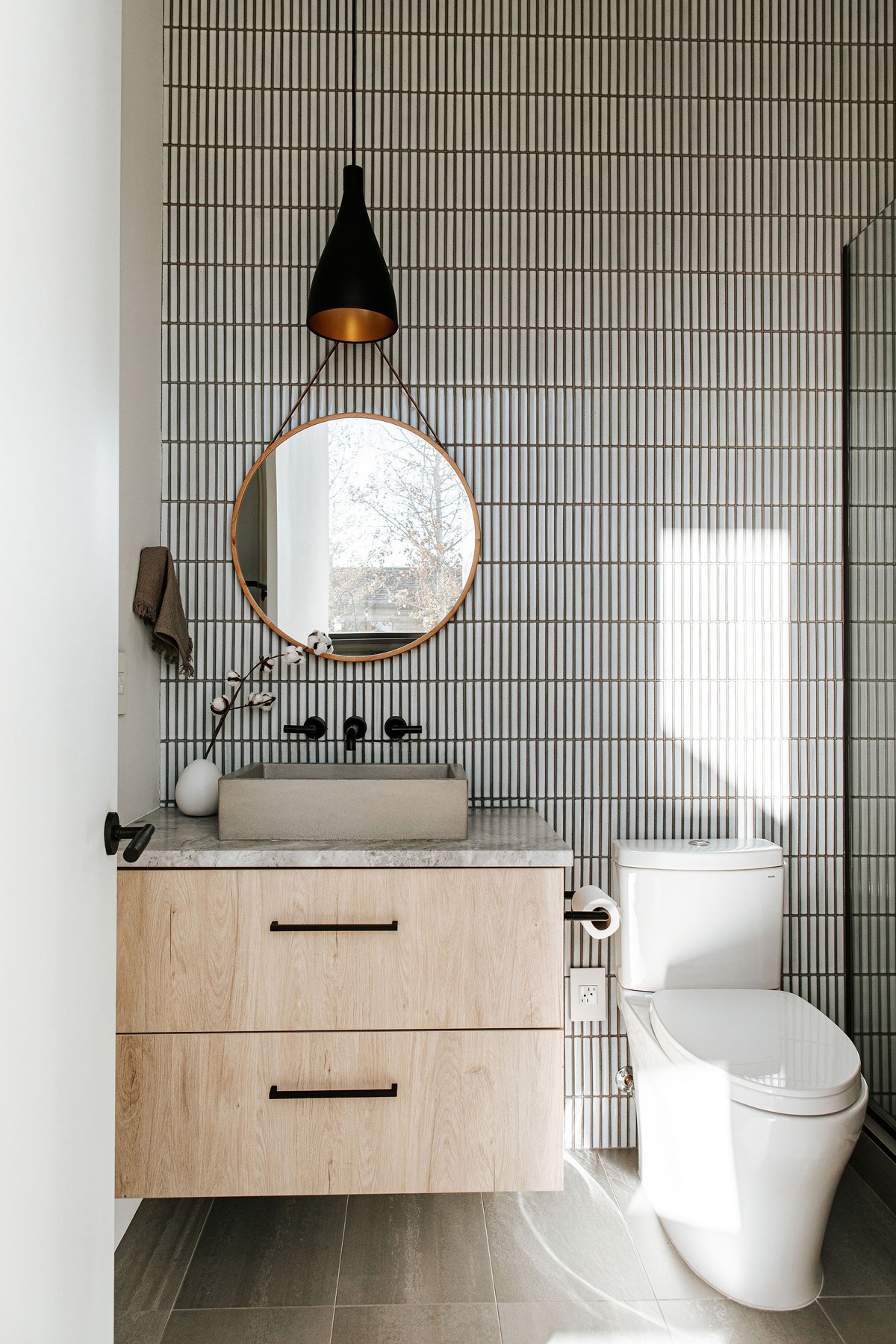
Whenever possible, and as budgets allow, Murphy utilizes drawers for efficient storage. Even in bathrooms, L-shaped/notched versions capture valuable space that has historically been lost beneath the sink.
“Storage has become so important, especially in high-functioning areas like kitchens and bathrooms, and in historic homes where we’re trying to incorporate efficient storage into a space which traditionally hasn’t had much,” Murphy states. “It can certainly be a disappointment for someone to invest in a remodel or new-build project and not be able to fit everything!”
Taking Storage Personally
As a kitchen and bath designer with more than 30 years of experience, Mary Maney is well-versed with how to handle challenges related to helping clients attain their storage needs. And now, as a homeowner who recently renovated her own kitchen, the ASID/CKBD for Crystal Kitchen + Bath in Crystal, MN, shifted those talents to herself and her own home. Admittedly, she found it to be as challenging, if not more so, to tackle her own storage needs.
“I know too many things!” she quips. “My space is also limited, and I couldn’t do everything I wanted, so it was very difficult to make decisions.”
Even so, one decision she has been especially appreciative of includes a pull-out cabinet next to the range top where she can store cooking utensils.
“I used to store my spatulas, rubber scrapers, whisks, spoons, etc. in a jar on the countertop,” she says. “Now everything is in the cabinet and out of the way. I love it!
“I also have a knife block in a drawer on my island so I don’t have to have it on the countertop,” she continues. “I also included a tray divider above my ovens. These items used to be in a drawer where they were all piled up. Now they are all upright, and it’s much easier to pull out what I need.”
Mary Maney’s clients, especially those who have limited space, don’t want to waste any space, thus they have an appreciation for cabinetry and accessories that can fit into tight spots. Such was the case in this kitchen renovation where the designer included a narrow pull-out next to the refrigerator and a pair of narrow pull-outs on the island.
Photos: Spacecrafting, LLC
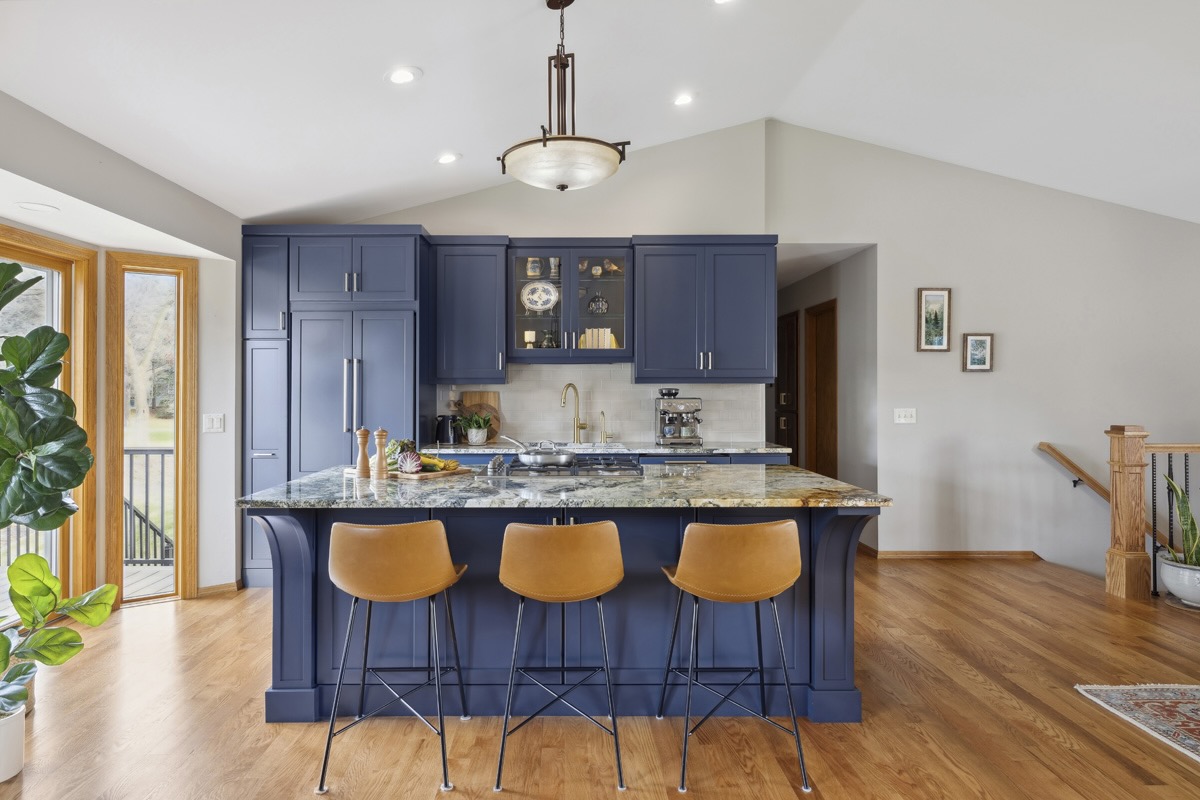
These types of storage options are popular with her clients, too, as are pull-out waste/recycling bins and corner cabinet solutions with pull-out shelves. Charging stations inside of drawers keep electronics and their associated chaos of wires off the countertop while drawer inserts organize spices, and backsplashes that extend into a shelf above the cooktop keep frequently used spices and oils within easy reach.
“My clients are most interested in organizing their kitchens to keep items off the countertops,” she remarks. “And, they want to find stored items faster. By keeping a kitchen organized, free of clutter, with easy to find ingredients and supplies, it makes cooking more enjoyable.”
Clients, especially those who have limited space like Maney, also don’t want to waste any space, thus they have an appreciation for cabinetry and accessories that can fit into tight spots.
“Sometimes, after factoring in doors, drawers and appliances, we are left with spaces that can be pretty narrow, even less 9″ wide,” she relates.
Such was the case in one recent renovation where Maney included a narrow pull-out next to the refrigerator and a pair of narrow pull-outs on the island.
“This kitchen is super small…just one perimeter wall and the island,” she says, “so every single square inch had to be well thought out. At one point we were contemplating using a hallway linen closet as a pantry. Ultimately, we were able to plan for enough storage that she didn’t need to use that closet.”
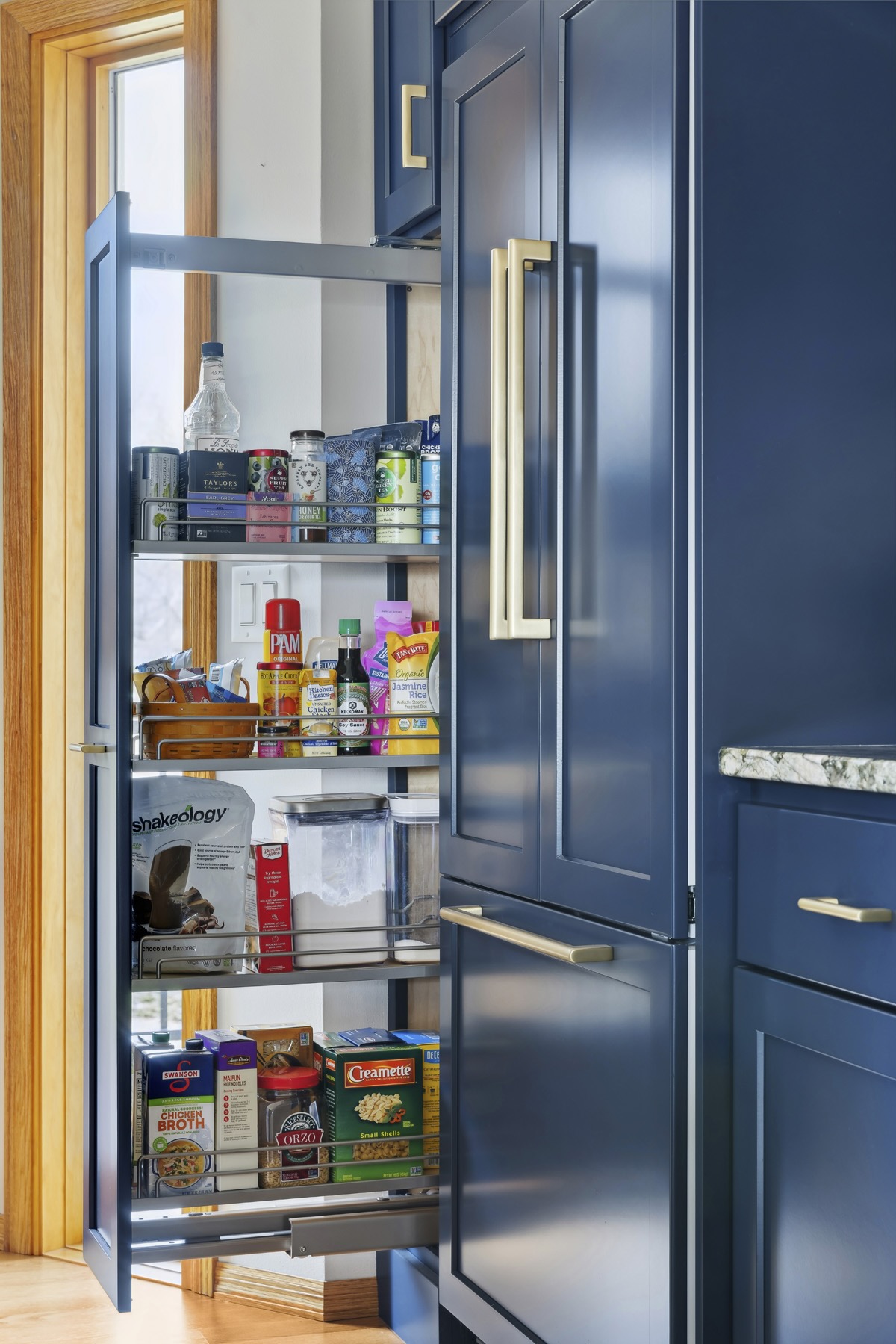
Maney wasn’t sure there would be enough room in this kitchen for a pantry. However, since she needed wall space to the left of the refrigerator to fully open the doors and bins, it worked out to add a narrow pull-out pantry cabinet for dry goods storage.
The narrow pull-out in the island is perfect for oils, vinegars and spices in large containers.
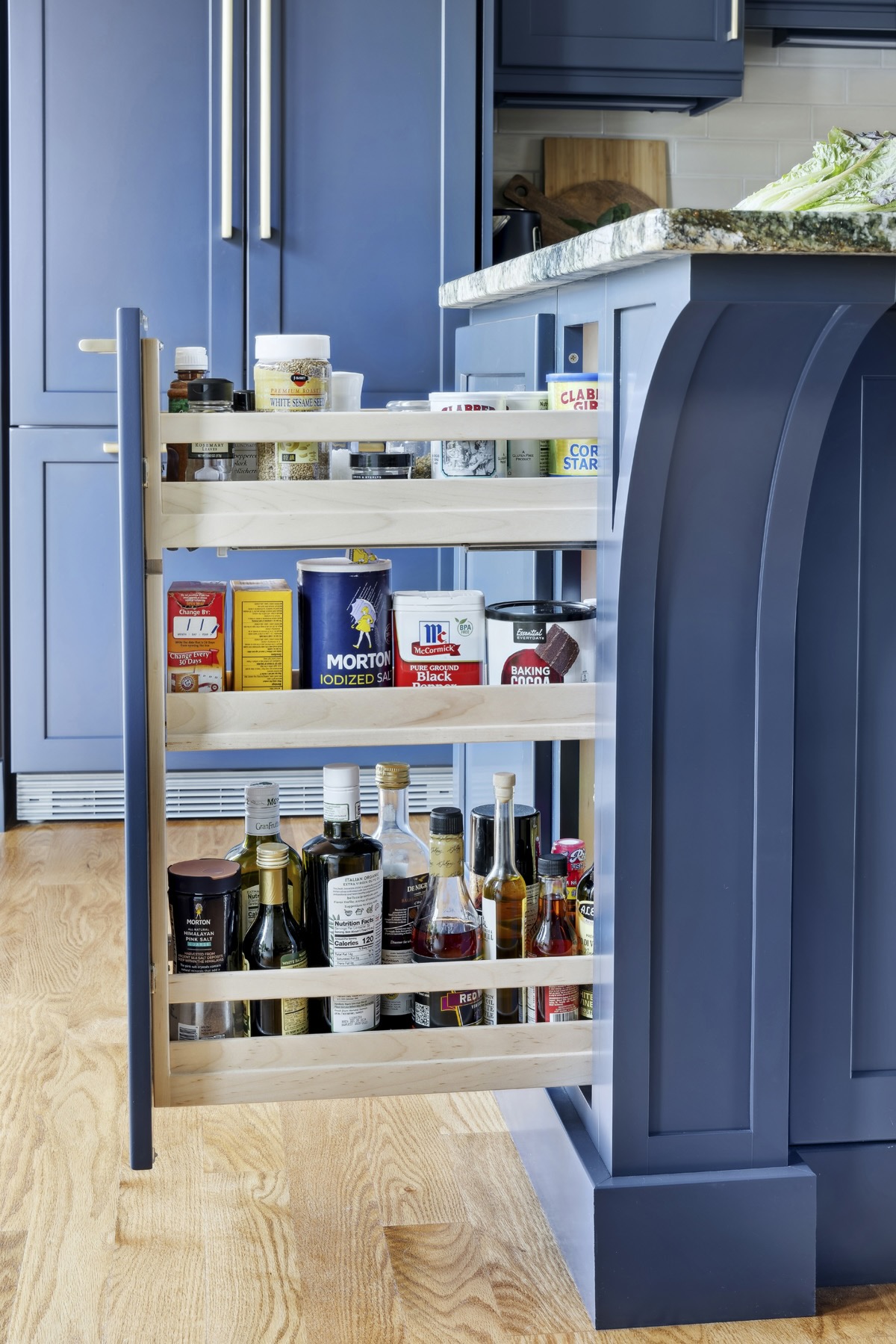
The ‘saving graces’ were, in part, those narrow pull-outs, which are tucked conveniently into otherwise wasted space. The two in the island are perfect for trays and oils, vinegars and spices in large containers while the one next to the refrigerator stores dry goods.
“We didn’t think there would be enough room in this compact kitchen for a pantry,” Maney indicates. “We also needed wall space to the left of the refrigerator to fully open the doors and bins, so it worked out beautifully to add the narrow pull-out pantry.”
As well, the designer included shallow-depth storage on the seating side of the island where her client can store less-frequently used items. Deep drawers are ideal for storing pots and pans and a drawer insert organizes spices in small bottles.
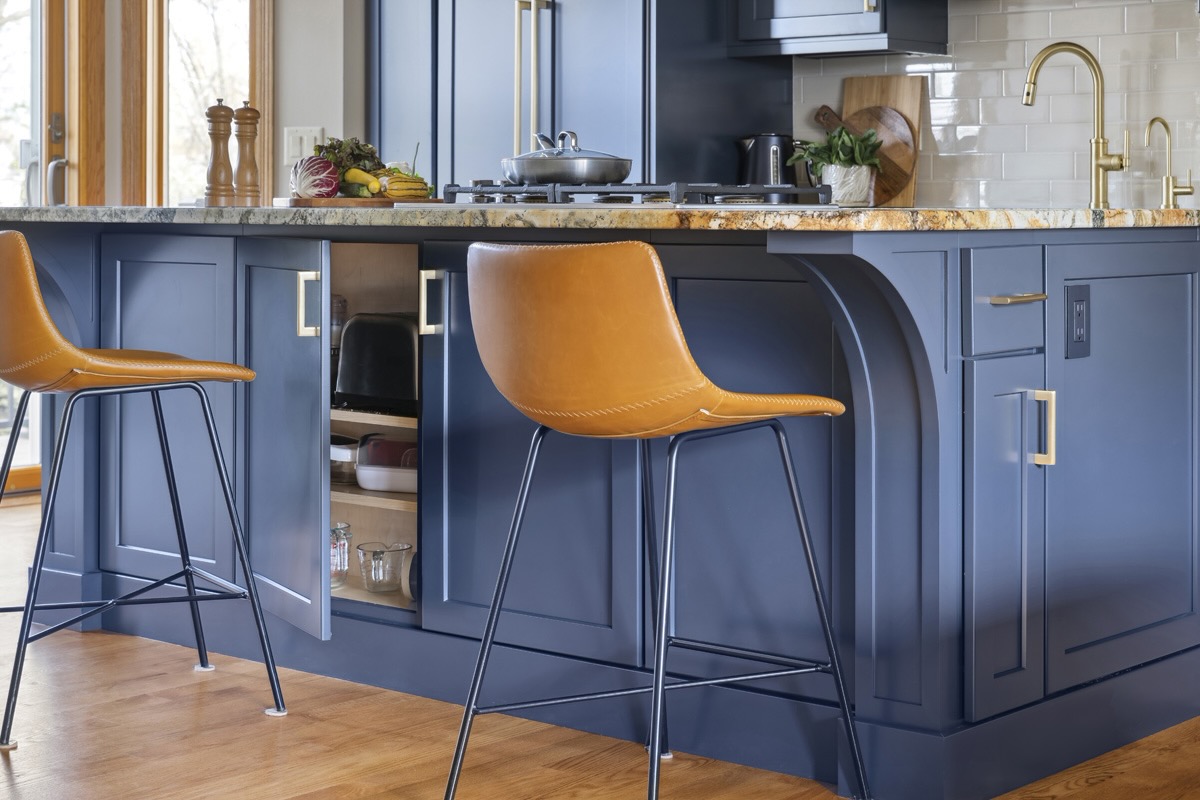
Shallow-depth storage on the seating side of the island is used to store less-frequently used items.
Maney planned well enough that she could even give her client a bit of décor display space above the sink.
“When a sink doesn’t overlook a window, it’s nice to have some open shelves or cabinets with glass doors so you don’t have to look directly at a cabinet door,” she explains. “With this client, she used to display things on top of her cabinets, and she didn’t want to do that in her new kitchen. This way, she has a place to keep some of those items, and she can change up things when she wants.”
Practical Storage With Style
Social media sites, such as Instagram, Pinterest and Houzz, are great places for people to find inspiration related to kitchen and bath storage. However, they can also be great places for people to get overwhelmed given the wealth of information that is posted and shared.
“There are so many choices these days, and people see so many different trends and styles,” notes Lauren Mills, president, Sea Pointe Design & Remodel in Orange County, CA. “That’s where our designers come in. They ask questions about their clients’ everyday routines and lifestyles so we can sort through all of the information to create tailored storage that utilizes every square inch of their kitchens, without sacrificing style.”
Frequently, discussions center around a desire for open spaces, clean lines and clutter-free countertops. To meet those priorities, designers often turn to semi-custom and custom cabinetry for built-in storage solutions that can clear the countertops, yet, equally importantly, provide easy access.
“It isn’t only about hiding things,” she stresses. “It’s also about optimizing access.”
Areas of particular emphasis include maximizing storage in islands and ever-challenging corners. Because of their size, islands often offer a capacious place for storage, especially for larger items.
Narrow pull-outs are great solutions for spices and similar ingredients, such as in this kitchen where designers at Sea Pointe Design & Remodel tucked it alongside the refrigerator. They also included a corner pull-out rack system and storage in the island for big pots and pans.
Photos: Leigh Ann Rowe
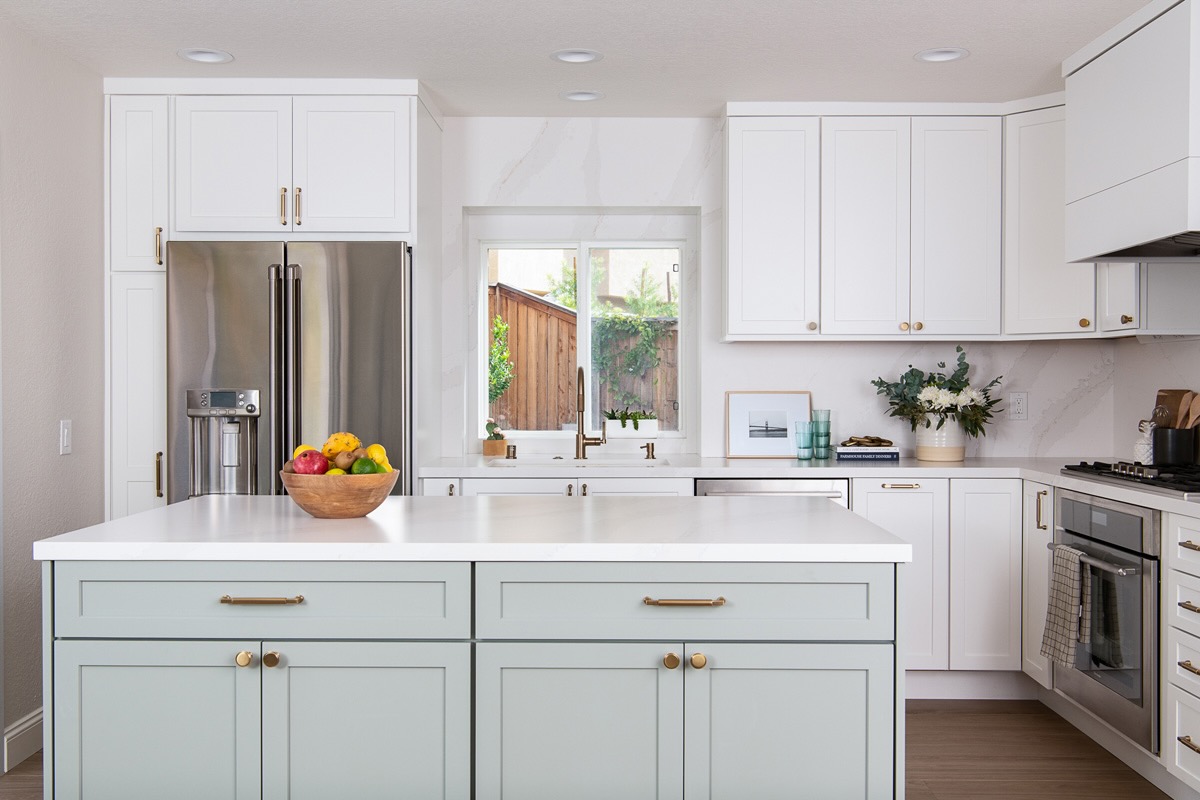
“Deep pull-out drawers fit cast iron cookware, pots and pans, woks and other items that are big and bulky,” Mills reports. “They keep them hidden away so they don’t need to be left out on the stove or countertop, or even in the oven.
“Corners are often a forgotten area,” she continues. “People really struggle with what to store in them, and usually they are left digging deep to find anything. We make it easier for them with either a traditional lazy Susan or, more commonly, a pull-out corner rack system that gives easy access to contents.”
Other custom solutions include pop-ups for heavy stand mixers and pull-outs for spices and similar ingredients. The latter is great because they can maximize narrow spaces, which can potentially be wasted. Such was the case in one recent kitchen remodel where a narrow pull-out, used for spices, was tucked alongside the refrigerator.
“It’s common for people to store spices next to the range or cooktop,” the designer says. “However, for this client, we chose to locate their spices next to the refrigerator, in a narrow space that was otherwise hard to use. We also included a corner pull-out rack system and storage in the island for their big pots and pans. These clients love to cook, and they really needed to maximize storage in their small kitchen. They also have kids and they wanted to give them easy access to things, rather than having them grab them off of the countertops.”
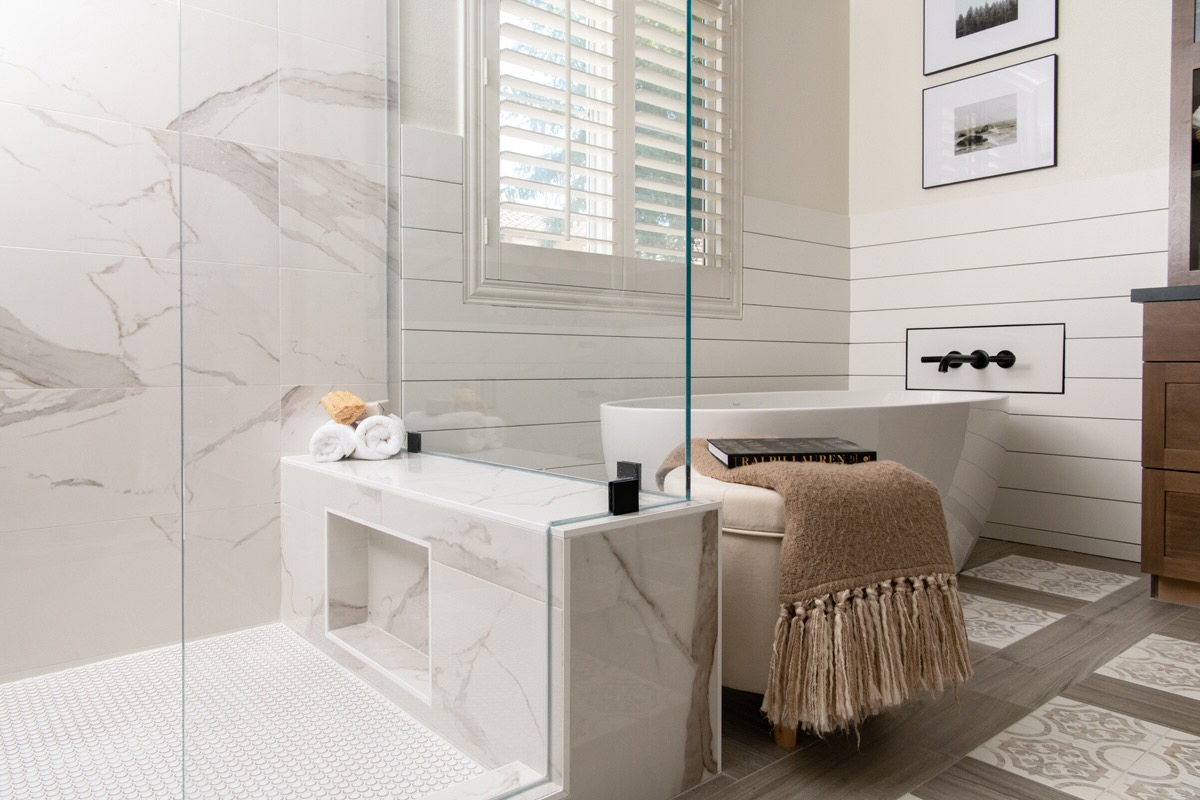
Designers at Sea Pointe also like to incorporate custom solutions into bathrooms. For example, toiletries niches in showers can be discreetly hidden in benches so they are functional, yet hidden from the overall vision of the bathroom. Also, in one recent bathroom renovation, they included a custom built-in pull-out hamper to corral and conceal dirty clothes and linens.
“This bathroom is a great example of how we can maximize bathroom storage with custom cabinetry,” Mills indicates, noting the addition of cross-shelving for towels and traditional shelves for décor or toiletries.
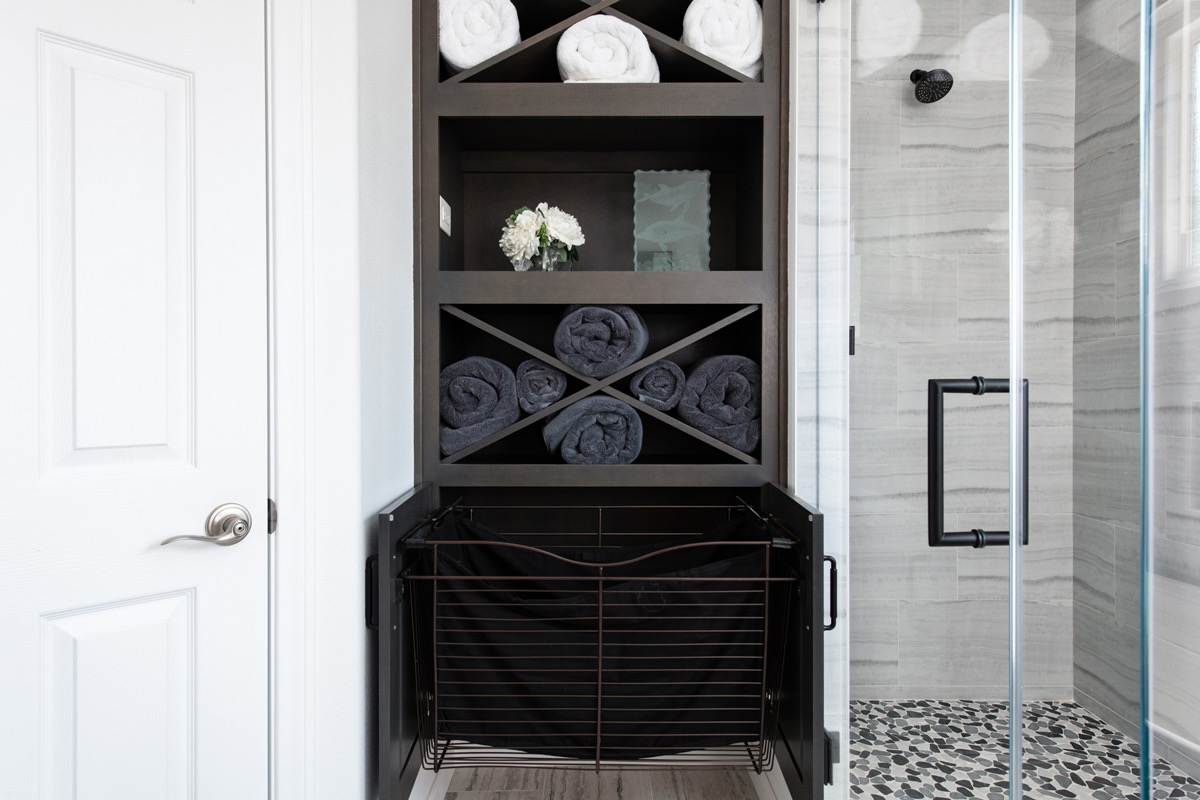
This custom built-in cabinet features a pull-out hamper, cross-shelving for towels and more traditional shelves for décor or toiletries. Designers at Sea Pointe Design & Remodel also included hidden electrical outlets in the floating vanity so the homeowners can plug in their hair dryer, curling iron and even phone charger, all while keeping them hidden in the drawer.
Designers at Sea Pointe Design & Remodel like to incorporate custom solutions into bathrooms. For example, toiletry niches in showers can be discreetly tucked away in benches so they are functional yet hidden from the overall vision of the bathroom.
Sometimes storage solutions are deceivingly small. For example, electrical and charging outlets inside drawers and appliance garages are changing the way people charge electronics and store small appliances in kitchens, and even in bathrooms.
“With charging outlets in drawers, people can charge laptops, phones, watches, etc. inside a drawer so all of the wires aren’t on the countertops,” she relates. “With electrical outlets in appliance garages, people can keep appliances, such as toasters and coffee makers, hidden while still being easy to use. Even in the bathroom, people can tuck away hair dryers and curling irons to keep vanity tops clutter free.”