

The skilled-labor shortage that’s plaguing the residential construction trade is increasingly looming as a major concern for the kitchen and bath industry, with employers struggling to recruit, train and retain qualified workers, and employee workplace attitudes impacted dramatically by the COVID-19 pandemic, the current job market and other societal trends.
Those are among the key findings of a nationwide survey conducted by Kitchen & Bath Design News in conjunction with its exclusive research partner, the Research Institute for Cooking and Kitchen Intelligence (RICKI). The online survey, fielded in May, polled nearly 250 employers and employees at kitchen/bath dealerships, design/build remodeling firms and related businesses.
The primary goals of the study were to determine how kitchen and bath design firms are currently experiencing labor shortages, how severe those shortages are, who is being impacted, and what actions are being undertaken to recruit and retain qualified employees. The survey also probed employees of kitchen and bath design firms regarding their views on such topics as wages and benefits, hybrid work arrangements, flexible schedules, staffing shortages and workplace incentives.
According to the survey’s findings, roughly seven in ten kitchen and bath dealers who identified themselves as employers – either the sole person responsible for hiring or someone who is very involved in hiring – say that it’s either “extremely” or “very” difficult to find qualified employees compared to past years. In sharp contrast, a mere 5% of surveyed employers reported that finding qualified employees is either “not very difficult” or “not difficult at all” (see Figure 1).

For nearly every employer polled, finding and retaining qualified employees and subcontractors ranks as the single- most pressing issue facing management – outranking such overarching concerns as supply chain disruptions, product/material price hikes, rising interest rates, a housing slowdown and keeping up with both consumer demand and new technology (see Figure 2).
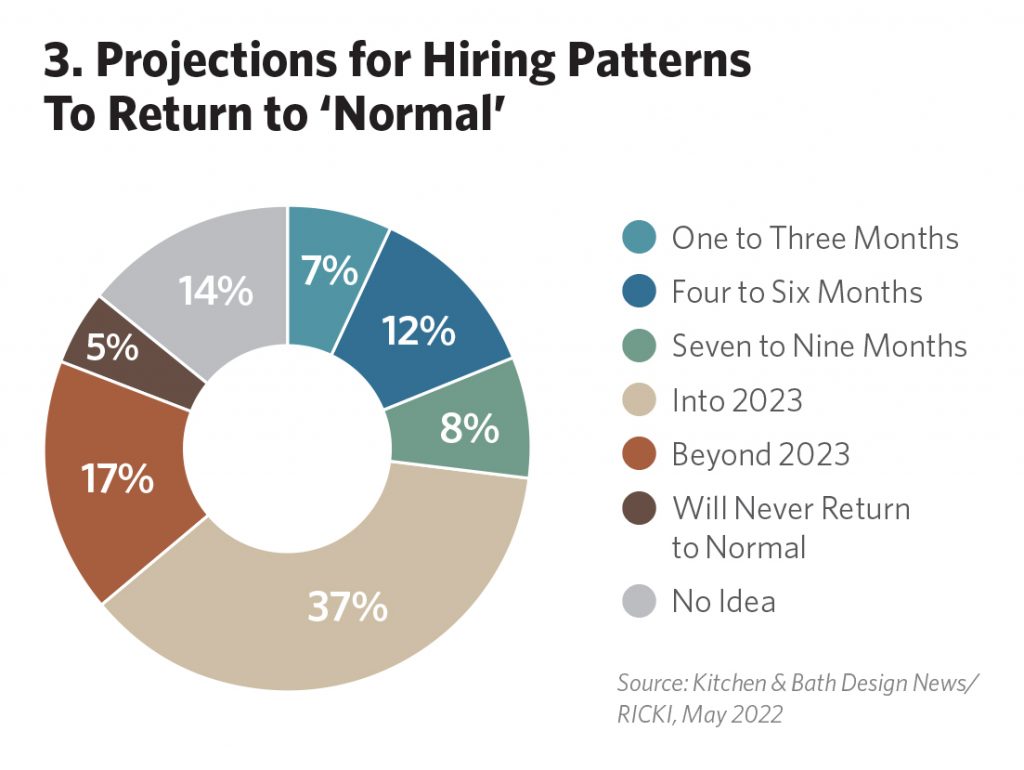
To compound matters, more than half the employers surveyed say they foresee no palpable change in the status quo anytime soon – with 54% believing that the current labor shortage will persist into 2023 and beyond, another 5% saying that past hiring patterns will never return to normal, and 14% reporting they have “no idea” of what the employment picture will look like in the future (see Figure 3).
POOL OF JOB CANDIDATES ‘SMALL’
The most difficult workers for kitchen/bath design firms to find these days are subcontractors, installers and other field/support personnel (such as warehouse workers, delivery drivers and receptionists), followed by experienced designers and salespeople (see Figure 4).

“It’s highly competitive among employers right now,” one employer said. “The pool of candidates is small, and the pool of desirable ones is even smaller. Finding employees who want to work and who are willing to go the extra mile to increase business (is challenging).”
Said another employer: “I can find installers, but it’s difficult to find highly skilled ones without having to teach them everything. It takes too much of an investment in time.”
A third employer lamented that finding employees with basic skills such as written and verbal aptitude has become increasingly challenging.
“The hiring process is long and drawn out, and the tight labor market makes it difficult to land candidates who are self-starters, who work collaboratively and who possess the ability to recognize that they need to seek input rather than make (blind) assumptions,” the employer said.
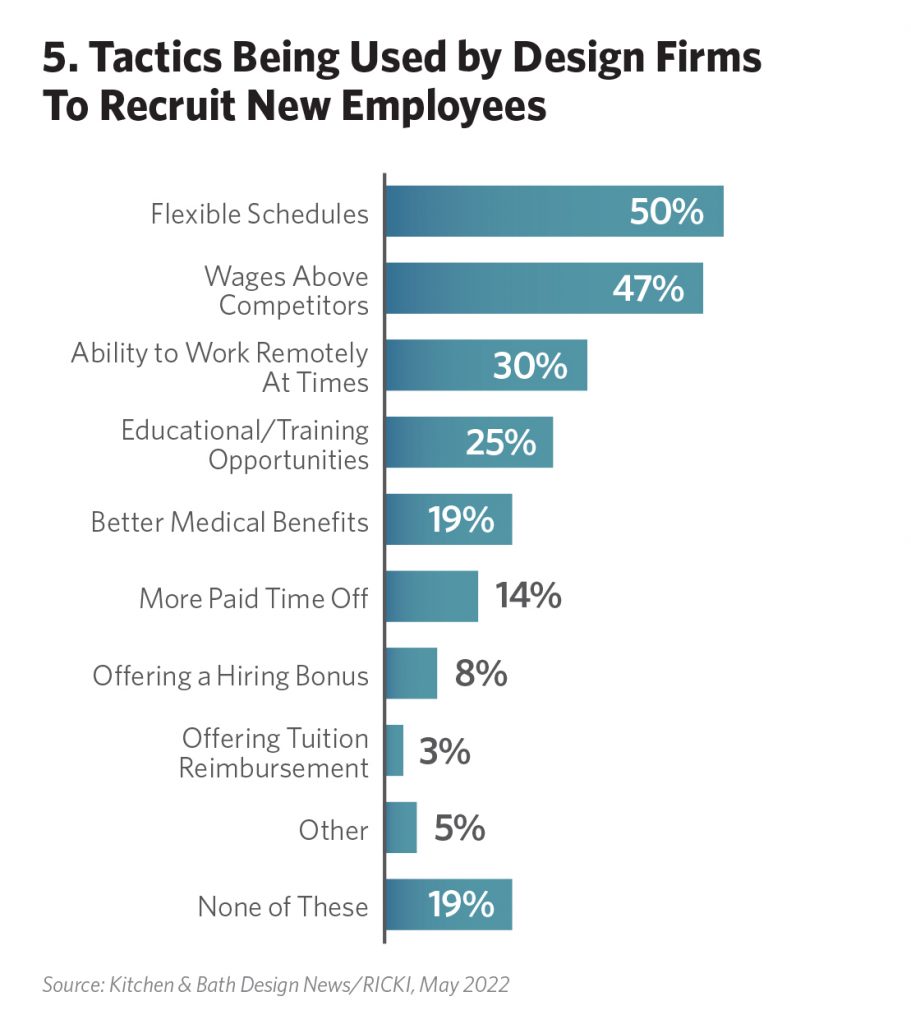
To help recruit qualified employees, half of the businesses surveyed say they are offering flexible work schedules and wages that are above those of competitors. Three in ten are offering the ability to work remotely at least some of the time. A quarter of the employers polled say they offer training and educational opportunities as incentives for new hires (see Figure 5).
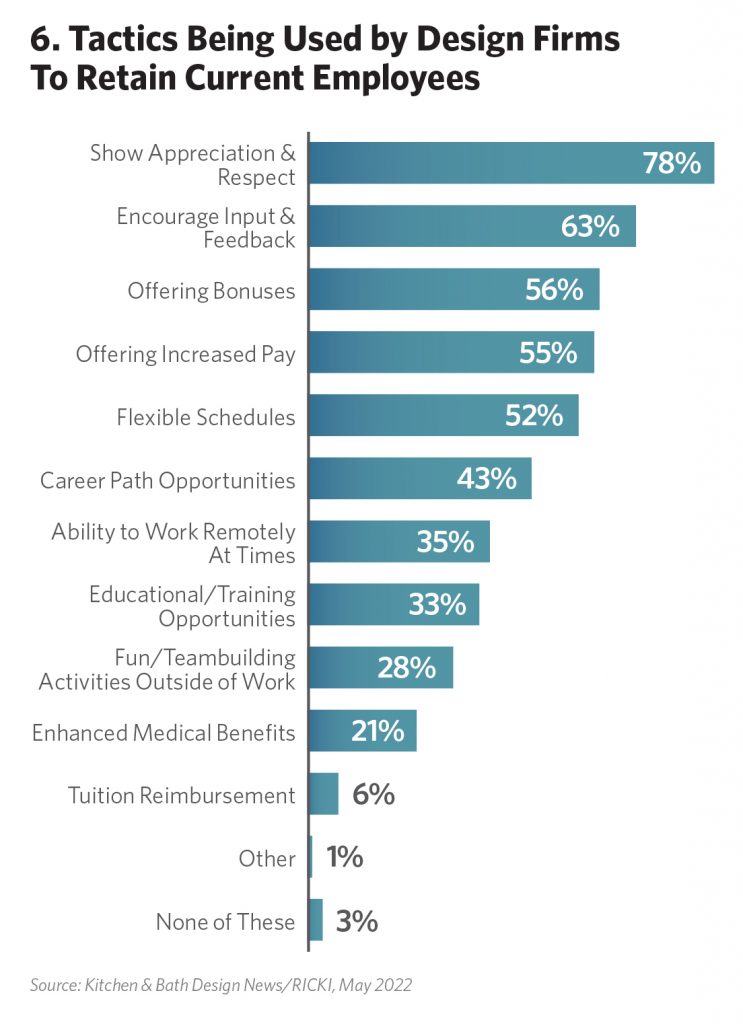
While it’s difficult these days to recruit qualified employees, fewer than one in ten design firms surveyed also say it’s “extremely” or “very” difficult to retain those employees. To help in retainment efforts, most employers say they are making a concerted effort to show “appreciation” and “respect” to employees, encourage more input and feedback, and offer a range of similar intangibles. About half the surveyed companies report they are offering some type of financial incentive, such as bonuses and pay increases. Nearly half say they permit their employees to conduct work remotely at least some of the time (see Figure 6).
Offering employees the ability to work remotely is also a practice that will apparently remain in effect into 2023 and beyond, employers report, adding that the most common ways businesses are supporting remote work are by conducting regular digital communications (such as Zoom meetings), making personal phone calls to remain in contact with remote employees, and offering administrative support such as printouts of contracts, sending client invoices and accepting product deliveries.
Nearly one-third of surveyed companies say that they offer their employees specific training on how to effectively work from remote locations, while 25% say they either offer resources to assist with mental and/or physical health or provide support to combat such issues as isolation and burnout.
EMPLOYEES’ PERSPECTIVE
But employees at kitchen/bath design firms offer sharply divergent opinions than employers about the workplace challenges they and their companies currently face.
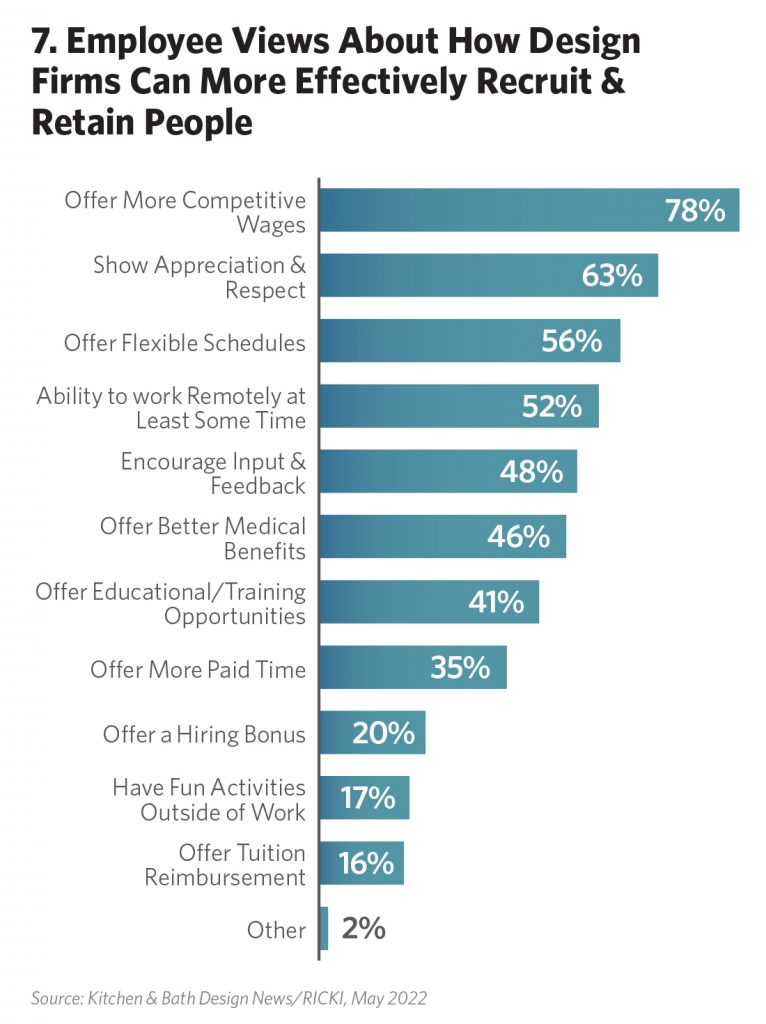
For instance, seven in ten believe that companies must offer more competitive wages in order to recruit and retain employees. Others point to concerns involving company culture, the prospects for advancement, chronic understaffing, COVID-related issues, a sense of being under-valued, and less-than-constructive engagement between management and employees as key reasons for people changing jobs in a workplace that offers a multitude of alternative opportunities.
“There are fewer people having to do more work and not being appreciated for it,” one employee lamented. “Management is still making money, but the staff that actually makes the business function has had nothing but decreases in salary and layoffs since the pandemic began.”
“We have seen such an increase in demand for our services and products over the past three years that we’re struggling to keep up, but our employer has not made any new hires,” another employee observed. “Burnout is setting in. It’s been so busy with projects, but then you’re also busy tracking down product or reselecting (an alternative) because there’s too long of a lead time.”
“I feel as if I’m just a cog in the wheel,” said yet another employee. “We’re short-staffed, our pay doesn’t equate to the rising cost of living, there’s a lack of training upon entry, and many employers don’t understand the need for a flexible schedule.”
Employees also say they feel that companies should offer more competitive wages, medical benefits and educational opportunities, demonstrate a higher level of appreciation and respect, and be more willing to offer both flexible work schedules and the ability to work remotely at least some of the time (see Figure 7). ▪