
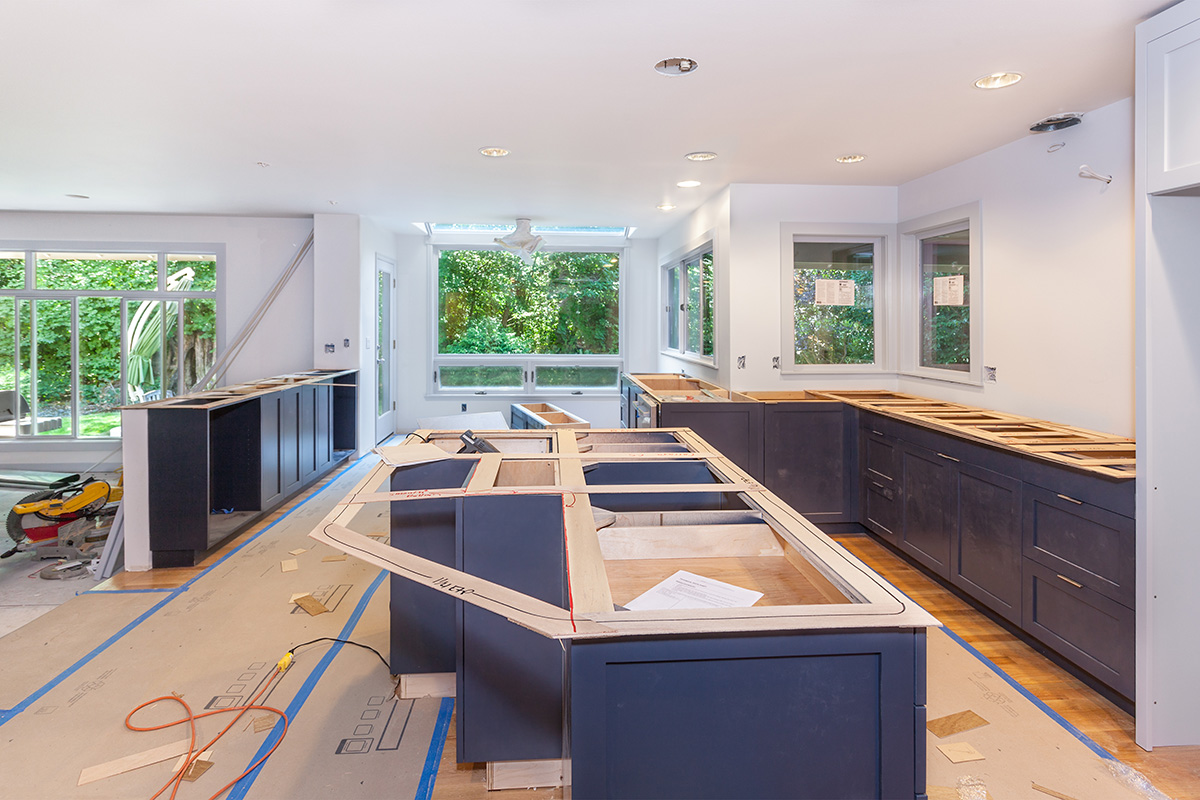
PALO ALTO, CA — Overall median spending on home renovation projects last year dipped from its peak in 2023, and while kitchens and primary bathrooms followed a similar trend, major remodels of kitchens and bathrooms continue to drive the market, according to a major new market study by Houzz Inc.
The 2025 U.S. Houzz & Home Study of nearly 22,000 U.S. respondents found that the top 90th percentile of surveyed homeowners spent $140,000 or more on renovations in 2024, down from $150,000 in 2023, with a softening median spend for remodeled kitchens down 8%, and bathrooms down 13% year over year.
The annual U.S. Houzz & Home Study, fielded between January and February 2025, covers a wide range of renovation projects. The 2025 study includes nearly 22,000 U.S. respondents, according to Houzz, the Palo Alto, CA-based online platform for home remodeling and design. Median spend is defined as the midpoint level of spending.
According to Houzz, the median spending amount for major renovations of large kitchens (200+ sq. ft.) and large bathrooms (100+ sq. ft.) in 2024 held steady in 2024, at $55,000 and $25,000, respectively. At the same time, investment in major renovations of smaller spaces witnessed notable growth. The median spend for major remodels of small kitchens (less than 200 sq. ft.) rose by 9%, to $35,000, while major remodels of small primary bathrooms (less than 100 sq. ft.) increased by 13%, to $17,000, Houzz reported.
For high-end renovations (the top 10% of spending), budgets expand considerably. Large, upscale kitchens start at $150,000, while small luxury kitchens begin at $90,000. Similarly, homeowners are investing at least $70,000 when renovating large luxury bathrooms and $45,000 or more in smaller high-end bathrooms, Houzz reported.
“The softening in renovation spend reflects the impact of elevated borrowing costs and the rising prices for everyday goods and services, which limit how much homeowners can allocate toward home improvements,” said Marine Sargsyan, Houzz staff economist.
“What stands out, however, is homeowners’ ongoing demand and consistent investment in sizable kitchen and bathroom upgrades. Perhaps even more telling, notable growth in spend on smaller spaces signals that even amid economic pressures, homeowners are prioritizing meaningful improvements no matter the size of the home.”
Among the study’s other key findings:
- Homeowners most frequently tap into their savings for renovation projects (84%). Credit cards (29%) remain the second-most-common financing method, though their popularity declined by 8% from a year earlier. Secured home loans funded 1 in 8 projects, with Home Equity Lines of Credit (HELOCs) being the most common (6%), followed by cash-out refinancing and general home equity loans (3% each).
- More than half (56%) of surveyed renovating homeowners hold full equity in their homes, and they’re committed to living there long-term, with 3 in 5 planning to remain in place for at least 11 years following their project.
- Pent-up demand continues to be the strongest motivator for home upgrades, with roughly 40% of homeowners reporting they finally have the time and means to pursue a renovation.
- Baby Boomers and Gen X homeowners continue to lead in renovation activity (59% and 29%, respectively). Though representing a smaller share of renovators, Seniors outpaced both generations in median spend at $22,000. Gen X renovators are the most likely to undergo luxury projects with the top 10% of homeowners exceeding national levels and spending $150,000 or more, followed by Baby Boomers and Millennials at $125,000 or more each.