
This year’s Design & Construction Week broke all previous records. You probably felt that if you were at the show on Tuesday or Wednesday (things always calm down a bit on Thursday, I’ve found). According to an International Builders’ Show release, “DCW drew over 124,000 attendees, and nearly 2,500 exhibitors occupied over 1.2 million net square feet of indoor and outdoor exhibits.” These statistics include both the International Builders’ Show and Kitchen & Bath Industry Show sides of the event. Here are five trends I spotted on the show floor:
- Sustainability is going stronger than ever and was evident in numerous categories.
- Wellness has shifted from a want to a need and is showing up in more categories and price points.
- Resilience, thanks to all of the hurricane and wildfire disasters that have been savaging homes across the country, showed up in strength this year.
- Camouflaging strategies are hiding more kitchen and bath features from view.
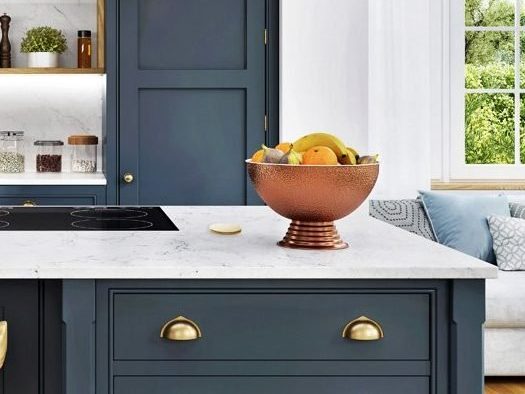
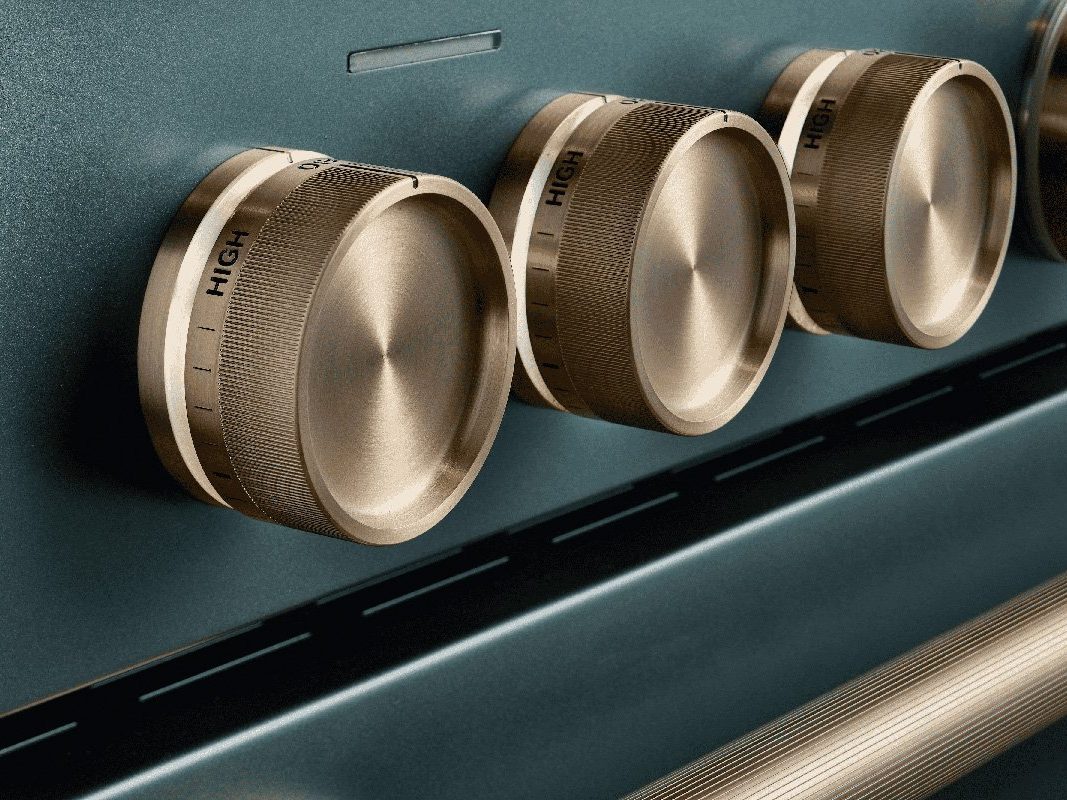
- Style trends included matte and moody finishes, with deep green a starring color across categories.
Sustainability
Recent research conducted by the American Society of Interior Designs revealed that homeowners are willing to spend 10% to 15% more for sustainable products. That’s good news for protecting the planet, but what’s become increasingly obvious is that these investments can also protect a family’s health and reduce its utility bills. Clients don’t need to sacrifice performance either, with new technologies making these products better at their jobs.
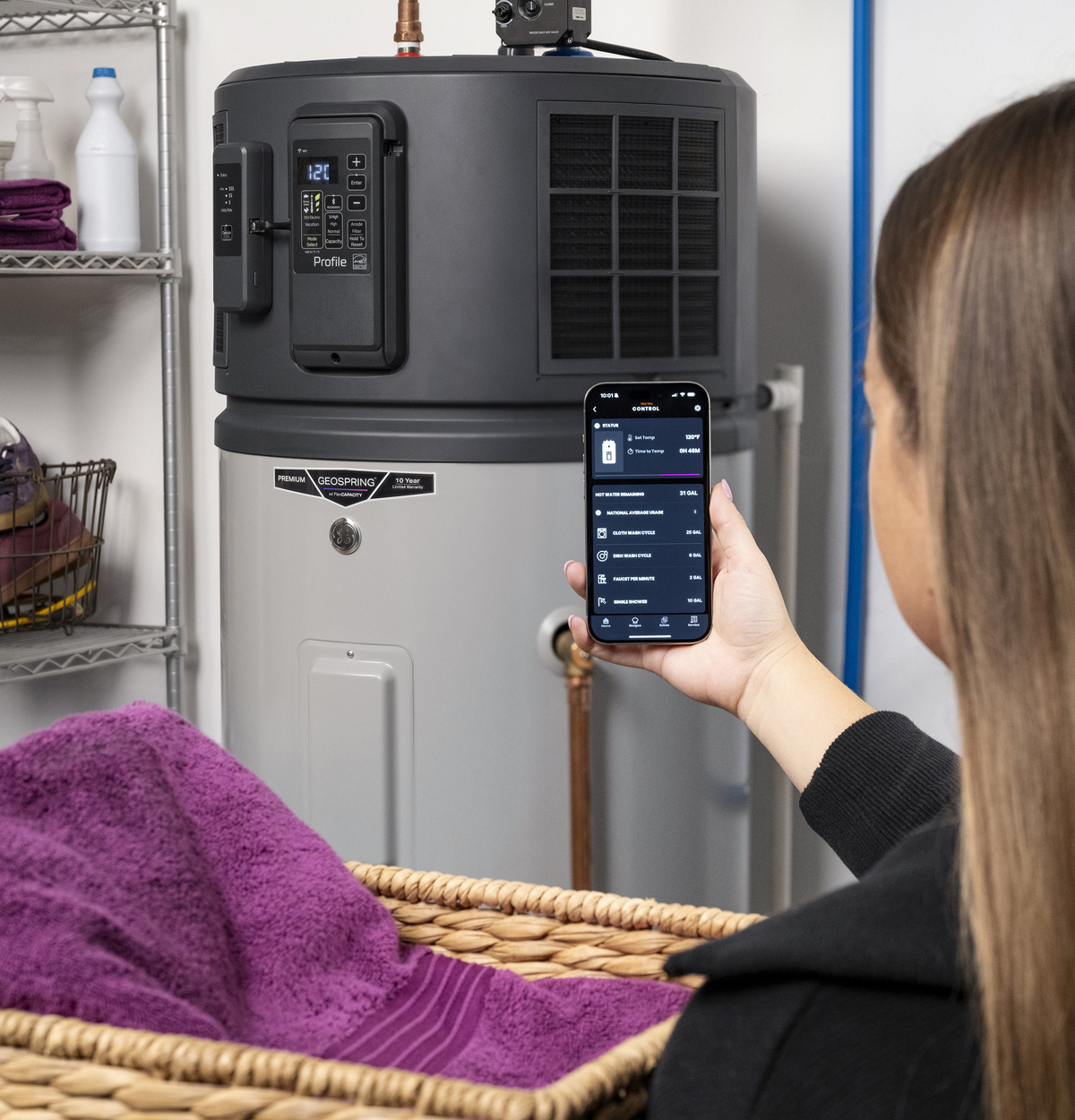
One category is energy savings. And in this category, heat pump-enabled water heaters play a starring role. One trend visible around the show floor was the hybrid electric/heat pump combination model. Like a plug-in hybrid car, it provides energy savings and peace of mind for owners who may fear running out of hot water mid-shower or dishwasher run. Rheem and GE were both showing off models in their booths. (I strongly suspect that other brands were too, but it’s practically impossible to cover every booth and brand.) Heat pump water heaters use significantly less energy than traditional models, and they do it without putting fossil fuel gases into the home or atmosphere for wellness enhancement.
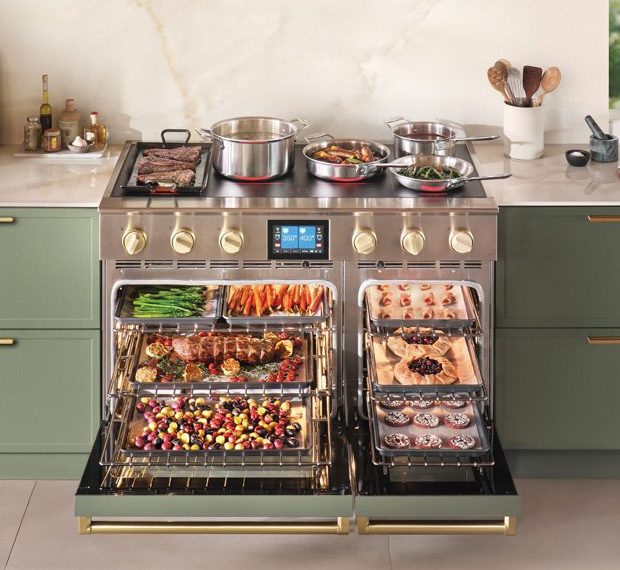
Induction cooktops and ranges continue to be a strong energy-saving (and wellness) category, with some interesting innovations on display this year. Not only does this technology waste less cooking heat, it also doesn’t force a home’s air conditioner to work harder in the hotter months. BlueStar took home a top DesignBites award for its new 48″ Platinum Series Induction Range. One of its interesting features is the red indicator light bar at each burner, letting home chefs know how much power they’re running under each pot. This might be especially appealing to the reluctant gas convert who is trying induction for the first time, now able to enjoy that satisfying red glow from their cooktop. The glass surface is also matte, which the brand touts as “resistant to scratches, stains, and fingerprints… [and it] cleans 2x as fast with a simple wipe-down.” Dacor also showcased a matte finish induction top.
Dacor, SKS (formerly Signature Kitchen Suite) and likely other brands also offer vent hood syncing with their induction tops. SKS also offered a free-zone induction surface in its 36″ Induction Pro Range, letting the home chef place a pot or pan anywhere on the cooktop; the power follows the cookware. Another useful feature in the model is a sensor that keeps food or water from boiling over. JennAir and Bertazzoni introduced new downdraft technology to their induction models. These were circular, center-mounted vents with user-removable, dishwasher-safe filters.
Induction is also showing up in outdoor kitchens, adding additional cooking capabilities to this expanding domain! Danver was showing off this feature in the company’s Brown Jordan upscale outdoor kitchen series. Using individual induction hobs, the home chef can have as many or as few induction burners as desired, in whatever placement works best for their space.
In the dishwasher category, LG’s new model boasts best-in-class efficiency and time savings, with a one-hour complete wash and dry cycle, a boon for the home entertainer. There’s also a function that automatically opens the dishwasher door after the completion of a cycle for more energy-efficient drying. Maytag’s new model offers this capability too.
One unhappy discovery many designers make when specifying induction for a client is that their electric panel may need a costly upgrade to handle these new appliances. (This is something I learned in wanting to change out my own gas cooking appliances.) The same is true for replacing gas with electric clothes dryers and adding EV chargers and other
desirable sustainability features. There are solutions available, including Savant Power System and Span Home, which won a Best of IBS award at the show for its energy-efficiency electric panel options. Upgrading technologies is where a very current (pun intended) electrician will become another MVP in your project team roster.
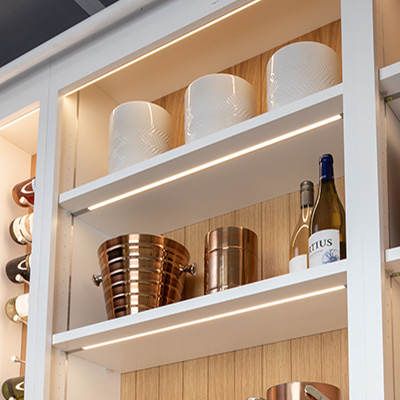
LED technology continues to illuminate kitchen, bathroom and other spaces with its energy savings and versatility. Häfele showed off sleek new lighting for adjustable shelves, along with programmable or button-operated, color-changing lights. Hettich showed off new integrated drawer lighting that doesn’t need wiring.
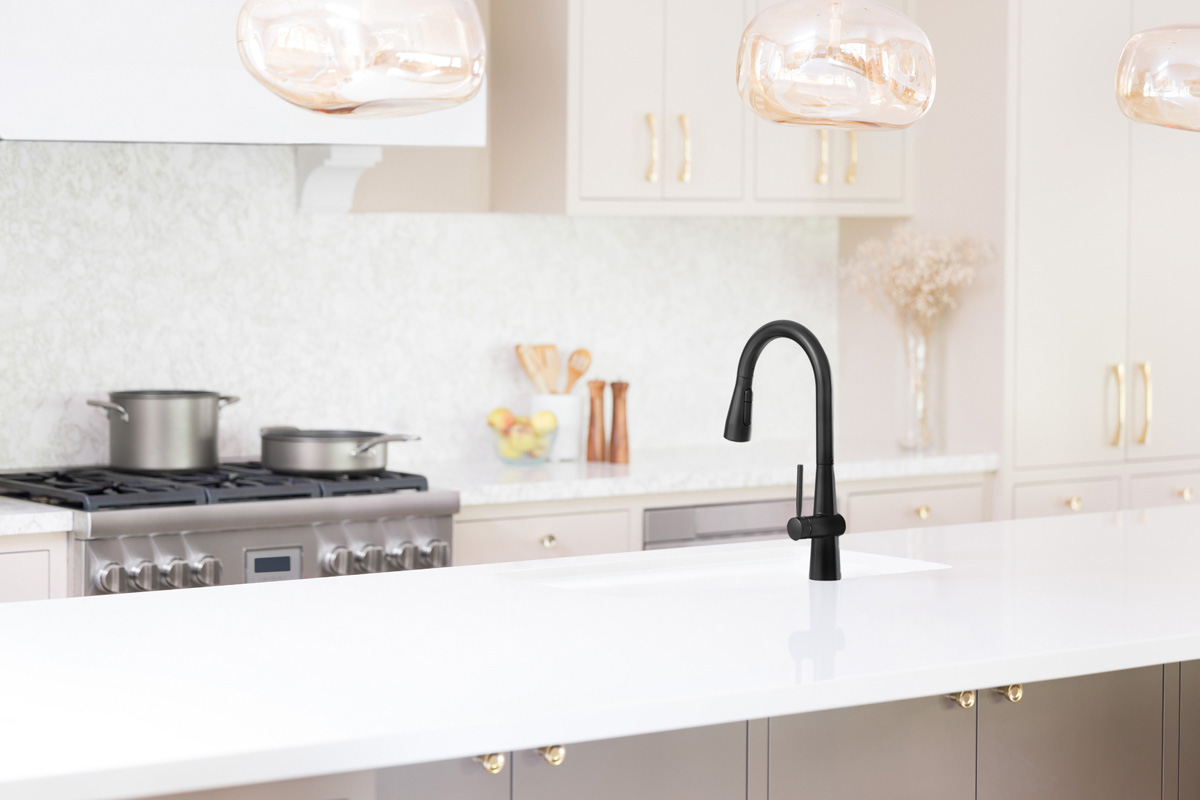
Another sustainability category is water savings. Brondell’s Jema Faucet for the kitchen and Yuba Shower demonstrated that well, with excellent water pressure despite boasting best-in-class conservation. GE Profile’s new Compact Dishwasher also saves water and could be ideal for ADUs, in-law suites and other spaces that don’t need full-sized models. It can be installed under a sink, in a wall cabinet, or even sit on a countertop (reducing construction costs and waste).
Wellness
The wellness trend has been especially strong since the pandemic drove us all home five years ago! Recent calls to action include the presence of forever chemicals and microplastics in our drinking and bathing water, as well as dangerous toxins in our indoor air. These have spurred homeowners seeking to protect their health with air and water filtration, as well as less toxic alternatives to gas-powered appliances. There’s also a rapidly aging population, driving trends that emphasize longevity and aging in place. (High home prices and mortgage rates also motivate the latter.) Let’s look at each of these.
As noted previously, all of the induction cooking models and heat-pump water heaters foster healthier indoor air quality. Electric fireplaces can do the same. Heat & Glo’s Inception and Allusion Edge models and DaVinci’s Holographic Electric Fireplaces offered the most realistic options for those of us who crave cozy hearth views. If your luxury bathrooms are incorporating fireplaces, these are especially worth noting.
There were numerous booths across the show floor offering healthy water solutions. Delta Faucets showed off a new Trinsic Touch2O Kitchen Faucet with Oxidized Water Technology (and hands-free operation) for germ killing on nonporous surfaces. Kraus offered an under-sink filtration system that removes microplastics and forever chemicals. GE Profile and Moen showcased new whole-house water-filtration systems.
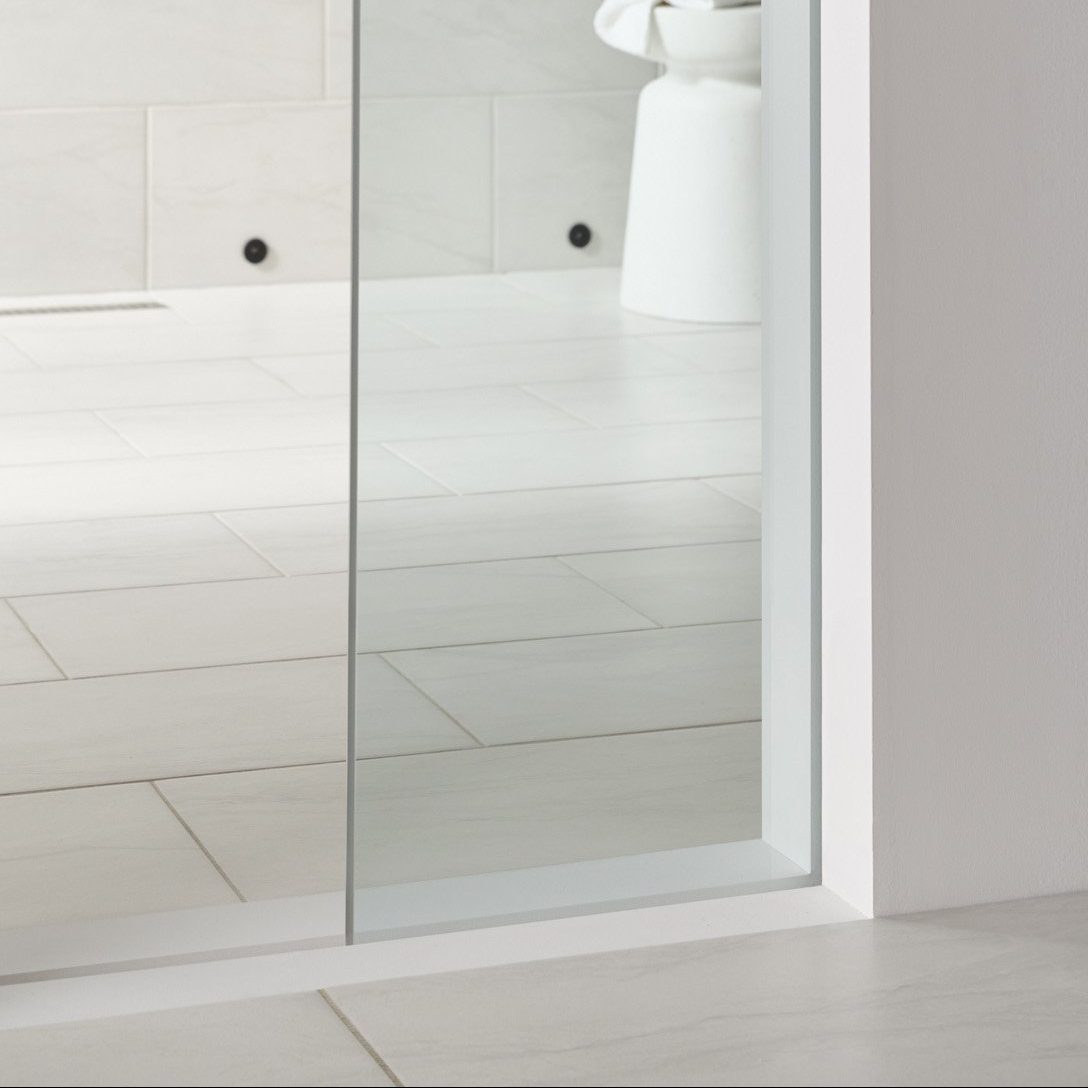
We’re not getting any younger! According to AARP, 10,000 Americans turn 65 every day. I’ll be one of them later this year and am in the process of making my home aging-in-place friendly. I’m certainly not alone in this pursuit, and manufacturers are paying close attention. (I’m hearing from the designers I interview that they are, too.) Airmada is offering a curbless-compatible, push-to-open AirPocket Door for shower users with less upper body strength. (This makes it ideal for steam shower spaces, especially in tandem with its other products for easy cleanup.) Their shower drying technology reduces the risks of mold and mildew and makes maintaining a healthy shower space easier for older users.
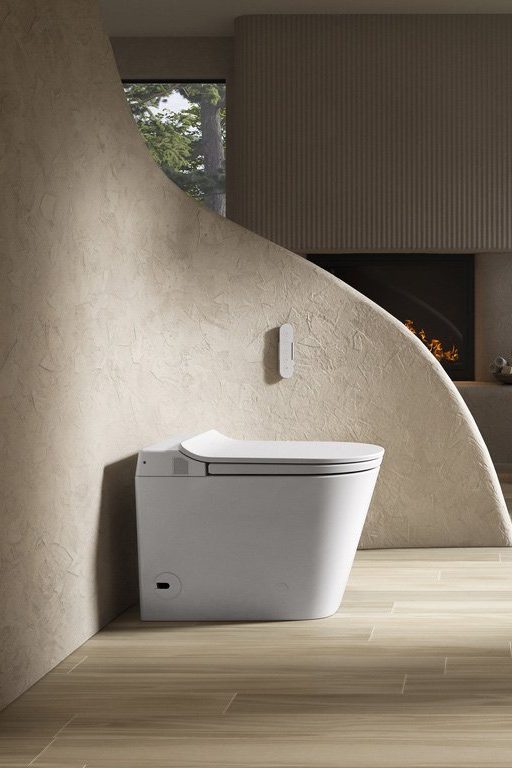
Bidets continue to grow in popularity, and new bidet-enabled toilets from Kohler and Brondell bringing style and affordability to the category will surely amplify that trend. Kohler’s Leap Smart Toilet will be just under $2,000. Brondell’s will be about $2,500. This capacity – and its increasing affordability – makes independent living easier for older users by reducing the need for stepping into a tub or shower for hygiene.
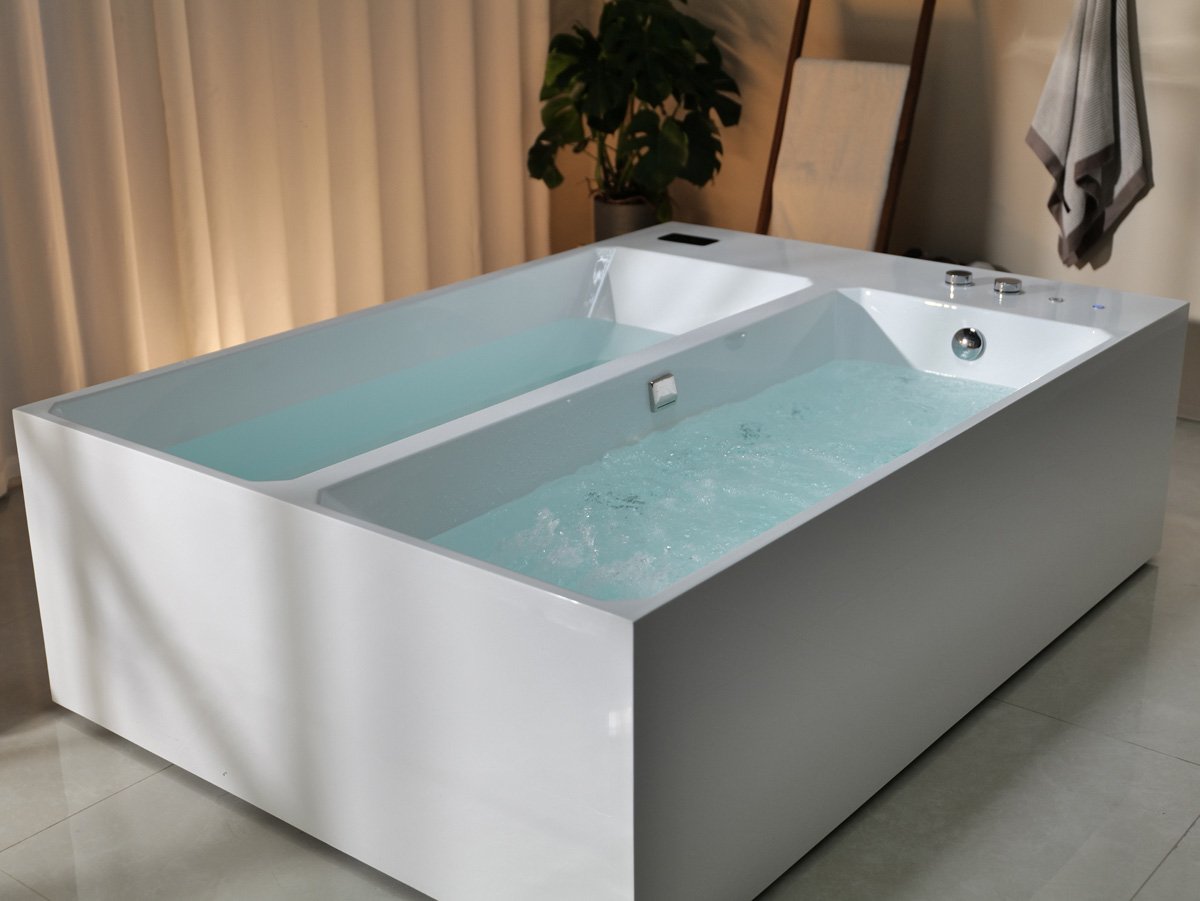
One relatively new feature for fitness enthusiasts is the cold plunge tub for indoor use. Empava had a unique dual Hot/Cold Plunge Indoor Tub, one side offering jetted heat and the other offering an ice bath experience. Kohler also showed off a cold plunge tub in its booth; theirs can go outdoors if the homeowner prefers.
Resilience
Homeowners are understandably seeking ways to keep their lights, electronics and appliances powered during increasing outage episodes, and the market is responding. A gas-powered home generator is always an option, but
sustainability-focused homeowners may want to avoid this solution.
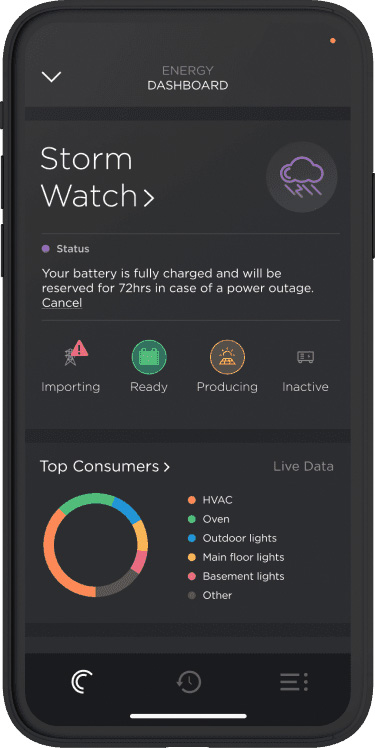
Backup battery storage for homes with solar panels are a popular alternative. Numerous smart home companies are offering related systems to optimize this capacity. I spent some time talking with a product engineer in the Savant booth. I like that their Storm Watch feature prepares a home for strong weather forecasts, making sure that all of the home’s available battery storage can be accessed for use during an outage. (Leak detectors and fire-
resistant exterior cladding – including porcelain – are also worth noting for their resilience potential.)
Camouflaging
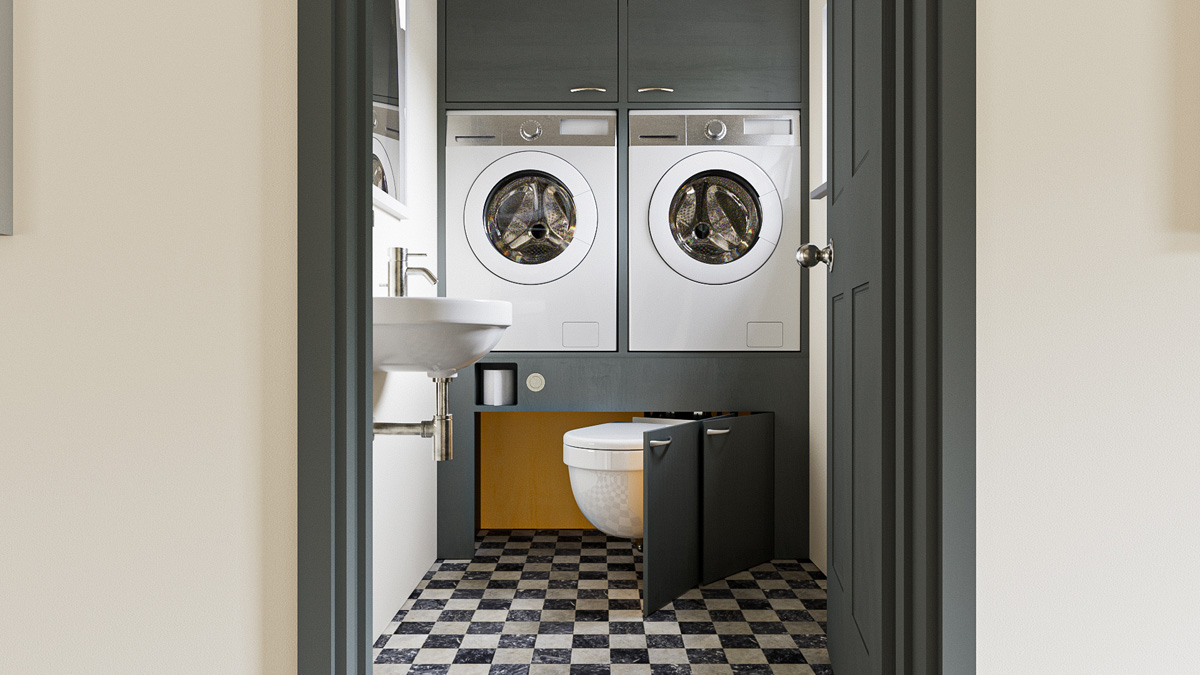
Concealing and minimizing features was a trend this year. One of the most unusual offerings was the aptly named Hidealoo, which allows you to place and hide a retractable toilet inside a cabinet for space-saving reasons. It rotates out when needed. This makes it possible to add new capabilities to a tiny utility room, ADU or anywhere else it would be beneficial, but otherwise challenging!
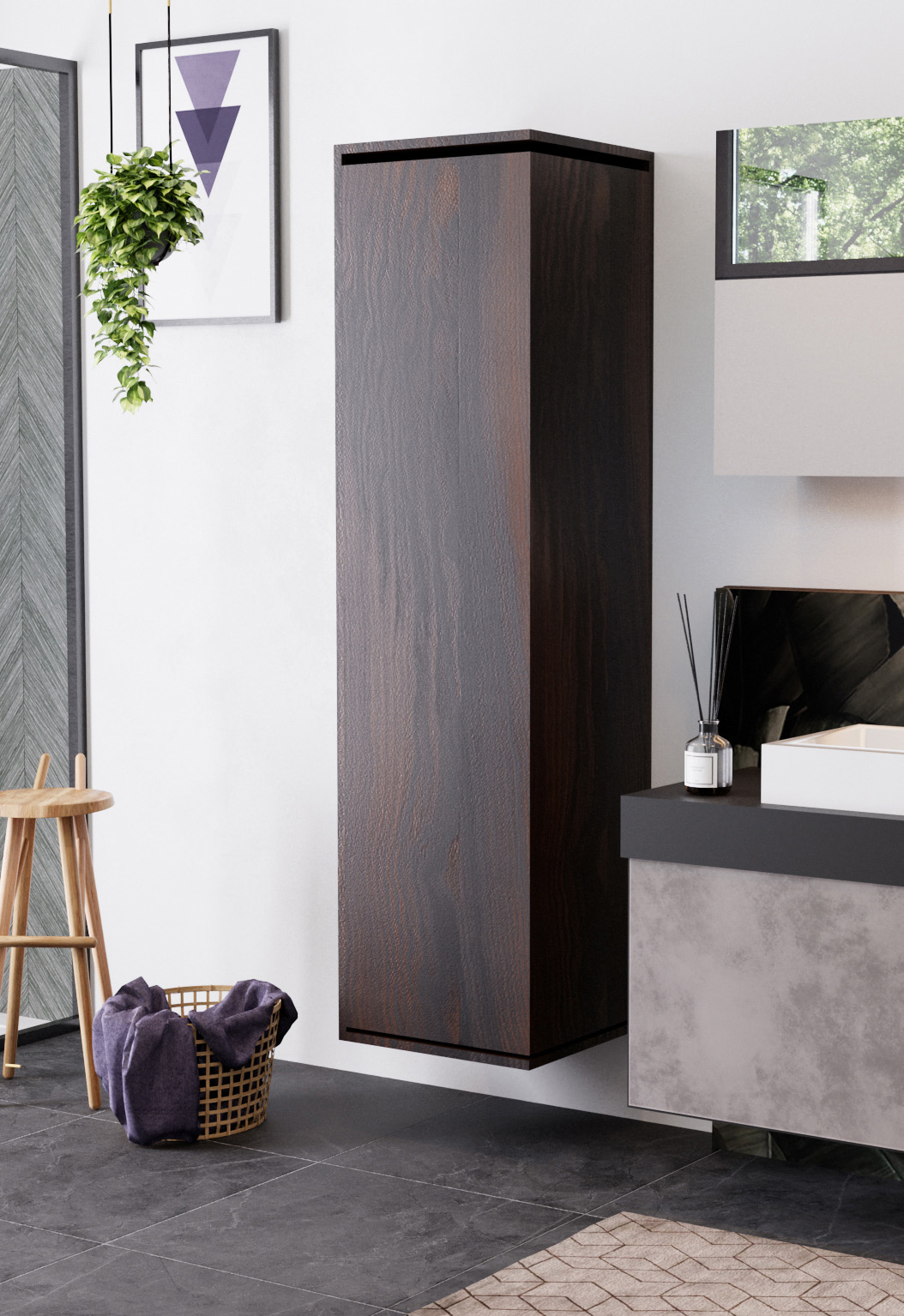
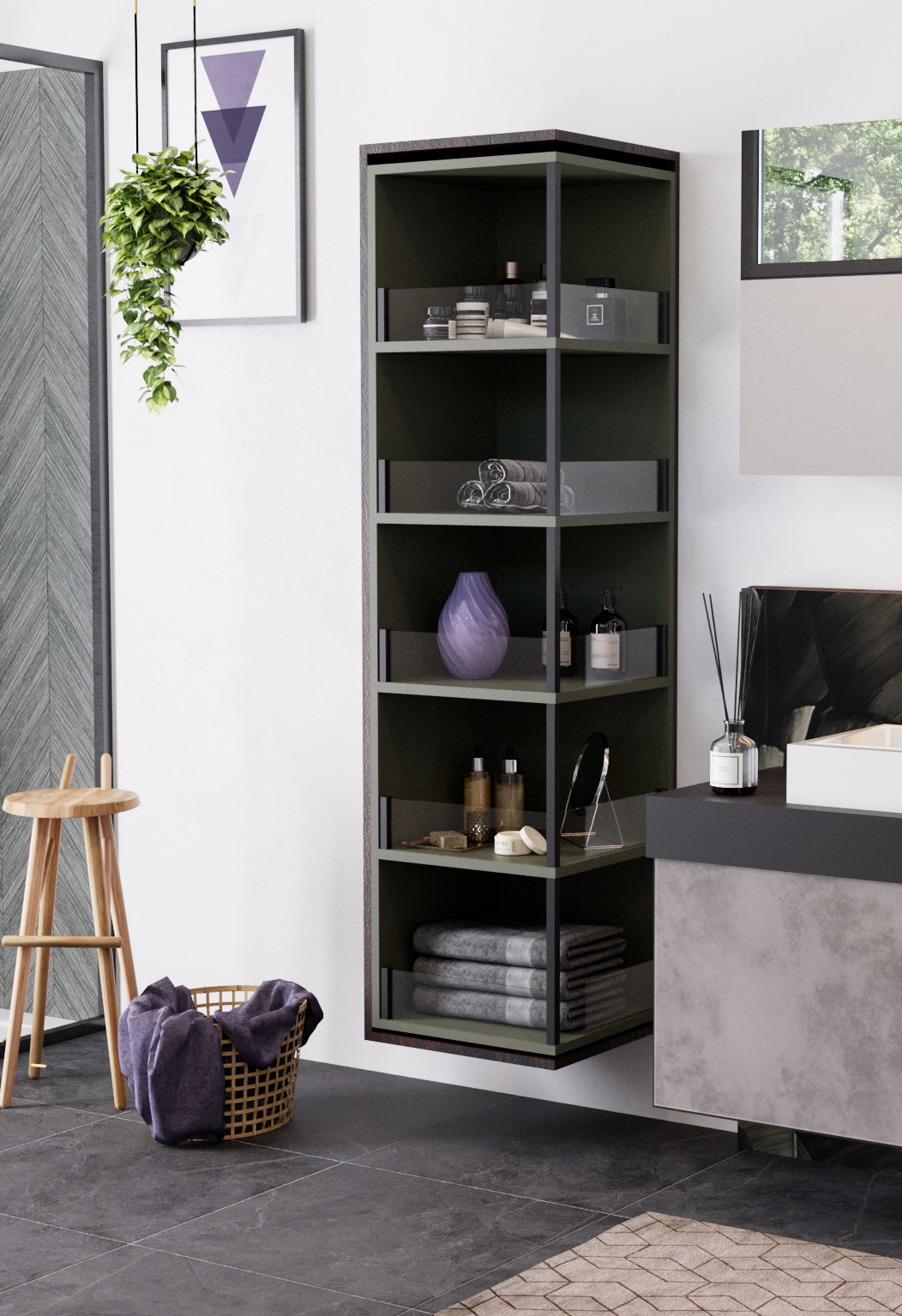
Hettich also offered rotation with its new FurnSpin. This innovative hinge rotator allows base, wall or tall cabinets to turn 180 degrees with the lightest touch for hidden or open storage. The company was one of several featuring the next wave in ultra-thin hinges, ideal for all kinds of storage applications.
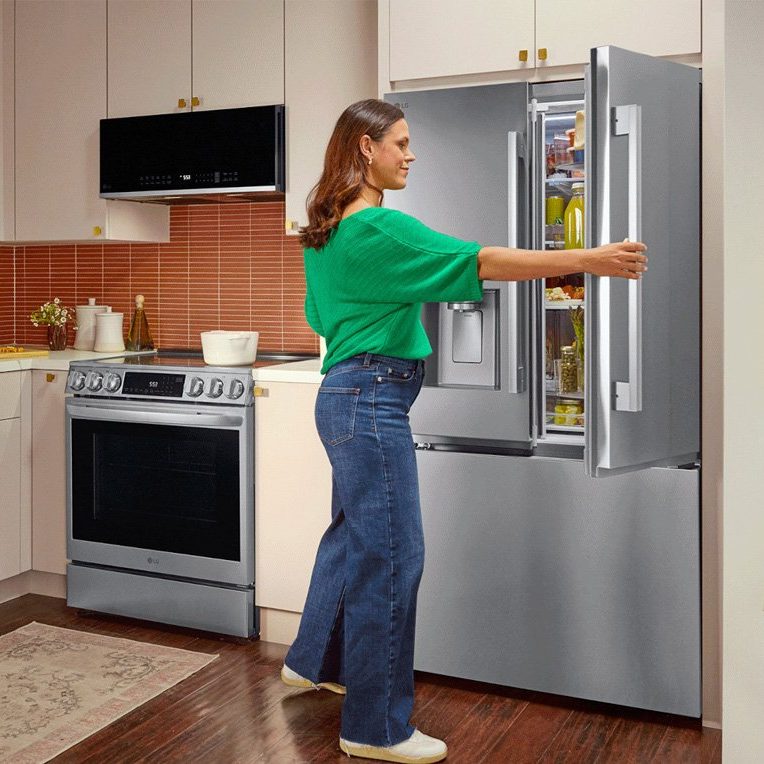
Similar hinging innovation and new thin-door technology was on display at the LG booth in its Fit & Max refrigerators. These freestanding French door models with the new Zero Clearance technology lived so snugly into their surrounding cabinetry that they looked more built in than I’ve ever seen in this category.
Legrand offered a different type of camouflaging solution with its almost-flush mounted Kitchen Countertop Outlet. This provides a simpler alternative to pop-up models, with potentially greater durability. Also in the tech category was the award-winning FreePower device charging system that mounts under a countertop. There are single, double and triple capacity versions available for every room in the house now; think beyond busy kitchens, as Best of KBIS judges did by giving the product and its Cosentino/James Martin Vanities partnership a bathroom award. (This product can also benefit a home’s wellness potential by eliminating a cord clutter trip hazard.)
Style Trends
Moody matte finishes dominated the show this year. Deep blues, greens and blacks cast quiet spells on appliances, fixtures, faucets, cabinets and surfaces. As noted above, there were new induction tops with matte, rather than glossy, finishes. There were handsome black toilets and matching lavs from TOTO, velvety lacquer olive cabinetry fronts from nobilia (with fingerprint resistance and a clever anti-warp strip for tall doors), deep green outdoor cabinet fronts from Danver, and a wide range of handsome, dark matte appliances from multiple brands – including a deep Juniper from KitchenAid
Last Words
Design & Construction Week is heading to Orlando next year, then back to Las Vegas for the foreseeable future. It will run from February 17 through 19 in 2026, a bit earlier than this year. The co-location of the International Builders’ Show and Kitchen & Bath Industry Show has been such a mega-success that it’s being extended through 2030.
Jamie Gold, CKD, CAPS, MCCWC is an award-winning author and journalist, wellness design consultant and industry speaker. You can learn more about her design industry presentations, books and consulting services at jamiegold.net.