
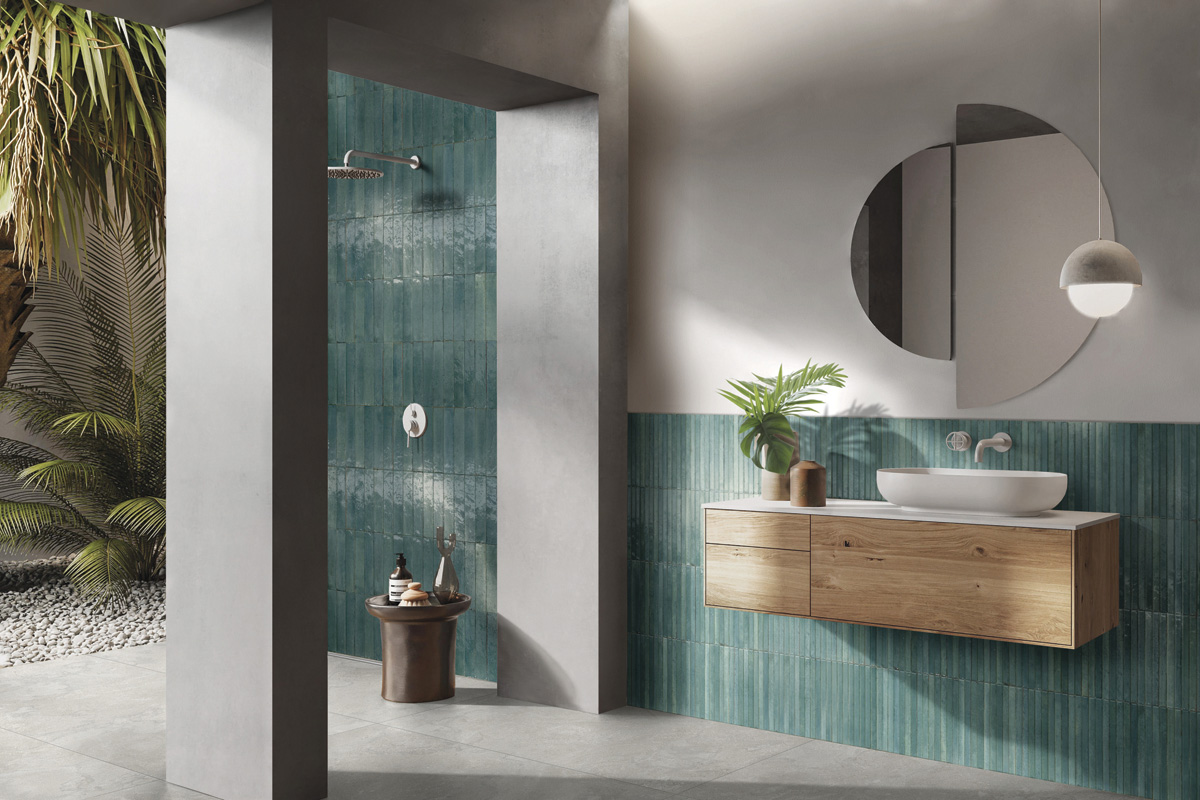
April found me back in Orlando for the 2025 Coverings expo. Dubbed “The Global Tile & Stone Experience,” this eye candy-rich event happens every spring somewhere in the U.S. I love being able to see tiles from around the world without a passport. These are my impressions from the latest show.
As I speculated at the end of my 2024 Coverings column, I was definitely “the weirdo running my fingers gently along the textured veins of stone-look slabs” this year! That was especially true with the aptly named Flaviker Supreme Hedonism collection. These Italian beauties deserved their own place of honor!
Among the visual splendors on display at Coverings, there was worthwhile innovation as well, along with some new, some fun and some retro styles.
Reality Check
The industry, like many others, has been impacted by inflation and tariffs. Eric Astrachan, executive director of the Tile Council of North America, provided some sober stats in his press conference presentation. “The U.S. ceramic tile market contracted for the third consecutive year in 2024, largely due to issues in the residential market,” he announced. By volume, it contracted 5.1% from 2023. By dollars, it fell 6.6%. These paralleled slowdowns in new home starts.
One detail I found surprising was that India has been the largest exporter of tile to the U.S. for the second straight year, comprising 20.4% of total U.S. imports. Spain is the second largest (and a co-sponsor of Coverings), with 17.6% of volume. Italy, another co-sponsor, ranks third with 16% import share by volume. Mexico (part of Coverings co-sponsor TCNA) is fourth; Brazil and Türkiye follow. All three co-sponsor exporting nations saw double-digit declines last year from 2023, according to Astrachan. Vietnam and Malaysia, on the other hand, significantly grew in import volume, 36.7% and 94.6% respectively. Is country of origin a factor in your sourcing? If so, are you choosing strictly on price, which is where these Southeast Asian imports dominate?
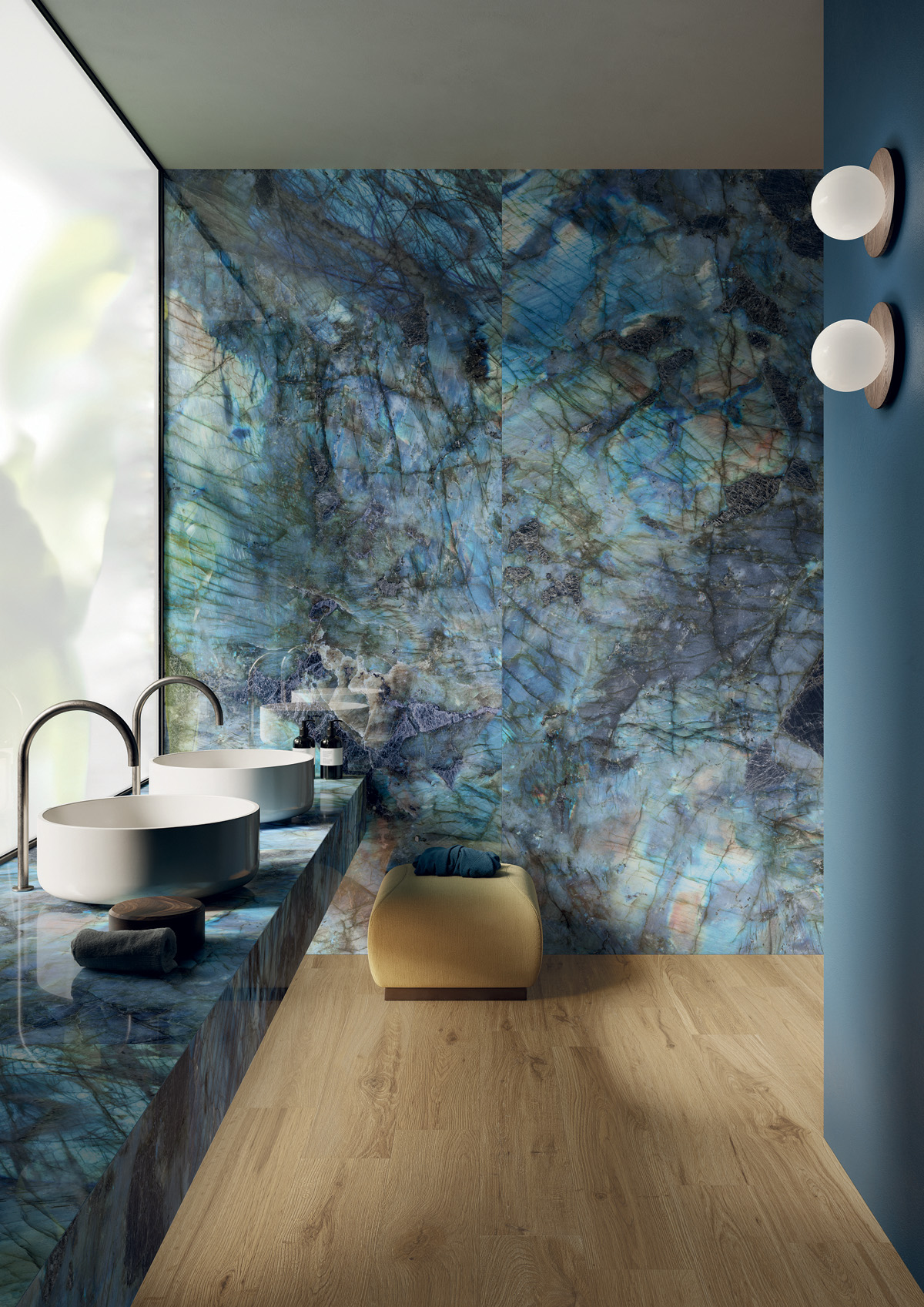
Photo: Emil Ceramica – Ceramics of Italy Member Company
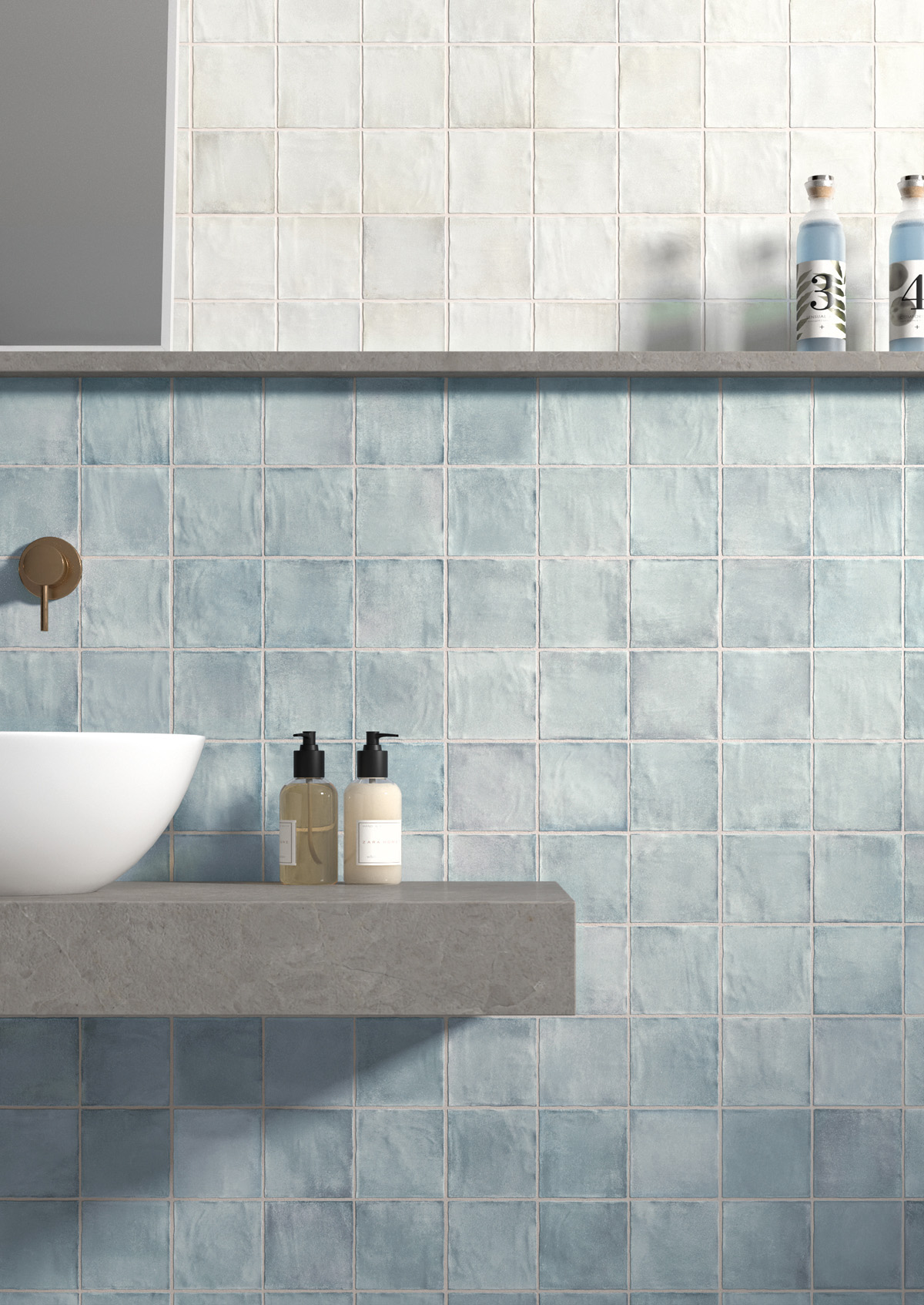
Photo: Equipe – Tile of Spain Member Company
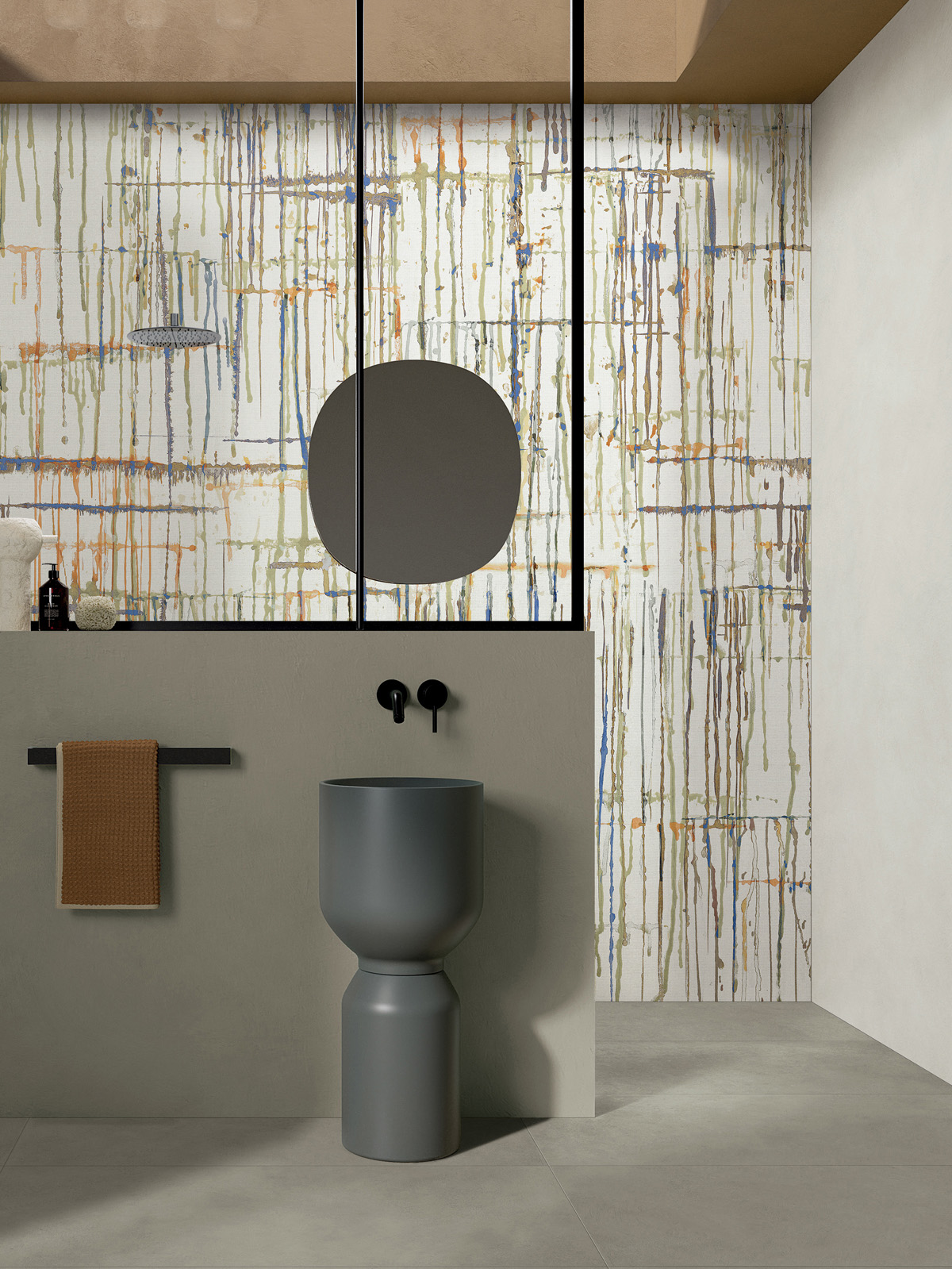
Photo: ABK – Ceramics of Italy Member Company
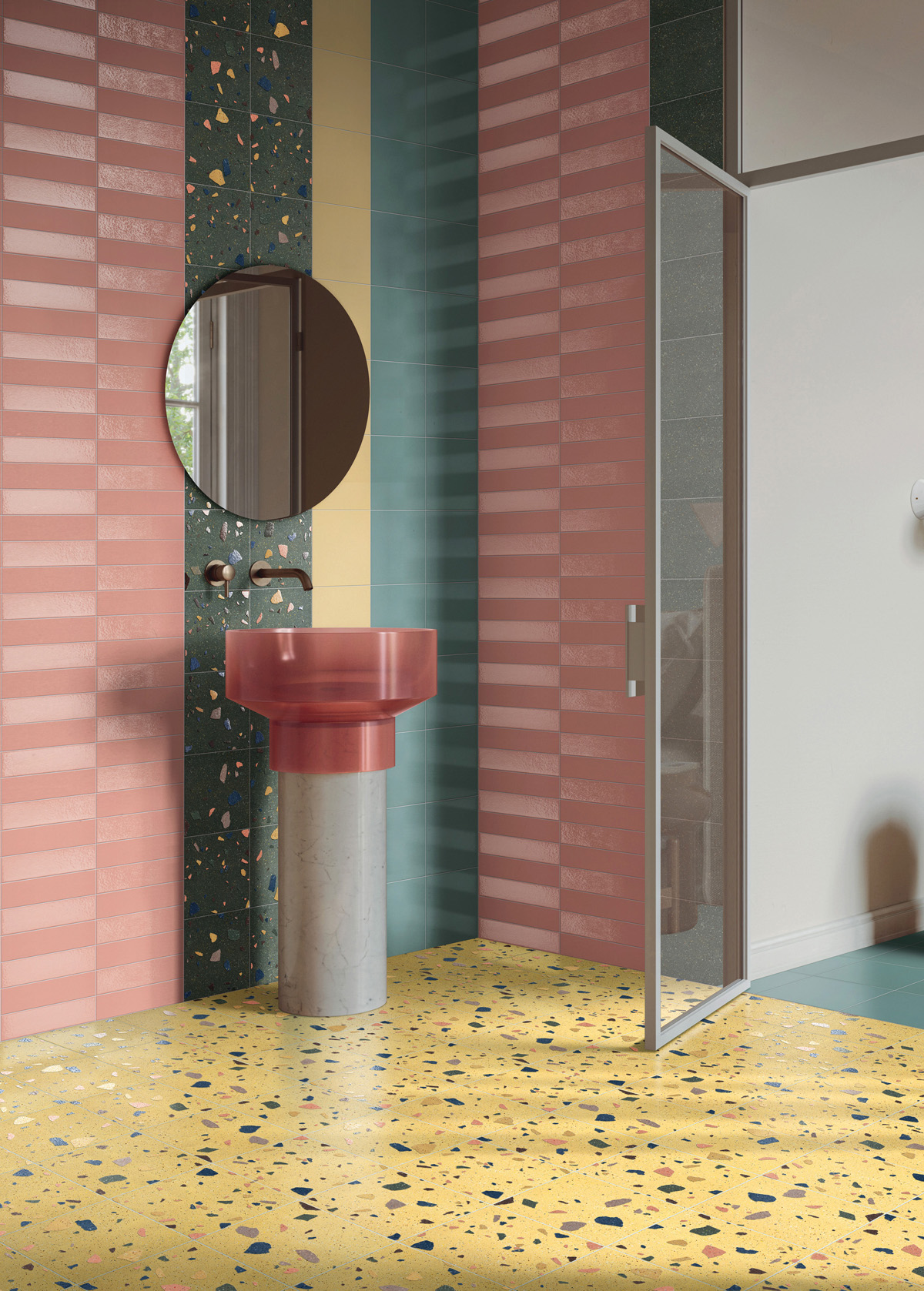
Photo: Gruppo Romani – Ceramics of Italy Member Company
One trend that has roiled the industry has been regulation around silica and silicosis – particularly in California. The state’s occupational health and safety division has been looking at this incurable, debilitating and often fatal condition for several years related to the fabrication of engineered stone countertops and has imposed strict requirements and steep noncompliance penalties on the shops that turn the material into client kitchen and bathroom surfacing.
While many of the countertop brands are shifting to formulations that significantly reduce the silica content of their slabs to below the 10% mandate, the regulation and safety concerns may drive some specifiers to choose porcelain slab instead of manufactured quartz. With the formulation change, and with innovations in the porcelain slab category, the differences are narrowing.
Another element of Astrachan’s talk addressed a growing category of porcelain tile: exterior cladding. The industry is seeking to create simplified criteria for adhering these surfaces to the outside of homes and other buildings. While this won’t have an impact on interior or kitchen and bath designers, it can prove helpful to architects, builders and their tile installers. The benefits of porcelain cladding to home exteriors is increased resilience, particularly regarding wildfire spread. That can be a huge safety boon in high-risk areas – like my Southern California region.
Innovations
Digital glaze is made possible by improvements in tile production for the last 25 years, according to Tile of Spain consultant Ryan Fasan, and, in turn, creates more beautiful tiles with impressive texture, depth and realism. That was on display throughout the show floor, and when you commented on a gorgeous slab, the response was typically, “Digital glaze!”
One magnificent incarnation was Ceramic of Italy’s Tele di Marmo Lumia slabs from Emil Group. These luminous surfaces look like they are backlit, but they’re not. The effect is created by backlighting natural stone, photographing it, then reproducing the look on porcelain. The realism is stunning!
Another innovation noted at earlier shows – and available more widely this year – contributes to safety. Tiles that are smooth when dry become rough and slip resistant when wet. Fasan explains this as the result of a micronized silicate incorporated in the glaze that creates a suction effect, increasing the coefficient of friction when wet. Complex concept – simple benefit! Think of how many falls this can avoid. Spanish brand Tau showed it off on the Mythe series in its booth, and offers the finish on other series as well. Fasan estimates that it’s available on as much as 25% of Spanish tile lines. Crossville showcased a variation on its Sociale series at Coverings, but isn’t promoting it as slip resistant.
I suspect that we’ll be seeing more of this finish in the next few years, as its slip-resistant potential enhances both aging in place and outdoor living trends.
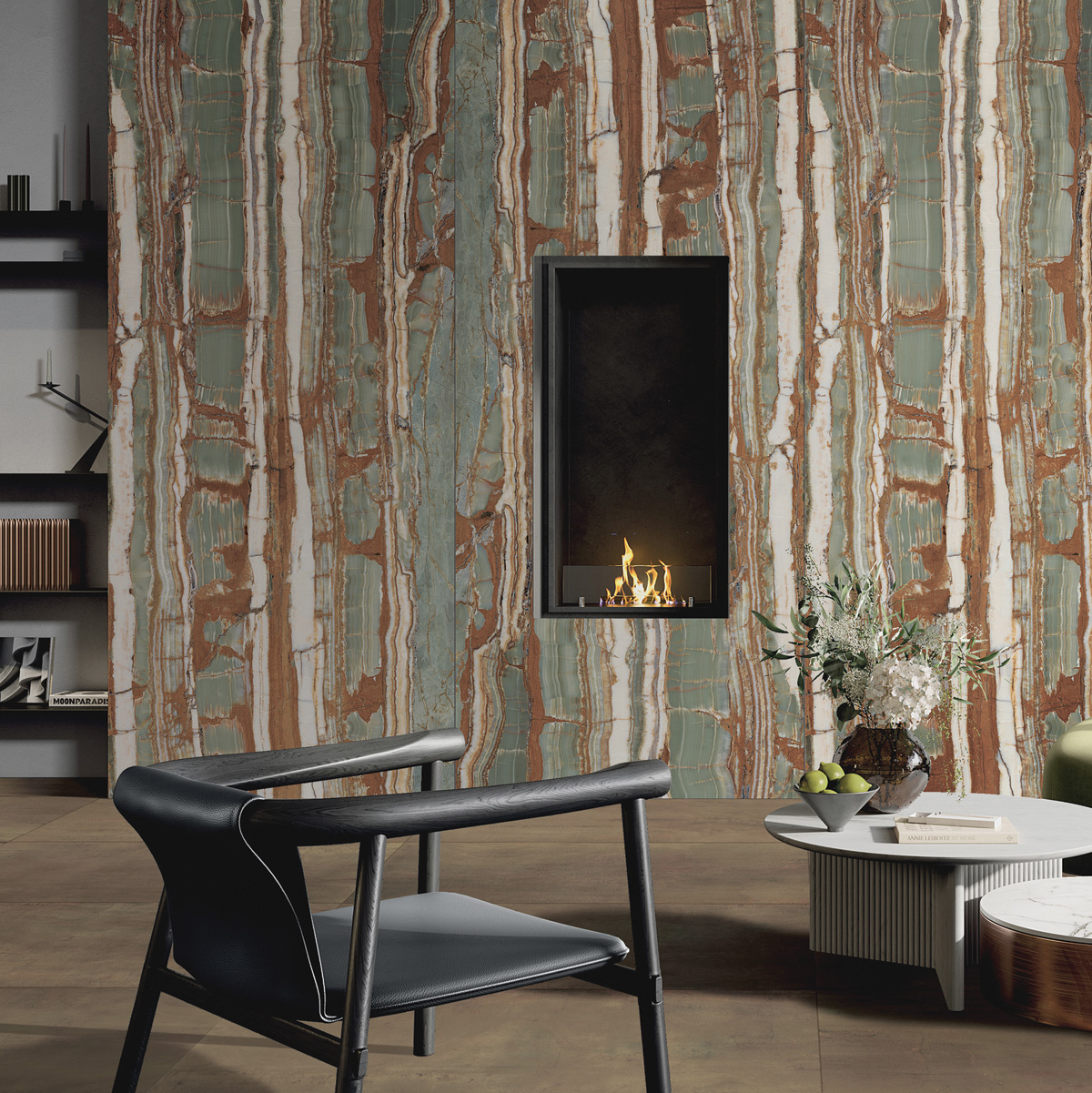
Photo: Flaviker – Ceramics of Italy Member Company
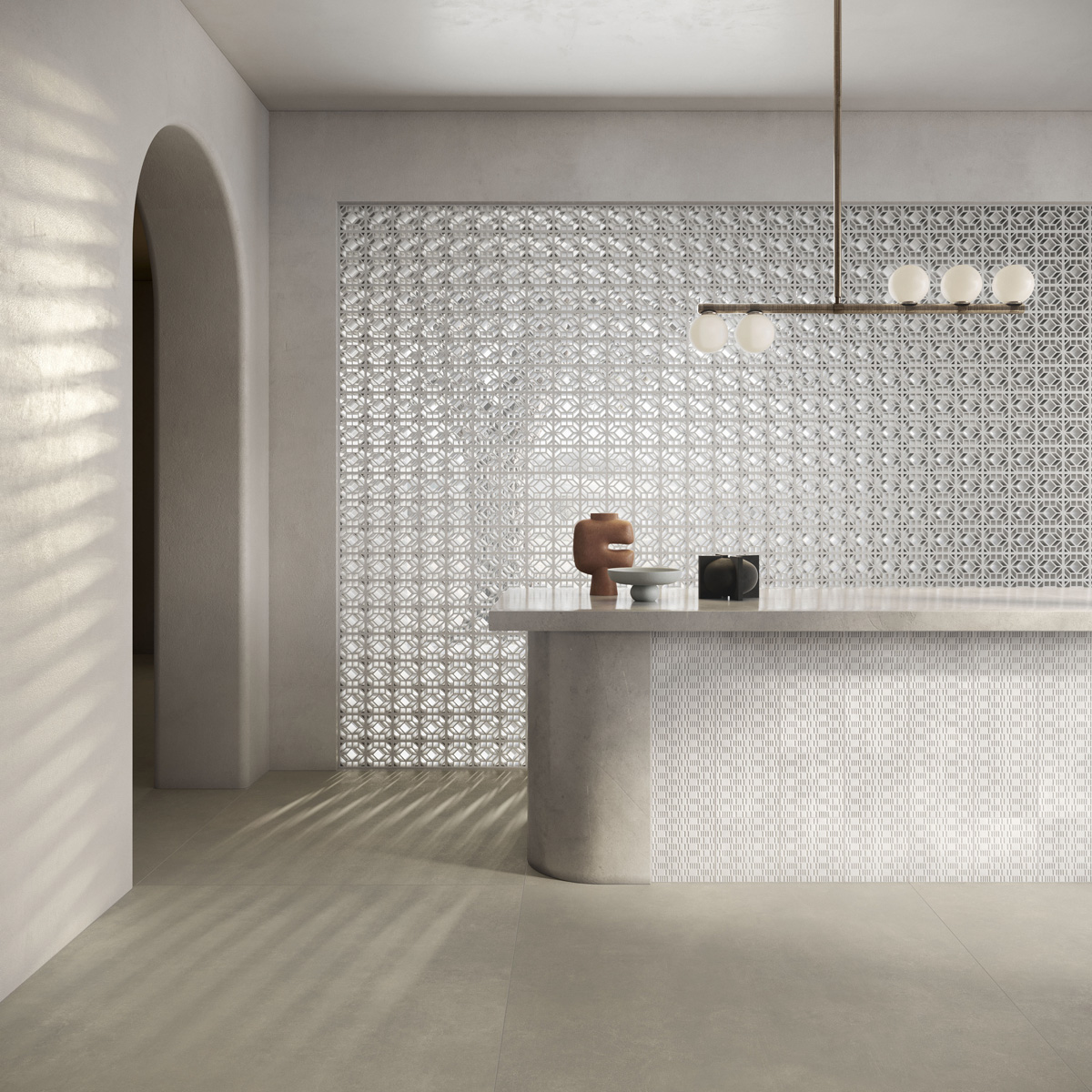
Photo: Mirage – Ceramics of Italy Member Company
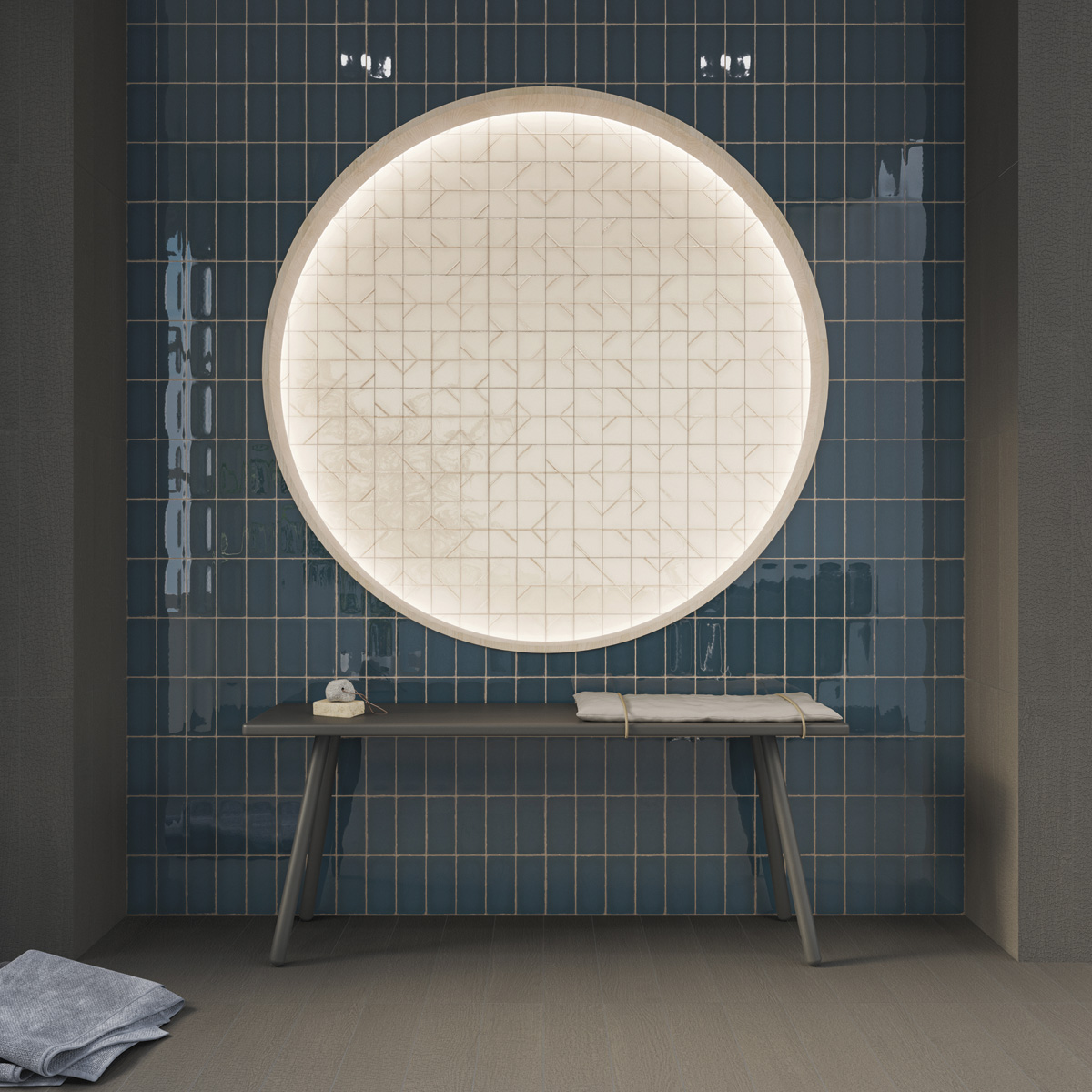
Photo: WOW Design – Tile of Spain Member Company
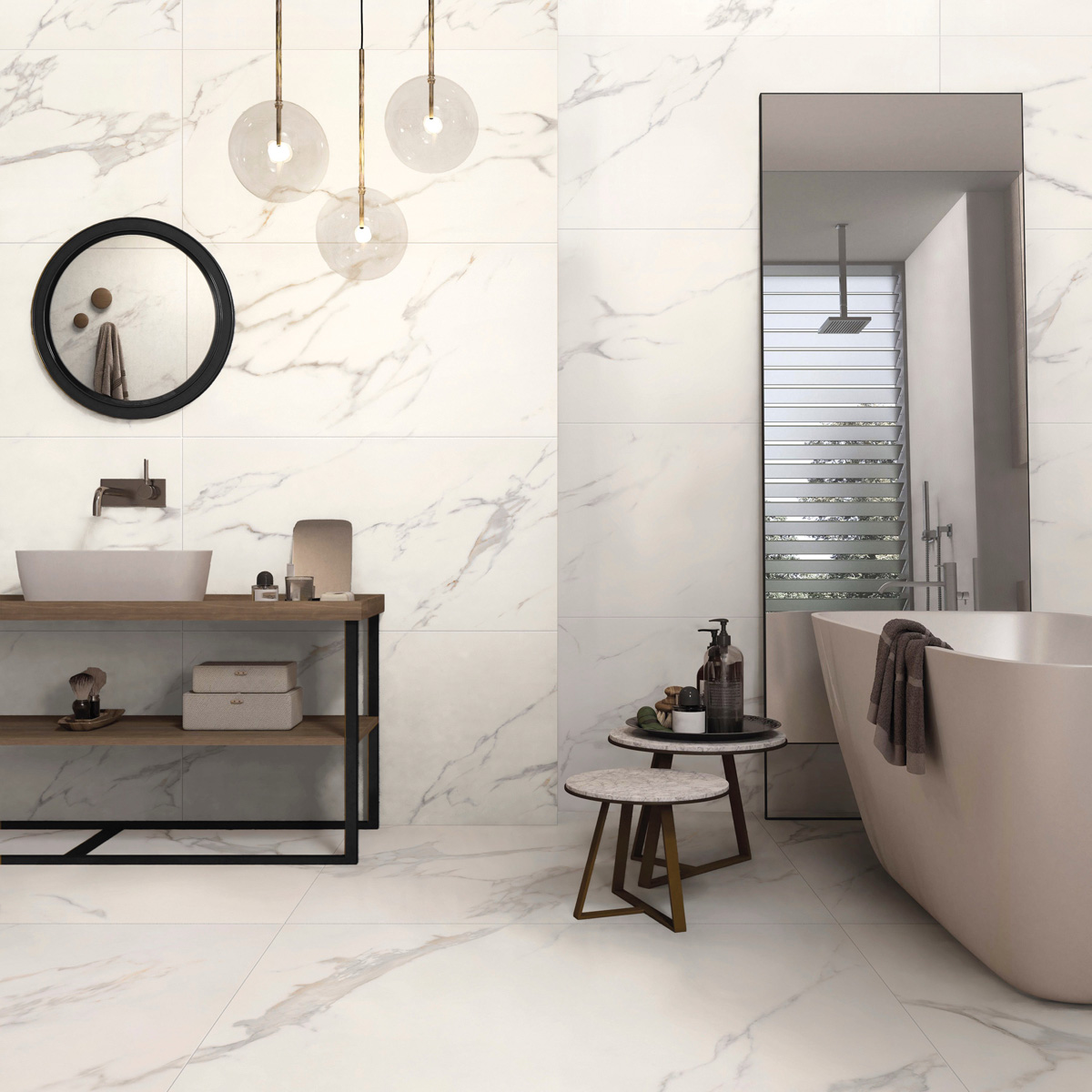
Photo: Wonder – Tile Council of North America Member Company
There were a few variations on easy installation through interlocking-type systems. Tau offered one in its Quick Ceramica line, touting easy replacement if needed. TCNA member Wonder Porcelain touted book-matching in its Connectile system. Italian line Rondine/Bottega’s interlock Stick & Stile system floats like laminate or engineered wood. Spanish brand Natucer offered interlocking technology on two of its extruded Swing lines as well.
Crossville introduced a very light porcelain slab. At just 2mm thickness, Gemini is ideal for interior or exterior walls and likely easier to install as well because of its decreased weight.
Finish innovations also made possible leather textures from TCNA member Wonder Porcelain in its Textile line; textured travertines from MILEstone (also North America-based); Spanish Equipe’s Sabbia line that looks handmade but costs less and is easier to install; Rondine’s advanced antibacterial and air purifying Angers line, and Fondovalle’s MyTop line for countertops with through-body veins and eased edges (both from Italy). American brand MILEstone was showing off a ready-made countertop line called Pre-Fab. It was great to see so much useful and attractive innovation in Orlando this year!
Style Trends
“Lines, lines, lines” was a trend cited in both Alena Capra’s welcome press conference and that of Ceramics of Italy – and both were spot on. There were lines of every imaginable variety across the show floor. It showed up in fluting that was hard-edged from the Iconic line from Undefasa, micro-sized from Realonda, origami-inspired from WOW’s Yoko series, extruded and wavy from Natucer’s Rap (all from Spain), softly organic from Del Conca’s Bioterre and Portobello group’s Thera, herringboned from Atlas Concorde’s Essenz series (all Italian) and bumpy from American Landmark’s Atelier line.
Another prominent trend was biophilia. While wood-looks have diminished somewhat in the latest shows, there were still some impressive offerings that were more realistic than ever. Crossville and MILEstone both had impressive offerings.
Travertine was a strong natural stone trend as well, widely represented in porcelain, but the most unique biophilic stone look was inspired by boulders. You saw this large, irregular pattern throughout the show floor. Landmark offered it in its Shapes paver series and Realonda offered it in an outdoor-friendly Cuzco line.
Biophilia was also rendered in watery blues. It shimmered in U.S.-based Lamosa/Roca Group’s Dune and Italian FAP’s True Color. And more shimmer was on display in golden bricks from FAP’s Glim line, Ragno’s (Italian) Look series, Grupo Romani’s Serenissima and Porto Rotondo lines – also from Italy.
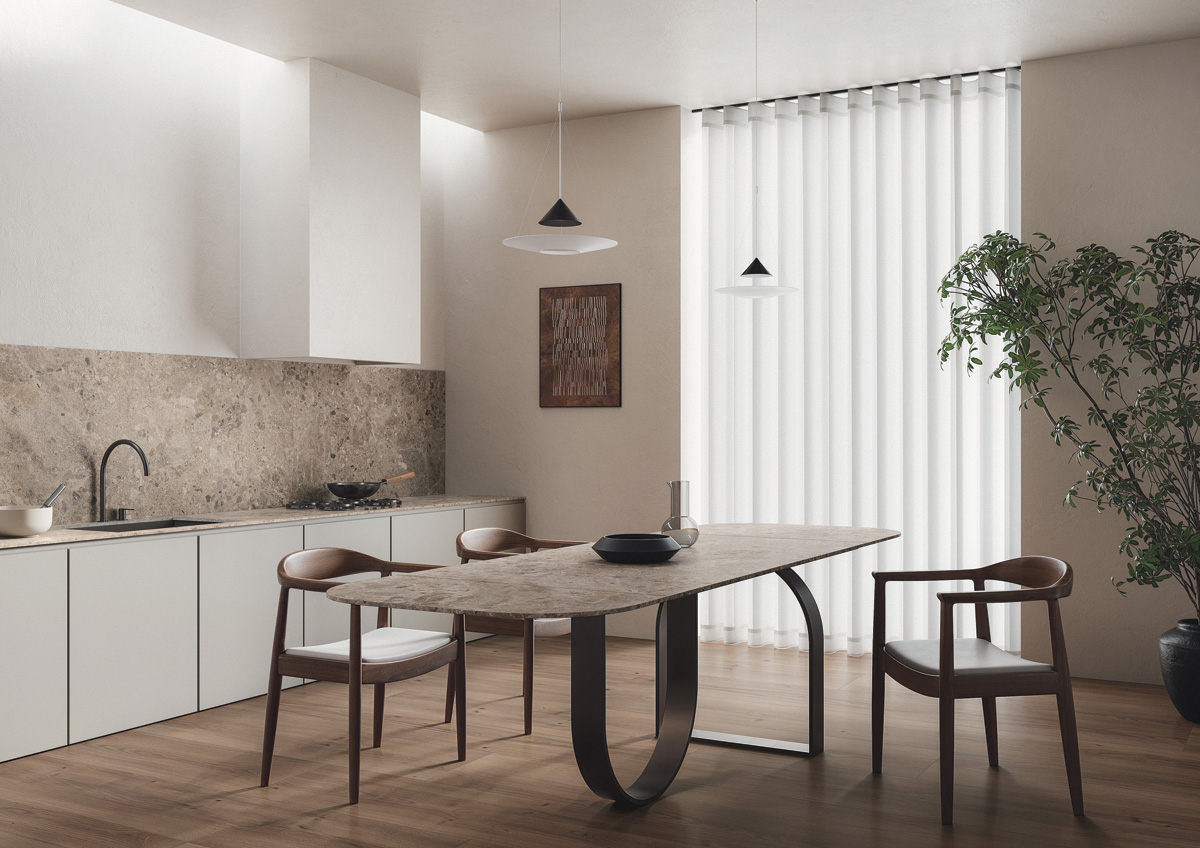
Photo: Fondovalle – Ceramics of Italy Member Company
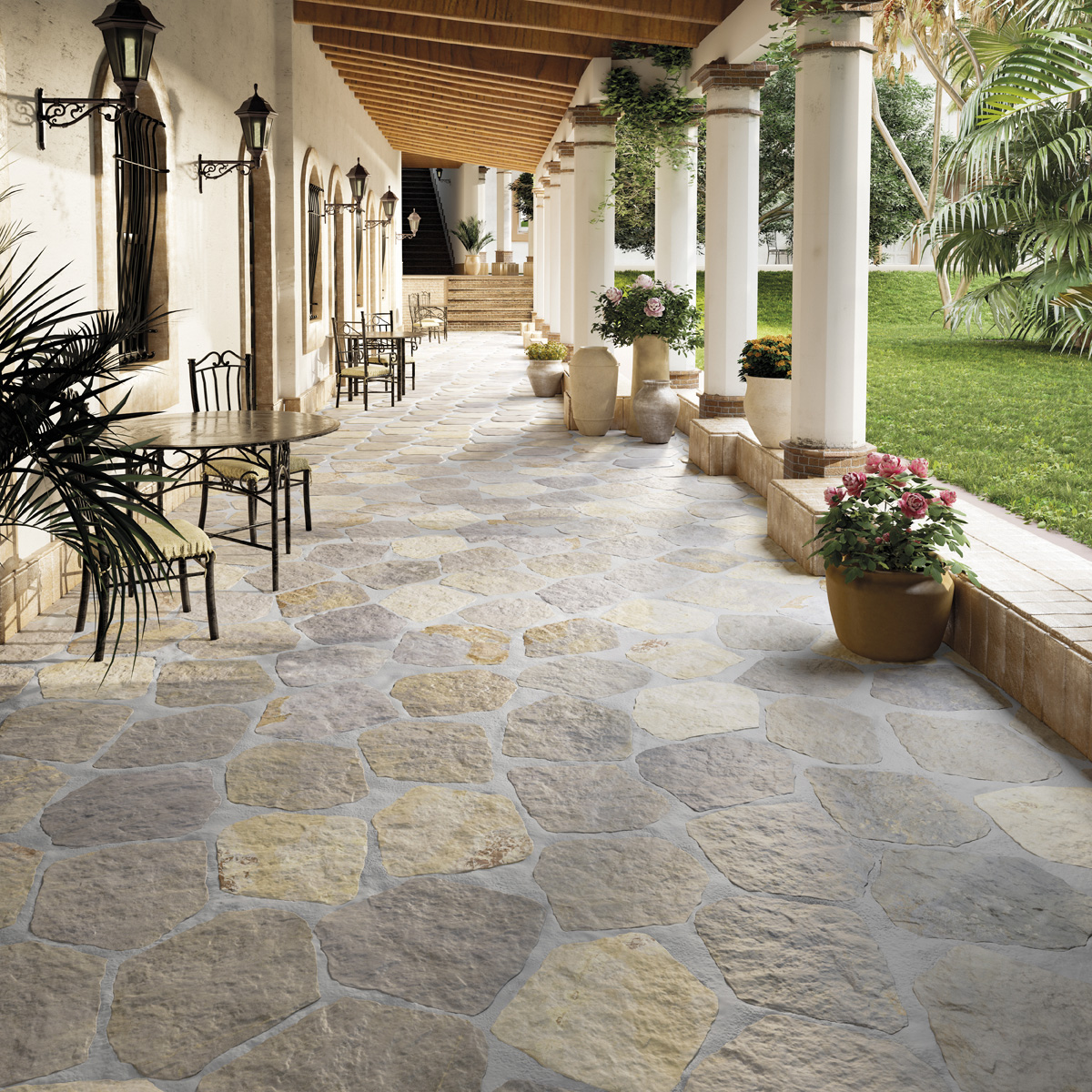
Photo: Realonda – Tile of Spain Member Company
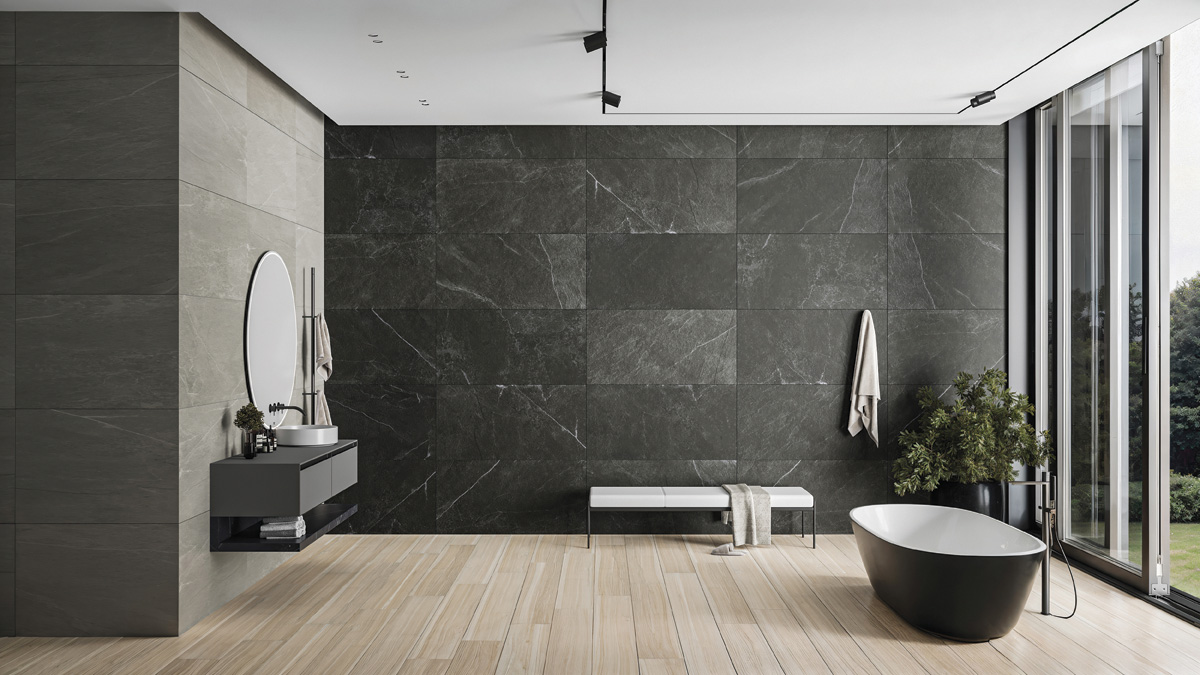
Photo: Tau – Tile of Spain Member Company
Terrazzo inspirations were everywhere – both in the boulder-sized looks and in more traditional renderings. Mirage offered it in its ReConcrete recycled line and Gruppo Romani offered a more literal rendition in its Manifatture Forever Color Line (both Italian brands).
Creativity was definitely a trend at Coverings this year. ABK Group’s Alterego series and Mirage’s Indomita brought art to tile for the adventurous homeowner. Several brands, including Marca Corona with its Aria Luce line, Mirage’s Terrae series, Terratinta’s Split and Decorati Bassanesi, used ceramic “blocks” to create architectural room dividers (all Italian lines).
Tile makers were also looking beyond surfacing in their offerings, including vanities from Mirage and Atlas Concorde’s Habitat line, Casalgrande Padana’s furniture (all Italian lines) and clever wall-mount planters (or light fixtures) from Spanish Natucer’s Squama series.
Last Words
So much of what was on display – and not just on the official North American, Italian and Spanish tile walks and intros that dominated our press tour – exemplified what Capra identified as a “Re-Human” trend, celebrating the artisanal. There were handmade tiles from Morocco, art tiles from American craftsmen and delicate patterns from Asian brands. Even tiles that were engineered by the latest glazing technology – like Equipe’s Sabbia – were rendered in handcrafted style.
It reminded me of the late futurist John Naisbitt’s “high tech/high touch” concept. While he intended it to mean that technology derives its success from its power to shape the human experience, I always saw it a bit differently. Especially in our screen-dominated era, I think the more high-tech our lives become, the more high-touch humanity we crave. The fact that our industry can “re-human” that into home spaces enhances life more than we can imagine.
Next year’s Coverings will take place in Las Vegas from March 30 to April 2. It returns to Orlando after that. See you in the tile aisles!
Jamie Gold, CKD, CAPS, MCCWC is an author, wellness design consultant and industry speaker. Her award-winning third book, Wellness by Design (Simon & Schuster, 2020), has an online Bonus Chapter: Lessons for How We Live Now, published October 2023. Learn more about her wellness design CEU presentations, books, blog and consulting services at jamiegold.net.