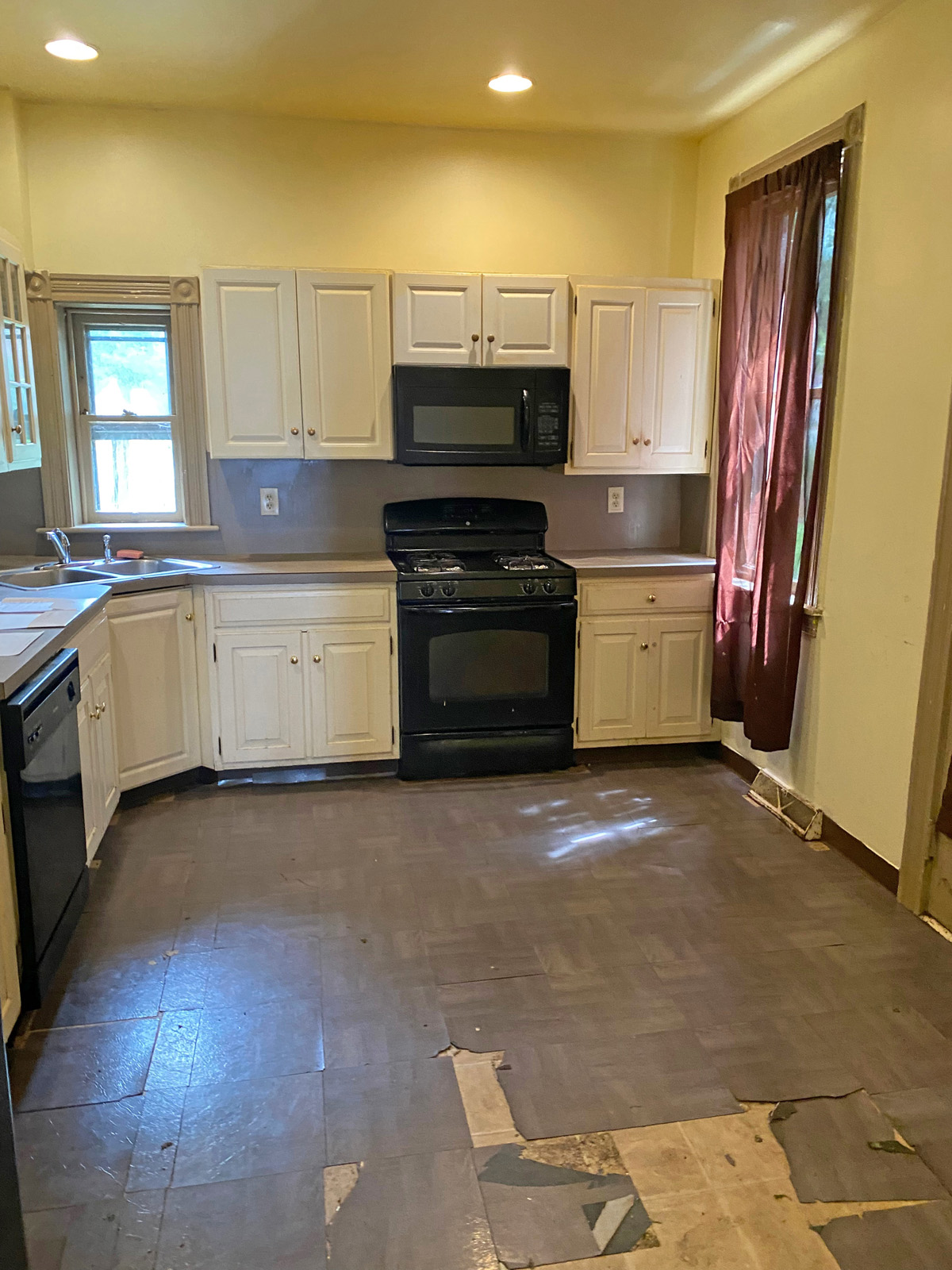
BEFORE
Located in a Lancaster, PA row home built circa 1800, this kitchen needed more than a facelift to meet its owners’ needs – it needed to be completely relocated. In keeping with the architectural conventions of its time, the kitchen was located far from the living areas in the front of the home: more of a working scullery than a space meant to be seen.
Due to heavy use and poor maintenance, the old kitchen had to be completely demolished and reconceived, requiring entirely new cabinetry, appliances and finishes, not to mention utility connections.
AFTER
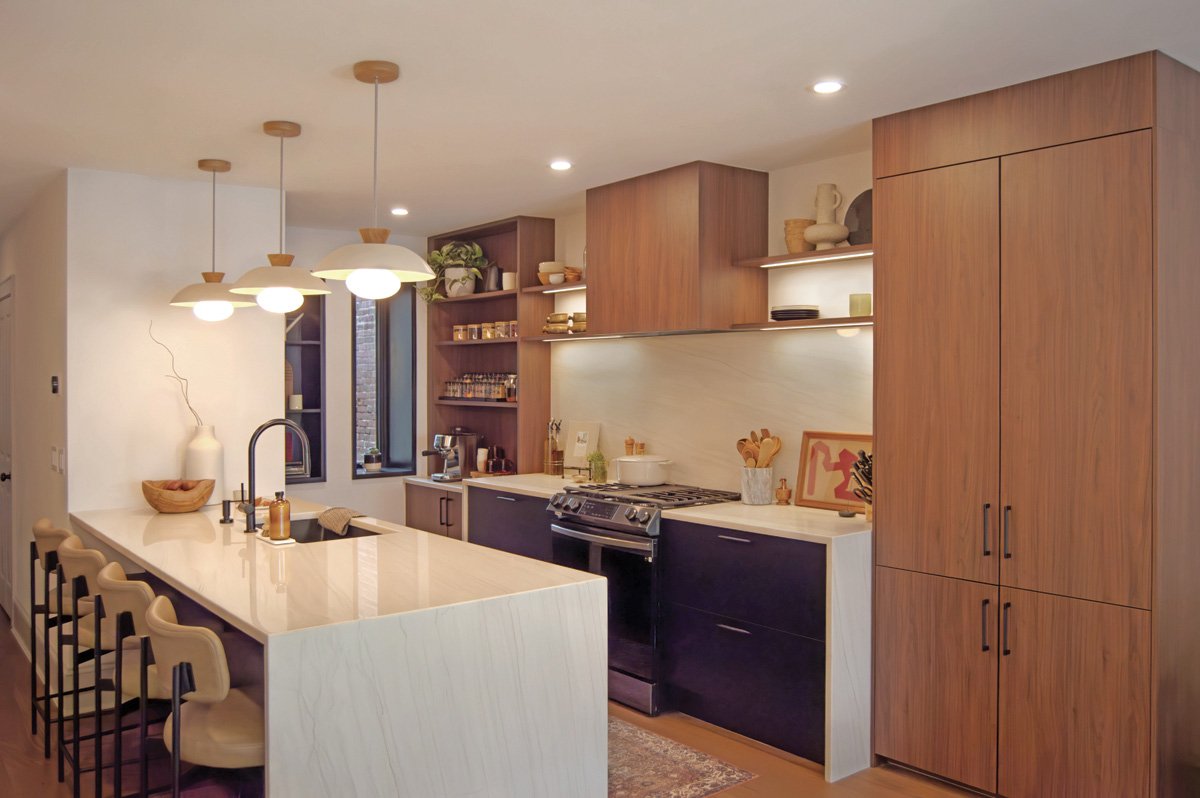
When designer Maiata Carlton and architect Brett Carlton of firm Marlo & Kroft took on this remodel, they approached it with an eye toward modernizing and improving functionality of the kitchen without sacrificing the historical flavor of the home.
First, however, the kitchen had to be relocated. Some creative solutions had to be implemented to make allowances for HVAC and other utility connections, as well as to make space for an exhaust line to avoid a recirculating hood. Adjacent windows at non-standard heights presented an additional challenge.
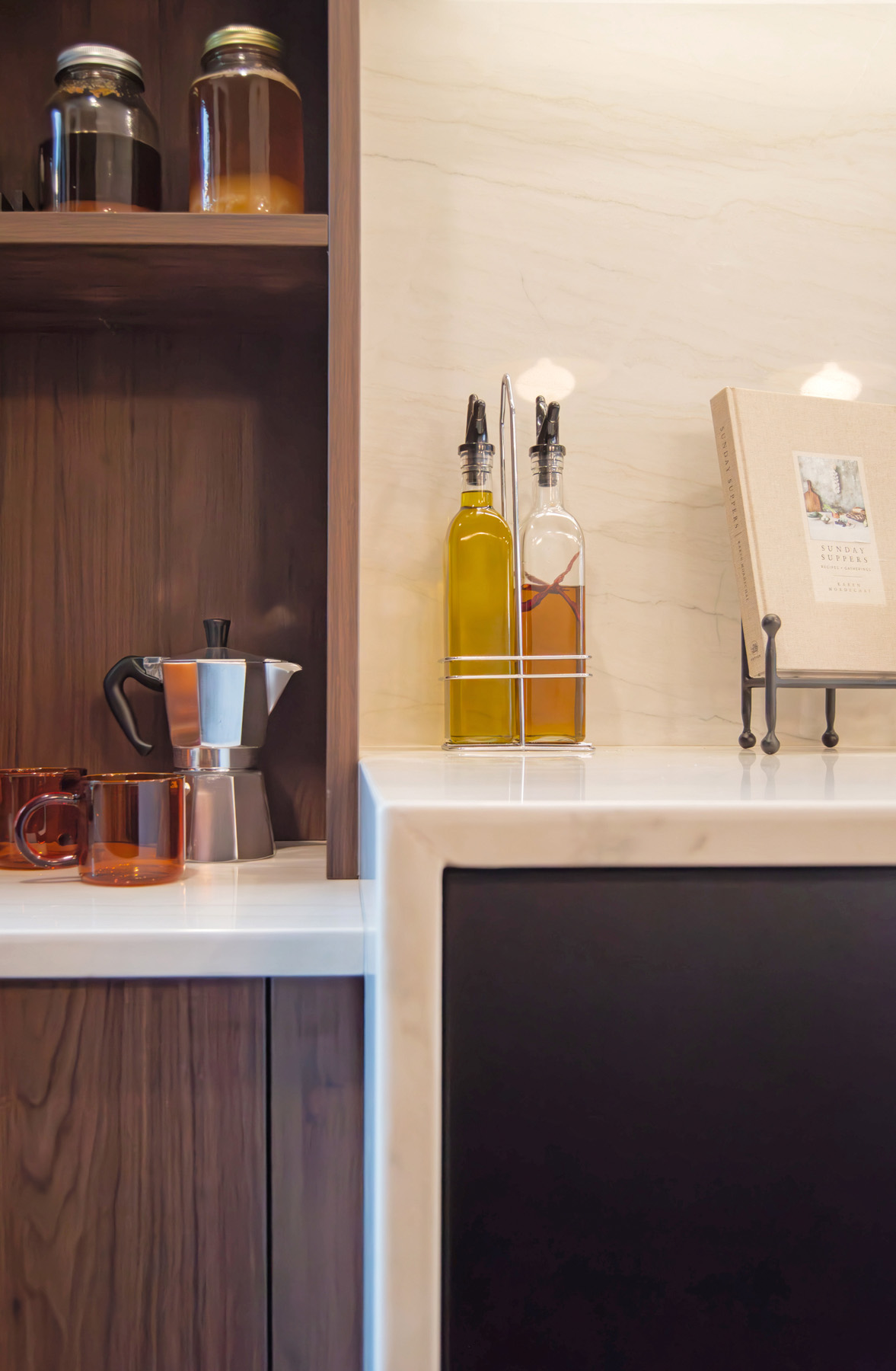
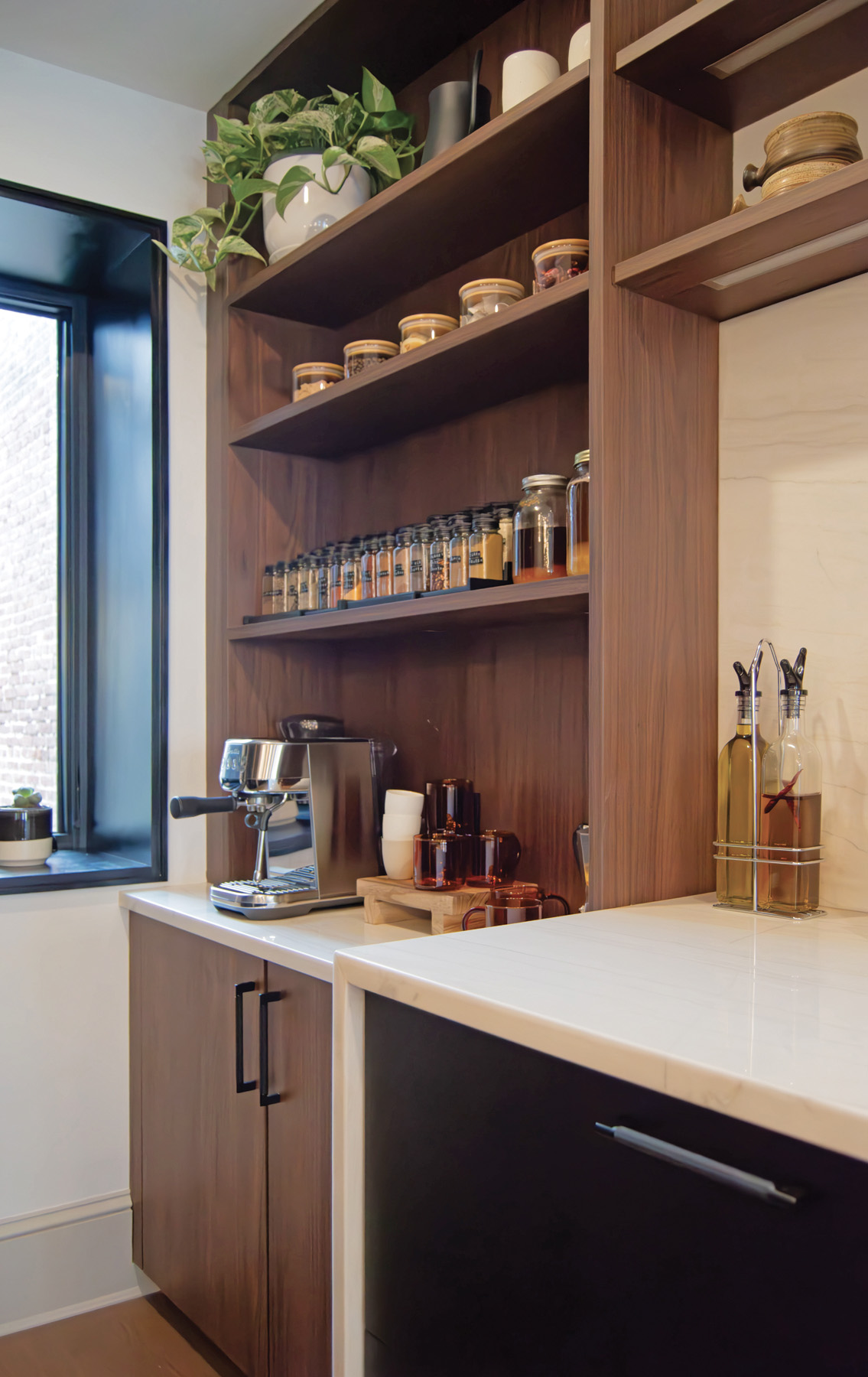
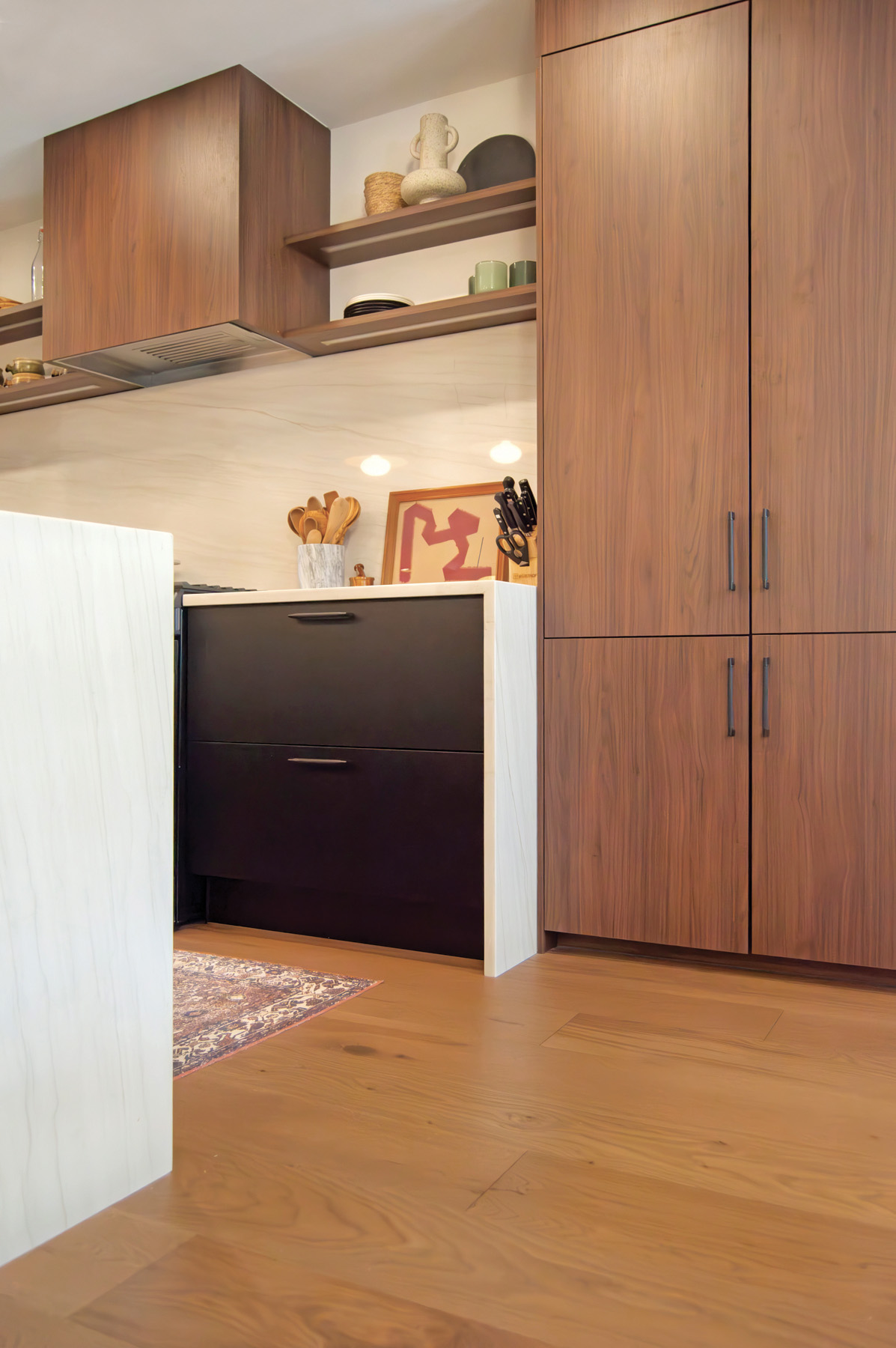
Integrating the HVAC necessitated a deep packed-out wall to house ductwork, while a dropped ceiling housed the exhaust. The low windowsills presented the perfect opportunity to incorporate a coffee station lower than average counter height, allowing the taller quartzite-wrapped waterfall peninsula and back counter to shine. The peninsula format provides plenty of seating for guests and casual dining.
Made-to-order cabinetry by German brand Form Kitchens features wall cabinets faced in black satin that transition to a more historic palette with a walnut millwork finish face on the surrounding cabinetry and hood, smartly blending the old and the new.